
What if the storm that sends water toward your sump pit also cuts the power your pump needs to run? For Tallahassee homeowners, that’s the problem a sump pump battery backup system is designed to address. Choosing one means looking beyond the battery: the right approach depends on your existing pump, the backup method, and how the system may need to operate.
It’s reasonable to want clear answers before investing in backup protection. Runtime varies by equipment and conditions, and not every backup option works the same way with every sump-pump setup. While Foundation ResQ can’t control power outages, an assessment of your pump and its configuration can help you understand the system and its service needs.
This guide explains the main backup options, their trade-offs, and the factors that affect performance during an outage. You’ll also learn what to assess before choosing a system and how a sump-pump inspection can provide a practical starting point for protecting your Tallahassee property.
Key Takeaways
- A sump pump battery backup system can help maintain water removal when normal power is interrupted, but runtime depends on the equipment and operating conditions.
- Compare a battery-powered secondary pump with a backup power system by how each works with your existing pump and what limits its operation.
- Start by identifying the existing sump pump and pit, then note the backup equipment and the pump’s power requirements.
- If compatibility or pump condition is unclear, an inspection can help you understand your setup and possible next steps.
- Foundation RESQ provides sump-pump inspection and service in Tallahassee, including attention to the float switch and mechanical pump.
What Does a Sump Pump Battery Backup System Do During a Power Outage?
A sump pump battery backup system helps a sump pump continue moving water when normal power is unavailable. Its purpose is to keep water from collecting in the sump pit if an outage interrupts the primary pump’s power. Systems differ: some use a separate battery-powered pump, while others provide backup power to a compatible primary pump.
Backup equipment has limits. Its ability to keep up depends on the system’s design, the battery’s condition, how often the pump runs, and how much water it needs to move. A battery is a finite reserve, so there is no single runtime that applies to every home.
Which parts make up a sump pump system?
The sump pit is the collection point in a drainage setup. Water drains toward it, where a pump can move it away from the home. For a general overview of the equipment and its common uses, see What is a Sump Pump?
A sump-pump system also includes a mechanical pump and a float switch. As water rises in the pit, the float switch signals the pump to start. When the water level drops, the pump stops according to its operating controls. Both components matter: if either is not working as intended, water removal can be affected, whether the system is on normal or backup power.
What does battery backup change?
Backup equipment provides another way to support pumping during an outage. A secondary battery-powered pump adds pumping capacity, while a backup power arrangement supplies electricity to a compatible primary pump. Both approaches are intended to help move water when the usual power supply is interrupted. Neither changes the sump pit’s role as the collection point.
Battery capacity is finite. The available reserve depends on the battery’s condition and system design, as well as how often the pump runs and how much work it has to do. A system that cycles frequently may use its reserve differently from one that runs occasionally. A product description alone cannot tell you how long backup will last in a particular home. The pump, backup equipment, and operating conditions all matter.
While Foundation RESQ can’t control power outages, an assessment of your Tallahassee sump-pump setup can help you understand how its float switch, mechanical pump, and backup equipment fit together. Foundation RESQ provides sump-pump inspection and repair, including attention to the pump and switch.
A backup system supports the primary sump pump during a power interruption; it isn’t the primary pump itself.
How Sump Pump Battery Backup Systems Work, and What Limits Them
A backup system is designed to respond when the primary power supply is interrupted. Depending on its design, it may switch to a battery-powered secondary pump or provide backup power to a compatible primary pump. The backup source runs the pump, which moves water out of the sump pit while drawing on the available battery reserve.
That explains how backup works, but not how long it will run. Pumping capability and runtime are separate considerations: a pump may move water effectively while power is available, but the battery reserve is still limited. Backup capacity depends on the system and its operating conditions.
What affects how long a backup can operate?
No single runtime applies to every pump, battery, property, or water-inflow condition. Frequent pump cycling can draw down the reserve faster than occasional operation. Battery condition, pump demand, and the length of the outage also affect how long the system may need to work. For an equipment-specific runtime estimate, refer to the manufacturer’s specifications.
For example, a backup may cycle repeatedly if water continues entering the pit. That creates different demands from a situation where the pump runs only occasionally. The same backup equipment can therefore face different conditions in different homes, or at the same property at different times. Specifications provide a reference, but actual performance depends on the system’s condition and what it is asked to handle.
What can a battery backup not do?
A battery backup cannot supply power indefinitely, prevent an outage, or remove every risk of water intrusion. If a battery is depleted, aging, or poorly maintained, it may not provide the expected operation. The pump and its controls must also work properly to move water. Backup equipment is one part of a sump-pump plan, not a guarantee that water won’t enter a home.
Follow the manufacturer’s maintenance guidance and keep the battery’s condition in view. If the system has been installed for some time, don’t assume it will perform as expected simply because it is there. Assess the battery, backup arrangement, and existing sump pump together to identify potential weak points before an outage puts the equipment to work.
A sump pump battery backup system is most useful when it suits the property’s pumping needs and its limitations are understood. Foundation RESQ can’t control power outages, but Tallahassee homeowners can have their pump and components assessed. A free sump-pump inspection can help evaluate the float switch and mechanical pump as part of understanding the system’s condition.
Battery Backup Pump vs. Backup Power System: Which Fits Your Setup?
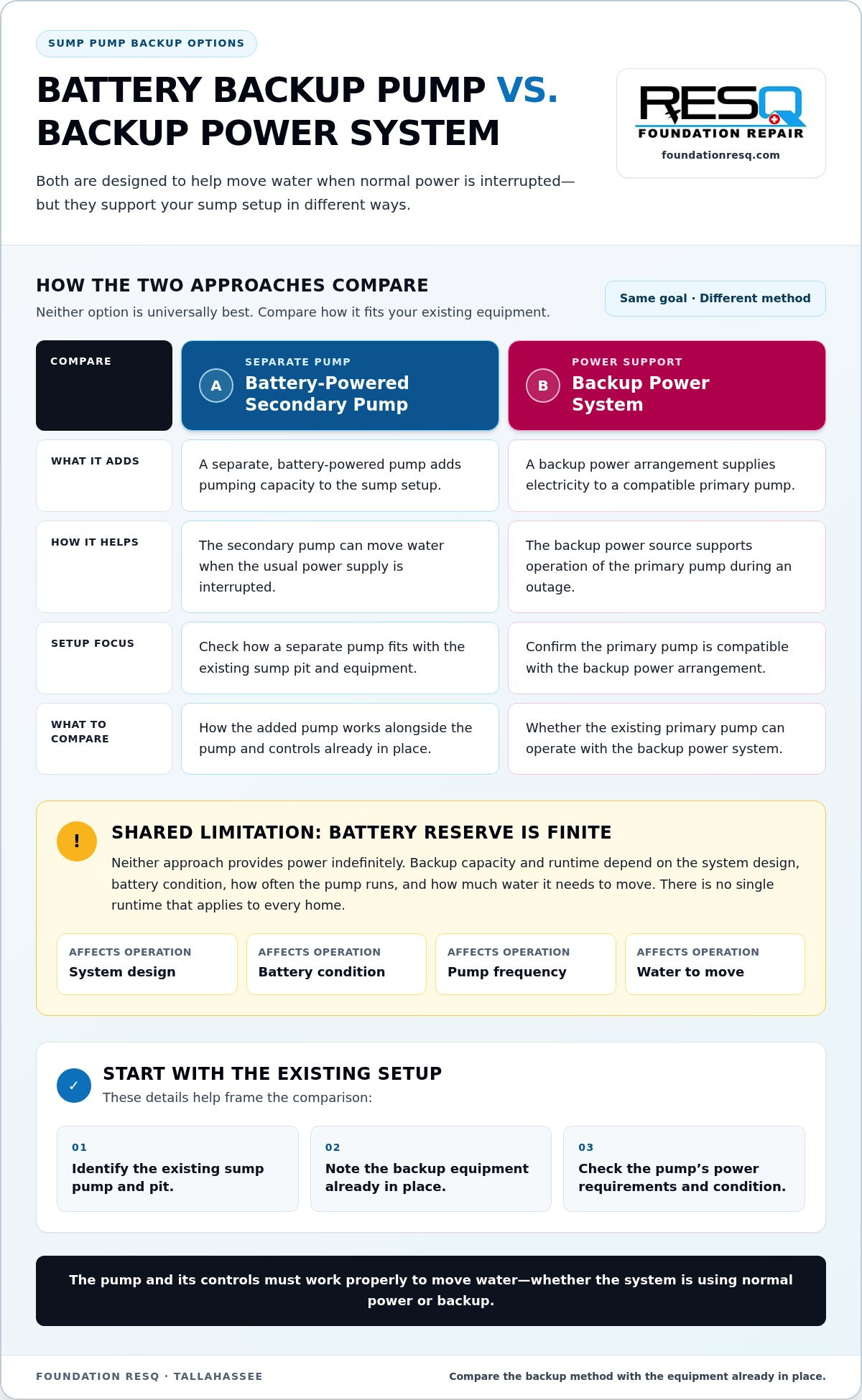
Two backup approaches address the same concern in different ways. A battery-powered secondary pump adds a separate pump to the sump setup, while a backup power system uses stored electricity to support pump operation. Neither approach is universally best. Compare each with the equipment already in place and how the backup is designed to work alongside it.
Use the table to compare the basic approaches. It’s a starting point, not a compatibility check: the existing pump, electrical requirements, and full system design all matter.
| Operating approach | Relationship to the primary pump | Key limitation |
|---|---|---|
| Battery-powered secondary pump | A separate pump is installed to provide backup pumping. | It adds another pump to the setup, and its performance depends on the selected equipment and installation. |
| Backup power system | Stored power supports operation of the existing primary pump, if compatible. | The pump’s power requirements and the backup system’s capacity must work together. |
How does a battery-powered secondary pump differ?
This approach uses a separate pump for backup instead of supplying stored power to the primary pump. The secondary pump is intended to move water if the usual pump cannot operate during an outage. How the equipment is positioned and controlled depends on the selected system. Its suitability rests on the complete setup, not simply on whether it runs from a battery.
When might backup power be the comparison to consider?
A backup power system stores electricity to support pump operation when normal power is unavailable. This approach may be worth comparing if you want to preserve the existing primary pump’s role. The pump must be compatible with the backup equipment, and the system must meet its power requirements. Assess the actual pump and setup rather than relying on a general assumption based on a battery label.
Headline wattage alone doesn’t establish whether a backup power system is a suitable match. Compare it with the pump’s requirements and the backup equipment’s operating limits. Likewise, a battery label alone doesn’t show how a secondary-pump arrangement will perform in a particular sump setup. Treat the pump and backup as connected parts of one system.
Before narrowing your choice, identify the primary pump’s type and power needs. Then determine whether the backup will add a separate pump or provide power to the existing one. This distinction helps avoid comparing unlike setups. A sump-pump inspection from Foundation RESQ can help Tallahassee homeowners understand their existing pump configuration and condition as they consider backup options.
The best fit is the one designed to work with the home’s sump-pump arrangement. With a sump pump battery backup system, compatibility and the complete system design matter more than one specification.
How to Assess a Sump Pump Battery Backup Before Choosing One
Before selecting a sump pump battery backup system, document what is already installed. The primary pump, sump pit, backup equipment, and power requirements all affect which approach may suit the property. An assessment also gives you a clearer picture of maintenance needs and concerns to address before relying on backup operation.
- Start with the sump pit and primary pump. Note where the pit is and how the existing pump is arranged. Record visible float-switch and mechanical-pump components, but don’t try to diagnose a problem from appearance alone.
- Identify any backup equipment. Determine whether the setup includes a separate backup pump or stored power intended to support the primary pump. Keep manuals, product labels, and specifications together for reference.
- Record power requirements. Use the pump and backup equipment documentation to note their stated electrical requirements. This makes it easier to compare compatibility than relying on a battery label or headline wattage alone.
- Check battery condition and access. Note the battery’s age or visible condition if known, and make sure the sump pit and equipment are accessible for inspection and service.
- Track what you observe. Record recurring water accumulation, unusual pump operation, or how often the pump appears to run. These observations can help inform an assessment without assuming what is causing the pattern.
What should homeowners document about the existing system?
Keep your notes practical: pump arrangement, visible components, backup type, and available equipment instructions. If a label or specification isn’t readable, record that rather than guessing. Repeated starts or water remaining in the pit are useful context for an inspection, but they don’t establish the cause. Clear notes help connect equipment requirements to the actual setup.
How should a backup system be maintained?
Follow the equipment manufacturer’s inspection and maintenance schedule, including any directions for the battery. Keep access to the pit clear so the system can be inspected and serviced. If the pump behaves unusually or a component appears damaged, arrange an assessment rather than assuming the backup will perform as expected. Foundation RESQ provides sump-pump service, including inspection and repair of the float switch and mechanical pump.
What local property conditions should the assessment consider?
For Tallahassee homeowners, consider how the sump pump fits into the property’s water-management setup during storm-related disruptions. Note whether it serves a basement, crawl space, or drainage system, since the surrounding configuration helps inform the assessment. If the pump is part of a crawl-space moisture plan, consider how it relates to broader measures such as crawl space encapsulation.
If you’re unsure about the pump’s condition, backup arrangement, or compatibility, Foundation RESQ offers Tallahassee homeowners a free sump-pump inspection and estimate. Arrange an inspection to review the existing system and clarify practical next steps.
Sump Pump Battery Backup Help in Tallahassee: What Happens Next?
A backup choice is only part of the picture. If you’re uncertain whether equipment matches your existing pump, notice unusual pump behavior, or suspect the system needs repair, an inspection can help clarify the setup and service needs. This is useful before relying on a sump pump battery backup system because its role depends on the condition and configuration of the equipment it supports.
What does a sump-pump inspection address?
Foundation RESQ inspects and repairs sump-pump systems, including the float switch and mechanical pump. These components help the system respond to rising water and move it out of the pit. An inspection can identify concerns with the existing setup and help determine whether service is needed. It does not guarantee backup operation or prevent future water intrusion, but it gives you a clearer basis for deciding on next steps.
To make the inspection more useful, describe what you’ve noticed. For example, tell us when the pump runs, whether water has collected in the pit, or whether you’ve observed unusual sounds or visible damage. If you have the pump or backup equipment instructions, keep them available. This context helps connect the equipment’s condition to your questions about compatibility or repair without assuming a cause in advance.
How can Tallahassee homeowners take the next step?
Foundation RESQ serves Tallahassee property owners with sump-pump inspection and repair. An inspection considers the system’s components, including the float switch and mechanical pump, so you can better understand the existing setup before deciding how to proceed. A free sump-pump inspection and estimate are available. Financing is available for major repairs.
While Foundation RESQ can’t control power outages, an inspection can help you understand the condition of the sump-pump system that manages water at your property. Whether you’re comparing backup approaches or addressing a pump concern, an assessment is a practical way to move from uncertainty to an informed decision. Foundation RESQ serves Alabama, Florida, and Georgia.
Have your pump information or equipment instructions ready if available, and describe any recurring concerns you’ve observed. Schedule a sump-pump service inspection through Foundation RESQ to arrange a free inspection and estimate for your Tallahassee home.
Turn Your Backup Plan Into a Practical Next Step
Connect your backup decision to the equipment already protecting your home. Before choosing a sump pump battery backup system, gather the pump or backup-system instructions and note any questions about compatibility or condition. A focused inspection can help turn those details into a clearer plan for your Tallahassee property.
Foundation RESQ offers a free sump-pump inspection and estimate. The inspection can assess your setup and identify service needs, giving you a more informed starting point before you decide how to move forward. No backup arrangement can remove every uncertainty, but understanding your system is a practical way to make a considered choice.
Schedule your free sump-pump inspection with Foundation RESQ and take the next step toward a backup plan that fits your home.
Frequently Asked Questions
What is a sump pump battery backup system?
A sump pump battery backup system provides an alternative way to support water removal if the home’s regular power is interrupted. Some setups use stored power with a compatible primary pump; others include a separate backup pump. To understand what’s installed, look for a second pump or backup power equipment near the sump pit, then check its label and instructions. Those details help identify the system for assessment.
How long will a sump pump battery backup last?
Runtime varies by equipment and conditions, so use the manufacturer’s specifications for a system-specific estimate. Check that the estimate applies to the exact pump and battery in your setup, and note any assumptions in the instructions. Water entering the pit and how often the pump cycles affect demand. Treat a published runtime as an estimate, not a promise for every outage.
Is a battery backup sump pump worth considering in Tallahassee?
It may be worth considering if your Tallahassee property depends on a sump pump to manage water and you want backup operation during a power interruption. Start with what you’ve observed at home, such as recurring water in the pit or frequent pump operation, then consider the existing system’s condition and backup limits. An inspection can help assess service needs. Foundation RESQ can’t control power outages.
What is the difference between a battery backup pump and a backup power system?
A battery backup pump is a separate pump intended to provide additional pumping, while a backup power system supplies stored electricity to support pump operation. To compare them for your home, identify the primary pump and consult its documentation alongside the backup equipment’s requirements. A battery or power rating alone doesn’t establish compatibility. Consider how the complete equipment arrangement fits the existing system.
Can a battery backup sump pump work if the power goes out?
It’s designed to provide backup operation during a power interruption, but whether it does depends on the equipment’s condition and available capacity. Keep the manufacturer’s instructions accessible and follow its guidance for checking the system. Don’t assume an installed backup is ready simply because it’s present. If you’re unsure about the pump or backup arrangement, an inspection can help assess the setup.
Does a sump pump battery backup need maintenance?
Yes. Follow the manufacturer’s instructions for inspecting and maintaining the specific backup equipment, and keep its documentation where you can find it. Record when the system was installed and any service or battery changes so you have a maintenance history to refer to. Keep the sump pit accessible. If the pump behaves unusually or components appear damaged, arrange an assessment rather than guessing at the cause.
What does Foundation ResQ check during a sump pump inspection?
Foundation RESQ’s sump-pump inspection and service includes attention to the float switch and mechanical pump. If you’re considering backup equipment, share the pump’s instructions or specifications and describe any concerns about operation or compatibility. This context helps assess the existing setup and identify service needs. A free sump-pump inspection and estimate are available in Tallahassee. An inspection can inform next steps, but it doesn’t guarantee backup operation or prevent water intrusion.