
A loud bang at shutoff usually means check valve slam, grinding points to worn bearings or a jammed impeller, rattling signals debris, and gurgling at the end of a cycle is often just air clearing the line. Start by unplugging the pump, timing exactly when the noise happens, clearing visible debris, and considering a quiet check valve. Save grinding, electrical issues, or overheating for a professional.
TL;DR:
- A spring loaded quiet check valve costs $20 to $50 and closes gradually, while pipe strapping and rubber isolation mounts reduce vibration transmitted through framing.
- Before inspection, unplug the pump and keep hands dry; record whether noise starts during operation, at shutoff, or as drainage ends.
- Call a professional if grinding continues after cleaning, a breaker will not reset, you smell burning, or the motor housing feels hot.
- Test the float monthly with a bucket of water; quarterly, clear the weep hole and clean the strainer; annually, clean the basin and inspect seals.
Table of Contents
- Common sump pump noises and what each usually means
- Step-by-step checklist to diagnose the noise safely
- High-impact DIY fixes that quiet a noisy pump
- Routine maintenance that prevents noise from coming back
- When a professional needs to take over
- How sump pump noise affects your basement environment
- Why I treat sump pump noise as an early warning, not a nuisance
- How we can help if DIY troubleshooting doesn’t solve it
- FAQ
- Sources
- Authoritative manuals and guides used to support this troubleshooting advice
Common sump pump noises and what each usually means
Matching the sound to its timing is the fastest way to narrow down the cause. A noisy sump pump rarely fails silently. It almost always tells you what’s wrong before it stops working entirely, if you know what to listen for.
A sharp bang or thud right as the pump shuts off is the signature of check valve slam, also called water hammer. Water in the discharge column reverses direction and hits the valve flap hard enough to shake the pipe. According to troubleshooting guidance on sump pump noise, this is one of the most common complaints homeowners report, and it’s also one of the easiest to fix.
Grinding, screeching, or a high metallic whine while the pump runs usually means mechanical wear: bearings breaking down or an impeller struggling against something caught inside it. These sounds tend to get worse, not better, over time.
Rattling or knocking during operation often comes from loose debris bouncing around the impeller housing or fittings that have worked loose over months of vibration. Humming or buzzing without the pump actually moving water can mean a stalled motor or jammed impeller rather than normal operation. Gurgling or slurping right at the end of a pump cycle is typically air entering the pumping chamber through the weep hole, not a sign of failure.
To localize the source, place a hand on the discharge pipe while the pump runs and feel where the vibration is strongest, then check whether the noise originates at the pit, the pipe run, or where the pipe meets the framing.
- Bang or thud at shutoff: check valve slamming shut (water hammer).
- Grinding or metallic whine: worn bearings or impeller contact with debris.
- Rattling or knocking: loose debris or hardware vibrating against the housing.
- Gurgling at cycle end: air clearing through the anti-airlock weep hole.
Step-by-step checklist to diagnose the noise safely
Work through these steps in order, and stop immediately if you hit an electrical issue you can’t resolve with a simple reset.
- Cut the power first. Unplug the pump or flip the dedicated breaker before touching anything in the pit. Never reach into standing water near an energized pump.
- Wear insulated, dry footwear and keep hands dry while inspecting the basin.
- Log the exact timing of the noise: does it happen at startup, during the run cycle, at shutoff, or only at the very end of drainage?
- Check the power supply. Reset the GFCI outlet, check the breaker panel, and confirm the pump is on its own dedicated circuit rather than sharing one with other appliances.
- Remove the pit cover and look inside. Check for gravel, debris, or sediment near the intake screen and impeller.
- Check float switch clearance. Make sure it travels freely without catching on the pit wall, discharge pipe, or power cords.
- Put a hand on the discharge pipe while the pump runs to find exactly where vibration peaks.
- Listen for valve slam at the check valve location when the pump cycles off.
- Inspect the anti-airlock weep hole in the discharge pipe below the basin lid and clear it if blocked.
- If safe, unplug and lift the pump to inspect and clean the inlet screen and impeller, following your owner’s manual.
- Plug back in and retest, documenting whether the noise has changed or disappeared.
- Stop and call a professional if grinding continues after cleaning, if you notice any electrical fault, or if the pump housing feels hot.
Manufacturer troubleshooting matrices from Liberty Pumps’ installation manual list electrical faults, float switch interference, and a stuck check valve as the most common causes behind unusual pump behavior, and they recommend checking power and float clearance before assuming a mechanical failure.
Quiet check valves commonly cost $20 to $50 and are built to absorb the shock of water reversing in the column instead of letting a flapper valve slam shut, according to this guide to sump pump noise causes. That’s often the single cheapest fix for the most reported noise complaint.
For a structured walkthrough of these same checks with photos, our step-by-step sump pump testing guide covers five quick tests you can run in under 15 minutes.
High-impact DIY fixes that quiet a noisy pump
Most sump pump noise complaints come down to a handful of fixable issues, and none of them require special tools.
Installing a spring-loaded quiet check valve is the highest-impact fix for shutoff bang. These valves close gradually instead of snapping shut, which eliminates most water hammer noise. They typically run $20 to $50 and install in place of the existing valve on the discharge pipe, according to sump pump noise troubleshooting advice. If your discharge piping is complex or the valve is hard to access, a professional installation avoids leaks at the joint.
- Add foam padding or rubber isolation mounts wherever the pump or discharge pipe touches the pit wall or floor joists.
- Strap the discharge pipe securely and add a rubber coupling where it passes through framing to stop transmitted vibration.
- Cover the pit with an insulated lid to dampen airborne noise from the motor and water movement.
- Clear debris from the inlet screen, impeller, and anti-airlock vent hole.
- Adjust the float switch off-point slightly higher to reduce slurping at the end of each cycle.
Foam padding and isolation mounts are affordable, semi-permanent fixes. They usually last for years unless the pump shifts position. A new check valve and secure pipe strapping provide more permanent solutions by addressing the mechanical cause directly rather than just dampening the sound.
Pro Tip: Test one fix at a time and run a full cycle before adding the next, so you know exactly which change solved the noise.
Routine maintenance that prevents noise from coming back
A pump that’s properly maintained rarely develops the kinds of noise that catch homeowners off guard during a storm.
- Monthly: pour a bucket of water into the pit to confirm the float triggers activation, and check the basin for debris buildup.
- Quarterly: inspect the check valve for smooth operation, confirm the anti-airlock weep hole is clear, clean the strainer, and test any battery backup system.
- Annually: fully clean the basin, inspect the motor housing and seals for wear, and replace any component showing early signs of failure before it breaks down completely.
Liberty Pumps’ manufacturer guidance recommends this same monthly, quarterly, and annual cadence to catch problems while they’re still minor and inexpensive to fix.
Most submersible sump pumps have a service life in the range of several years under normal use, and repeated grinding or a motor that runs hot are reliable warning signs that replacement, not another repair, is the right call. Our guide on when to replace a sump pump breaks down age, symptoms, and cost expectations in more detail, and our maintenance checklist walks through each seasonal task.
When a professional needs to take over
Some noises are safe to chase down yourself. Others are a sign that the fix is beyond a weekend project.
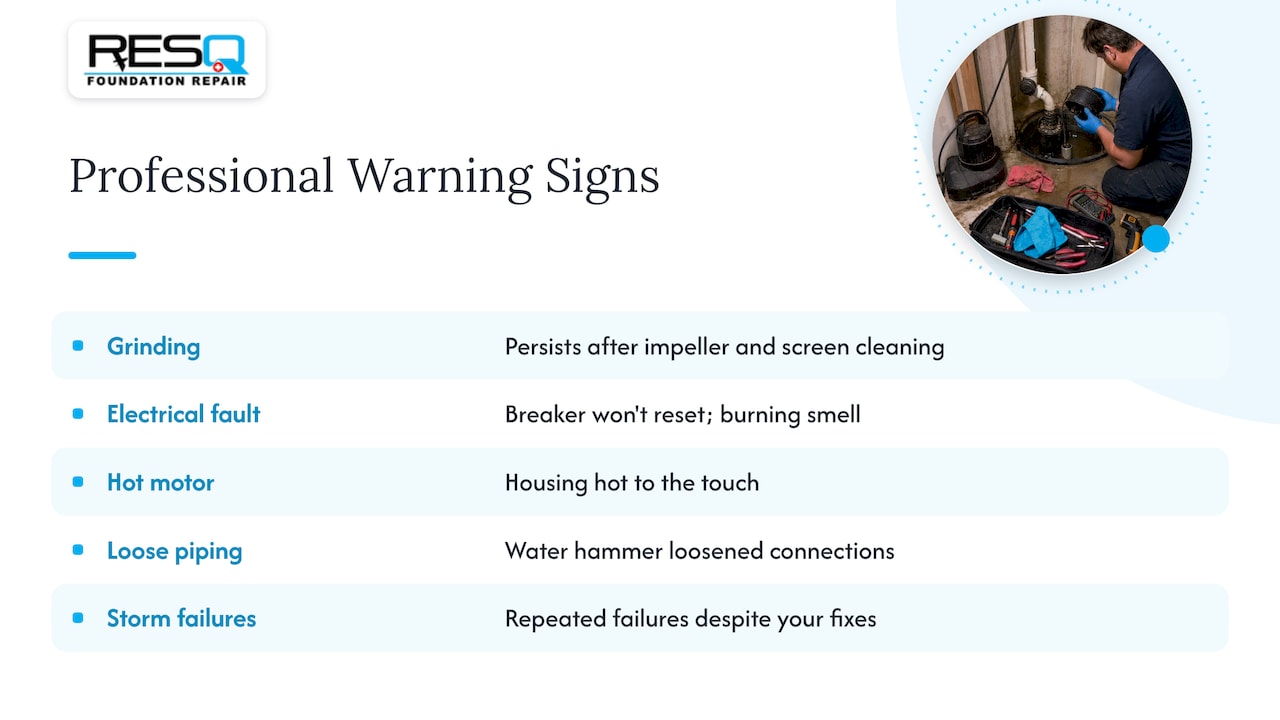
Call a professional when grinding continues after you’ve cleaned the impeller and inlet screen, when you notice any electrical fault such as tripped breakers that won’t reset or a burning smell, when the motor housing feels hot to the touch, when water hammer has loosened piping connections, or when the pump has failed repeatedly during storms despite your fixes.
A technician’s visit typically includes a full teardown of the motor and impeller assembly, an electrical capacity check of the circuit, check valve replacement if yours is beyond a simple swap, discharge line rerouting if piping is contributing to vibration, and an evaluation of any battery backup system. Repair costs and full replacement costs vary by unit and labor, so it’s worth getting a written estimate before deciding which route makes sense.
Before the visit, have the sump pit accessible, note down when the noise happens and how long it’s been going on, and take a few photos or a short video of the pump running if you can safely do so. Our sump pump repair services page outlines what a typical service call covers.
How sump pump noise affects your basement environment
Noise isn’t only an annoyance. Persistent vibration from a poorly isolated pump or pipe transmits into floor joists, subfloor, and nearby framing over time, and that constant low-level stress can loosen fasteners, fittings, and even flooring attachments near the pit.
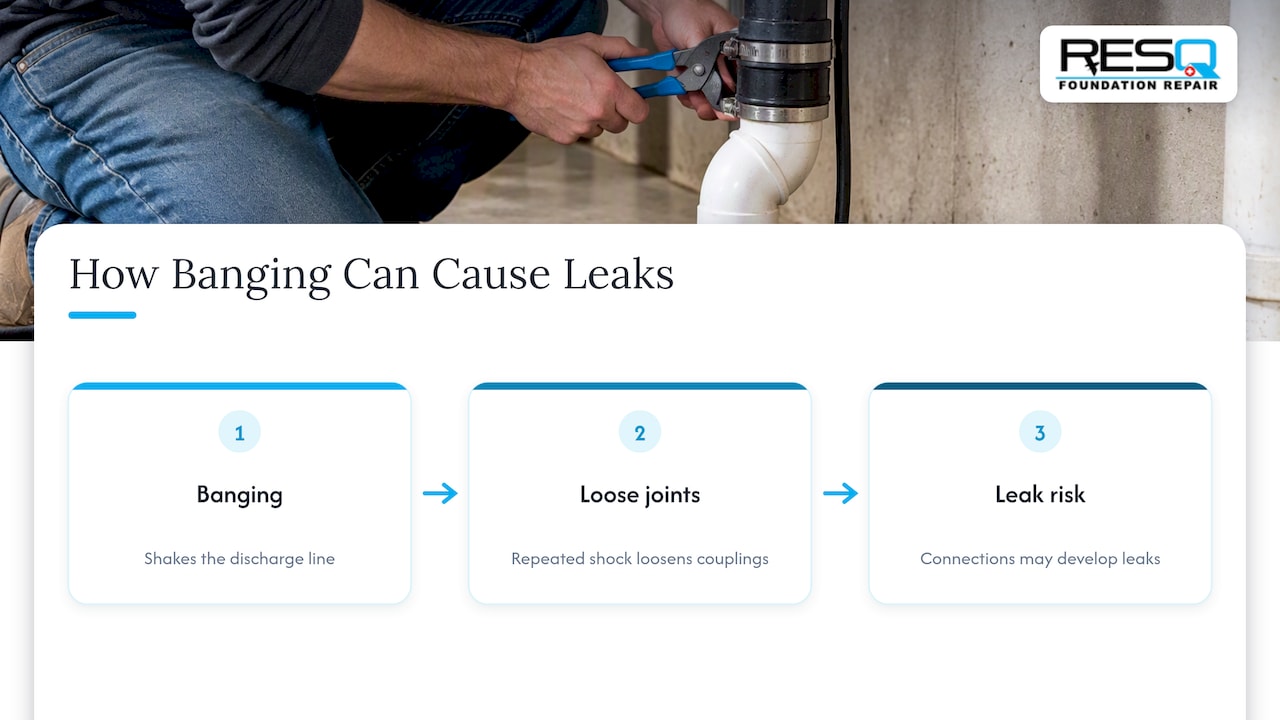
A pump that bangs at every shutoff cycle is physically shaking the discharge line each time it happens, sometimes dozens of times a day during heavy rain, highlighting the importance of following a seasonal gutter checklist for homeowners to reduce roof runoff near the foundation and limit sump activity. That repeated shock can work connections loose at joints and couplings, which raises the odds of a leak developing exactly where you don’t want one, right at the point where water is supposed to be leaving the basement.
There’s also a comfort and livability dimension. A finished basement used as living space, a home office, or a bedroom suffers when a pump bangs or grinds every few minutes during a storm. Beyond the nuisance, unresolved noise is frequently an early indicator of a developing mechanical problem, and ignoring it risks a pump failure precisely when you need it most: during heavy rainfall. Addressing the noise early is less about comfort alone and more about catching a failure before it becomes a flooded basement.
Why I treat sump pump noise as an early warning, not a nuisance
Noise is data. A pump that starts banging, grinding, or rattling is giving you a window to act before it fails outright, usually during the worst possible storm. My advice is simple: unplug it, document exactly what you hear and when, try the cheap fixes first, and don’t wait once grinding or electrical symptoms show up. That early action is what prevents flooding and a much bigger repair bill later.
— Kayle
How we can help if DIY troubleshooting doesn’t solve it
If you’ve worked through the checklist and the noise persists, or if you’ve hit an electrical issue you’d rather not handle yourself, our sump pump repair team can take it from there. We send a technician to inspect the pump, test its cycling and float operation, check the electrical supply, and identify whether the fix is a simple part replacement or something tied to a larger moisture issue in your basement or crawl space.

We offer inspections that typically include a visual check of the pit and discharge line, an electrical safety check, a full pump cycle test, and a written recommendation you can act on at your own pace.
- Sump pump repair and replacement
- Basement waterproofing to address the moisture driving pump demand
- Corrective discharge routing and check valve work
Visit our sump pump repair services page to see the full scope, or browse our services page for related basement and foundation work. If a bigger repair turns up, our financing options guide explains what’s available before you commit to anything.
FAQ
Is it normal to hear your sump pump running?
Yes, a steady hum or the sound of water moving through the discharge pipe during a cycle is normal operation. What’s not normal is a loud bang at shutoff, grinding, or screeching, which usually points to a check valve, debris, or worn bearings.
What kind of noise does a failing water pump make?
A failing pump typically produces grinding, a metallic whine, or screeching while running, which usually signals worn bearings or an impeller fouled by debris. These sounds tend to get louder and more frequent as the motor continues to wear down.
How do you insulate sump pump noise?
Placing foam padding or rubber isolation mounts between the pump and the pit wall, strapping the discharge pipe, and covering the pit with an insulated lid all reduce transmitted and airborne noise. These are low-cost fixes that can be done in under an hour, according to common sump pump noise fixes.
What type of sump pump is the quietest?
Submersible pumps, which sit fully inside the sump basin, generally run quieter than pedestal pumps because the water and basin cover muffle the motor noise. A pedestal pump’s motor sits above the basin in open air, so its running noise is more noticeable in a finished space.
What causes a sump pump to cycle on and off repeatedly?
Short cycling often comes from a float switch that’s set too close to the on and off points, or from a check valve that’s failing and letting water fall back into the basin after each cycle. Clearing debris around the float and testing or replacing the check valve usually resolves it.
Sources
- Why Is My Sump Pump So Loud? (Check Valve Slam) | OnOtto
- Sump Pump Not Working? Troubleshooting Guide for Common Failures
- Zoeller technical bulletin / manual (sump pump service & precautions)
Authoritative manuals and guides used to support this troubleshooting advice
- Why Is My Sump Pump So Loud? (Check Valve Slam)
- Sump Pump Not Working? Troubleshooting Guide for Common Failures
- Zoeller technical bulletin on sump pump service and precautions
Recommended
- Homeowners: Test a Sump Pump That Runs Constantly in Five Minutes – Tallahassee Foundation Repair | Foundation ResQ
- Fix a Sump Pump Not Working With 5 Safe Checks Backed by NDSU and FEMA – Tallahassee Foundation Repair | Foundation ResQ
- 5 Fast Tests to Confirm Your Sump Pump Works for Homeowners – Tallahassee Foundation Repair | Foundation ResQ
- When to Replace Your Sump Pump: Age, Signs, and Cost Rules – Tallahassee Foundation Repair | Foundation ResQ