
Remediated mold is defined as a property where active mold contamination and its underlying moisture source have been professionally addressed, returning the home to normal fungal conditions. The term goes well beyond surface cleaning. Understanding what remediated mold means for buyers requires knowing whether the moisture pathway was fixed, whether contaminated materials were removed, and whether an independent clearance test confirmed the results. Skipping any of those three steps leaves buyers exposed to health risks and potential property value loss. This guide walks you through the mold remediation process, the documentation you need to request, and the red flags that signal incomplete work.
What does remediated mold mean for buyers?
Remediated mold means the property had an active moisture problem and mold contamination that were addressed to restore normal fungal conditions, not just scrubbed surfaces. The EPA defines effective cleanup as controlling the moisture source and removing affected porous materials. A coat of paint over a moldy wall does not qualify as remediation. Buyers who treat the two as equivalent take on serious financial and health risk.
The industry term for this work is mold remediation, and it follows a defined protocol. The IICRC S520 standard and EPA guidance both require written documentation, physical removal of contaminated materials, and post-work verification. When a seller says a home has been “remediated,” your job is to verify that all three requirements were met, not just the first one.
What does the mold remediation process involve?
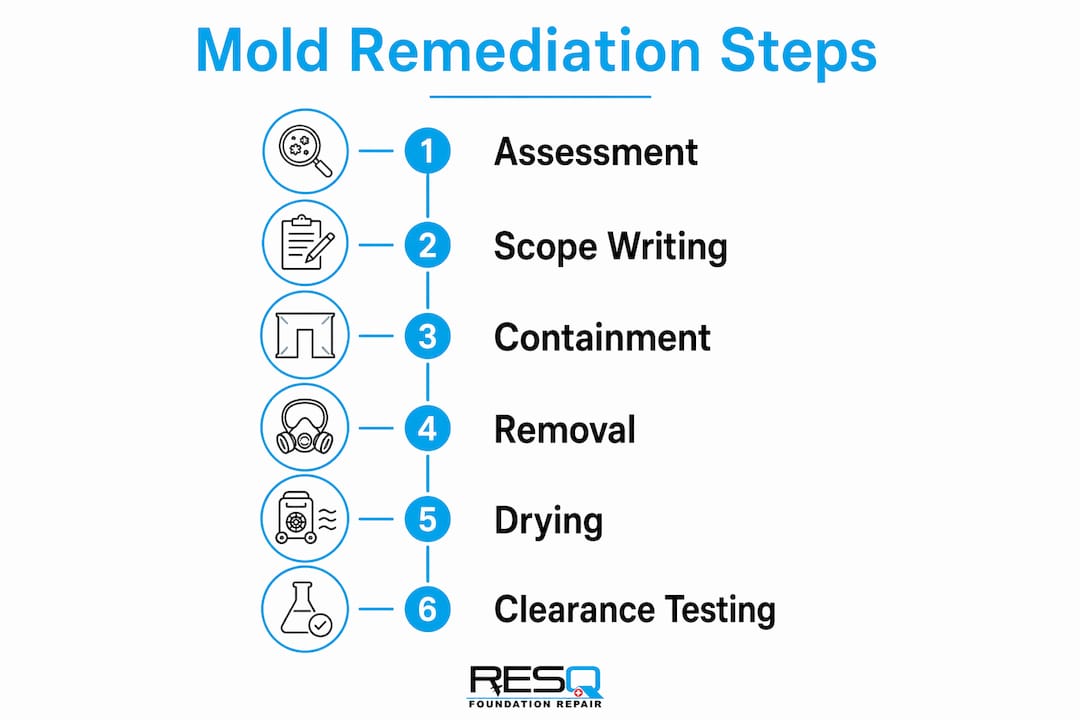
Professional mold remediation follows a sequence of steps. Cutting corners on any one of them creates conditions for mold to return.
- Moisture investigation. A certified inspector identifies the water source feeding mold growth. This could be a leaking pipe, roof intrusion, crawl space condensation, or foundation seepage. No remediation is durable without this step.
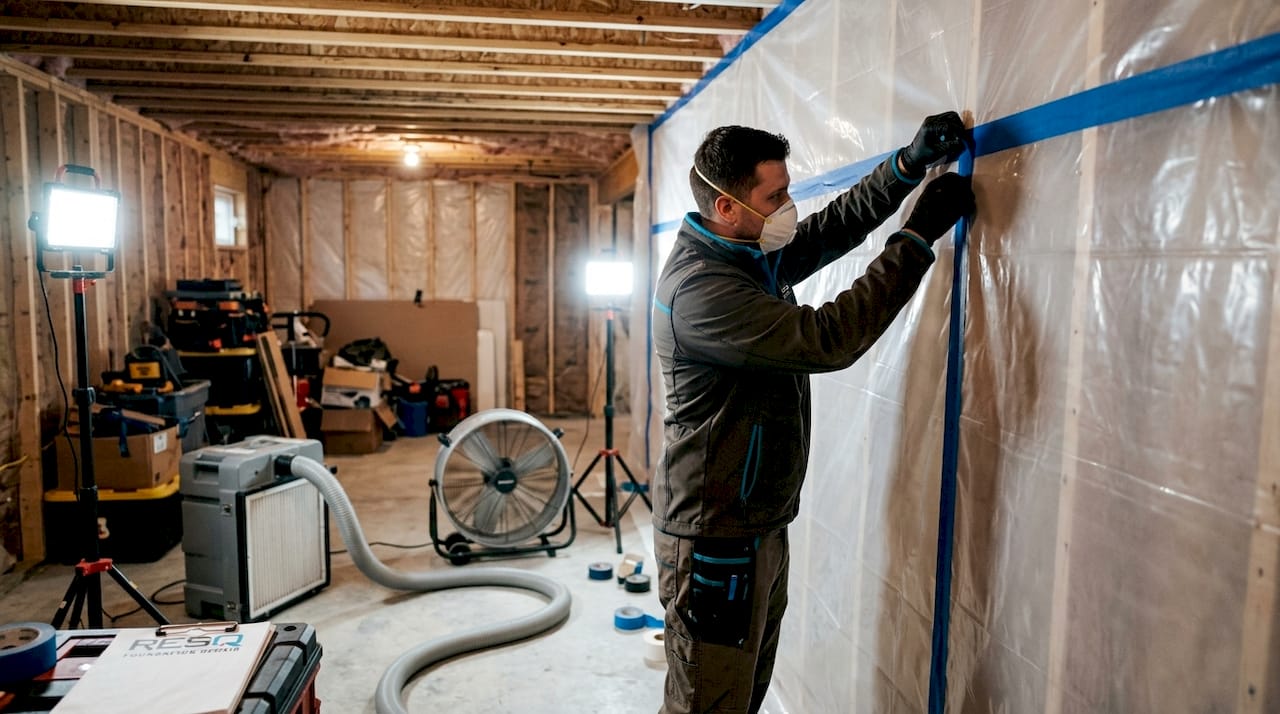
- Containment. Workers seal the affected area with plastic sheeting and negative air pressure to prevent spores from spreading to clean areas of the home during removal.
- Removal of contaminated materials. Porous materials like drywall, insulation, and wood framing that cannot be cleaned are discarded. Painting over moldy surfaces without removal causes peeling and mold regrowth.
- Cleaning and drying. Remaining surfaces are cleaned with EPA-registered antimicrobials. The area is then dried thoroughly, typically for 24–72 hours, before any reconstruction begins.
- Post-remediation clearance testing. An independent third party collects air and surface samples to confirm mold spore levels have returned to normal. Clearance testing acts as the gatekeeper before reconstruction or closing.
The IICRC S520 standard requires written scope documentation, independent verification, and containment procedures. Contractors who skip these steps are not following the recognized industry standard.
Pro Tip: Ask specifically whether the contractor who performed the remediation also performed the clearance test. If the same company did both, that is a conflict of interest. Independent clearance testing is the only reliable confirmation of success.
A typical remediation timeline runs 1–5 days of active work, followed by 24–72 hours of drying, then 24–48 hours for lab results. Buyers should budget time before closing to allow proper remediation and verification rather than rushing the process.
How to interpret mold remediation documentation as a buyer
Documentation is where most buyers make their biggest mistake. A paid invoice from a contractor is not proof of effective remediation. Real documentation tells a complete story from moisture source to clearance.
Request these specific documents before proceeding:
- Original moisture source assessment. This report identifies where water entered the home and confirms it was repaired. Without it, you cannot know whether the root cause was fixed.
- Written scope of remediation work. The scope details which materials were removed, what containment methods were used, and which cleaning agents were applied. Adjuster-defensible documentation includes photos, moisture readings, and chain-of-custody lab records.
- Independent post-remediation clearance report. This is the most important document. It must come from a third party, not the remediation contractor. It should include air sampling data and lab results showing spore counts at or below outdoor baseline levels.
- Evidence of permanent moisture repair. Receipts or permits for plumbing repairs, roof work, waterproofing installation, or drainage corrections confirm the water source was fixed, not just dried out.
Incomplete documentation is a red flag, not a minor gap. If a seller cannot produce a clearance report from an independent inspector, you have no verified proof the remediation succeeded.
Pro Tip: Cross-reference the moisture source assessment with the clearance report dates. If the clearance test was done before the moisture repair was completed, the test result is meaningless.
For buyers purchasing investment properties, aligning moisture source documentation with remediation scope and clearance results is a standard underwriting requirement. Treat it the same way for a personal home purchase.
How does remediated mold affect property value and health?
The impact of remediated mold on a property depends entirely on the quality of the remediation and the documentation supporting it.
| Factor | Well-Documented Remediation | Incomplete Remediation |
|---|---|---|
| Health risk | Low, if moisture is corrected and clearance confirmed | High, mold can regrow within 24–48 hours of moisture return |
| Property value | Minimal long-term impact with full documentation | Potential stigma and price reduction |
| Insurance | Standard coverage typically available | Some insurers may require additional inspection |
| Renegotiation | Unlikely if documentation is complete | Justified, especially without clearance report |
| Resale | Easier with full paper trail | Harder, disclosure requirements apply |
Mold can begin regrowing within 24–48 hours if moisture returns. That speed means a remediated home with an unresolved water source is not actually remediated at all.
A common buyer misconception is that any mold history makes a home permanently unsafe. The EPA’s guidance on controlling moisture is clear: moisture control is what controls mold growth and health risk. A home with verified, documented remediation and a permanently fixed moisture source carries no greater health risk than a home with no mold history. The key word is verified.
Buyers should also consider the health risks of crawl space mold specifically, since crawl spaces are a common site for moisture intrusion and are often overlooked in remediation scopes.
What are the red flags buyers should watch for?
Not all remediation is created equal. These warning signs indicate the work may have been inadequate.
- No independent clearance report. If the seller only has a contractor invoice or a self-issued completion certificate, the remediation is unverified. Failures most often result from skipping clearance testing before reconstruction.
- Remediation completed without fixing the moisture source. This is the single most common cause of mold returning after remediation. Ask for documentation of the repair, not just the cleanup.
- Unusually short timelines. A remediation job completed in less than a day on a significant mold problem almost certainly skipped containment, proper drying, or both.
- Visual cleanup only. Bleaching or painting over mold without removing contaminated porous materials is not remediation. It is cosmetic concealment.
- Musty odors after remediation. A persistent musty smell after claimed remediation is a reliable indicator that mold is still active somewhere in the structure.
- No written scope of work. Contractors following IICRC S520 always produce a written scope. The absence of one suggests the work did not follow the recognized standard.
Buyers purchasing properties with mold history should also get an independent mold inspection before closing, regardless of what documentation the seller provides. A fresh inspection confirms current conditions, not just past work.
Key takeaways
Remediated mold is safe for buyers only when the moisture source is permanently fixed, contaminated materials are removed, and an independent clearance test confirms normal spore levels.
| Point | Details |
|---|---|
| Remediation requires moisture repair | Mold removal without fixing the water source will result in regrowth within 24–48 hours. |
| Independent clearance testing is required | The clearance report must come from a third party, not the remediation contractor. |
| Documentation tells the full story | Request the moisture assessment, written scope, and clearance report before closing. |
| Mold history does not equal unsafe home | Verified remediation with permanent moisture correction carries no greater health risk. |
| Red flags justify renegotiation | Missing clearance reports or short timelines are grounds to renegotiate or walk away. |
What I’ve learned about buyers and remediated mold
Most buyers I’ve seen make one of two mistakes. They either panic at the word “mold” and walk away from a perfectly sound property, or they accept a contractor invoice as proof and close without asking a single follow-up question. Both responses cost money.
The paperwork is where the real story lives. I’ve reviewed remediation files where the clearance test was dated two days before the moisture repair was completed. That sequence makes the test worthless. The contractor was testing air quality while the leak was still active. No buyer would catch that without reading the dates carefully.
My honest recommendation: hire an independent industrial hygienist or certified mold inspector to review the documentation before closing. That inspection typically costs a few hundred dollars. Compare that to the cost of full mold remediation after you own the property, and the math is obvious.
Remediated mold should not automatically deter you from a purchase. What should deter you is incomplete documentation, a seller who cannot name the moisture source that was fixed, or a clearance report that came from the same company that did the cleanup. Those are the real warning signs. The mold itself, properly addressed, is history.
— Kayle
Foundationresq’s moisture and mold services for buyers
Buying a property with a mold history means you need a team that understands both the remediation side and the moisture control side.
Foundationresq specializes in crawl space remediation, crawl space waterproofing, and mold removal for homeowners and buyers in the Tallahassee area. The team addresses the moisture source first, which is the step most contractors skip. Whether you need a pre-closing inspection, a second opinion on existing remediation documentation, or a permanent moisture control solution, Foundationresq offers free inspections and financing options to make the process straightforward. Contact Foundationresq before you close, not after.
FAQ
What does “remediated” mean in a real estate listing?
Remediated means the property had mold contamination and a moisture problem that were professionally addressed. It does not guarantee the work was done correctly unless supported by independent clearance documentation.
Is a home with remediated mold safe to buy?
A home with properly documented remediation, including a fixed moisture source and an independent clearance report, is safe to buy. The EPA confirms that moisture control is the key factor in maintaining safe indoor air quality.
What documents should I request for remediated mold?
Request the original moisture source assessment, the written scope of remediation work, and an independent post-remediation clearance report with lab results. An invoice alone is not sufficient proof.
Can mold come back after remediation?
Mold can return within 24–48 hours if moisture is reintroduced. Permanent moisture correction is the only reliable way to prevent regrowth after remediation.
Should I get an independent inspection even if the seller has documentation?
Yes. An independent inspection confirms current conditions and verifies that the documentation matches the actual state of the property. It is the most reliable protection a buyer has before closing.
Recommended
- How Homeowners Can Reduce Mold Remediation Costs – Tallahassee Foundation Repair | Foundation ResQ
- Mold Remediation Costs Uncovered: A Homeowner’s Guide – Tallahassee Foundation Repair | Foundation ResQ
- Cost of Mold Remediation in Crawl Space: 2026 Homeowner Price Guide – Tallahassee Foundation Repair | Foundation ResQ
- Professional Mold Remediation in Tallahassee, FL: The Homeowner’s Guide to Permanent Solutions – Tallahassee Foundation Repair | Foundation ResQ