
Water seeps through basement walls when external water pressure finds weak points in your foundation, including cracks, porous concrete, and wall-floor joints, and pushes moisture inside. The industry term for this force is hydrostatic pressure, and it is the root cause behind 65–70% of basement leaks. Understanding why water intrusion happens is the first step toward fixing it correctly. The good news is that most causes are identifiable, and many are correctable without tearing your foundation apart.
Why water seeps through basement walls: the role of hydrostatic pressure
Hydrostatic pressure is the force that saturated soil exerts against your basement walls and floor. Water exerts 62.4 pounds per cubic foot, which means pressure at a typical basement depth can exceed 250 pounds per square foot pushing upward on your slab. That number explains why even a hairline crack becomes a serious water entry point.
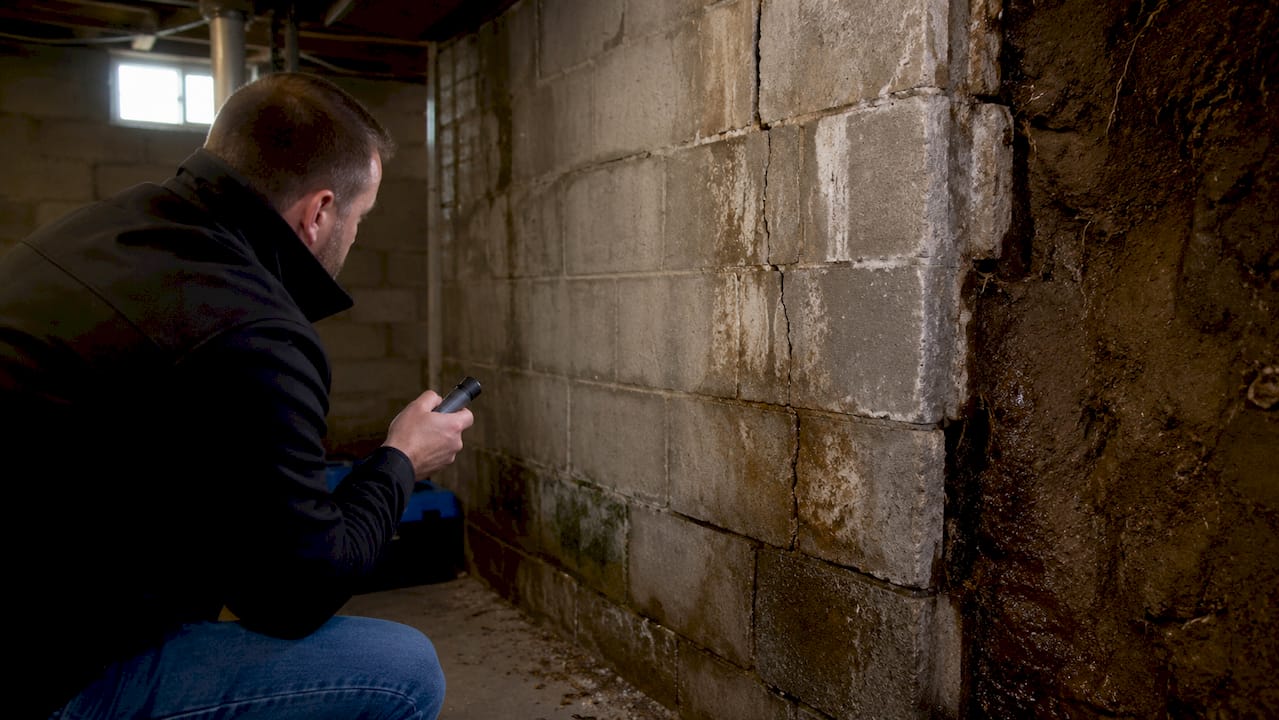
Pressure increases with depth. The deeper your basement floor sits below grade, the greater the force acting on every square inch of concrete. This pressure does not distribute evenly. It concentrates at the weakest structural points: the cove joint where your wall meets the floor, existing cracks, and mortar joints in block walls.
Interior patching alone cannot solve a hydrostatic pressure problem. Sealing a crack from the inside without relieving the external pressure is like putting tape over a garden hose. Water finds the next weak point.
- Cove joint seepage: The wall-floor joint is the most common entry point because it is rarely monolithic concrete.
- Wall cracks: Pressure forces water through cracks as narrow as a credit card’s thickness.
- Floor cracks: Upward pressure on slabs causes water to bubble up through floor fractures.
- Pipe penetrations: Gaps around utility pipes give water a direct channel inside.
Pro Tip: Run your hand along the cove joint after a heavy rain. Persistent dampness there, even without visible cracks, confirms hydrostatic pressure is your primary problem.
What role does soil type and water table play in basement water intrusion?
The soil surrounding your foundation is not passive. It actively transmits water pressure to your walls, and its composition determines how much pressure builds up and how fast.
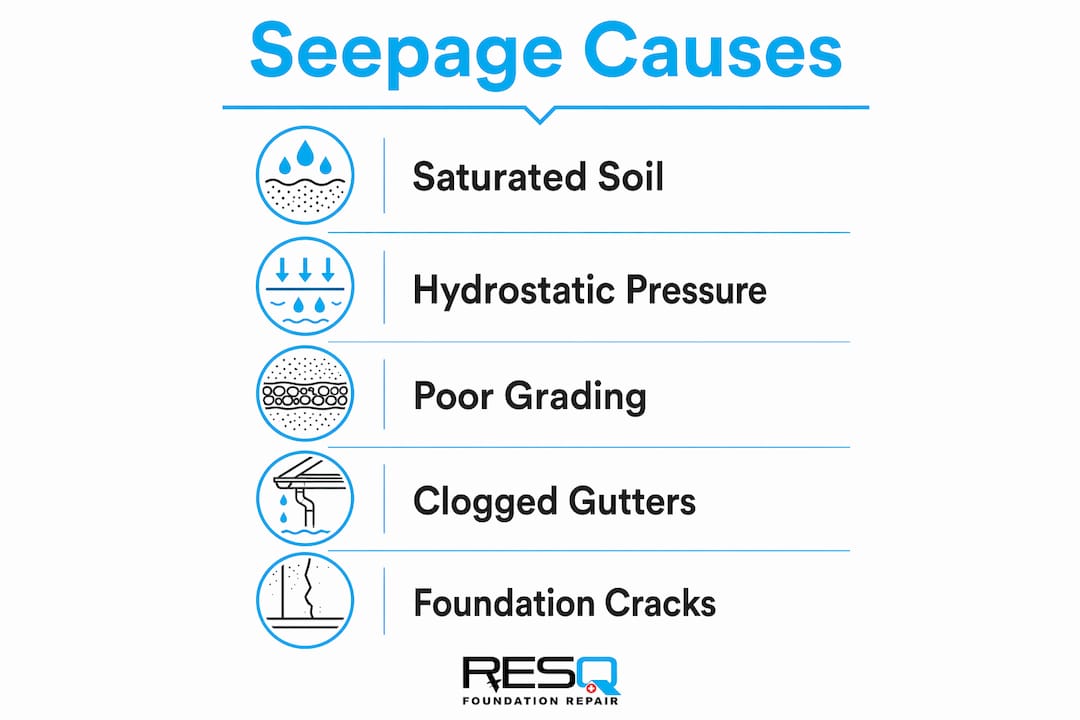
Expansive clay soils swell up to 10% when wet, exerting lateral pressure that bows walls inward and opens new cracks. This cycle repeats every wet season, causing cumulative mechanical stress that worsens over years. Sandy soils drain faster and create less lateral pressure, but they offer little resistance to water movement toward your foundation.
The water table is equally important. When the water table rises above your basement floor level, upward pressure on the slab increases dramatically. Seasonal rainfall, snowmelt, and nearby irrigation all raise the local water table temporarily. Homes in low-lying areas or near bodies of water face this condition regularly.
- Identify your soil type. A local soil survey or county extension office can tell you whether clay-heavy soils surround your home.
- Check your water table history. Your county’s geological survey often publishes seasonal water table data for your area.
- Watch for seasonal patterns. If seepage appears every spring or after heavy rain, a rising water table is likely involved.
- Assess backfill conditions. The soil placed against your foundation during construction is often looser than native soil, which creates a hidden risk.
The “clay bowl effect” is one of the most misunderstood causes of basement moisture problems. When builders backfill around a foundation, they use looser, more porous soil than the native ground. That backfill acts like a sponge, trapping water near the foundation and creating localized high pressure even when the surrounding yard drains well. Your basement can flood from a clay bowl effect even if your neighbor’s yard looks perfectly dry.
How does improper exterior grading and drainage lead to basement seepage?
The slope of the ground around your home controls where surface water goes after rain. When that slope points toward your foundation instead of away from it, every rainstorm delivers water directly to your basement walls.
Proper exterior grading should slope away from the foundation at least 6 inches over 10 feet. Most homes settle over time, and the soil near the foundation compacts and drops, reversing the original slope. Homeowners rarely notice this until water starts appearing inside.
| Drainage problem | Effect on basement | Corrective action |
|---|---|---|
| Soil sloping toward foundation | Directs surface runoff against walls | Regrade with compacted fill soil |
| Downspouts discharging at foundation | Concentrates large water volumes at walls | Extend downspouts at least 6 feet away |
| Clogged gutters | Causes overflow that saturates soil at base | Clean gutters twice yearly |
| Flat or sunken window wells | Pools water against below-grade windows | Install window well covers and drains |
Downspouts are a frequently overlooked cause of basement moisture problems. A single downspout during a moderate rainstorm can discharge hundreds of gallons of water directly against your foundation. Extending downspouts with a flexible elbow and underground drain tile is one of the most cost-effective fixes available. Many basement moisture troubles resolve with surface water management corrections alone, before any interior system is needed.
Pro Tip: After the next heavy rain, walk around your foundation and watch where water pools. Standing water within 3 feet of your walls is a direct indicator of grading failure.
For homes with plumbing near the foundation, proper basement plumbing maintenance also reduces the risk of water accumulation near walls from internal sources.
What are the common entry points for water in basement walls and floors?
Water does not seep through solid, intact concrete uniformly. It finds specific physical vulnerabilities and exploits them under pressure. Knowing where to look helps you diagnose the problem before calling a professional.
- Cove joint: The horizontal seam where the wall meets the floor is rarely a single poured unit. Water under pressure migrates through this joint regularly.
- Hairline cracks in poured concrete: These cracks are not structural failures. They are shrinkage cracks from curing, and interior patching without exterior pressure relief typically fails because water simply finds the next crack.
- Mortar joints in block walls: Concrete block walls have dozens of mortar joints, each a potential seepage point. Water wicks through porous mortar faster than through the blocks themselves.
- Pipe penetrations: Any pipe entering through the wall creates a gap where concrete meets a dissimilar material. These gaps widen as the home settles.
- Window well leaks: Below-grade windows without proper drainage allow water to pool and seep through the frame.
| Entry point | Most common cause | Warning sign |
|---|---|---|
| Cove joint | Hydrostatic upward pressure | Wet line at base of wall |
| Wall cracks | Shrinkage or settling | White mineral deposits (efflorescence) |
| Mortar joints | Porous material and pressure | Damp patches on block walls |
| Pipe penetrations | Settlement gaps | Rust stains around pipe entry |
One distinction that trips up many homeowners is condensation versus seepage. Condensation forms on the interior wall surface when warm, humid air contacts cold concrete. Seepage comes from outside. Misidentifying the source leads to the wrong fix.
How do you diagnose and address basement water seepage correctly?
Correct diagnosis saves you from spending money on the wrong solution. The most common diagnostic mistake is treating condensation as seepage, or patching cracks without addressing the pressure driving water through them.
- Run the plastic tape test. Tape a 12-inch square of plastic sheeting directly to the damp wall and seal all four edges. Wait 24 hours. Moisture behind the plastic confirms seepage; moisture on the inside face of the plastic confirms condensation.
- Inspect after rain, not during dry spells. Seepage often disappears between rain events. Inspect walls within 24 hours of a significant storm.
- Check exterior conditions first. Walk the perimeter and look for grading problems, clogged gutters, and downspouts discharging near the foundation. Fix these before investing in interior systems.
- Get a professional waterproofing evaluation. A qualified inspector can identify pressure points, soil conditions, and structural vulnerabilities that are not visible from inside. Foundationresq offers free inspections for homeowners in the Tallahassee area.
- Understand interior drainage systems. Interior drain tile systems and sump pumps do not stop water from entering. They collect water after it enters and redirect it away. They are a management solution, not a prevention solution. For homes with persistent high water tables, this is often the most practical long-term approach.
- Address exterior waterproofing for severe cases. Exterior waterproofing membranes, drain board, and proper backfill address the source of pressure directly. IRC 2021 foundation codes require comprehensive systems for below-grade living spaces in wet soils, not just paint or coatings.
The interior waterproofing methods guide from Foundationresq covers specific interior options in detail, including drainage channels, wall panels, and vapor barriers.
Key Takeaways
Water seeps through basement walls because hydrostatic pressure forces moisture through cracks, joints, and porous materials, and fixing it requires addressing the external pressure source, not just the interior symptoms.
| Point | Details |
|---|---|
| Hydrostatic pressure is the primary cause | Pressure exceeding 250 PSF at basement depth forces water through any weak point in the foundation. |
| Soil type amplifies the problem | Expansive clay soils swell when wet, exerting lateral pressure that cracks walls and opens new entry points. |
| Grading failures are often correctable | Regrading soil to slope 6 inches away over 10 feet and extending downspouts resolves many seepage cases without interior work. |
| Interior patching alone fails | Sealing cracks from inside without relieving exterior pressure causes water to find the next weak point. |
| Diagnose before you fix | The plastic tape test distinguishes condensation from seepage and prevents costly misdiagnosis. |
What I’ve learned from watching homeowners chase the wrong fix
The most expensive mistake I see homeowners make is patching cracks from the inside and calling it done. It feels logical. You see water coming through a crack, you seal the crack. But that approach ignores the physics entirely.
Hydrostatic pressure does not care about your patch. Water at 250 PSF will find the next crack, the next mortar joint, or the cove joint you did not notice. I have seen homeowners spend money on interior sealants three times over before finally addressing the grading problem that was causing everything.
The other misconception worth addressing is that a dry summer means your basement is fine. Seasonal water tables rise and fall. A basement that stays dry from june through september can flood every march. The pressure conditions that matter most are the ones you never see because they happen underground.
My honest advice: start outside. Walk your perimeter after rain. Look at your downspouts. Check your grading. Fix those things first, because many seepage problems resolve with surface water corrections alone. If water keeps coming after you have addressed the exterior, then you need a professional evaluation. At that point, the cause is either a high water table, a structural crack, or a clay bowl effect that requires engineered drainage. None of those respond to caulk.
— Kayle
Foundationresq can help you stop basement water for good
If you have identified seepage in your basement and exterior fixes have not resolved it, the problem likely involves hydrostatic pressure, soil conditions, or structural vulnerabilities that need professional assessment.

Foundationresq specializes in basement waterproofing services for homeowners dealing with persistent moisture intrusion. The team evaluates your specific soil conditions, grading, and foundation type before recommending a solution. That means you get a fix tailored to your actual problem, not a one-size approach. Foundationresq also offers financing options for repairs so cost does not force you to delay a fix that protects your home’s value and your family’s health. Contact Foundationresq for a free inspection and get a clear picture of what is driving water into your basement.
FAQ
Why does water seep through basement walls after heavy rain?
Heavy rain saturates the soil around your foundation, rapidly increasing hydrostatic pressure against your walls. That pressure forces water through cracks, joints, and porous concrete faster than it can drain away.
Can I fix basement seepage myself?
Simple exterior fixes like regrading soil and extending downspouts are DIY-friendly and resolve many cases. Persistent seepage tied to high water tables, structural cracks, or clay soils requires professional waterproofing systems.
What is the difference between seepage and condensation?
Seepage comes from water pushing through the wall from outside. Condensation forms on the interior surface from humid indoor air. The plastic tape test distinguishes the two: moisture behind the plastic means seepage, moisture on the surface means condensation.
Why do interior crack patches keep failing?
Interior patching without exterior pressure relief fails because the hydrostatic pressure driving water inward remains unchanged. Water simply redirects to the next weak point in the wall.
How do I know if my soil type is causing basement moisture problems?
If your home sits on clay-heavy soil and seepage worsens every wet season, expansive clay is likely involved. A local soil survey or professional foundation inspection can confirm whether clay bowl effect or lateral soil pressure is contributing to your water intrusion.