
Basement water stains are a direct signal of moisture intrusion, and they are one of the most common reasons buyers walk away from a home or demand steep price reductions. The industry term for the underlying problem is “water intrusion,” and it covers everything from minor seepage to chronic foundation leaks. Why basement water stains concern buyers goes far beyond cosmetics. 11.8 million US homes report exterior water leakage annually, and an additional 11.2 million report interior leakage. Those numbers tell you this is not a rare problem. It is a widespread risk that buyers have every reason to take seriously.
Why do basement water stains concern buyers so much?
Basement water stains trigger a specific kind of buyer anxiety that goes well beyond the visible mark on a wall. Even minor stains create “worst-case scenario” thinking among buyers, prompting suspicion of hidden structural defects. That psychological shift is powerful. A buyer who walked in excited about a home can pivot to viewing it as a risky project the moment they spot a brown tide mark along the basement wall.
The financial consequences match the emotional ones. Basement water damage reduces home value by 5% to 30%, depending on severity. On a $700,000 home, that translates to a $70,000 to $175,000 loss. That range is wide because buyers and their agents use stains as negotiation leverage, often demanding repair credits that exceed the actual remediation cost.
The buyer’s perspective on water issues also shifts the entire negotiation dynamic. Sellers lose bargaining power the moment moisture evidence appears. Buyers who stay in the deal typically push for:
- Price reductions tied to worst-case repair estimates
- Repair contingencies requiring professional remediation before closing
- Escrow holdbacks until a licensed inspector confirms the fix
- Full disclosure of any prior water events or drainage work
Buyers seeing water damage recalibrate emotionally from “dream home” to “project property.” That psychological shift can outweigh the actual repair cost in negotiations, which is why water stains and property value are so tightly linked.
What do water stains reveal about structural health?
Home inspectors treat a basement water stain as the beginning of an investigation, not the end of one. Inspectors caution buyers not to treat stains as isolated cosmetic issues but as potential systemic problems requiring drainage, foundation, and moisture source assessment. A stain is a symptom. The disease could be a cracked foundation wall, failed exterior waterproofing, or a drainage system that no longer functions.
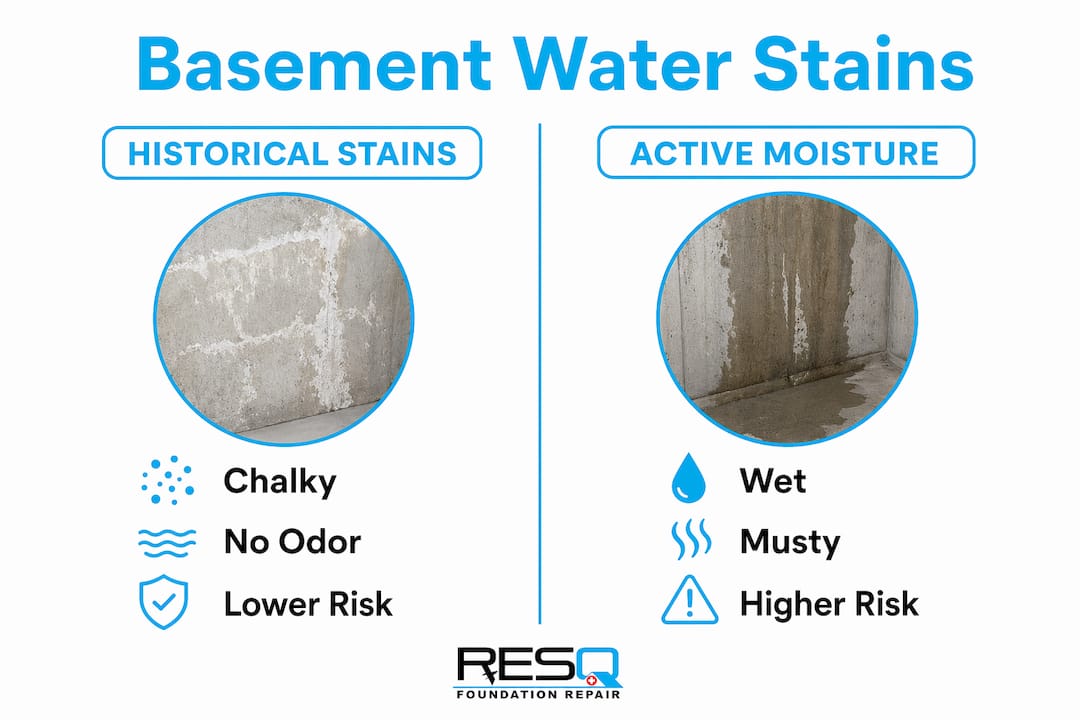
The first distinction inspectors make is between historical and active moisture. A dry, chalky stain with no musty odor may indicate a one-time event that has since resolved. Active dampness, soft drywall, or a musty smell points to ongoing intrusion. Professional remediation for active issues typically costs $8,000 to $15,000, which becomes a hard number in any price negotiation.
| Stain Type | Characteristics | Buyer Risk Level |
|---|---|---|
| Historical dry stain | Chalky, no odor, no soft surfaces | Lower, but needs verification |
| Active moisture stain | Damp to touch, musty smell, soft drywall | High, requires specialist evaluation |
| Patterned wall seam stain | Follows gravity and mortar lines | High, indicates recurring infiltration |
| Widespread floor staining | Large area, possible efflorescence | High, suggests drainage failure |
Water stains along wall seams and baseboards indicate active, repetitive moisture infiltration rather than a single flooding event. That pattern reveals chronic drainage failure, which is a structural concern, not a cleanup task. Understanding why water seeps through basement walls helps buyers ask the right questions during inspection.
Persistent basement moisture threatens structural integrity and indoor air quality by supporting mold growth. Mold degrades wood framing and drywall over time, turning a moisture problem into a structural one. The health risks from mold in damp spaces are well documented and add another layer of concern for buyers with children or respiratory conditions.
Pro Tip: Ask the seller for any moisture meter readings or past inspection reports. A seller who has documented and resolved a prior leak is in a far stronger position than one who cannot explain the stain’s origin.
How should buyers handle water stains during the home sale process?
Buyers who spot moisture evidence need a clear process before they make any decisions. Skipping steps leads to either overpaying for a damaged property or walking away from a fixable problem.
- Get a specialist evaluation before closing. A general home inspector flags the stain. A waterproofing or foundation specialist diagnoses the cause. These are different professionals with different tools. Buyers should hire both.
- Request full disclosure documentation. Ask the seller to provide any records of past water events, drainage work, or waterproofing installations. Gaps in documentation are themselves a red flag.
- Understand what a plumber’s role in water damage assessment involves. Some moisture sources are plumbing failures, not foundation failures. A plumber can rule out or confirm internal pipe leaks as the stain’s source.
- Negotiate with repair cost data, not fear. Use the specialist’s written estimate to request a price reduction or repair credit. Vague demands based on appearance rarely succeed. A $10,000 remediation quote is a concrete negotiation tool.
- Decide if the stain is a dealbreaker or a manageable risk. Active foundation cracks with ongoing water intrusion in a high-water-table area may justify walking away. A single historical stain with documented repair and a dry inspection is a manageable risk worth pricing in.
Recurring basement water problems often have identifiable causes that specialists can address permanently. Buyers who invest in that diagnosis before closing protect themselves from inheriting a problem the seller never solved.
What misconceptions do buyers have about basement water damage?
The biggest misconception buyers carry is that a clean-looking basement is a dry basement. Fresh paint on basement walls is one of the most common concealment tactics inspectors encounter. Freshly painted basement walls may conceal moisture problems, reducing buyer trust when the truth surfaces after closing. Paint masks stains. It does not fix water intrusion.
A second misconception involves sump pumps. Many buyers see a sump pump and feel reassured. The opposite reaction is more appropriate when documentation is absent. A sump pump without documentation is a red flag for concealed ongoing moisture problems. A recently installed pump with no service history may indicate a last-minute seller attempt to manage a chronic issue before listing.
Buyers also underestimate what stain patterns reveal. A single stain near a window well suggests a different problem than a horizontal line running the full perimeter of the basement wall. The pattern maps the moisture pathway. Buyers who learn to read those patterns make better decisions.
- Isolated stain near a window or pipe: Likely a localized source, often fixable
- Horizontal stain at the same height on multiple walls: Suggests hydrostatic pressure from soil saturation
- Vertical stains following wall seams: Points to foundation crack or mortar joint failure
- White powdery deposits (efflorescence): Confirms water has moved through the concrete repeatedly
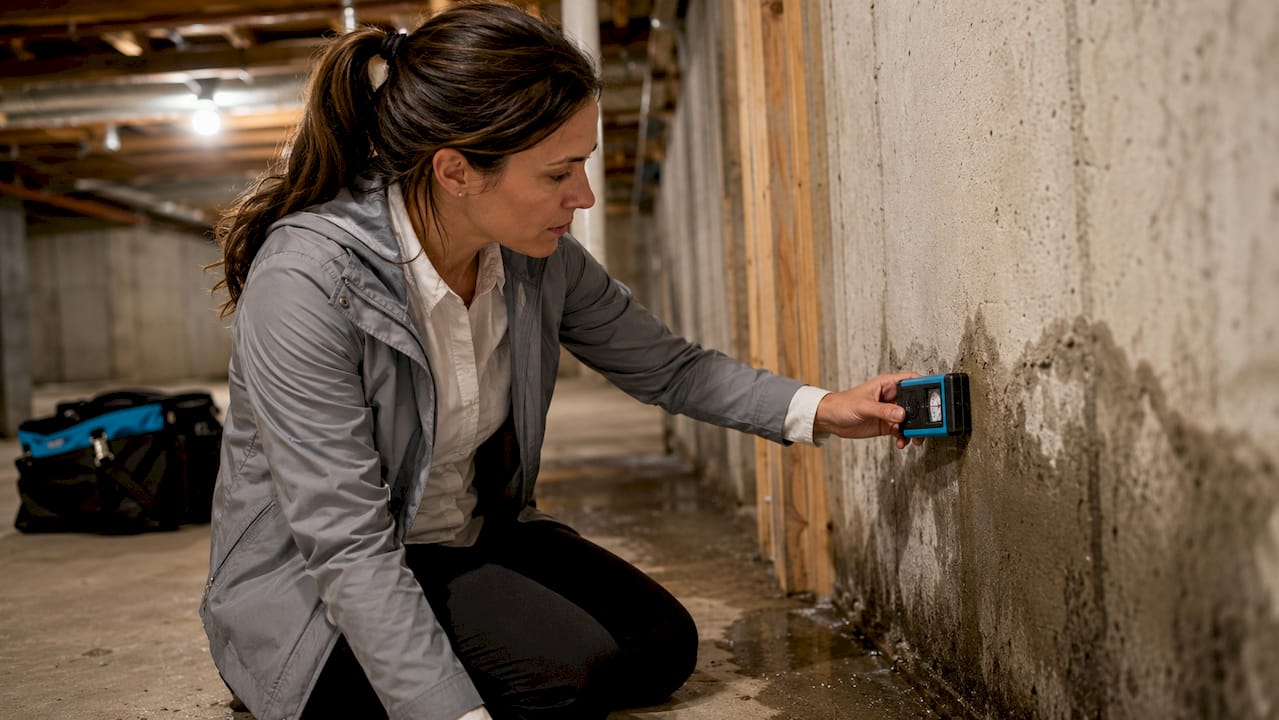
Pro Tip: Bring a flashlight and a moisture meter to every basement walkthrough. A dry-looking stain that reads wet on a meter is active moisture, regardless of how old the discoloration looks.
The significance of basement leaks is often dismissed as a cleanup issue. It is a structural threat with a long tail. Basement moisture is a structural threat with prolonged risks including mold that impacts both health and durability. Buyers who treat it as cosmetic pay for that mistake after closing.
Key Takeaways
Basement water stains are a structural and financial warning sign that buyers must evaluate with specialist help, documented repair history, and clear negotiation strategy before closing.
| Point | Details |
|---|---|
| Value impact is significant | Water damage can reduce home value by 5% to 30%, creating real dollar losses in negotiation. |
| Stain type determines risk | Active, patterned stains signal chronic drainage failure; dry historical stains carry lower but still real risk. |
| Fresh paint is a warning sign | Painted-over stains often hide unresolved water intrusion that surfaces after closing. |
| Specialist evaluation is non-negotiable | A general inspector flags stains; a waterproofing specialist diagnoses the cause and cost. |
| Documentation protects buyers | Sellers with documented repairs hold stronger positions; gaps in records are red flags. |
What I’ve learned from watching buyers react to basement stains
Buyers consistently underreact or overreact to basement water stains, and both responses cost them money. I’ve watched buyers dismiss a stain with “we’ll paint over it” and then spend $12,000 on remediation six months after closing. I’ve also watched buyers walk away from a home with a single documented, resolved leak that was priced $40,000 below market because they couldn’t get past the visual.
The buyers who make the best decisions are the ones who treat the stain as a question, not an answer. They hire a specialist, get a written estimate, and use that number to negotiate. They don’t let fear or optimism drive the decision. They let data drive it.
My honest advice: never skip the specialist evaluation, even if the general inspector says the stain looks old. “Looks old” is not a diagnosis. And if a seller can’t produce any documentation about a stain’s origin or repair, that absence tells you something important about how the home has been managed.
The buyers I’ve seen get burned are the ones who trusted a coat of paint and a seller’s verbal assurance. The ones who came out ahead hired the right professionals, asked hard questions, and negotiated from a position of knowledge.
— Kayle
Foundationresq can help you evaluate and fix basement water issues
Basement water stains don’t have to end a deal or drain your budget after closing. Foundationresq specializes in basement waterproofing services, foundation repair, and mold remediation for homeowners and buyers in the Tallahassee area. A professional assessment from Foundationresq gives you a clear picture of what a stain actually means and what it will cost to fix permanently.

Whether you’re a buyer who needs answers before closing or a seller who wants to address moisture issues before listing, Foundationresq’s full range of home services covers every step from diagnosis to repair. Financing options are available for qualified homeowners, so cost doesn’t have to be the reason a problem goes unresolved. Contact Foundationresq for a free inspection and get the documentation you need to make a confident decision.
FAQ
How much can water stains reduce a home’s sale price?
Basement water damage reduces home value by 5% to 30% depending on severity. On a $700,000 home, that equals a $70,000 to $175,000 reduction.
Are all basement water stains a dealbreaker for buyers?
Not all stains are dealbreakers. Historical dry stains with documented repairs carry lower risk. Active moisture with no repair history is a much stronger reason to walk away or negotiate aggressively.
What does a patterned basement stain mean?
Stains that follow wall seams, baseboards, or appear at a consistent height around the perimeter indicate recurring moisture infiltration, not a one-time event. This pattern points to chronic drainage or foundation failure.
Should buyers be concerned about a sump pump in the basement?
A sump pump without service records or documentation is a red flag. It may signal that the seller installed it recently to manage an ongoing moisture problem before listing the home.
How much does professional basement waterproofing remediation cost?
Professional remediation for active basement moisture issues typically costs $8,000 to $15,000. Buyers use this figure as a concrete basis for price reduction or repair credit negotiations.