
A quick patch can hide a crack without stopping the movement behind it. The main DIY foundation crack repair risks include a failed seal, trapped moisture, and damage from overlooking the cause. Have a foundation specialist assess cracks wider than 1/8 inch or cracks that keep spreading.
A repair kit can seem like a practical fix for a small crack, especially when the visible damage looks straightforward. But appearance and width alone don’t show whether the foundation is moving or water is getting in.
This guide explains the risks of DIY foundation crack repair, how to recognize signs that a crack may be structural, and where repair kits fall short. You’ll learn which warning signs deserve closer assessment, so you can address the cause rather than simply cover the crack.
Key Takeaways
- Learn which changes in a crack’s width, direction, or pattern may point to movement that needs attention.
- Understand how settlement, water pressure, and drainage conditions can contribute to foundation cracks.
- See why a repair kit may seal the visible surface without resolving the cause or reaching hidden cavities.
- Recognize how improper repair work can create structural and personal safety hazards.
- Find out when foundation repair or structural stabilization can address concerns beyond the crack itself.
What Happens When You Try DIY Foundation Crack Repair?
A surface patch may hide a crack without addressing its cause. Before attempting a repair, decide whether the crack needs professional assessment.
Warning Signs Requiring Professional Inspection
Warning signs include particular crack patterns or nearby changes that may indicate foundation movement or water intrusion. A patch cannot correct shifting soil, pressure, or an unstable foundation.
Call a foundation repair specialist for cracks wider than 1/8 inch or cracks that continue spreading. Wider than 1/4 inch is another threshold that warrants professional inspection. Horizontal, stair-step, deep, or widening cracks also deserve attention, especially alongside sticking doors, uneven floors, or new wall cracks.
Look for a crack that returns after patching, water stains, damp spots, visible mold, or a musty odor. These signs can indicate a leak or a problem beyond the visible surface. A licensed foundation professional can assess the crack’s severity and cause, check for other cracks, and determine whether repairs are warranted before work begins.
Repair Costs and Cleanup
DIY repair costs can include the kit and additional materials or repairs if the attempt fails.
A failed seal can let water in later, and an ineffective repair may leave damage that needs professional cleanup and further work. For example, caulk can hide a crack without stopping movement or water pressure. Removing the patch and repairing resulting damage can add work that a surface fix never addressed.
Before buying injection materials, consider what the crack is doing. If it is spreading, leaking, or accompanied by uneven floors, an assessment can help define the work needed. The cause, crack pattern, moisture, and related damage all affect the repair.
Permits, Codes, and Repair Materials
Permit and code requirements depend on local rules and the scope of work. In Tallahassee, check with the local building department before work that may involve structural changes, since requirements vary by jurisdiction. A foundation professional can help determine whether repairs are needed and suggest an appropriate approach.
DIY kits may contain epoxy or polyurethane, injection ports, and surface sealant. Preparation may also require hand tools to clean and shape the crack, along with protective equipment. Materials vary by method and crack conditions; a kit cannot assess soil pressure or foundation movement.
Injection is more than filling a visible gap. Large cavities behind a crack can create several paths for leaks, while moisture or continued movement can undermine a repair. If the crack’s condition is unclear, have it assessed before applying materials, so a surface fix doesn’t conceal a larger concern.
Are Foundation Cracks Cosmetic or Structural?
A crack’s direction, changes over time, and effects on nearby surfaces can help distinguish surface damage from movement. No single appearance proves the cause, so compare the crack with changes elsewhere in the home.
Cosmetic and Structural Cracks
Cosmetic cracks affect the concrete surface without clear signs of foundation movement. Structural cracks can reflect pressure, shifting, or uneven settling. The distinction matters: waterproofing the surface won’t stabilize a moving foundation.
Vertical cracks can form as concrete cures or during normal settlement, but they may still let water in. Horizontal cracks can indicate more serious soil or water pressure; diagonal cracks may point to shifting soil or uneven settling. Take dated photos and note whether the crack widens or appears with new damage.
Insurance coverage, resale reviews, and structural warranty terms depend on different documents and circumstances. Keep dated photos, repair receipts, and written warranty terms together. A patch alone doesn’t show that an underlying structural problem has been resolved.
Structural Movement and Home Safety
Ongoing structural movement means forces continue to shift or press against the foundation after a crack appears. Patching the visible line cannot stop soil pressure, water effects, or seasonal movement.
Foundation problems can make doors and windows stick, crack interior walls or ceilings, and leave floors uneven. For example, a repaired crack that widens again while a door starts sticking may signal changes beyond the visible line. Foundation cracks don’t close on their own, and many widen with seasonal movement.
Improper repairs can add risk: a poorly stabilized foundation may settle unevenly, causing more cracks or damage. In severe cases, improper foundation repairs have been associated with house collapse. This is not the expected outcome of every failed patch, but it underscores why structural repair quality matters beyond appearance.
Assess the whole structure, not just one line in the concrete. A horizontal crack paired with a bowing wall, or a diagonal crack with uneven floors, suggests a different concern from an isolated surface mark. These combinations warrant attention to movement and its cause, not just cosmetic filling or waterproofing. This comprehensive evaluation is especially critical before planning major renovations; for example, builders executing home additions Medford NJ must verify the structural integrity of existing footings and foundations before building upward or outward.
When a crack changes pattern or appears alongside movement elsewhere, document it and don’t treat a surface repair as proof of stability. A structural assessment considers the crack, nearby damage, and signs of continued movement together. This broader view helps distinguish concrete shrinkage from a condition that needs structural repair.
What Problems Can Foundation Cracks Cause?
For a small, dry crack confirmed as nonstructural, remove loose debris and use a compatible filler according to its instructions. For injection, ports are spaced 6-8 inches apart; moisture and ongoing movement can undermine epoxy, so the crack’s condition matters before choosing this method.
Cracks have different causes, and the cause determines the repair. Settlement can happen when soil beneath a foundation shifts or compacts. Hydrostatic pressure builds as groundwater presses against basement walls. Poor drainage can leave water pooled near the foundation, while seasonal changes and water-saturated or clay-rich soils can add stress. Concrete shrinkage during curing and freeze-thaw damage are other possible causes.
A crack’s pattern offers clues, but doesn’t establish a diagnosis. Vertical cracks may relate to shrinkage or settlement; horizontal cracks can reflect soil pressure or water damage; and diagonal cracks may accompany soil movement and uneven settling. A crack alongside a bowing wall, damp basement, or newly uneven floor raises a different concern from an isolated surface line. Proper assessment considers both the pattern and surrounding conditions.
Water intrusion is one direct consequence. During heavy rain, water can seep through a foundation crack, leaving damp spots, stains, or pooling in a basement. Continued moisture can contribute to mold and mildew, musty odors, rotting wood framing, and damp insulation. Cracks may also let radon gas enter, so the effect can extend beyond the concrete’s appearance.
The repair method needs to suit both the crack and its cause. Filling a leak may close the opening, but it won’t correct soil pressure or settlement that keeps moving the foundation. If the cause remains, the crack may reopen or water may find another path. Assessing structural integrity and soil conditions helps identify an approach that addresses the underlying problem.
For a small crack, preparation and repair materials depend on the selected method. Some repair guidance recommends opening cracks less than 1/4 inch into a small V-shape and clearing debris with an air compressor. Injection methods use ports spaced 6-8 inches apart; spraying the crack with water after installing ports can help plug adhesion. These steps don’t establish that a crack is nonstructural.
Hydraulic mortar sets in 1-2 minutes, leaving little time to correct a poorly prepared application. Don’t treat that quick set as evidence of a complete repair. If the crack is leaking, widening, or linked to shifting walls, the priority is identifying the pressure, drainage, or settlement issue affecting the foundation’s integrity.
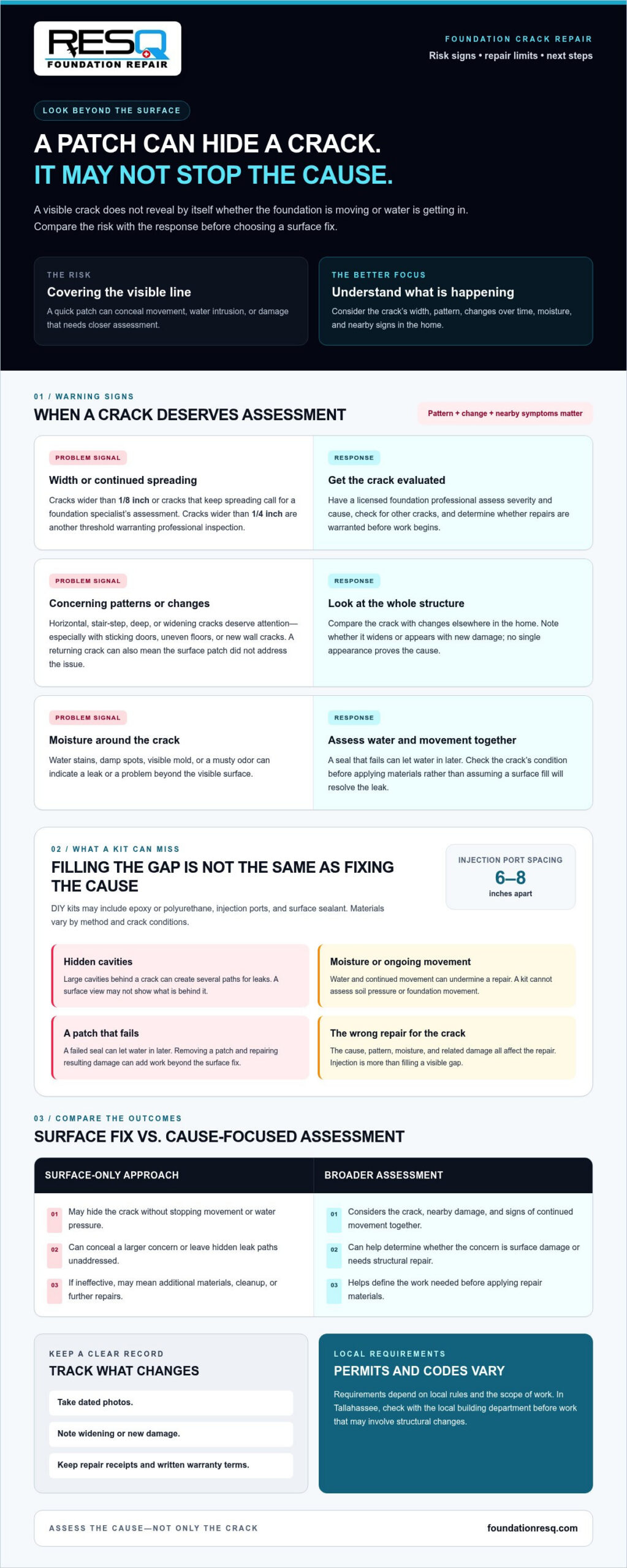
Limitations of DIY crack repair kits
Repair kits can seal visible cracks, but they’re intended for minor surface-level problems. Their limits matter when a crack points to movement, moisture, or a hidden cavity.
Limits of Epoxy and Polyurethane Kits
Epoxy and polyurethane have different uses, so the right choice depends on the crack’s condition. Epoxy is used for structural cracks, while urethane is a flexible waterproofing material. Neither material identifies why the foundation cracked or whether it is still shifting.
DIY kits can fall short when a crack extends into a large cavity behind the wall. That hidden space can create multiple paths for water, beyond the surface opening the kit reaches. For larger cracks, a contractor may use 2-3 times the material included in a DIY kit. A small kit quantity can leave parts of a deep crack untreated.
Injection also requires suitable conditions. Epoxy injected into a crack that is still moving or exposed to moisture can trap water in the foundation. The surface may look sealed while moisture remains behind it. Cured resin alone can’t show whether movement continues; changes to the crack and surrounding wall matter.
Professional repair methods use different equipment and materials. Foundation repair professionals use high-pressure injection systems and industry-grade resins. These support repairs that reach beyond a thin surface layer, but the underlying cause still needs attention for the repair to work as intended.
A kit label describes its intended use, not the condition of every foundation. If a crack is wide, deep, leaking, or changing, a surface-level product may not suit the problem. The important question is whether the repair addresses the full crack and its underlying cause, not just the visible concrete.
Repair Longevity and Warranties
How long a DIY repair lasts depends on whether it seals the crack and whether the cause continues. A stable, minor surface crack is different from one affected by shifting or moisture. There is no single lifespan for every kit repair; the crack’s condition, preparation, material, and continued movement all matter.
Caulk patches have a clear limitation: they can hide a crack without addressing its cause. A neat bead over a moving crack, for instance, may conceal changes until the line reappears or water finds an opening. A patch doesn’t prove the foundation has stabilized or moisture has stopped reaching the wall.
Kit instructions and warranty terms are separate from a warranty on the foundation itself. Read the product’s stated coverage and exclusions before applying it, and keep the packaging and receipt. A kit warranty doesn’t show that the underlying foundation problem is resolved or cover damage from continued movement.
When comparing repair options, focus on what each material is meant to do. Epoxy bonds a crack, while flexible urethane is used for waterproofing. Neither replaces addressing shifting soil, pressure, or other causes. Matching the method to the crack helps avoid mistaking a sealed surface for a lasting repair.
Risks of DIY foundation crack repair
A repair kit can be tempting when a crack looks like a simple surface problem. The risk is treating the visible line without identifying the foundation issue behind it. A patch may conceal movement, water intrusion, or a cavity while the cause continues to affect the structure, making later repairs more involved.
A large cavity behind a crack is one common failure point. A kit may seal the surface but leave hidden spaces where water can travel along multiple paths. For example, a patch that stops a visible drip may not keep water from entering farther along the wall. If drainage or soil pressure remains unchanged, the underlying problem can persist.
Material choice and crack conditions matter, too. Epoxy injected into a crack that is still moving or exposed to moisture can trap water in the foundation. A rigid patch may also fail as movement continues. Repair kits address a particular opening; they don’t determine whether settlement, pressure, or another cause needs attention.
Improper stabilization creates more serious structural risks. Trying to support a foundation without suitable knowledge or equipment can contribute to uneven settling, new cracks, or collapse. Poorly performed work can also cause supports or beams to buckle, or floors and ceilings to cave in. These outcomes aren’t inevitable, but they show why structural work needs careful assessment before it begins.
The work can expose homeowners to hazards beyond the crack. Breaking or drilling concrete may create dust, and repair materials can produce fumes. Working near a damaged wall can also pose fall or crush risks. Hidden wires or water damage may create electrical hazards, including electrocution if wiring is exposed or water reaches electrical equipment.
Before acting, consider whether the crack is changing, whether water is entering, and whether nearby floors or walls have shifted. These observations help describe the problem but don’t establish its cause. A surface patch that hides evidence can make a later assessment harder. Photograph the crack and note where moisture or damage appears.
The clearest takeaway: repair kits can seal a crack, but they can’t correct every cause or safely stabilize every foundation. If movement, water entry, or structural damage accompanies the crack, arrange a professional assessment before attempting a repair. Request an assessment for foundation repair when the problem calls for a closer look.
Foundation ResQ: Foundation repair
Foundation ResQ repairs foundations for homeowners facing cracks, shifting, or signs of structural movement in Tallahassee. A professional assessment can connect visible damage with its likely cause and help identify an appropriate repair approach.
When a foundation needs added support, Foundation ResQ offers Helical Pier Installation and Push Pier Installation. If water intrusion has led to mold concerns, Mold Remediation Services address that related issue. The appropriate service depends on the conditions affecting the home, not just the appearance of one crack.
If a crack is spreading, returning after patching, or accompanied by uneven floors or moisture, contact Foundation ResQ for a free foundation inspection in Tallahassee.
Choose a Next Step That Protects Your Home
A useful next step is to create a clear record. Note where the crack appears, photograph any changes, and track nearby signs such as moisture or doors that no longer close smoothly. These details can help you have a more informed discussion about what the foundation needs.
DIY foundation crack repair risks are easier to weigh when you focus on the cause, not just the visible line. If you’re unsure whether a patch is appropriate, a professional assessment can help clarify the foundation’s condition and repair options. Foundation ResQ offers foundation repair, Helical Pier Installation, and Mold Remediation Services for structural and moisture-related concerns in Tallahassee.
Take the next step at a pace that feels right for your home. Contact Foundation ResQ for help, and move forward with a clearer path toward protecting your home.
Frequently Asked Questions
Can small cracks cause serious damage?
Yes. Even a small opening can let water in or signal movement below the surface. For example, a hairline crack that becomes damp after heavy rain may create conditions for mold or damage nearby materials. Width alone doesn’t establish the cause. Note whether moisture appears, the crack changes, or related changes develop elsewhere in the home.
Is epoxy or urethane better for foundation cracks?
Neither material is universally better; each serves a different purpose. Epoxy is used for structural cracks, while urethane is a flexible waterproofing material. Choosing based only on a product label can miss the key issue: whether the crack is moving or letting water through. Consider the crack’s condition and the intended repair before selecting a material.
What Should You Do If You See Cracks?
Document the crack before making changes. Take a clear photo, note its location, and record the date so you can compare it later. Check nearby rooms for related changes, such as a sticking door or new wall crack. If the crack spreads, leaks, or appears alongside shifting, arrange an inspection before covering it with filler or paint.
Why Professional Repair Makes All the Difference?
Professional repair connects the visible crack with the conditions affecting the foundation. A recurring leak, for example, may involve more than the opening itself, while a shifting wall calls for attention to structural stability. A specialist can assess the crack, nearby surfaces, and signs of movement, then recommend an approach suited to those conditions rather than relying on a surface patch.
You might be able to do this, but do you want to?
Decide based on the work involved, not just whether a kit looks simple. Preparing concrete, handling injection materials, and working near damp walls or electrical equipment can add practical risks. A minor cosmetic patch differs from stabilizing a moving foundation. If you can’t confidently identify the cause or work safely, stop before applying materials and seek an assessment.
Which foundation cracks are safe to repair DIY and which need a structural engineer?
Appearance alone can’t establish that a crack is safe for DIY repair. A small, stable surface crack with no water entry or related movement may suit a compatible patch. Spreading, horizontal, stair-step, or deep cracks, especially alongside bowing walls or uneven floors, need professional assessment. A structural engineer can evaluate suspected structural concerns; a patch is not proof of stability.
What are the risks of DIY epoxy or polyurethane foundation crack injection?
Injection can fail if the material doesn’t reach hidden cavities or the crack is still moving. Epoxy applied to a moving or wet crack can trap moisture inside the foundation. Poor preparation or uneven application may also leave paths for water. These are key DIY foundation crack repair risks: a sealed surface can conceal ongoing movement or moisture rather than resolve it.
How much does DIY foundation crack repair cost versus professional repair?
Professional repair pricing depends on the case and is provided after a quote request; relevant factors include the crack’s size, cause, location, access, and related damage. A kit’s purchase price doesn’t show whether it suits the crack or includes everything needed. Compare the repair scope, not just the initial material cost.