
Keep basement relative humidity ideally between 30% and 50%, and never let it sit above 60% for long, according to EPA guidance. The moment you notice a musty smell or damp walls, grab a hygrometer, start a dehumidifier, and pull out any wet materials within 24 to 48 hours. If mold already covers more than about 10 square feet or water keeps seeping in, it’s time to call a professional.
TL;DR:
- Place hygrometers near exterior walls, room center, and floor, then record morning and evening readings for one or two weeks to expose patterns.
- After sealing foil to a wall for 24 hours, moisture beneath it points to seepage, while moisture on its room side suggests condensation.
- Grade soil away from the home at least 5% over the first 5 feet, and extend downspouts to move water away from the foundation.
- Match a dehumidifier’s capacity to basement square footage and moisture load; undersized units may run constantly without lowering humidity enough.
- Treat crawl space water intrusion before encapsulation, because sealing over an active leak can trap moisture; then add a vapor barrier and dedicated dehumidifier.
Table of Contents
- How to diagnose basement humidity accurately
- Why basements get humid in the first place
- What to do right now to bring humidity down
- Long-term fixes that stop water at the source
- Choosing the right dehumidifier and running it properly
- A simple schedule to keep humidity in check
- When to schedule a professional inspection
- How we approach diagnosis and source-first remediation
- How basement humidity affects your foundation over time
- Mold types linked to basement humidity and health concerns
- How crawl space moisture drives basement humidity
- Local climate considerations for Tallahassee basements
- A practitioner’s take on fixing basement humidity
- How we can help with a free inspection
- FAQ
- Sources
How to diagnose basement humidity accurately
A single reading from one spot tells you almost nothing. Place hygrometers near exterior walls, in the middle of the room, and close to the floor, since cold surfaces and low areas trap more moisture than the rest of the space. Log the numbers morning and night for a week or two so you can spot patterns tied to weather, laundry days, or furnace cycles.
Visual and physical signs matter as much as the numbers on the dial:
- Condensation beading on pipes, windows, or concrete walls
- Musty odor that lingers even after cleaning
- Efflorescence (white, chalky mineral deposits) on block or brick
- Peeling paint, rust on metal fixtures, or damp carpet and baseboards
Step outside and check the usual culprits: clogged gutters, downspouts that dump water right next to the foundation, soil that slopes toward the house instead of away from it, and sump pits with debris or a failing lid. A simple tape test (sealing a square of foil or plastic to a wall and checking for moisture underneath after 24 hours) helps you tell whether water is coming from inside the slab or condensing from humid air. Watching what happens after a heavy rain often reveals active seepage that a hygrometer alone won’t catch.
Why basements get humid in the first place
Basement humidity comes from several directions at once, and figuring out which one dominates determines whether a dehumidifier will actually solve your problem. Common sources include:
- Groundwater and soil moisture pressing against foundation walls
- Surface water from poor grading, clogged gutters, or downspouts discharging too close to the house
- Plumbing leaks, including slow drips around sump pumps or water heaters
- Everyday indoor activities: showers, cooking, laundry, and even houseplants
- Humid outdoor air pulled in through open windows or ventilation
Water and vapor travel through a basement in more than one way. Liquid water seeps through cracks and joints, capillary action pulls moisture up through porous concrete, and vapor diffuses straight through masonry walls. Add in the stack effect (warm air rising and pulling in air from lower levels) and you get constant air exchange that keeps feeding the problem.
Basement RH often tracks outdoor humidity with a lag of several hours, since masonry absorbs and releases moisture slowly, and research on basement air moisture found a strong correlation between the two. That lag is also why a dehumidifier alone sometimes disappoints: it pulls moisture from the air, but moisture already stored inside concrete block or a slab keeps releasing into the room long after you’ve run the machine for hours.
What to do right now to bring humidity down
Once you’ve confirmed a humidity problem, speed matters more than precision. Work through these steps in order:
- Run a dehumidifier sized for your basement’s square footage continuously, not just when you remember to turn it on.
- Route the condensate to a floor drain or pump rather than relying on a bucket you might forget to empty.
- Add box fans and open interior doors to keep air moving, and run bathroom or kitchen exhaust fans so they vent outside rather than into the basement.
- Remove wet carpet, cardboard, and other porous materials within the 24 to 48 hour window the CDC recommends preventing mold from taking hold.
- Extend downspouts away from the foundation and pile soil temporarily against obvious low spots until a permanent grading fix is possible.
- Seal visible cracks with hydraulic cement as a stopgap, understanding this buys time rather than solving a structural issue.
For small mold patches, clean hard, nonporous surfaces with a mild detergent or a bleach solution of no more than one cup per gallon of water, and throw out anything porous that stayed wet for more than two days, following the EPA’s cleaning guidance. Our guide to stopping musty odors within 24 to 48 hours walks through the same urgency in more detail.
Pro Tip: Keep a spare box fan in the basement year-round. Grabbing one after a storm, when hardware stores sell out fast, is harder than you’d think.
Long-term fixes that stop water at the source
Mechanical drying buys time, but lasting relief comes from keeping water out in the first place. Exterior work is almost always the first line of defense:
- Clean gutters regularly and extend downspouts so discharge lands well away from the foundation
- Grade soil at a minimum slope of 5% over the first 5 feet away from the house
- Consider excavation and new exterior perimeter drains for chronic, high-volume seepage
- Check window wells for proper covers and drainage
Interior systems pick up where exterior fixes leave off. A perimeter drain tied to a sump pump with a sealed lid handles water that still makes it past the foundation wall, while vapor barriers or full encapsulation in a crawlspace stop ground moisture from migrating upward. Interior footer drains along the base of foundation walls catch seepage before it spreads across the floor.
For masonry that stores moisture even after the air has dried out, block-wall ventilation or active soil depressurization (ASD) and block-wall depressurization (BWD) systems can help. An EPA exploratory study found these systems reduced moisture in block walls in some homes, though effectiveness varies by season and house characteristics, and tends to perform better outside peak summer months.
Persistent seepage, high groundwater, bowing or cracked foundation walls, or a sump pump that can’t keep up are all signs that the problem has moved past what equipment can manage. At that point, waterproofing or structural remediation addresses the actual entry points rather than treating symptoms. Our breakdown of why basement seepage becomes a major issue covers how small leaks escalate if left alone, and our basement waterproofing services page details interior and exterior options side by side.
Choosing the right dehumidifier and running it properly
Portable units work well for finished basements with moderate humidity, while whole-house dehumidifiers integrated with your HVAC system make more sense in consistently humid climates or larger unfinished spaces. A DOE Building America case study found a properly sized whole-house system kept indoor RH below 60% for nearly the entire monitoring period, while also improving comfort.
Sizing mistakes are common. A unit rated for a small bedroom won’t keep up with an 800 square foot basement, and undersized dehumidifiers run constantly without ever catching up. When shopping, match capacity to square footage and expected moisture load rather than buying whatever is on sale.
Condensate drainage deserves attention most homeowners skip:
- A gravity drain to a floor drain is the simplest, lowest-maintenance option
- A condensate pump works where gravity drainage isn’t possible, routing water to a sink or exterior discharge
- An overflow pan with a float switch adds a safeguard against pump failure or a clogged line
Clean coils and filters on a regular schedule, since dust buildup reduces efficiency and shortens equipment life. Expect heavier runtime during humid months and lighter use in drier seasons. Our basement dehumidification page covers installation options for homeowners who want a permanent, low-maintenance setup.
A simple schedule to keep humidity in check
Prevention beats repeated cleanup, and it takes only a few minutes a week:
- Weekly: Log hygrometer readings, check the dehumidifier reservoir or drain line, and glance around for new stains or musty smells.
- Monthly: Test the sump pump and battery backup, clear gutters and downspouts, and inspect window wells and seals for gaps.
- Seasonally: Regrade topsoil after heavy winter or spring rains disturb it, and reassess any new landscaping that might redirect water toward the foundation.
Pro Tip: Jot weather events next to your humidity log. A spike that follows a storm points to intrusion, while a slow creep during a heat wave usually points to outdoor air.
When to schedule a professional inspection
Call in a professional when drying hasn’t worked within the 24 to 48 hour window CDC recommends, or when mold has spread past roughly 10 square feet. Other red flags include:
- Water returning after every rain despite your best drying efforts
- Walls that bulge, crack, or show signs of settling
- A sump pump that fails repeatedly even after maintenance
- A sewer-like smell that cleaning doesn’t resolve
A trade-level inspection typically includes hygrometer mapping across multiple rooms, a check of the crawlspace or under-slab conditions, an evaluation of both interior and exterior drainage, and a written scope of recommended repairs. Our article on what the mold remediation process involves explains what to expect once a professional gets involved.
How we approach diagnosis and source-first remediation
We operate as a specialized home services company based in Tallahassee, FL, focusing on foundation repair, crawl space remediation, concrete leveling, basement waterproofing, and mold removal. Our basement waterproofing services page documents how we pair drainage work with crawl space dehumidification, because treating the air without closing off the water source rarely holds up for long. That source-first sequence—stop the water, then manage the air—shapes how inspections are approached.
How basement humidity affects your foundation over time
Persistent moisture does more than make a basement uncomfortable. Water that repeatedly saturates soil around a foundation increases hydrostatic pressure against basement walls, and over years that pressure can push walls inward or create horizontal cracking. Concrete and block absorb water through capillary action, and repeated wet-dry cycles weaken the material gradually, leaving it more prone to spalling and crumbling at the surface.
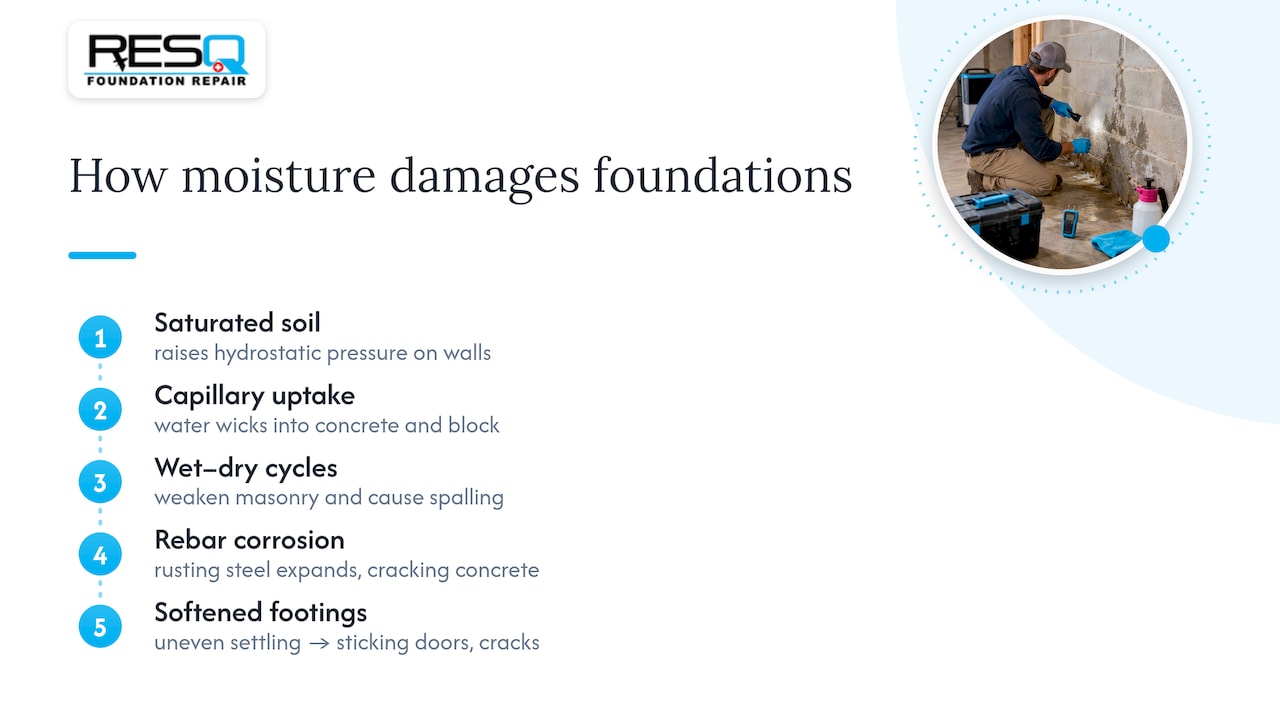
In colder climates, trapped moisture that freezes and expands inside masonry accelerates cracking, though this matters less in warmer regions where freeze-thaw cycles are rare. Steel reinforcement embedded in concrete corrodes when exposed to consistent moisture, and that corrosion expands the metal, which can crack the concrete surrounding it from the inside out.
Chronic dampness also softens the soil beneath footings, which can lead to uneven settling. A foundation that settles unevenly often shows up as sticking doors and windows, sloping floors, or diagonal cracks near corners, long before anyone notices the humidity problem that started it. Addressing drainage and grading early protects the structure itself, not just air quality inside the basement. Our page on why water seeps through basement walls walks through how seepage patterns connect to the structural issues that follow.
Mold types linked to basement humidity and health concerns
Several mold species thrive in the damp, low-light conditions typical of humid basements. Cladosporium and Penicillium are among the most commonly found in homes with elevated moisture, often appearing as green, black, or blue-green patches on walls, wood, or stored belongings. Aspergillus species also show up frequently in damp basements, particularly on insulation, drywall, or dust-covered surfaces.
Stachybotrys chartarum, sometimes called black mold, needs sustained moisture to grow and tends to appear on water-damaged drywall, wood, or paper products rather than on concrete itself. It gets more attention than other species, but any mold growth indoors signals a moisture problem that needs addressing regardless of which species is present.
Health effects vary by person. Some people experience no reaction at all, while others, especially those with asthma, allergies, or compromised immune systems, report symptoms like coughing, nasal congestion, throat irritation, or skin reactions after prolonged exposure. The CDC’s cleanup guidance applies regardless of species: dry affected areas quickly, clean hard surfaces properly, and bring in a professional once mold covers more than about 10 square feet. Our comparison of mold removal methods covers which cleaning approaches hold up and which fall short for larger infestations.
How crawl space moisture drives basement humidity
Many homes with basement humidity problems actually have a crawl space feeding moisture into the rest of the structure. Exposed dirt floors in an unsealed crawl space release ground moisture continuously, and that humid air travels upward through floor joists, gaps around plumbing penetrations, and shared wall cavities into the basement and living space above. The stack effect pulls this air upward even more efficiently in colder months, when warm indoor air rises and draws in replacement air from below.
Encapsulation addresses this at the source: sealing the crawl space with a heavy vapor barrier, insulating the walls instead of the floor above, and installing a dedicated dehumidifier sized for the enclosed space. This approach cuts off the moisture supply instead of just treating symptoms upstairs. Our crawl space dehumidification page details how a properly sealed and conditioned crawl space reduces the load on a basement dehumidifier and often lowers overall humidity readings throughout the home.
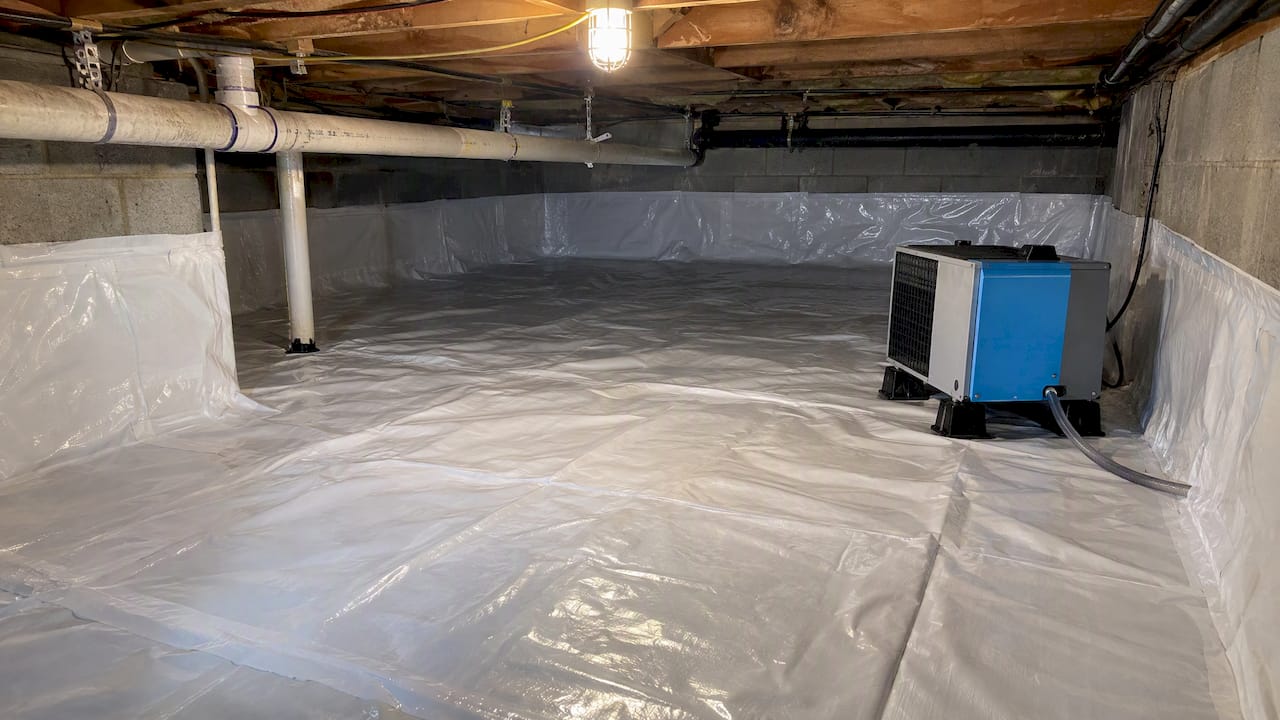
For crawl spaces with existing water intrusion, drainage work needs to happen before encapsulation, since sealing over an active leak traps moisture rather than removing it. That sequencing mirrors the same source-first logic that applies to basements: stop the water, then seal and condition the space.
Local climate considerations for Tallahassee basements
Tallahassee sits in a humid subtropical climate with long, hot, muggy summers and heavy seasonal rainfall, conditions that keep outdoor humidity elevated for much of the year. Basements and crawl spaces in this region face near-constant pressure from both soil moisture and humid outdoor air, which means a dehumidifier that might be adequate in a drier climate often struggles to keep pace here without a correctly sized, continuously running unit.
Heavy rain events common to the area also raise the stakes for exterior drainage. Clogged gutters, flat grading, or undersized downspouts that might cause minor issues elsewhere can lead to standing water against a foundation quickly during a Tallahassee downpour. Homes built on clay-heavy or poorly draining soils in the region are especially prone to hydrostatic pressure buildup after storms, which makes perimeter drainage and sump pump reliability more important than in drier parts of the country.
Given these conditions, the source-first approach matters even more locally: exterior grading and drainage fixes tend to deliver a bigger return than equipment alone, since the outdoor air feeding into the basement rarely dries out for long stretches during the warmer months.
A practitioner’s take on fixing basement humidity
Stop the water before you chase the number on the hygrometer. Dry fast, fix drainage first, and only then invest in long-term equipment. Photograph conditions before and after any repair so you can confirm it actually worked.
— Kayle
How we can help with a free inspection
We provide services for homeowners dealing with structural moisture problems that equipment alone can’t fix.

- Inspections to map moisture sources inside and outside the home
- Custom plans matched to soil types and specific entry points
- Financing options to help spread out the cost of repairs
An inspection typically takes under an hour and ends with a clear, written scope, no pressure to decide on the spot. If you’re ready to get a straight answer on what’s driving your basement humidity, request a free inspection through our services page.
FAQ
Is 70% humidity in a basement bad?
Yes. Humidity that high sits well above the 60% upper limit EPA and CDC recommend and creates conditions where mold and dust mites thrive. Bringing it down into the 30% to 50% range should be a priority, not something to monitor passively.
How can I fix humidity in my basement?
Start by measuring with a hygrometer, running a properly sized dehumidifier continuously, and drying any wet materials within 24 to 48 hours. For lasting results, pair that with exterior fixes like gutter maintenance, downspout extensions, and proper grading, since air drying alone rarely solves a moisture problem that’s entering through the foundation.
Why can’t I get my basement humidity below 60%?
Persistent readings above 60% despite running a dehumidifier usually mean moisture is still entering through soil, cracks, or a crawl space rather than coming only from the air. Moisture stored inside concrete block or a slab also releases slowly over time, which an EPA study on basement moisture found limits what air-only dehumidification can achieve.
Why is my humidity going up even though I use a dehumidifier?
An undersized unit, a full reservoir, or a clogged condensate line can all cause readings to climb even while the dehumidifier runs. If the unit is working properly and humidity still rises, active water intrusion or a crawl space feeding moisture into the basement is the more likely cause, and it’s worth a professional inspection to pinpoint the source.
Sources
- EPA mold course: chapter 2 — requirements and background (mold guidance)
- CDC — Mold cleanup in homes
- DOE / Building America: Improving comfort in hot-humid climates with a whole-house dehumidifier (case study)