
Which mold removal methods are right for your home?
The most effective mold removal method depends on two things: the surface type and how much area is affected. For small patches on tile or sealed countertops, detergent and water does the job. For drywall, carpet, or anything porous, no amount of scrubbing fixes the problem. The EPA draws the line at 10 square feet: below that, on non-porous surfaces, you can handle it yourself. Above it, or on porous materials, you need professional remediation.
Here is what each method actually does, and where it falls short:
- Detergent and water scrubbing: Physically removes mold colonies from hard surfaces like tile, glass, and sealed concrete. Dry the surface completely afterward.
- Wet vacuuming: Pulls standing water from floors and carpets before mold sets in. Use only on wet materials; running a wet vac on dry mold spreads spores.
- Damp wiping: Wipes surface mold from non-porous materials. Works for light growth on painted walls or metal fixtures.
- HEPA vacuuming: Captures fine mold spores after materials have dried and contaminated items are removed. Filters particles down to 0.3 microns.
- Discarding porous materials: Drywall, carpet, and ceiling tiles with mold growth must be bagged and removed. Surface cleaning cannot reach mold roots inside these materials.
Pro Tip: Never mix bleach with ammonia or any other cleaner. The CDC warns this combination creates toxic fumes. Detergent and water are safer and equally effective on hard surfaces.
Table of Contents
- Mold removal methods compared: effectiveness by surface and severity
- Mold removal vs. mold remediation: why the difference matters
- Why fixing the moisture source is the only permanent solution
- What professional mold remediation actually looks like
- How to do DIY mold removal safely
- Common mistakes that make mold problems worse
- Long-term strategies to prevent mold from coming back
- Key Takeaways
- Foundationresq handles what DIY methods can’t
- FAQ
Mold removal methods compared: effectiveness by surface and severity
Each method has a specific job. Using the wrong one wastes time and can make the problem worse.
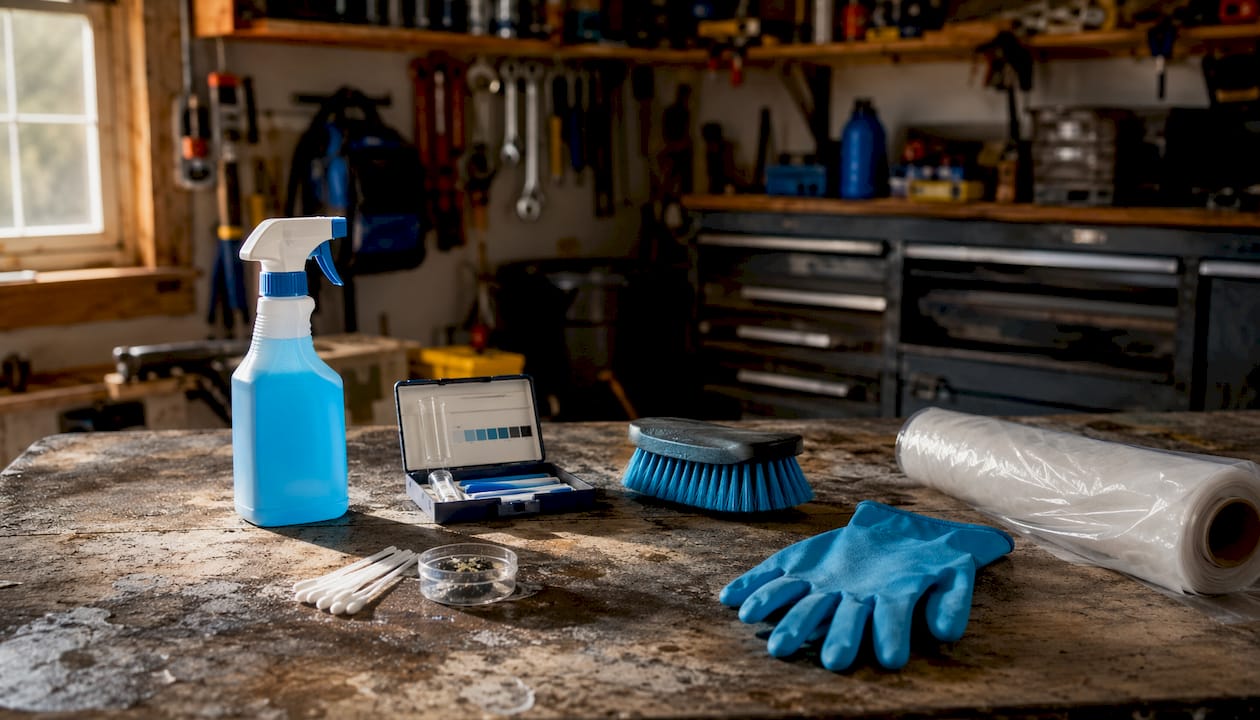
| Method | Best Surface | Mold Severity | Key Limitation |
|---|---|---|---|
| Detergent scrubbing | Non-porous (tile, metal, glass) | Small, surface-level | Cannot penetrate porous materials |
| Wet vacuuming | Floors, carpets, hard surfaces | Active water intrusion | Spreads spores if surface is dry |
| Damp wiping | Non-porous hard surfaces | Light surface growth | Ineffective on porous substrates |
| HEPA vacuuming | All surfaces (post-cleanup) | Final cleanup phase | Must follow material removal |
| Discarding materials | Porous (drywall, carpet, insulation) | Moderate to severe | Requires containment; not DIY-safe above 10 sq ft |
The critical distinction is whether mold sits on a surface or grows into it. Tile and glass are non-porous, so mold colonies rest on top and scrubbing removes them. Drywall and wood are porous. Mold sends root structures called hyphae deep into the material, and porous materials colonized by mold must be removed and sealed in plastic bags, not cleaned.
The EPA also advises against routine use of biocides like bleach. Dead mold still triggers allergic reactions, so killing mold without physically removing it solves nothing. On porous materials, bleach whitens the visible surface but leaves root structures intact. The mold returns, often faster.
Mold removal vs. mold remediation: why the difference matters
Mold removal and mold remediation are not the same process, and confusing them is the most common reason mold comes back.
Mold removal means physically cleaning visible mold from a surface. It is a partial action. Mold remediation is a complete protocol following IICRC S520 that covers containment, demolition of affected porous materials, antimicrobial treatment, air scrubbing, and post-clearance testing. The goal is not zero mold. That is biologically impossible.
Mold spores exist in every indoor and outdoor environment. The standard is not elimination. It is returning indoor spore counts to normal background levels, verified by lab analysis, not a visual check. Any contractor who promises 100% mold removal is either uninformed or misleading you.
Learn more about what the full remediation process involves before hiring anyone by visiting full remediation process.
Why fixing the moisture source is the only permanent solution
Mold is a symptom. The moisture problem is the actual diagnosis.
“If you clean up the mold, but don’t fix the water problem, then, most likely, the mold problem will come back.” — US EPA
Common moisture sources include plumbing leaks behind walls, condensation on cold pipes, poor bathroom ventilation, and water intrusion through foundations or crawl spaces. Painting or caulking over mold without addressing the source is one of the most frequent mistakes homeowners make. The EPA states plainly that paint over moldy surfaces will peel, and the mold underneath continues growing.
Professionals use moisture meters, thermal imaging, and exploratory wall openings to trace water paths that are invisible from the surface. These are not tools most homeowners have. Understanding how moisture enters home walls is the first step toward stopping it permanently.
Pro Tip: Dry water-damaged areas promptly to prevent mold colonization, ideally within a couple of days, emphasizing speed over product choice.
What professional mold remediation actually looks like
Professional remediation follows a defined sequence. Skipping any step increases the chance of mold returning within months.
- Containment: The affected area is sealed with 6-mil polyethylene sheeting and maintained under negative air pressure using a HEPA-filtered machine. This prevents spores disturbed during demolition from migrating to clean areas of the home.
- Source elimination: The moisture source is identified and resolved before any cleaning begins. Without this step, remediation is temporary.
- Demolition of porous materials: Drywall, insulation, and carpet with active mold growth are removed. Cuts extend 24 inches beyond visible mold because hyphae grow invisibly past what you can see.
- HEPA vacuuming: All surfaces in the containment zone are vacuumed to capture surface spores.
- Antimicrobial treatment: Structural members like framing and subfloor are treated with EPA-registered antimicrobial products, not bleach.
- Air scrubbing: HEPA air scrubbers run for 24–48 hours after demolition to bring airborne spore counts down to background levels.
- Clearance testing: Indoor and outdoor air samples are sent to a certified microbiology lab. The job passes when indoor spore counts match or fall below outdoor baseline.
Post-remediation clearance testing is the only way to confirm the work actually succeeded. Visual inspection alone misses active spore loads that are invisible to the eye. Low-cost providers frequently skip this step, which is exactly why their jobs fail.
Pro Tip: Ask any contractor two questions before hiring: “Do you use sealed containment with negative air pressure?” and “Do you do third-party clearance testing?” A “no” to either is a red flag.
How to do DIY mold removal safely
DIY is appropriate only when the affected area is under 10 square feet, on a non-porous surface, and the moisture source is known and fixable.
- Put on an N95 respirator, safety goggles, and rubber gloves before touching anything.
- Open windows and doors to ventilate the space.
- Mix dish detergent with water. Do not use bleach, and never mix cleaning products.
- Scrub the surface thoroughly with a stiff brush. Wiping without scrubbing leaves mold behind.
- Rinse the area with clean water and dry it completely within a few hours.
- Bag any sponges, rags, or disposable materials in sealed plastic bags before throwing them away.
- Fix the moisture source immediately. Monitor the area for 4–6 weeks to confirm the mold does not return.
If mold reappears after a proper cleanup, the moisture source was not fully resolved, or the growth was deeper than the surface. At that point, call a professional.
Common mistakes that make mold problems worse
The most damaging mistake is using bleach on porous surfaces. Bleach removes the visible color but cannot reach mold roots inside drywall or wood. The water in the bleach solution soaks into the material and feeds surviving hyphae. Regrowth follows, often within weeks.
Running a fan directly on visible mold is another frequent error. Fans spread spores to unaffected rooms before you have contained the problem. Use fans only after visible mold has been removed and surfaces are clean.
Skipping personal protective equipment is risky even for small jobs. Mold spores become airborne the moment you disturb a colony. An N95 respirator, not a paper dust mask, is the minimum for any mold cleanup. Painting over mold without cleaning it first is also a failure mode. The EPA is direct: paint applied over moldy surfaces will peel, and the mold continues to grow underneath.
Long-term strategies to prevent mold from coming back
Controlling humidity is the most reliable prevention tool. Keep indoor relative humidity below 60%, ideally between 30% and 50%. A dehumidifier in a basement or crawl space handles this automatically. For window sill mold and bathroom surfaces that keep returning, increasing ventilation with an exhaust fan usually stops the cycle.
Fix plumbing leaks immediately, even small drips. A slow leak inside a wall cavity creates the perfect conditions for mold to grow undetected for months. Inspect under sinks, around water heaters, and at pipe connections at least once a year. Crawl spaces and basements deserve special attention because they stay damp and dark, two conditions mold thrives in. Encapsulation and proper drainage address both.
After any professional remediation, reconstruction should wait until clearance testing passes. Starting drywall work before that confirmation traps any remaining spores behind new walls.
Key Takeaways
Choosing the right mold cleanup method comes down to surface type, affected area size, and whether the moisture source is fixed. Without correcting the source, no removal method produces a lasting result.
| Point | Details |
|---|---|
| Surface type determines method | Non-porous surfaces can be scrubbed clean; porous materials like drywall must be removed and bagged. |
| The 10-square-foot threshold | The EPA recommends professional help for mold areas exceeding 10 square feet or any porous material. |
| Removal vs. remediation | Removal cleans visible mold; remediation follows IICRC S520 to address root causes and verify clearance. |
| Moisture source correction | Fixing the moisture problem is mandatory. Mold will return if the source remains, regardless of cleanup quality. |
| Foundationresq for professional remediation | Foundationresq provides full mold remediation services in Tallahassee, FL, including containment, treatment, and clearance verification. |
Foundationresq handles what DIY methods can’t
When the mold patch is bigger than a 3×3-foot area, or it’s on drywall, in a crawl space, or keeps coming back after cleaning, the situation calls for professional remediation, not another scrubbing session.
Foundationresq specializes in exactly this: full mold remediation for Tallahassee homeowners, including sealed containment, demolition of affected materials, antimicrobial treatment, and post-clearance air quality testing. The difference between a surface wipe-down and what Foundationresq does is the difference between a temporary fix and a verified, lasting result. Foundationresq also addresses the moisture sources driving mold growth, including crawl space waterproofing and basement moisture control, so the problem does not return after remediation. See the full range of home remediation services and request a free inspection to get a clear picture of what your home actually needs.
FAQ
What is the safest DIY mold removal method?
Detergent and water scrubbing on non-porous surfaces is the safest approach. The CDC advises never mixing bleach with ammonia or other cleaners, as this produces toxic fumes.
When should I call a professional instead of cleaning mold myself?
Call a professional when the affected area exceeds 10 square feet, when mold is on porous materials like drywall or carpet, or when the moisture source is unknown. Recurring mold after a DIY cleanup also signals the need for professional assessment.
What is the difference between mold removal and mold remediation?
Mold removal cleans visible surface mold. Mold remediation follows IICRC S520 protocols, including containment, demolition of porous materials, antimicrobial treatment, and post-clearance testing to verify indoor spore counts match outdoor baseline levels.
Does bleach kill black mold permanently?
Bleach kills surface mold on non-porous materials but does not reach root structures inside porous materials like drywall or wood. On those surfaces, the mold returns. Detergent and physical scrubbing are more effective because they physically remove the colony rather than just discoloring it.
Why does mold keep coming back after I clean it?
Mold returns when the moisture source is not corrected. The EPA states that cleaning mold without fixing the underlying water problem almost always results in regrowth. Identify and repair the leak, condensation issue, or water intrusion before or alongside any cleanup.
Recommended
- What Does the Mold Remediation Process Involve? – Tallahassee Foundation Repair | Foundation ResQ
- How Homeowners Can Reduce Mold Remediation Costs – Tallahassee Foundation Repair | Foundation ResQ
- How to Evaluate Past Mold Remediation Effectiveness – Tallahassee Foundation Repair | Foundation ResQ
- Mold Remediation Costs Uncovered: A Homeowner’s Guide – Tallahassee Foundation Repair | Foundation ResQ