Why Your Home’s Health Starts Beneath Your Feet
Crawl space encapsulation transforms a damp, dirty area into a clean, dry space by sealing it from outside air and moisture. This process involves installing a heavy-duty vapor barrier, insulation, and a dehumidifier to improve your home’s air quality, energy efficiency, and structural integrity.
Key Benefits of Crawl Space Encapsulation:
- Healthier Air Quality: Prevents mold, allergens, and musty odors from entering your living space.
- Lower Energy Bills: Saves 15% or more on yearly heating and cooling costs.
- Structural Protection: Stops wood rot, pest infestations, and foundation damage.
- Increased Home Value: Creates usable storage and appeals to future buyers.
- Better Comfort: Eliminates cold floors and reduces summer humidity.
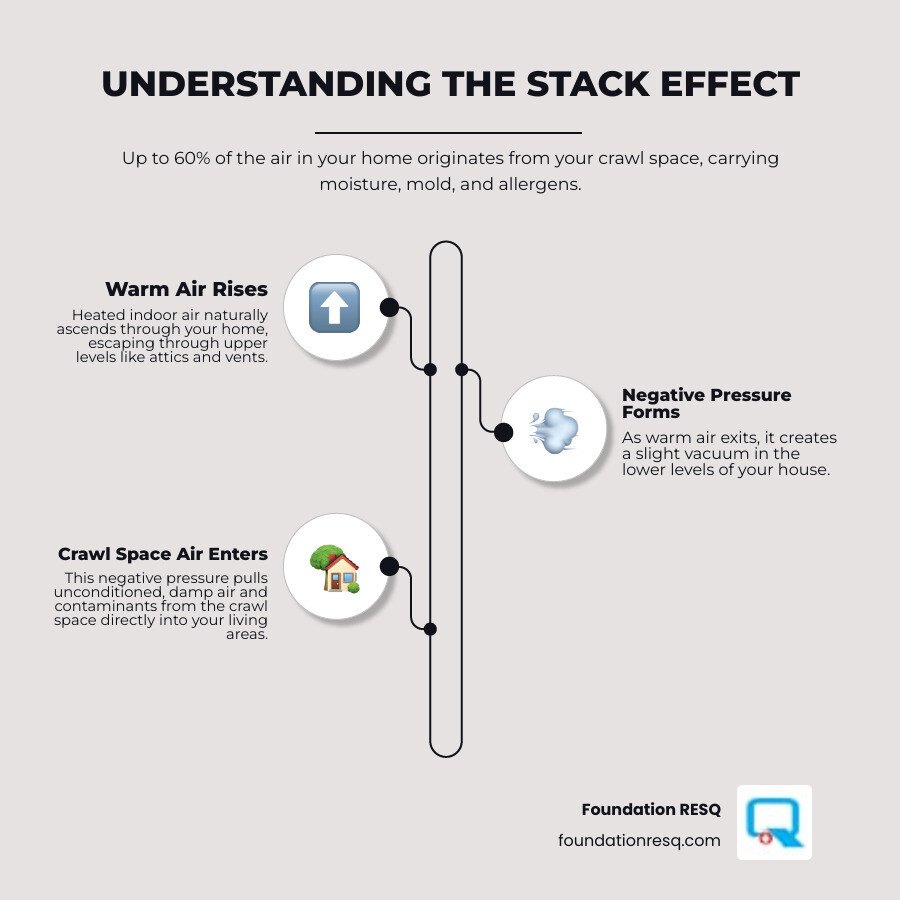
What most homeowners don’t realize is that up to 60% of the air in your home comes from your crawl space. This “Stack Effect” pulls air—along with moisture, mold, and dust—up into your living areas. A damp crawl space isn’t just unpleasant; it can harm your home’s structure, raise energy bills, and affect your family’s health.
Encapsulation solves these issues by creating a sealed, controlled environment. It’s a complete system designed to keep moisture out and protect your home from the ground up. This guide will walk you through everything you need to know about crawl space encapsulation to make an informed decision.
Is Your Crawl Space Harming Your Home? 7 Telltale Signs
Ignoring your crawl space can lead to serious issues, especially in humid climates like the Southeast. These problems often appear as subtle signs that many homeowners misdiagnose. Here are seven warning signs that your crawl space needs attention and possibly crawl space encapsulation.
-
Musty Odors in Your Home: A damp, earthy smell is a primary indicator of mold and mildew in the crawl space. Because of the stack effect, these odors rise directly into your living area. More info about crawl space odor removal.
-
High Indoor Humidity: If your home feels sticky even with the AC on, or humidity levels stay above 55%, moisture is likely evaporating from the crawl space. This forces your HVAC system to work harder and encourages mold growth.
-
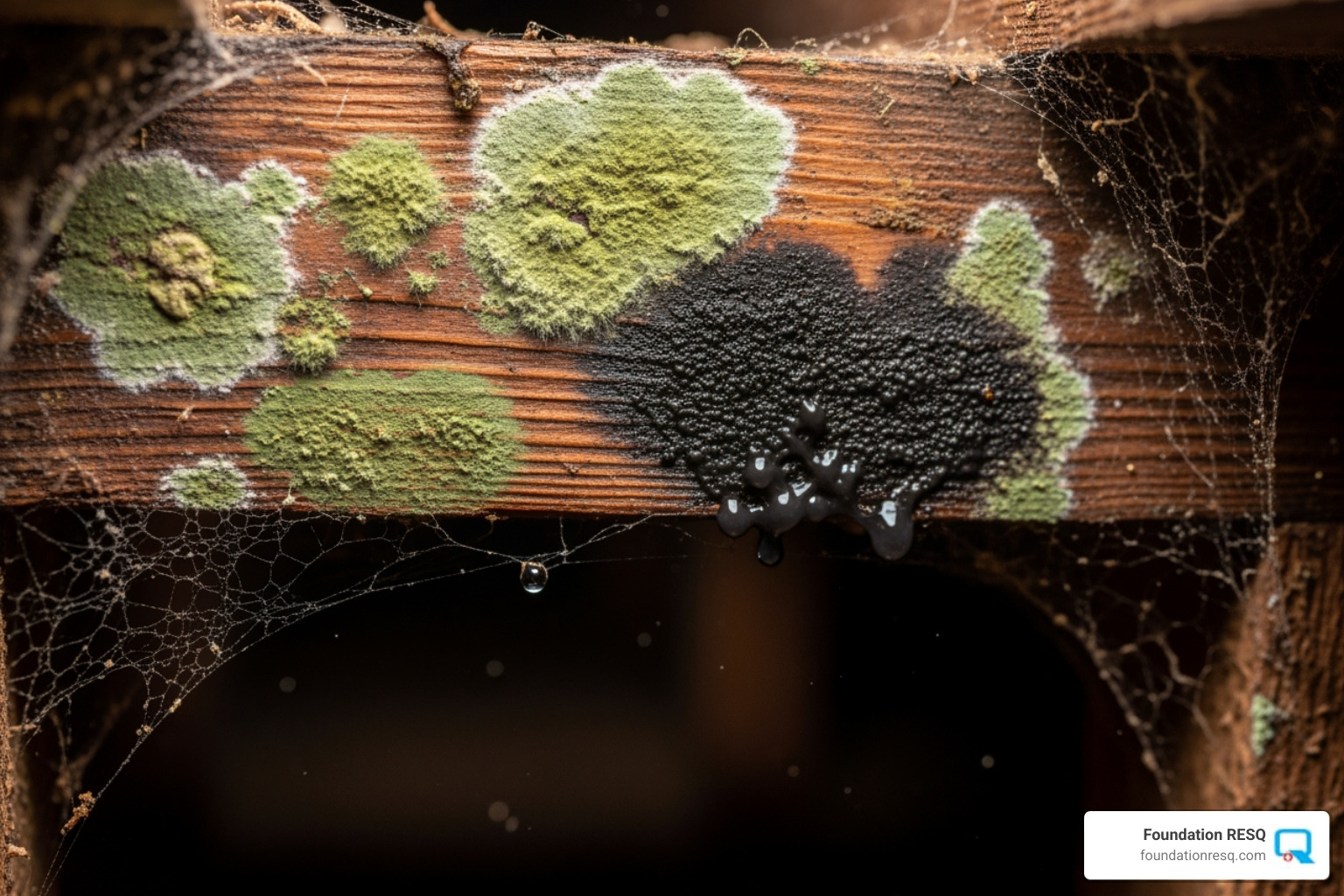
Visible Mold or Mildew Growth: Seeing fuzzy black, green, or white patches on wooden joists or subflooring confirms a significant moisture problem. Mold damages wood and releases spores that can trigger respiratory issues.
-
Pest Infestations: Rodents, termites, and other pests are drawn to the shelter and moisture of unsealed crawl spaces. If you see more pests indoors, they are likely coming from below.
-
Sagging or Soft Floors: Spongy, creaky, or sagging floors indicate that moisture has started to rot your home’s wooden structure. This is a serious structural problem that worsens over time.
-
Condensation on Pipes or Ductwork: Water droplets on pipes and ducts in the crawl space lead to rust, corrosion, and mold growth. This condensation also soaks insulation, reducing your HVAC system’s efficiency.
-
Worsening Allergy or Asthma Symptoms: Unexplained sneezing, coughing, or allergy flare-ups can be caused by poor air quality. Mold spores and dust mites from a damp crawl space rise into your home and can impact your family’s health.
These signs don’t improve on their own; they escalate. Recognizing them early allows you to fix the root problem before it leads to major structural damage and health concerns.
The Top 5 Benefits of Encapsulating Your Crawl Space
Investing in crawl space encapsulation is one of the smartest decisions you can make for your home’s health, comfort, and value. For homeowners in humid regions like Florida, Alabama, and Georgia, the benefits are especially significant. Here’s what you can expect when you encapsulate your crawl space.

1. Improved Indoor Air Quality
Since up to 60% of your home’s air originates in the crawl space, an unsealed area sends mold spores, dust mites, and allergens into your living space. Encapsulation creates a sealed environment that stops these contaminants at the source. Many families report fewer allergy and asthma symptoms and notice the air feels cleaner. What Is Crawl Space Encapsulation?
2. Lower Energy Bills
A damp, unsealed crawl space allows humid air to enter your home, forcing your HVAC system to work overtime. By creating a sealed, conditioned space, encapsulation helps your HVAC system run more efficiently. Homes typically save 15% or more on yearly heating and cooling costs, allowing the investment to pay for itself over time.
3. Structural Protection
Moisture is the primary enemy of your home’s wooden support structure. Constant dampness leads to wood rot, which causes sagging floors and can result in costly structural failures. Crawl space encapsulation keeps the area dry, protecting your floor joists and beams from decay and preserving your home’s integrity.
4. Pest Prevention
Unsealed crawl spaces offer a damp, dark shelter for rodents, insects, and other pests. Encapsulation seals off entry points and eliminates the moisture that attracts them, creating a clean, dry barrier that makes your home far less appealing to unwanted guests.
5. Increased Comfort and Home Value
An encapsulated crawl space helps maintain consistent temperatures, eliminating cold floors in winter and reducing sticky humidity in summer. This makes your entire home more comfortable. When it’s time to sell, a clean, encapsulated crawl space is a major selling point, signaling a well-maintained home with better air quality and lower utility bills.
The Complete Crawl Space Encapsulation Process
A successful crawl space encapsulation is a systematic process that addresses all sources of moisture and air infiltration. At Foundation RESQ, we follow a proven, multi-step approach to protect homes across Alabama, Florida, and Georgia.
Step 1: Inspection and Preparation
Every project begins with a free, detailed assessment to identify moisture sources, mold growth, pest entry points, and structural issues. Based on this inspection, we create a customized plan. Preparation involves removing all debris and old, damp insulation. If we find standing water, we address the source, and any existing mold is treated with appropriate fungicides to ensure a clean start.
Step 2: Sealing and Installing a Vapor Barrier
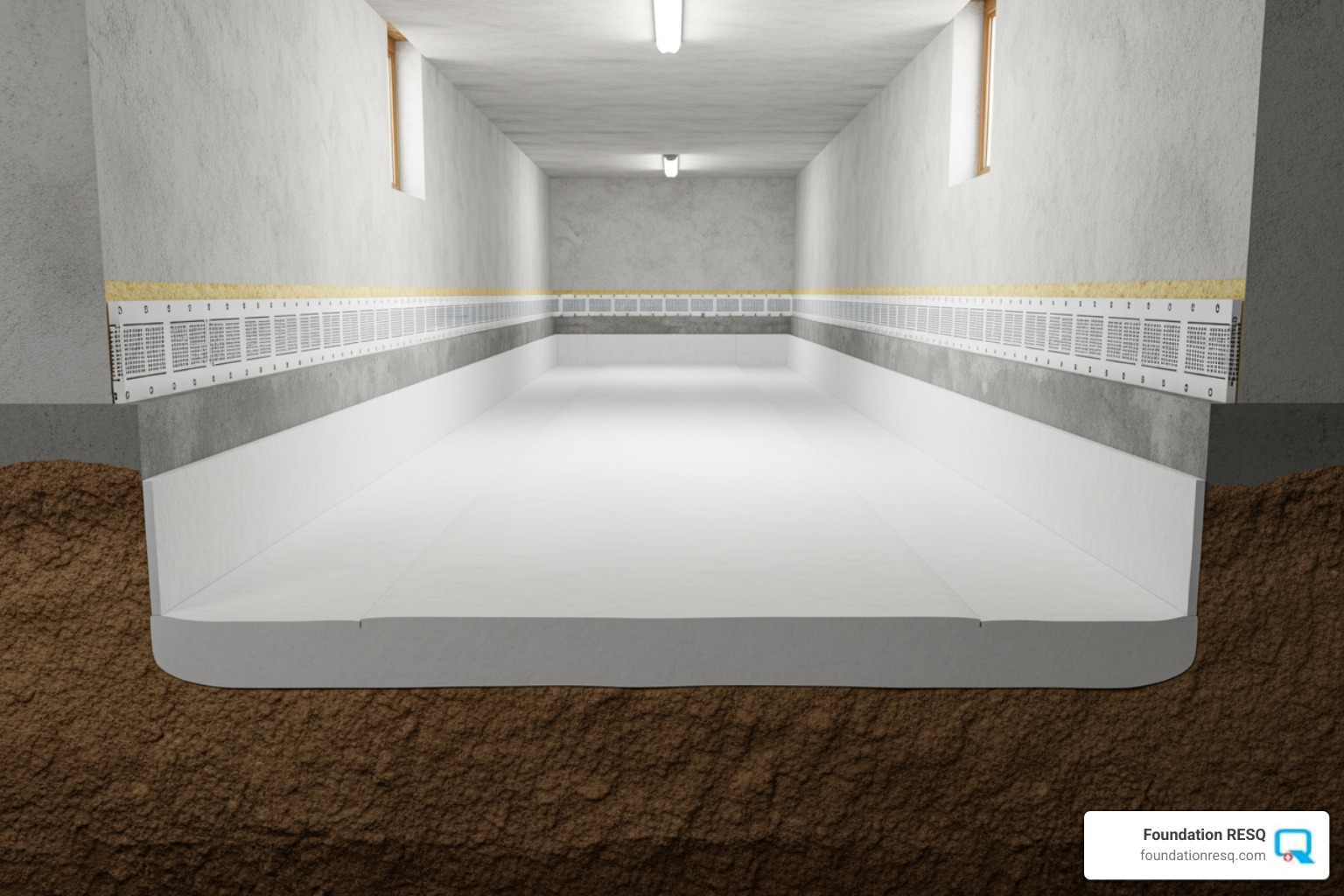
To create an airtight envelope, we seal all existing vents and any gaps around pipes and wiring. More info about crawl space doors & vents. Next, we install a heavy-duty polyethylene liner (12-mil to 20-mil thick) across the entire floor and up the foundation walls. This industrial-grade vapor barrier is mechanically fastened and all seams are taped to completely block moisture from the ground.
Step 3: Adding Insulation and Drainage
Unlike traditional fiberglass insulation that absorbs moisture, we install rigid foam board insulation on the crawl space walls. This material is impervious to moisture and provides excellent thermal protection, leading to more comfortable floors and lower energy bills. For homes with groundwater issues, we can install a drainage system and sump pump to automatically remove any water that enters the space. More info about our crawl space drainage system.
Step 4: Conditioning the Air
The final step is to control the air inside the newly sealed space. We install a professional-grade dehumidifier designed for crawl spaces to maintain optimal humidity levels. The goal is to keep relative humidity consistently below 55%, which prevents mold growth and deters pests, ensuring the air that circulates into your home is clean and dry. More info about crawl space dehumidification.
This complete process transforms your crawl space from a liability into a healthy, stable foundation for your home.
Understanding the Investment: Costs and ROI
When considering crawl space encapsulation, it’s important to understand both the cost and the return on investment (ROI). This is a significant home improvement, but one that pays for itself in multiple ways.
What Does Crawl Space Encapsulation Cost?
Costs can vary, but most projects in Alabama, Florida, and Georgia fall between $1,500 and $15,000, with a typical investment being $5,000 to $8,000. The final price depends on several factors:
- Size: A larger crawl space requires more materials and labor.
- Condition: Addressing existing issues like standing water, mold, or structural damage will affect the cost.
- Scope of Work: A basic vapor barrier is less expensive than a full system with insulation, drainage, and a dehumidifier.
- Material Quality: Thicker, more durable materials like a 20-mil vapor barrier offer better long-term protection.
- Accessibility: Tight or low-clearance spaces may require more labor.
The Return on Your Investment
While there is an upfront cost, crawl space encapsulation provides a strong ROI:
- Energy Savings: Expect to save 15% or more on yearly heating and cooling costs as your HVAC system runs more efficiently.
- Preventing Costly Repairs: The greatest return comes from avoiding structural damage. Encapsulation prevents wood rot that can lead to repair bills of $15,000 or more.
- Increased Home Value: An encapsulated crawl space is a major selling point, signaling a healthy, well-maintained home to potential buyers.
- Health and Pest Control: Cleaner air can reduce health issues, while a sealed space saves money on pest control services.
At Foundation RESQ, we offer free, no-pressure inspections and flexible financing options to make this essential project accessible. Encapsulation is an investment in your home’s future that starts paying dividends immediately. More info about financing.
Frequently Asked Questions
Homeowners often have questions about crawl space encapsulation. Here are answers to some of the most common ones we hear.
What is the difference between crawl space encapsulation and just adding a vapor barrier?
A simple vapor barrier typically involves laying a thin (e.g., 6-mil) plastic sheet on the crawl space floor. It’s an incomplete solution that doesn’t seal seams, walls, or vents, allowing humid air and moisture to still enter.
Crawl space encapsulation is a complete system. It uses a heavy-duty (12-mil to 20-mil) liner to cover the floor and walls, with all seams and penetrations sealed. Vents are sealed off, and a dehumidifier is installed to control air quality. Encapsulation creates a fully sealed and conditioned space, while a basic vapor barrier only covers the ground.
How does crawl space encapsulation differ from crawl space insulation?
These two systems serve different primary functions but work together.
- Insulation’s main role is thermal control, slowing heat transfer to keep your home’s temperature more stable.
- Encapsulation’s main role is moisture and air quality control, sealing the space and removing humidity.
Proper encapsulation includes installing moisture-impervious insulation on the walls within the sealed environment. Insulating a damp, unsealed crawl space is ineffective, as the insulation will absorb moisture and promote mold.
What are common mistakes to avoid during encapsulation?
Doing the job incorrectly can waste your investment or even make problems worse. Avoid these common pitfalls:
- Using Thin Materials: Using cheap, thin plastic (under 12-mil) that tears easily instead of a durable, puncture-resistant liner.
- Failing to Seal Vents and Air Leaks: Leaving vents open allows humid outside air to enter, defeating the purpose of creating a sealed environment.
- Ignoring Water Issues: Encapsulation is not a substitute for waterproofing. Existing drainage problems or leaks must be fixed first.
- Skipping the Dehumidifier: In humid climates like the Southeast, a professional-grade dehumidifier is essential to keep humidity below 55% and prevent mold.
- Improper DIY Installation: Encapsulation is a complex job. A professional ensures it’s done correctly, avoiding costly mistakes and ensuring long-term performance.
Conclusion: A Healthier Home Starts from the Ground Up
Your home’s health truly starts from the ground up. For homeowners in humid regions like Alabama, Florida, and Georgia, an unsealed crawl space is a constant source of moisture that can lead to poor air quality, high energy bills, pest infestations, and serious structural damage.
Crawl space encapsulation is the comprehensive solution to these problems. By creating a sealed, dry, and conditioned environment, it protects your home and your family. The key benefits are clear:
- Healthier indoor air free from mold and allergens.
- Energy savings of 15% or more on heating and cooling.
- Protection against costly wood rot and structural repairs.
- Increased comfort and higher property value.
Encapsulation is not an expense; it’s a long-term investment in your property’s health and stability. It transforms a problematic crawl space from a source of worry into a clean, dry foundation for a healthier home.
If you’re in Tallahassee, Gainesville, Panama City, Macon, Valdosta, Columbus, Prattville, Dothan, Auburn, or the surrounding areas, trust the experts at Foundation RESQ. We offer free inspections and deliver affordable, lasting solutions custom to your home. Let us show you how a customized crawl space encapsulation system can protect your investment.