
For most homes, closed-cell spray foam or sealed rigid foam on the perimeter walls is the crawl space insulation type that holds up. Fiberglass batts almost always lose to moisture within a few years. Before choosing a material, check whether your crawl space is vented or sealed; if there’s any sign of dampness, prioritize sealing and encapsulation before you spend a dollar on insulation.
TL;DR:
- Closed-cell spray foam and rigid foam boards are the most moisture-resistant insulation choices for crawl spaces, with spray foam providing both insulation and air sealing.
- Vented crawl spaces require floor insulation, while sealed or unvented spaces need insulation on the foundation walls and rim joist for optimal performance.
- Proper moisture management starts with fixing water intrusion, installing a vapor barrier, and sealing air leaks before adding insulation or mechanical dehumidification.
- Costs vary from a few thousand dollars for rigid foam to over $5,000 for full spray foam systems with waterproofing and dehumidification, depending on access and damage.
- Professional inspection and moisture control are essential to ensure long-term success, especially in humid or variable climate zones.
Table of Contents
- Which Crawl Space Insulation Materials Actually Work?
- Should You Insulate the Walls or the Floor Joists?
- How Do You Manage Moisture Before Insulating?
- What R-Value and Budget Should You Plan For?
- When Should You DIY vs. Hire a Professional?
- Do Insulation Materials Carry Health or Environmental Risks?
- How Often Should You Inspect Crawl Space Insulation?
- How Should Climate Shape Your Crawl Space Insulation Choice?
- What Actually Determines Long-Term Success Here?
- Get a Professional Read on Your Crawl Space Before You Insulate
- Sources
- FAQ
Which Crawl Space Insulation Materials Actually Work?
Not every insulation material belongs in a crawl space, and the ones that work well above grade often fail below it. The difference comes down to how each material handles moisture, air movement, and the odd shapes you find between joists and foundation walls.
Closed-cell spray foam delivers roughly R-6 to R-7 per inch and doubles as an air barrier and vapor retarder in one application, according to This Old House’s crawl space guide. It conforms to rim joists, pipe penetrations, and the uneven surfaces typical of a foundation wall. That flexibility comes at a price: professional application, higher material cost, and a mandatory ignition or thermal barrier in most jurisdictions when it’s left exposed.
Rigid foam boards (XPS, EPS, and polyiso) offer continuous insulation along flat wall sections and resist moisture well once seams are taped and sealed. Polyiso typically has the highest R-value per inch of the three, though its performance can dip in colder conditions, per Insulation Institute analysis. XPS lands around R-5 per inch and holds that number more consistently across temperature swings. Rigid foam is also the most realistic DIY option for accessible, flat crawl space walls.
Fiberglass batts are cheap and easy to find, but they’re a poor match for crawl spaces. They absorb moisture, sag out of place, and lose most of their insulating value once damp. Crawlspacecosts notes fiberglass installations commonly fail within a few years in humid conditions. Reserve fiberglass for rare, fully dry, well vented crawl spaces, or skip it entirely.
Mineral wool tolerates moisture better than fiberglass and adds real fire resistance, making it a reasonable niche pick where code requires extra fire protection. Radiant or reflective barriers only work as a supplement, cutting some radiant heat gain, but they’re never a substitute for real R-value insulation.
- Closed-cell spray foam: R-6 to R-7/inch, air barrier included, best for rim joists and irregular surfaces
- Rigid foam (XPS/polyiso/EPS): R-5 to R-8/inch depending on type, ideal for flat wall sections
- Fiberglass batts: roughly R-3 to R-4/inch dry, drops fast once wet
- Mineral wool: moderate R/inch, strong fire and moisture tolerance
- Reflective barriers: supplemental only, not a standalone solution
Statistic Callout: Spray foam and rigid foam both outperform fiberglass on installed R-value per inch, and unlike fiberglass, neither loses meaningful R-value when the crawl space runs humid, according to BuildingScience’s crawlspace insulation guidance.
Should You Insulate the Walls or the Floor Joists?
The single biggest mistake homeowners make is insulating the wrong plane for their crawl space type. A vented crawl space, one with open foundation vents that let outside air circulate, needs insulation between the floor joists, keeping the thermal boundary at the floor above. An unvented, sealed crawl space (often called a conditioned or encapsulated crawl space) moves that boundary down to the foundation walls and the rim joist instead.
Building science guidance has shifted firmly toward the sealed approach, especially in humid climates, because sealed crawlspaces resist condensation and keep ductwork and plumbing warmer, according to Energy. Insulating floor joists in a space that’s actually damp and unsealed traps moisture against wood framing, which invites rot and mold.
Here’s a quick way to classify your own crawl space before you buy any material:
- Check for open foundation vents. If they’re present and unsealed, you likely have a vented crawl space.
- Look for standing water, damp soil, or a musty smell. Any of these signals a moisture problem that needs fixing before insulation goes in.
- Check for an existing ground vapor barrier. No barrier means bare soil is feeding humidity straight into the space.
- If vents are sealed or you plan to seal them, treat the space as unvented and insulate the perimeter walls and rim joist instead of the floor.
- When in doubt, get a professional moisture assessment before committing to a material.
How Do You Manage Moisture Before Insulating?
Insulation fails when moisture control comes second. The standard sequence, drawn from This Old House’s installation guidance, starts with fixing any water intrusion, then layering in the vapor barrier and air sealing before insulation ever goes up.
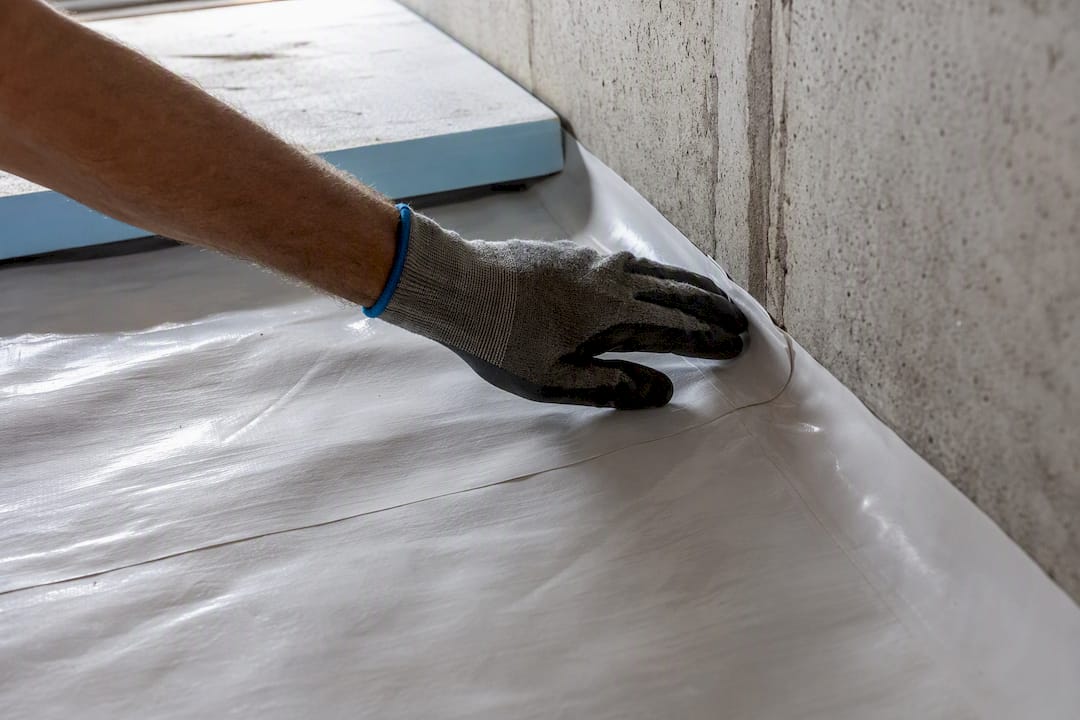
- Lay a 6-mil polyethylene ground vapor barrier across the entire crawl space floor, overlapping seams by several inches and taping them.
- Run the barrier up the foundation walls a few inches and seal it in place rather than leaving a gap at the base.
- Address exterior grading and drainage issues first; a vapor barrier can’t compensate for water actively draining into the space.
- Check for radon; if levels are a concern, vent the soil gas beneath the vapor barrier rather than trapping it.
- Air-seal the rim and band joist, along with any penetrations, before adding wall insulation.
- Add a dehumidifier or a conditioned-air supply once the space is sealed, since BASC/PNNL guidance shows conditioned crawlspaces perform noticeably better in humid regions than vented ones.
That order matters: water first, then vapor barrier, then air sealing, then insulation, then mechanical humidity control. Skip a step and the whole system underperforms.
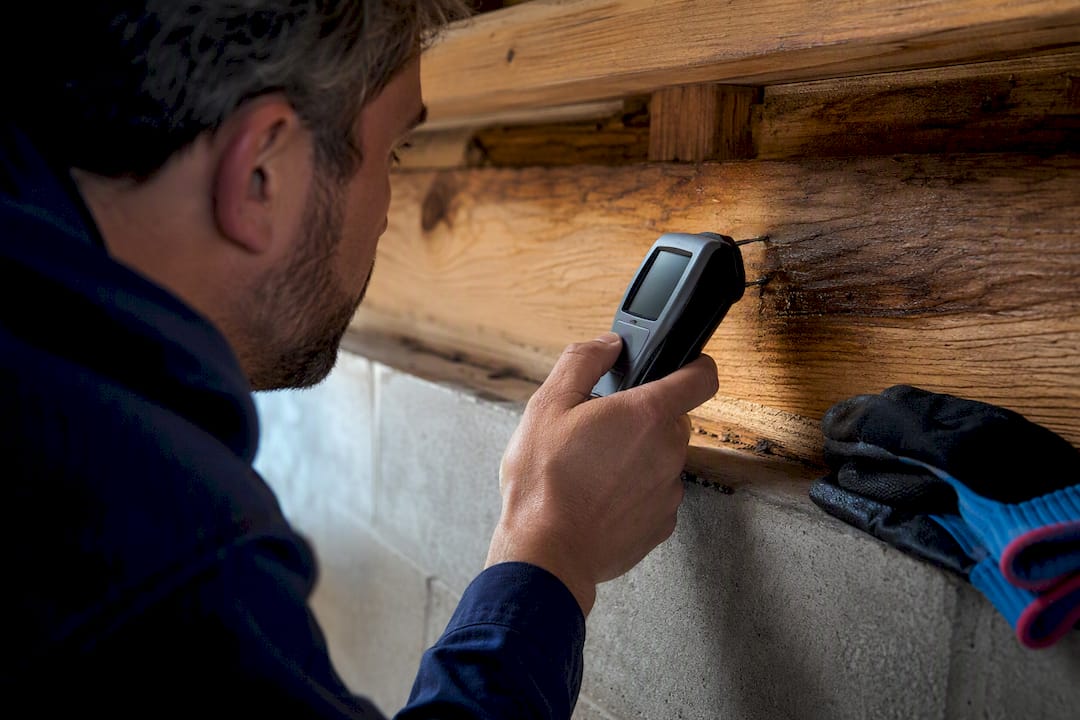
Pro Tip: Before you spray foam or panel over a band joist, check its moisture content. A band joist that’s still drying out from a past leak or seasonal condensation can trap that moisture against the sill plate once it’s sealed, which is exactly how “insulated” crawl spaces end up rotting from the inside. Sealing your crawl space against mold growth only works if the wood underneath is actually dry first.
What R-Value and Budget Should You Plan For?
Building codes set crawl space wall and floor R-value targets by climate zone under the IECC and IRC, and your local zone determines the number you should be asking contractors to hit. Warmer zones might call for wall insulation in the R-5 to R-10 range, while colder zones push toward R-15 to R-19 or higher. You can find your climate zone through your local building department or state energy code office; that number should drive every material decision from here.
In practical terms, roughly 1.5 to 2 inches of closed-cell spray foam gets you to about R-10 on a wall, while 2 inches of polyiso can land in a similar range depending on temperature. Rigid foam typically needs slightly more thickness than spray foam to hit the same target.
Statistic Callout: Installed costs for a typical crawl space insulation project commonly range from a few thousand dollars for basic rigid foam on accessible walls up to $5,000 or more for full spray foam application plus encapsulation, drainage work, and dehumidification, based on cost patterns reported by CrawlSpaceCosts.com. Access difficulty, existing moisture damage, and whether you’re adding a vapor barrier and dehumidifier all push costs up or down. Always confirm with your contractor whether local code requires a thermal or ignition barrier over exposed foam plastic, since that add-on affects both price and installation method.
When Should You DIY vs. Hire a Professional?
Some crawl space work is genuinely manageable on a weekend. Laying ground cover, taping seams on rigid foam panels along flat, accessible walls, and basic caulking around small gaps are reasonable DIY projects if you’re comfortable working in tight spaces.
Closed-cell spray foam application, large-scale drainage or standing-water fixes, structural repairs, and any job that triggers a code-required ignition barrier belong to a professional. Spray foam requires specific equipment and training, and getting it wrong on a band joist can trap moisture instead of stopping it.
- Ask any contractor about direct experience with crawl space encapsulation, not just general insulation work.
- Request references from similar jobs and confirm what warranty covers the vapor barrier, insulation, and any dehumidification equipment.
- Insist that drainage and moisture issues get addressed before insulation goes in, not simultaneously or after.
Do Insulation Materials Carry Health or Environmental Risks?
Fiberglass batts that get wet don’t just lose R-value, they become a mold substrate, and disturbed fiberglass fibers can irritate skin and lungs during removal or installation. That’s part of why building science guidance steers homeowners away from fiberglass in anything but a bone dry, vented space.
Spray foam raises different questions. Off-gassing during and shortly after application is a real concern, which is why manufacturers specify re-entry times and why code requires proper ventilation during installation. Once fully cured, closed-cell spray foam is largely inert, but the curing process itself needs to be respected, not rushed.
Damp crawl spaces of any kind, insulated or not, create ideal habitat for mold and can attract pests. The EPA notes that effective moisture barriers reduce conditions that support termites and other pests, which is one more reason sealing and vapor control matter as much as the insulation material itself. Mineral wool and rigid foam boards generally carry lower off-gassing concerns than spray foam, though neither solves a moisture problem on its own. Whatever material you pick, the health outcome depends far more on whether the space stays dry than on the R-value printed on the package.
How Often Should You Inspect Crawl Space Insulation?
Insulation isn’t a set-it-and-forget-it fix. Rigid foam and spray foam are both fairly low-maintenance once installed correctly, but that doesn’t mean zero maintenance.
Walk the crawl space at least once a year, ideally after the wettest season your area sees, and look for a few specific things. Check the vapor barrier for tears, gaps at the seams, or spots where it’s pulled away from the wall. Look at the base of rigid foam panels for staining or softness that suggests water has been sitting against them. Sniff for musty odors, which usually show up before visible mold does.
Spray foam holds up well over time, but check around penetrations, plumbing lines, and electrical runs where the foam seal might have separated. Rigid foam panels can shift if fasteners loosen, so press along the seams to make sure they’re still tight and sealed. If you’ve added a dehumidifier, check its drain line and filter on a regular schedule; a clogged unit stops protecting the space the moment it fails silently.
Fiberglass, if you’re stuck with an old installation, needs the most frequent attention. Once it sags, compresses, or shows any dampness, it’s no longer doing its job and should be replaced rather than left in place.
How Should Climate Shape Your Crawl Space Insulation Choice?
Humidity, not just temperature, should drive your material and strategy decisions. In hot, humid regions, a vented crawl space often pulls in more moisture than it releases, which is exactly why building science guidance favors sealing and conditioning crawlspaces in these climates rather than relying on ventilation to dry things out.
Colder climates add a different pressure: insulation needs to keep pipes from freezing while still managing the condensation that shows up when warm indoor air meets a cold foundation wall. That’s part of why polyiso’s cold-weather R-value dip matters when you’re comparing rigid foam options for a northern climate zone. Closed-cell spray foam tends to hold its performance more consistently across a wider temperature range.
Regions with extreme weather swings, hard freezes followed by humid summers, put the most stress on crawl space assemblies. These are the conditions where skipping the vapor barrier or choosing fiberglass causes the fastest failures. If your area sees both high humidity and freezing temperatures in the same year, lean toward closed-cell spray foam or rigid foam with a fully sealed vapor barrier rather than any vented, batt-insulated approach.
What Actually Determines Long-Term Success Here?
Moisture control decides whether any insulation choice succeeds, not the R-value on the label. I’ve seen the pattern repeat across every building science source cited here: seal the water problem first, then match your material to whether the crawl space is vented or conditioned, and the insulation takes care of itself for decades.
Homeowners who skip straight to buying insulation, without first classifying their crawl space or checking for existing moisture, are the ones back at this problem in three years. If you want a professional read on your specific crawl space before spending on materials, a proper inspection settles the vented-versus-sealed question fast.
— Kayle
Get a Professional Read on Your Crawl Space Before You Insulate
Guessing at material choice costs more than getting a straight answer up front. A specialized local company inspects crawl spaces to identify moisture sources, classify the space as vented or sealed, and recommend the right insulation approach before any material goes in.

The company’s crawl space encapsulation system combines a sealed vapor barrier, air sealing at the rim joist, and dehumidification into one coordinated remediation, which matters if the goal is a crawl space that stays dry for the long haul rather than one that looks fixed for a season. Foundationresq also handles the drainage and waterproofing work that needs to happen before insulation, so homeowners aren’t left guessing which contractor handles which part of the sequence. If your crawl space shows any sign of standing water, musty odor, or sagging insulation, request a free inspection and get a clear scope of work, including financing options if the remediation involves more than insulation alone. Start with an inspection at Foundationresq.
Sources
- Rigid foam board interior insulation guidance (BASC/PNNL)
- Energy
- How to insulate a crawl space (This Old House)
FAQ
What Is the Best Insulation to Use in a Crawl Space?
Closed-cell spray foam or sealed rigid foam boards on the perimeter walls perform best in most crawl spaces, especially in humid climates, because they resist moisture and air-seal at the same time. Fiberglass batts are the weakest choice unless the space is unusually dry and well vented.
Is R-19 Insulation Good for a Crawl Space?
R-19 fiberglass batts are sometimes used between floor joists in vented crawl spaces, but code targets vary by climate zone, so check your local IECC/IRC requirements rather than assuming R-19 fits every region. In a sealed crawl space, R-19 batts on the floor aren’t the right approach at all since the insulation belongs on the walls instead.
How Much Does It Cost to Insulate a 1,000 Sq Ft Crawl Space?
Costs commonly range from a few thousand dollars for basic rigid foam on accessible walls to $5,000 or more for full spray foam application combined with encapsulation, drainage repairs, and dehumidification. Access difficulty and existing moisture damage are the biggest cost swings.
Should I Use Faced or Unfaced Insulation in My Crawl Space?
Neither faced nor unfaced fiberglass batts are ideal for crawl spaces prone to moisture, since both absorb water and lose R-value once damp. If you’re set on batts in a genuinely dry, vented space, faced batts at least add a vapor retarder facing toward the living space above.
Should I Choose a Vented or Sealed Crawl Space?
A sealed, conditioned crawl space with perimeter wall insulation generally outperforms a vented one in humid climates, since it resists condensation and keeps insulation from trapping moisture against framing. Vented crawlspaces can still work in drier climates, but they require insulation between the floor joists rather than at the walls.