
A crawl space jack post is an adjustable steel column that lifts and temporarily supports a sagging floor joist or beam from underneath. Most models sold to homeowners are meant as shoring, not permanent structural columns, so plan on either replacing them with an engineered post later or hiring someone who will. The rule that overrides everything else: never exceed the jack’s marked rated capacity, and crib or block the load immediately once it’s raised.
TL;DR:
- Adjustable screw jacks and telescoping posts vary in rated capacity, which drops as they extend taller, so always follow the manufacturer’s weight limit.
- Cement footings must be properly sized for the soil type and load; undersized pads can cause posts to settle again within a year or two.
- Use a load analysis and permit approval from a professional contractor or engineer for widespread settlement or foundation cracks; DIY jacks suit only small, localized issues.
- Always respect the jack’s rated capacity and secure the load immediately with blocking after raising to prevent failure or accidents.
- A professional crawl space inspection can identify underlying moisture or structural issues, ensuring the support system addresses root causes rather than just symptoms.
Table of Contents
- What Types of Crawl Space Jack Posts Are Available?
- When Is a Jack Post the Right Fix?
- How Do You Install Jack Posts Safely, Step by Step?
- How Do You Size a Jack Post and Check the Footing?
- What Does a DIY vs. Professional Crawl Space Repair Cost?
- When Should You Hire a Contractor or Structural Engineer?
- Why Foundation RESQ Prioritizes Inspection Over Quick Fixes
- Get a Professional Crawl Space Inspection From Foundation RESQ
- Sources
- FAQ
What Types of Crawl Space Jack Posts Are Available?
Not every jack post does the same job, and mixing them up is where DIYers get into trouble.
- Adjustable screw jacks and telescoping tele-posts. These are the classic hardware store option: a hollow steel tube with a threaded rod or collar you turn to raise the load. Consumer-grade versions commonly carry rated capacities that vary widely depending on height and manufacturer, and capacity drops as you extend the post taller.
- Lally columns and permanent steel columns. These are solid or concrete-filled steel pipes bolted or welded into place at a fixed height. They’re not adjustable after installation, which is exactly why inspectors treat them as the real long-term fix.
- Engineered smart jacks and contractor-grade systems. These come with load calculations, warranties, and a footing design specific to your home, usually installed by a foundation repair company rather than sold off a shelf.
- Temporary vs. permanent, in practice. Home inspectors generally flag telescoping columns under about 3 inches in diameter as temporary shoring that was never engineered to carry a permanent load, even when a previous owner left one in place for years.
If you inherited a house with screw jacks holding up the main beam, that’s a repair someone started and never finished.
When Is a Jack Post the Right Fix?
A jack post earns its keep on small, contained problems. It’s the wrong tool for anything systemic.
- Good fit: one localized sag under a bathtub or kitchen island, a bouncy spot in the floor, or a short-term lift while you level a subfloor for tile or hardwood.
- Red flag: more than one support post already failing or leaning, foundation cracks wider than a quarter inch, doors and windows that suddenly stick or won’t latch, or rot and standing moisture across a large section of the crawl space.
- Root cause matters. A lot of “the jack didn’t hold” complaints trace back to moisture and undersized footings rather than a bad post, according to crawl space repair specialists who see repeat settling in homes where drainage was never addressed.
If your crawl space smells damp or the ground stays wet after rain, a jack post is treating the symptom while the real problem, water, keeps working against your foundation. That’s usually the moment to think about encapsulation alongside any structural work.
How Do You Install Jack Posts Safely, Step by Step?
Here’s the sequence that keeps you and your house intact:
- Find the load path first. Trace which beam or joist is sagging and locate any existing posts, piers, or masonry piers already carrying weight nearby.
- Prep the footing. A poured concrete pad needs to cure before it carries real weight; rushing this step is one of the most common DIY mistakes.
- Set the post plumb with a bearing plate at the top and bottom, distributing the load evenly instead of concentrating it on a single beam fiber.
- Raise in small increments, checking drywall, tile, and door frames after each turn of the jack. Gradual lifting spread over days, not one aggressive cranking session, avoids cracked finishes and overstressed joists.
- Crib or block the load immediately. OSHA’s rule for jacks is direct: mark the rated capacity, never exceed it, and secure any raised load with blocking the moment it’s lifted rather than trusting the jack alone to hold it indefinitely.
- Watch for electrical hazards in the crawl space, and never work underneath a load with nobody else aware you’re down there.
Pro Tip: Bring a headlamp and a phone with a full charge. Crawl spaces block cell signal in some houses, and you do not want to be stuck under a beam with no way to call for help.
That last point isn’t paranoia. An OSHA accident investigation documented a fatal electrocution during a foundation jacking job, a stark reminder that crawl spaces mix structural load, standing water, and old wiring in a tight space where mistakes compound fast.
How Do You Size a Jack Post and Check the Footing?
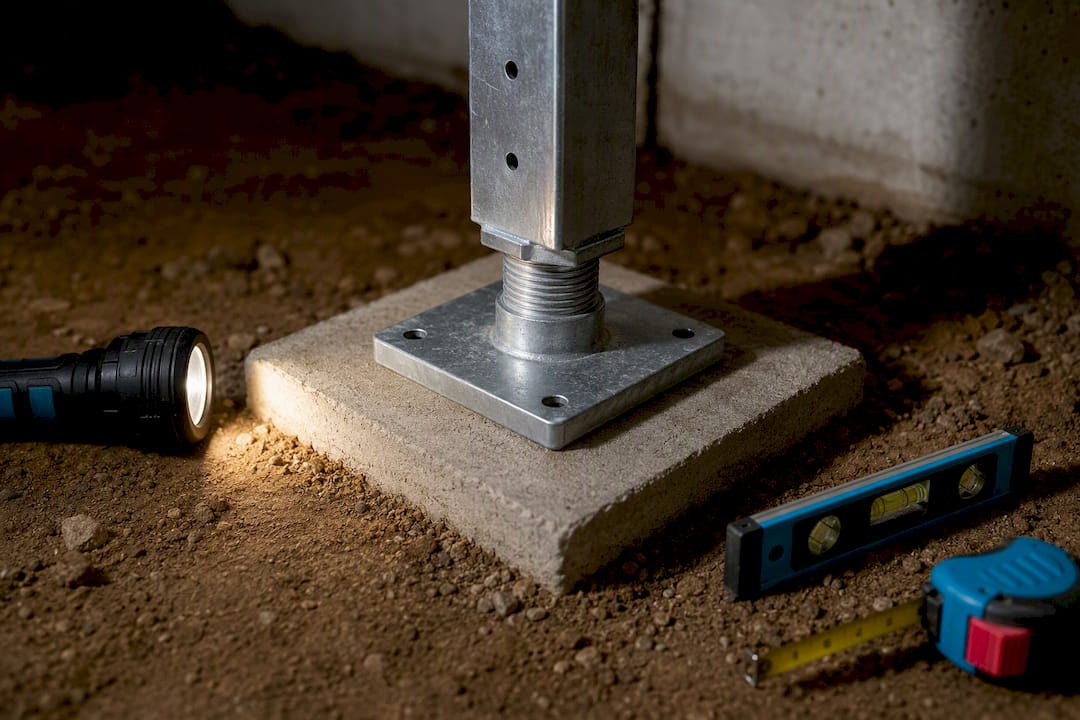
Every jack post is stamped with a rated capacity, and that number is not a suggestion. What most buyers miss is that the stamped figure assumes the post’s shortest setting. Extend a telescoping post to its maximum height and the safe working load drops, sometimes considerably, because a longer steel column bends more easily under the same weight. A 36-inch Tiger Brand jack post sold at typical home improvement stores illustrates the range you’ll see on retail shelves, though exact numbers vary by model and should always be read off the post itself, not assumed from memory.
Footing size matters just as much as the post rating. HUD’s foundations guidance stresses that piers and posts are only as good as the pad beneath them, and undersized footings on soft or expansive soil are a common reason posts settle again within a year or two.
- Check whether your crawl space soil is sandy, clay-heavy, or prone to holding water; each affects how large a footing needs to be.
- A pad that looks adequate for one post can be undersized if it’s also carrying a beam splice or a load from an added second story.
- If you’re lifting more than a fraction of an inch, or the beam spans a large opening, get a written load calculation before you touch the jack. That’s not overcaution, it’s the difference between leveling a floor and cracking a beam.
What Does a DIY vs. Professional Crawl Space Repair Cost?
Retail adjustable jack posts with a bearing plate typically run in the low hundreds of dollars for quality contractor-grade hardware, before you add concrete for the footing. Budget for the pad mix, extra labor if access is tight, and any incidental repairs you uncover once you’re under the house, rotted joists and old wiring have a way of showing up mid-project.
- Concrete, footing forms, and curing time add cost even to a simple single-post job.
- Access matters: a crawl space with 18 inches of clearance costs more in labor than one you can kneel in comfortably.
- Contractor pricing for engineered smart jack systems runs higher than a basic post swap because it includes design, warranty, and often a permanent footing.
- Homeowners commonly forget a vapor barrier, perimeter drainage, and local permits, all of which affect the real total.
When Should You Hire a Contractor or Structural Engineer?
Widespread settlement, beam rot spanning multiple joists, or foundation cracking beyond hairline width are signs a single post won’t solve the underlying problem. At that point you need someone qualified to design the fix, not another trip to the hardware store.
- A proper contractor or engineer visit includes a load analysis, footing specifications sized to your soil, and a plan for permanent piers rather than adjustable shoring.
- Ask any contractor how they calculate footing size, whether they pull permits, and what warranty covers the finished work; vague answers on any of those three are a red flag.
- Look at completed case studies before hiring, so you know what a finished job actually looks like.
Pro Tip: A short engineering inspection before major jacking work is inexpensive insurance. Confirming the right footing size and post placement upfront costs far less than repouring a cracked pad or replacing a beam you overstressed.
If your sag involves a joist that’s already cracked or rotted, a post won’t fix the wood itself. That’s a job for joist repair or sistering, not a jack.
Why Foundation RESQ Prioritizes Inspection Over Quick Fixes
Too many crawl space jobs treat a jack post as the finish line instead of a first step. The posts that hold up over decades are the ones installed after someone traced the actual load path, sized the footing for the real soil conditions, and dealt with the moisture that caused the settling in the first place. Skip that and you’re just scheduling a repeat visit in five years.
— Kayle
Get a Professional Crawl Space Inspection From Foundation RESQ
If the sag under your floor is bigger than one localized dip, or you’d rather not spend a Saturday under the house guessing at footing sizes, A free inspection before recommending any fix is often offered by specialized companies. That’s the practical alternative to buying a jack post and hoping it’s rated right for your beam: an engineer-informed plan instead of a guess.
A typical visit starts with locating the actual cause of the settling, whether that’s a failed footing, crawl space moisture, or a rotted beam, then walks you through options that range from targeted crawl space support installation to permanent piers designed for your soil. For homes where standing water is part of the problem, that plan can include encapsulation or dehumidification so the new supports don’t face the same conditions that caused the original sag. Financing options are available for larger jobs, so cost doesn’t have to force a shortcut. Start with a free inspection to find out what your crawl space actually needs before you buy a single jack.
Sources
- 1926.305 – Jacks – lever and ratchet, screw, and hydraulic. | Occupational Safety and Health Administration
- Accident Report Detail | Occupational Safety and Health Administration
- Inspecting Adjustable Steel Columns – American Society of Home Inspectors, Inc.
- Foundations guide (HUD)
- Crawl Space Jacks Guide (2026) | Types, Costs & Installation | CrawlRepair
FAQ
What Is the 3/4 Rule for Floor Jacks?
The “3/4 rule” is a rough field guideline some contractors use, capping how much of a jack’s rated capacity you actually load in practice, to leave a safety margin for uneven bearing or unexpected stress. It’s not an official OSHA standard, so the only number you must legally respect is the manufacturer’s marked rated capacity on the post itself.
How Do You Install a Jack Post in a Crawl Space?
Locate the sagging beam, pour and cure a properly sized concrete footing, then set the post plumb with bearing plates top and bottom. Raise it in small increments over several days, checking finishes as you go, and crib or block the load immediately once it reaches height.
How Much Do Crawl Space Support Jacks Cost?
A basic adjustable jack post with hardware typically costs a few hundred dollars including the concrete footing, though tight access or additional repairs push costs higher. Engineered smart jack systems installed by a contractor cost more upfront because they include design work, permanent footings, and a warranty; Foundation RESQ provides project pricing after a free inspection rather than a flat rate, since footing size and beam condition vary by home.
How Do You Jack Up a Sagging Floor in a Crawl Space?
Find the load path, prep a cured concrete footing, and raise the post gradually rather than all at once, since sudden lifts crack drywall and overstress joists. Block or crib the load as soon as it’s raised, and stop and call a professional if you notice new cracks, doors sticking, or the lift not behaving as expected.