
For crawl space water removal Tallahassee homeowners should start by protecting people from unsafe conditions and identifying what may be causing the water. Getting water out is only part of the job: if it returns after the next storm, the conditions that let it in still need attention. Standing water can be hard to assess from outside, and entering a damp, confined area may be unsafe, especially if electrical equipment or unstable footing is a concern.
Whether a home needs a sump pump, moisture control, or both depends on what is happening beneath it. A sump pump can help remove collected water, while crawl space encapsulation and a dehumidifier address different sources of ongoing moisture. These measures can work together, but not every home needs all of them.
This guide explains common causes of crawl space water in Tallahassee, immediate safety considerations, and options for removing water and limiting its return. You’ll also learn what an assessment can reveal about moisture, potential mold or wood damage, and how a plan tailored to your home can help protect it over the long term.
Key Takeaways
- Use a calm sequence: prioritize safety, assess the water, remove it, then address what may be causing it.
- Note whether water appears after rainfall, persists regardless of weather, or may be connected to a plumbing issue.
- Compare a sump pump, crawl space encapsulation, and a dehumidifier by the conditions each is meant to address.
- For crawl space water removal Tallahassee homeowners should connect the removal plan to measures that help limit recurring moisture.
- A professional assessment can help identify affected areas and drainage conditions so the moisture-control plan fits your home.
Crawl Space Water Removal in Tallahassee: What to Do First
Finding water beneath your home can be unsettling, especially when you can’t see how far it has spread or where it came from. Take it in a calm sequence: keep people away from unsafe conditions, note what you can observe, remove collected water using an approach suited to the site, and address conditions that could bring it back. Standing water, damp soil, persistent odors, and visible growth all deserve attention, but none identifies the full cause on its own.
Crawl space water removal means removing accumulated water and addressing the moisture conditions that may cause it to return. Pumping out visible water may be part of the work, but the source and extent of moisture help determine what else is needed. A what is a crawl space overview can explain the area beneath a home, but the conditions in an individual crawl space require a closer assessment.
How to recognize water in a Tallahassee crawl space
From a safe location, look for visible pooling, wet soil, condensation on surfaces, damp insulation, or a musty odor near the crawl space access. Conditions can vary across the space, and water may appear or worsen after rainfall. Treat these signs as clues, not a diagnosis: an odor or patch of visible growth alone can’t establish whether there’s mold, a leak, or structural damage.
What homeowners should do before removal begins
Keep children and pets away from affected access areas. Don’t enter standing water if exposed wiring, electrical equipment, unstable footing, or other unsafe conditions may be present. Even a shallow pool can conceal hazards or make the ground difficult to assess. If you can observe conditions safely from outside, don’t disturb wet materials or attempt to reach water in an unsafe area.
Record when you first noticed the water and whether it followed rainfall or seemed to coincide with a plumbing issue. Note where water or dampness is visible, whether the odor persists, and whether the conditions change. These details can help distinguish possible rain-related entry or drainage concerns from a suspected plumbing leak.
The right next step depends on what’s happening beneath the home. Is there standing water, dampness without pooling, or evidence that conditions recur after rain? The answers help guide water removal and whether ongoing moisture control should be considered. For crawl space water removal Tallahassee homeowners should address both collected water and the conditions contributing to it, rather than treating visible water as the whole problem.
Why Crawl Spaces Collect Water in Tallahassee Homes
Water in a crawl space can come from outside the home, from plumbing, or from moisture in the soil beneath it. In Tallahassee, the cause can’t be identified from location alone. A home’s grading, drainage paths, crawl space configuration, and the timing of the water all help narrow down what may be happening.
Finding the water source helps determine the right removal and prevention measures. Removing a pool without investigating why it formed may leave the underlying conditions unchanged, allowing moisture to return.
Rainwater, runoff, and drainage around the home
If water appears after rainfall, look for patterns around the property without entering an unsafe crawl space. Roof runoff, low areas near the foundation, or visible paths where water collects may help explain how moisture reaches the space below. The ground’s slope and the location of downspouts can influence where water travels, but surface clues aren’t proof of the source.
An assessment should consider how water moves around the specific home and whether the crawl space shows signs of entry. Conditions vary from property to property across the Tallahassee area, so local rainfall or soil characteristics shouldn’t be assumed to explain a particular home’s water problem without supporting evidence.
Leaks, groundwater, and persistent dampness
A plumbing leak may leave dampness or pooling that continues regardless of rainfall. If water appears unrelated to storms or a wet area persists, note its location and timing. Those details can help distinguish a suspected plumbing issue from rain-related entry or other drainage conditions. Groundwater may also be relevant, but an assessment needs to consider the property rather than assume it is the cause.
Recurring water calls for more than removing the visible pool. Damp soil, condensation, or moisture held in materials can remain after pooled water is gone. Since ongoing moisture can support mold growth, the EPA guidance on moisture and mold explains why moisture control matters. Persistent odor or visible growth deserves attention, but either sign alone doesn’t confirm the source or extent of a problem.
For crawl space water removal Tallahassee homeowners should look beyond the immediate water and consider what conditions keep feeding it. Foundation ResQ provides crawl space moisture-control solutions that can be tailored to findings such as water entry, recurring dampness, and drainage conditions, connecting water management with a plan to limit future moisture.
Crawl Space Water Removal Options: Pumps, Encapsulation, and Dehumidifiers
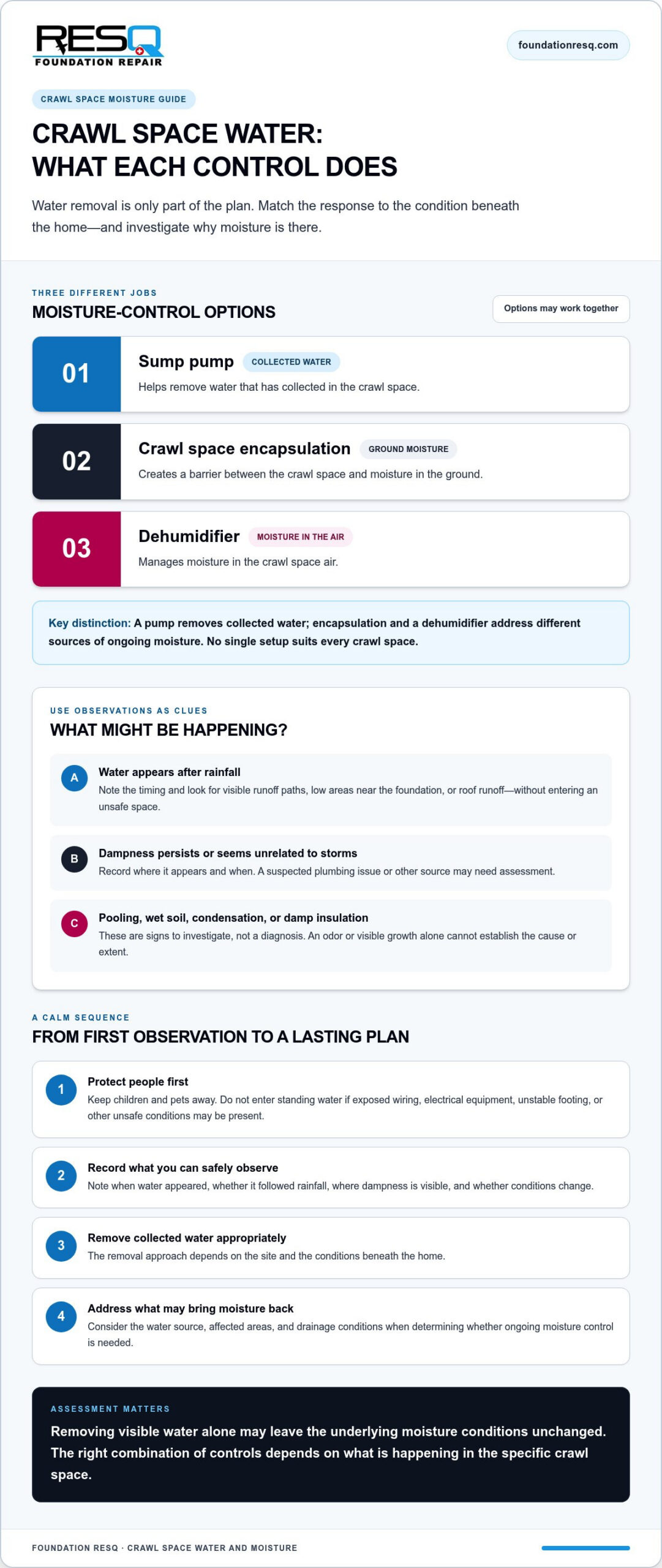
A pump, an encapsulation system, and a dehumidifier address different parts of a moisture problem. A pump removes collected water. Encapsulation creates a barrier between the crawl space and ground moisture. A dehumidifier manages moisture in the air. Depending on the property’s conditions, these options may complement one another, but no single setup suits every crawl space.
| Option | Purpose | Best-fit conditions and role |
|---|---|---|
| Sump pump | Collects and discharges water from a designated area. | May suit a crawl space where water collects and site conditions support a planned pump location and discharge route. |
| Encapsulation | Helps limit moisture from exposed ground by creating a barrier. | May form part of a plan for ongoing ground moisture, rather than remove an existing pool of water. |
| Crawl space dehumidifier | Manages humidity in the crawl space air. | May help address persistent dampness after the source and broader moisture conditions are assessed. |
When a crawl space sump pump may be appropriate
A sump pump moves water that collects in a designated area to a discharge location. It may be appropriate when an assessment finds recurring or pooled water that needs active removal. Placement and discharge planning depend on the crawl space and property conditions. A pump alone doesn’t explain why water is entering or prevent every source of moisture, so the plan should also account for where water gathers and how the system fits the site.
When encapsulation or a dehumidifier addresses moisture
Encapsulation and dehumidification target moisture conditions, not every water-removal need. A barrier can help limit ground moisture entering the crawl space, while a dehumidifier manages moisture in the air. If water is pooling, the cause and collected water may need attention first. If the space remains damp without a visible pool, humidity control or encapsulation may be relevant parts of a tailored plan.
Visible growth should be assessed rather than treated as proof of a specific cause. For more about addressing confirmed mold concerns, see the Tallahassee mold remediation guide.
For crawl space water removal Tallahassee homeowners should consider both immediate removal and longer-term moisture control. Foundation ResQ provides sump pump systems, crawl space encapsulation, and crawl space dehumidifiers, selected to suit the property’s conditions. The Tallahassee crawl space encapsulation buying guide offers more detail on how encapsulation may fit a moisture-control plan.
What to Expect During Professional Crawl Space Water Removal in Tallahassee
A professional process connects the water you can see with the conditions that may be causing it. For crawl space water removal Tallahassee homeowners can expect a sequence: assess the space, investigate likely sources, remove collected water, and consider moisture controls suited to the findings. The recommended work depends on the home’s access, crawl space layout, and observed conditions.
Assessment and water-source investigation
The assessment looks at where water or dampness is present and how widely it affects the crawl space. Access conditions, visible moisture, wet materials, and drainage around the home can all inform the next steps. A professional may also consider whether the water seems isolated or recurring and whether conditions appear connected to rainfall or possible plumbing indicators.
One photograph or symptom can’t establish the source or full extent of a problem. Looking at the crawl space and relevant drainage conditions together provides a more useful basis for planning. If access is limited or conditions are unsafe, that also affects how the space can be assessed.
Removal, moisture control, and next steps
Once the likely source and affected areas have been considered, the removal approach can be matched to the conditions. Collected water may need to be removed first. That addresses the immediate pool, but it doesn’t necessarily control moisture that remains in the space or prevent water from returning.
After standing water is addressed, follow-up measures can be selected based on the assessment. A sump pump system may suit conditions where water collects in a designated area. Crawl space encapsulation can help limit moisture from exposed ground, while a crawl space dehumidifier manages moisture in the air. These options can be used together, but the plan should fit the property rather than assume every crawl space needs all three.
A tailored plan should explain how the findings connect to the recommended work and which conditions each measure is intended to address. Foundation ResQ provides crawl space moisture-control solutions for Tallahassee homes, including sump pump systems, encapsulation, and dehumidifiers. Explore Foundation ResQ’s crawl space moisture-control solutions to learn about options for your home.
Choose a Lasting Crawl Space Water Solution with Foundation ResQ
A lasting approach starts with the cause, not a one-size-fits-all system. Consider four questions: Where is the water coming from? Is water collecting in the crawl space? Does dampness continue or return? Which controls fit the conditions observed? These questions help distinguish immediate water removal from the work needed to manage ongoing moisture.
Removing a visible pool may address the immediate problem, but it may not change the conditions that allowed water to collect. A tailored plan connects what’s happening in the crawl space with suitable removal and moisture-control measures. The aim is to address the observed conditions and reduce the chance of recurring moisture, without assuming one system will work for every home.
Match the solution to the crawl space condition
Different conditions point to different roles for equipment and moisture controls:
- Collected water: An appropriately planned sump pump system may collect and discharge water from a designated area. Its placement and discharge plan should suit the property.
- Moisture exposure: Crawl space encapsulation can form part of a strategy to limit moisture entering from exposed ground.
- Ongoing humidity: A crawl space dehumidifier can help manage moisture in the air, particularly when dampness persists without a visible pool.
These measures can complement one another, but each serves a different purpose. Foundation ResQ provides sump pump systems, crawl space encapsulation, and dehumidifiers for Tallahassee homeowners, with recommendations guided by the conditions found in the space.
Take the next step toward a drier crawl space
Before choosing equipment, connect the signs you’ve noticed, such as water after rain, pooling in a particular area, or persistent dampness, to a likely source. An assessment of the crawl space and surrounding drainage helps shape a plan for water removal and ongoing moisture control. The crawl space encapsulation guide for Tallahassee homeowners offers more detail on how encapsulation may fit that plan.
If you’re considering crawl space water removal in Tallahassee, explore Foundation ResQ’s services to learn how moisture-control options can be tailored to your home’s conditions.
Protect Your Crawl Space with a Plan That Fits
Water removal is an important first step, but lasting moisture control starts with understanding why water is there. The source, whether water is pooling or dampness persists, and the crawl space’s drainage conditions all help determine the right response. A sump pump can address collected water, while encapsulation and a crawl space dehumidifier can help manage ongoing moisture in different ways.
For crawl space water removal Tallahassee homeowners should look for a plan that addresses both visible water and the conditions that could bring it back. Foundation ResQ provides crawl space encapsulation and moisture-control services in Tallahassee, including sump pump systems and crawl space dehumidifier installation. The right combination depends on the home’s conditions, not a universal setup.
Explore Foundation ResQ’s crawl space moisture-control services to learn about options for your Tallahassee home. A clear assessment and tailored plan can help you take a steady step toward a drier, better-protected crawl space.
Frequently Asked Questions
Is water in a crawl space dangerous?
Water in a crawl space can create safety and home-maintenance concerns. Standing water may conceal electrical equipment, exposed wiring, or unstable footing, so don’t enter if hazards may be present. Ongoing dampness can also contribute to mold growth or damage to materials such as wood and insulation. Visible water alone doesn’t reveal the cause or extent, so treat it as a sign that the space needs attention.
How do you remove water from a crawl space?
Water removal starts with assessing the crawl space and identifying likely sources, such as rain-related entry, drainage conditions, or a suspected plumbing leak. The appropriate method depends on the amount and location of water and the site conditions. A pump may suit collected water, but removal should be followed by consideration of measures to manage moisture and reduce recurrence. Avoid entering water if electrical hazards or unsafe footing may be present.
Can a sump pump remove water from a crawl space?
Yes. A sump pump system can collect and discharge water from a designated area when the property’s conditions make it appropriate. Its placement and discharge plan should suit the crawl space and site. A pump addresses collected water, but it may not resolve why water is entering or ongoing humidity on its own. An assessment helps determine whether a sump pump should be part of a broader moisture-control plan.
Will crawl space encapsulation remove standing water?
No. Encapsulation is a moisture-control measure, not a way to pump out standing water. It can help limit moisture exposure from the ground after conditions have been assessed and existing water has been addressed. If a crawl space has a pool, the water and likely source need attention separately. Depending on the findings, encapsulation may complement a sump pump or dehumidifier as part of a plan tailored to the home.
How can I keep water from returning to my Tallahassee crawl space?
Start by identifying why water is collecting or dampness persists. Note whether conditions change after rainfall, where water appears, and whether there may be a plumbing issue. An assessment can consider the crawl space and surrounding drainage before recommending controls. Depending on the findings, a sump pump may manage collected water, while encapsulation or a dehumidifier may help address ongoing moisture. The right combination depends on your property.
How much does crawl space water removal cost in Tallahassee?
The cost depends on the source and extent of the water, affected areas, and the work needed to remove water and manage moisture afterward. A straightforward removal need may differ from a project involving recurring water or additional controls such as a sump pump, encapsulation, or dehumidifier. Because crawl spaces and conditions vary, an assessment is needed to develop a plan for the specific home rather than relying on a general estimate.
Does a crawl space dehumidifier remove standing water?
No. A crawl space dehumidifier manages moisture in the air; it isn’t designed to remove a pool of standing water. Collected water may need a separate removal approach, such as a sump pump system when site conditions support it. After standing water is addressed, a dehumidifier may help manage ongoing humidity as part of a broader moisture-control plan. The best approach depends on the source and conditions in the crawl space.