
What if the hairline cracks spreading across your living room wall aren’t just signs of a house settling, but a warning that the very ground beneath your feet is losing its grip? For many homeowners, noticing these shifts triggers an immediate wave of anxiety about sinkhole activity and the search for reliable foundation repair for concrete slab homes in Florida. It’s natural to feel overwhelmed by the potential costs and the confusion of choosing a permanent fix over a cosmetic patch. You want to protect your family’s greatest investment, but the volatile local geology often makes that feel like a constant challenge.
We believe that every homeowner deserves the peace of mind that comes from a stable, secure structure. You’re about to discover exactly why these slab failures occur and how to secure your home’s structural integrity using professional stabilization techniques. This guide provides a comprehensive look at the 2026 standards for structural remediation, moving from the science of our local limestone to the specific remedies that offer long-term protection. You’ll gain a clear understanding of the repair process so you can navigate the North Florida rain seasons with confidence and maintain your home’s full resale value.
Key Takeaways
- Understand how North Florida’s unique Karst topography and limestone bedrock create the underground voids that lead to slab instability.
- Learn to spot critical warning signs early, including interior door gaps and exterior stair-step cracks in your brickwork.
- Evaluate the most effective methods for foundation repair for concrete slab homes in Florida, such as helical piers and PolyRenewal concrete lifting.
- Discover how a professional structural evaluation provides a permanent remedy that protects your home’s long-term resale value.
- Stay ahead of 2026 building standards by choosing stabilization techniques designed specifically for Florida’s geological challenges.
Understanding Slab-on-Grade Foundations in the Florida Climate
In Florida, the architectural standard for residential construction is the slab-on-grade foundation. This design consists of a thick, single layer of concrete poured directly onto the prepared earth. Unlike homes in colder climates, Florida residences rarely include basements or deep crawl spaces. This isn’t a design preference but a geological necessity. Our state’s high water table means that digging just a few feet down often leads to saturated soil or standing water. By Understanding Slab-on-Grade Foundations, you can see how your home effectively floats on a shallow platform. This setup creates a critical bond between the concrete and the underlying soil. When the soil remains stable, the home stays level. However, if the ground shifts, the structural integrity of the entire building is at risk.
Why Slab Foundations are Standard in North Florida
In areas like Tallahassee, the shallow water table and sandy soil composition make deep excavations impractical and expensive. Developers prioritize slab construction because it’s both cost-effective and remarkably fast to implement. A slab-on-grade is defined as a floating concrete structure that distributes the weight of the home across a broad surface area. This efficiency comes with a trade-off. Because the foundation sits so close to the surface, it’s the first part of the home to feel the effects of soil erosion or compaction. Homeowners often mistake structural settlement for simple cosmetic drying cracks. While minor hairline cracks during the first year are common, persistent or widening gaps suggest a deeper issue that might require foundation repair for concrete slab homes in Florida to restore long-term stability.
The Vulnerability of Unreinforced Concrete Slabs
Concrete is incredibly strong under compression, but it lacks the flexibility to handle ground movement. Florida’s intense temperature fluctuations cause concrete to expand and contract daily. During our heavy North Florida rain seasons, the soil beneath the slab can become oversaturated, leading to a loss of load-bearing capacity. If the soil washes away or compresses unevenly, the slab loses its uniform support. It’s a simple rule of physics: a slab is only as strong as the soil supporting it. When voids form beneath the concrete, the weight of the structure forces the slab to bridge those gaps. Eventually, the tension becomes too great, and the slab cracks. Addressing these issues early with foundation repair for concrete slab homes in Florida prevents minor settlement from turning into a major structural failure that could compromise your home’s safety.
Why Florida Soil Causes Concrete Slabs to Settle and Crack
Florida’s landscape is famous for its beauty, but beneath the surface, the geology is incredibly volatile. Most homeowners assume their foundation is resting on solid, unmoving earth. In reality, the ground in North Florida is a complex mix of limestone, sand, and clay that reacts constantly to environmental changes. Understanding Why Florida Soil Causes Problems is the first step in recognizing why your home might be shifting. The primary driver of these structural issues is water. Whether it’s a slow, steady rain or a sudden tropical storm, moisture changes the density and volume of the soil supporting your slab every day.
Limestone Bedrock and Karst Topography
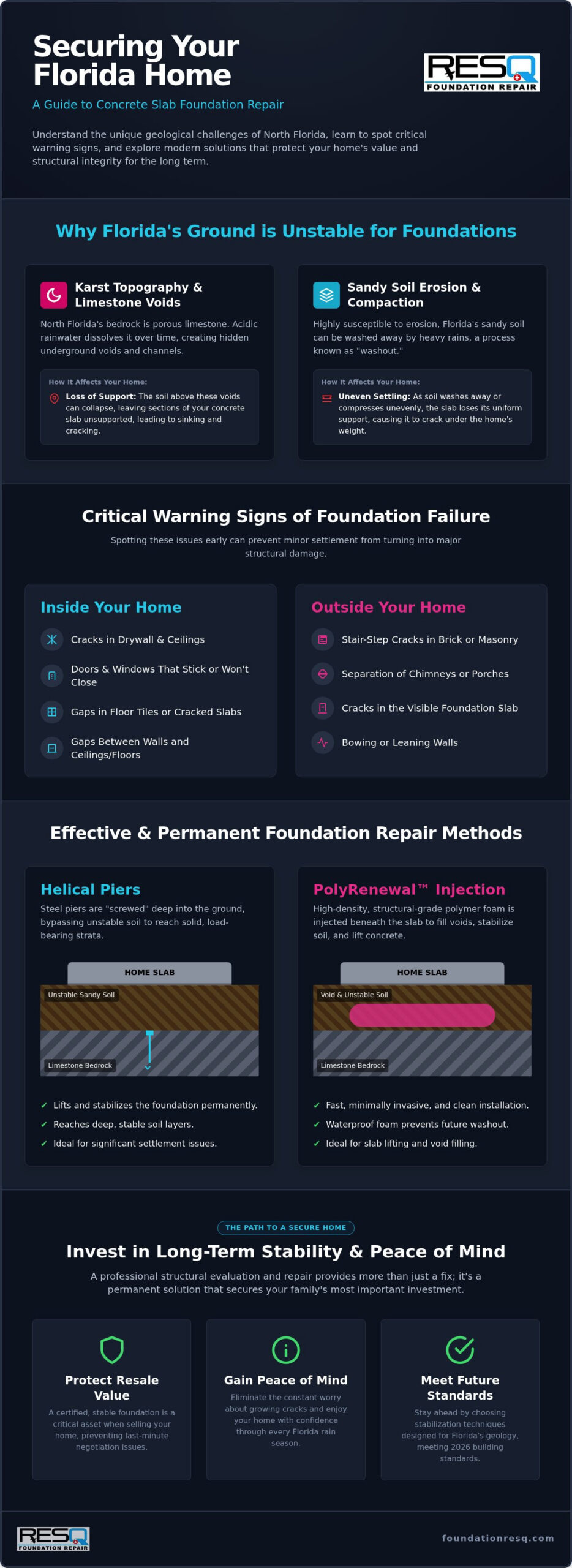
North Florida sits atop a unique geological formation known as Karst topography. This means the underlying bedrock is primarily composed of limestone, a porous rock that is easily dissolved by acidic rainwater over time. As water seeps through the earth, it creates underground channels and large voids in the rock. When a void grows large enough, the soil above it collapses into the gap, leaving your concrete slab without its necessary support. In Tallahassee, this often results in localized sinking where one section of a home drops while the rest remains stable. This type of settlement is a serious structural concern that requires specialized foundation repair for concrete slab homes in Florida to stabilize the building against the shifting bedrock.
Sandy Soil Erosion and Poor Compaction
Sandy soil is another major factor in foundation failure throughout our region. While sand drains well, it is also highly prone to erosion during heavy North Florida rain seasons. Intense rainfall can wash away the fine particles beneath a slab, a process often called “washout.” This is particularly common in newer Tallahassee developments where “loose fill” soil may not have been properly compacted before construction began. Additionally, pockets of expansive clay in the Panhandle further complicate matters. These clays swell when wet and shrink during dry spells, creating a constant cycle of movement that stresses the concrete. Water is the primary driver of soil movement in Florida, and its impact is only intensified by our frequent tropical storms. If you suspect your home is being affected by these geological shifts, a professional structural evaluation can determine the exact cause of the instability. Addressing these soil-related issues early ensures that foundation repair for concrete slab homes in Florida provides a permanent remedy rather than a temporary cosmetic patch.
Repair Methods: Comparing Slab Piering and Polyurethane Injection
Choosing the right method for foundation repair for concrete slab homes in Florida depends entirely on whether you need to lift a sinking surface or stabilize a failing structure. Many homeowners confuse these two goals. Lifting restores the height of the concrete, while stabilizing ensures the home never moves again. To make an informed decision, experts use data from sources like the USDA’s Professional Foundation Stabilization Solutions to understand the soil layers beneath your specific property. This data reveals if the issue is shallow soil erosion or deep-seated settlement near the limestone bedrock, which dictates the necessary remedy.
PolyRenewal for Concrete Lifting and Leveling
For non-structural concrete issues, such as a sinking patio or a garage floor that has pulled away from the walls, PolyRenewal is the modern standard. This method involves injecting a high-density polyurethane foam through small, penny-sized holes in the slab. Unlike traditional mudjacking, which uses a heavy grout that can actually cause more settlement, PolyRenewal is lightweight and won’t add stress to the soil. The foam expands to fill voids, waterproofs the underlying earth, and hardens in minutes. If your primary goal is restoring a level surface to a driveway or pool deck, Concrete Leveling in Tallahassee offers a fast, non-invasive remedy that protects against future moisture damage without the mess of heavy machinery.
Structural Piering for Permanent Stabilization
When the main slab of your home is sinking due to deep soil failure, surface-level lifting isn’t enough. In these cases, we must transfer the weight of the building to a more stable layer of earth or bedrock. Helical piers feature screw-like plates that allow them to be driven deep into the ground, making them ideal for the varying soil densities found in North Florida. For heavier residential structures, push piers utilize the weight of the home itself to drive steel tubes down to load-bearing strata. This process provides Professional Helical Pier Installation that bypasses unstable soil entirely. This level of deep underpinning is often the only way to achieve lasting foundation repair for concrete slab homes in Florida when the upper soil layers have been compromised by Karst activity. By anchoring your home to deep, reliable ground, you ensure a permanent fix that maintains the home’s structural integrity regardless of seasonal rain cycles.
Identifying Structural Warning Signs in Your Florida Slab Home
Many homeowners dismiss new cracks as normal “settling” that occurs as a house ages. While every home undergoes minor adjustments, Florida’s volatile geology means that settlement is often an active, ongoing process rather than a one-time event. In 2026, with the state’s increasingly intense rain cycles, it’s vital to distinguish between minor shrinkage and structural failure. If the ground beneath your slab is shifting, your home will leave a clear trail of evidence. Recognizing these indicators early is the key to successful foundation repair for concrete slab homes in Florida before the damage becomes a significant financial burden.
Interior Red Flags: More Than Just Cosmetic
The interior of your home often provides the first warnings that the slab is no longer level. When one section of the concrete sinks, it pulls the wall studs and door frames out of alignment. This physical shift manifests in several ways. You might notice doors that suddenly stick or windows that are difficult to latch. Diagonal cracks that run from the upper corners of door frames are another common sign of stress. Perhaps most telling is the appearance of gaps between your baseboards and the floor, which indicates the slab is dropping away from the interior walls. In some cases, you may even notice a “floor bounce” or a hollow sound when walking across the tile, suggesting that the soil has washed away and left the concrete to bridge an underground void.
Exterior Signs of Foundation Movement
The exterior of your home offers a broader perspective on its structural health. Because brick and mortar are rigid materials, they break in predictable patterns when the foundation moves. Stair-step cracks in the mortar are a classic red flag, following the joints between bricks as the wall settles. Another critical emergency sign is a chimney pulling away from the house. Because chimneys are often built on their own footings, they frequently show movement before the rest of the structure. You should also look for gaps in the fascia board at the roofline or cracks in the exposed foundation slab itself. We recommend that homeowners monitor the width of any existing cracks. If they grow wider than a quarter-inch, the soil movement is active and requires professional intervention. If you’ve noticed these red flags, a professional foundation inspection is the most reliable way to confirm the health of your home and determine if you need foundation repair for concrete slab homes in Florida to prevent further settlement.
Professional Foundation Stabilization Solutions in Tallahassee
Choosing a partner for foundation repair for concrete slab homes in Florida requires more than just a contractor; it demands a specialist who understands the red clay and limestone of Leon County. Foundation ResQ operates as the Steadfast Local Expert, providing deep community roots combined with access to extensive national engineering resources. This ensures that every stabilization project is backed by industry-leading research and high-quality materials. Whether we’re addressing a minor void with PolyRenewal or installing a deep piering system, our focus remains on providing a permanent remedy rather than a temporary patch. By choosing Professional Foundation Repair in Tallahassee, you’re investing in a solution that’s engineered to withstand Florida’s unique environmental pressures.
The Foundation ResQ Advantage
Our Tallahassee team at Foundation ResQ leverages top-tier structural engineering and proprietary stabilization technologies, ensuring solutions that aren’t available to general contractors. We combine this technical power with a serious, methodical approach to home health. Our specialists understand that structural integrity is paramount, and we treat every building with the professional care it deserves. This localized expertise is crucial when navigating the specific Karst topography of North Florida. We don’t just fix the symptoms of settlement; we provide a protective barrier between your property and the shifting soil. This commitment to long-term outcomes is why homeowners trust us to secure their greatest investment against the elements.
Next Steps: Securing Your Home’s Future
Taking action in 2026 means staying ahead of the next heavy rain season. During a free foundation inspection, you can expect a thorough walkthrough where our experts identify both current damage and potential future risks. We use a remedy-based framework that prioritizes the ultimate resolution of your structural concerns. Instead of waiting for cracks to widen or doors to stop latching entirely, proactive maintenance allows for more efficient corrections. Securing your home’s future starts with a clear understanding of the repair process and a commitment to professional stabilization. Our team is dedicated to guiding you from a state of uncertainty toward a state of informed resolution, ensuring your home remains a safe and stable environment for your family.
The long-term value of professional foundation repair for concrete slab homes in Florida extends beyond mere safety. A stabilized home maintains its full resale value and provides peace of mind during Tallahassee’s intense weather cycles. Our piering and lifting systems are designed for durability, offering a level of permanence that cosmetic fixes simply can’t match. When you’re ready to move from concern to a concrete plan, a professional structural evaluation is the first step toward a secure foundation. We’re here to provide the steady, reliable guidance you need to protect your home’s structural health for years to come.
Protecting Your Greatest Investment for the Long Term
Your home’s stability shouldn’t be left to chance. By understanding the role of North Florida’s unique Karst topography and recognizing the early warning signs of settlement, you can take proactive steps to secure your structure. Investing in professional foundation repair for concrete slab homes in Florida is the most effective way to preserve your property’s value and ensure your family’s safety. Whether your home needs deep stabilization or surface leveling, a methodical approach ensures a lasting result.
As a proud member of the Groundworks national network, Foundation ResQ offers permanent helical pier solutions and technical expertise specifically for the Tallahassee area. We focus on delivering a definitive remedy that protects your building from the elements and shifting soil. You don’t have to manage these structural concerns alone; our team is here to provide the steady, reliable guidance you deserve.
Take the first step toward total peace of mind today. Schedule Your Free Foundation Inspection with Foundation ResQ to receive a thorough structural evaluation from our local experts. We look forward to helping you build a more secure future for your home.
Frequently Asked Questions
Is foundation repair for concrete slab homes in Florida covered by insurance?
Insurance coverage typically depends on the underlying cause of the damage rather than the repair method itself. Most standard Florida homeowner policies provide coverage for catastrophic ground cover collapse but exclude gradual settlement or soil erosion. You should review your policy for specific sinkhole coverage riders. We recommend consulting with your insurance agent to determine if your specific structural issues qualify for a claim under current 2026 regulations.
How long does a typical slab foundation repair take in Tallahassee?
Most residential foundation repair projects in Tallahassee are completed within one to three days. The exact timeline depends on the number of piers required and the depth of the stable soil layers beneath your property. Minor concrete lifting using PolyRenewal often takes less than a single day. Our team works efficiently to minimize disruption to your daily routine while ensuring every stabilization component is installed with technical precision.
Can I stay in my home during the foundation piering process?
Yes, you can typically remain in your home while we perform foundation repair for concrete slab homes in Florida. The piering process is conducted primarily from the exterior of the structure using specialized equipment. Unlike major interior renovations, this work doesn’t require you to vacate the premises or move furniture in most cases. We prioritize a clean and organized job site to ensure your family’s comfort throughout the entire restoration process.
What is the difference between mudjacking and PolyRenewal concrete lifting?
Mudjacking involves injecting a heavy slurry of sand and cement, which can add significant weight to already unstable soil. In contrast, PolyRenewal uses a lightweight, high-density foam that expands to fill voids without adding stress to the ground. PolyRenewal is the modern standard because it’s waterproof and cures in about fifteen minutes. This method provides a more durable and non-invasive solution for lifting sinking concrete slabs permanently.
How do I know if a crack in my floor is structural or just cosmetic?
Cosmetic cracks are usually hairline thin and result from the concrete’s natural drying process shortly after construction. Structural cracks are typically wider than a quarter-inch and are often accompanied by other signs like sticking doors or sloping floors. If a crack spans multiple rooms or continues to grow over time, it indicates active settlement. A professional evaluation is the only certain way to determine if your home requires structural intervention.
Will foundation repair prevent future sinkhole activity on my property?
Foundation repair techniques like piering stabilize the structure of your home by anchoring it to deep, stable earth. While these methods protect the building’s integrity, they don’t stop the geological processes that cause sinkholes elsewhere on your property. Stabilization acts as a final line of defense for the home itself. It ensures the building remains secure even if the surrounding soil conditions continue to shift due to regional Karst topography.
What is the average cost of foundation repair for a slab home in Florida?
The cost of foundation repair for concrete slab homes in Florida varies based on the specific needs of the structure. Factors such as the number of piers required, the depth of the limestone bedrock, and the extent of the slab damage all influence the final investment. Because every geological situation in Tallahassee is unique, we provide customized plans after a thorough structural evaluation to ensure you receive an accurate and honest assessment.
Do helical piers work in Florida’s sandy and limestone-heavy soil?
Helical piers are specifically engineered to perform well in the diverse soil conditions found throughout North Florida. The screw-like plates allow the piers to be driven through loose sand and into the dense limestone or load-bearing clay layers below. This method provides a permanent anchor that bypasses the unstable upper soil entirely. It’s a reliable remedy for homes facing the specific challenges of our local geological environment and seasonal rain cycles.