
Why Foundation Repair Contractors Matter for Your Home’s Safety
Foundation repair contractors are specialized professionals who diagnose and fix structural damage to your home’s foundation. When you see warning signs like wall cracks or sticking doors, these experts use advanced techniques—from helical piers to carbon fiber reinforcement—to stabilize your home and prevent further damage.
When hiring, look for certified contractors with extensive experience, who work with structural engineers, and offer lifetime, transferable warranties. A reputable contractor will provide a detailed, written estimate after a thorough inspection and offer multiple repair methods custom to your specific issue.
According to industry data, foundation repairs cost an average of $5,000, with prices ranging from $2,200 to $7,800. While this may seem steep, ignoring foundation problems can lower your home’s value by up to 20% and lead to dangerous structural failures. These aren’t just cosmetic issues; they are red flags signaling that your home’s structural integrity, safety, and value are at risk.
I’m Kayle Vernon, and with a decade of experience in home services, I’ve worked closely with foundation repair contractors to help homeowners understand this critical investment. My background has given me insight into what separates exceptional contractors from the rest.
Identifying the Red Flags: When to Suspect Foundation Problems
Foundation problems often start small, but ignoring them leads to more expensive repairs. Here are the warning signs your home may be in trouble.
Interior Signs
- Sticking Doors and Windows: If doors and windows that once operated smoothly now stick or won’t latch, your foundation may have shifted, warping their frames.
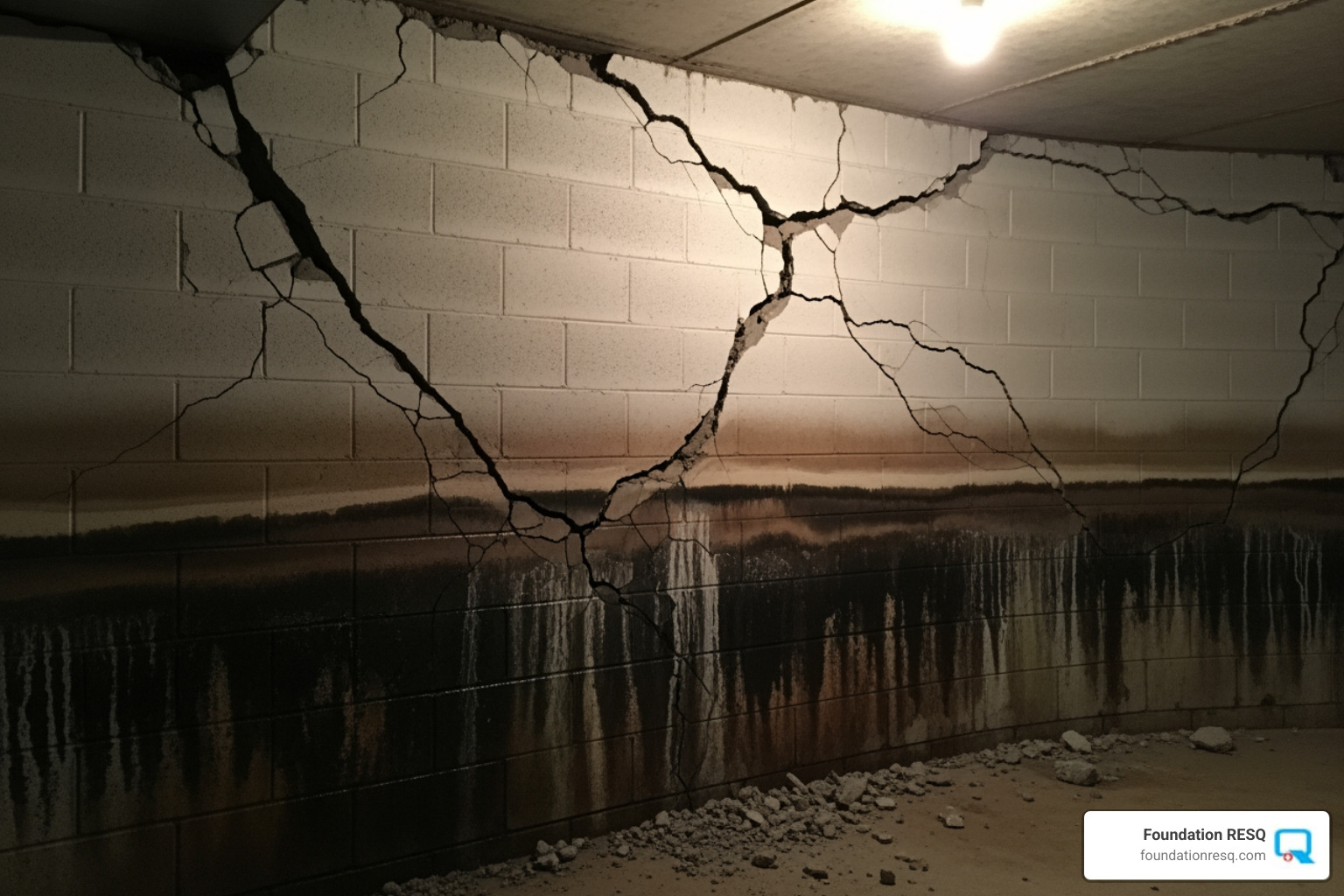
- Wall Cracks: While hairline cracks can be normal, pay attention to diagonal cracks extending from the corners of doors and windows, cracks wider than a quarter-inch, or any crack that is actively growing.
- Floor Cracks and Sloping: New or expanding cracks in concrete floors or tiles can indicate foundation movement. If a marble placed on the floor consistently rolls to one side, your floors are no longer level.
Exterior Signs
- Brick Cracks: Look for “stair-step” cracks that follow the mortar lines in your brickwork. This classic pattern often signals uneven foundation settlement.
- Gaps Around Windows and Doors: Gaps between your exterior walls and window or door frames are visible proof that your foundation is shifting.
- Leaning Chimney: A chimney that is tilting or pulling away from the house is a sign of serious foundation settlement that needs immediate attention.
Basement Signs
- Bowing Walls: Basement walls that bulge or curve inward are under immense pressure from water-saturated soil. Left untreated, these walls can fail. Foundation repair contractors can stabilize them, and we specialize in Bowing Walls repair to prevent collapse.
- Water Intrusion: Water seeping through cracks, damp walls, or standing water in your basement indicates your foundation has been compromised. This moisture can lead to mold growth and wood rot.
Long-Term Consequences
Foundation problems don’t fix themselves; they only become more severe and costly over time. Minor issues can escalate into major structural damage, creating an unsafe home. Furthermore, foundation problems can reduce your home’s value by up to 20%. Unchecked water intrusion also leads to secondary issues like mold, wood rot, and pest infestations. Catching these signs early makes repairs less extensive and more affordable.
Understanding Repair Methods and What Causes Damage
Understanding what causes foundation problems and how foundation repair contractors fix them helps you make informed decisions. Damage is usually a gradual process shaped by environmental conditions in Alabama, Florida, and Georgia.
Common Causes
- Soil Movement: In Alabama and Georgia, expansive clay soils swell when wet and shrink when dry, causing foundations to crack and settle. In Florida, sandy soils can erode or compact over time, leading to uneven settlement.
- Moisture Fluctuations: Heavy rains followed by dry spells create a cycle of soil expansion and contraction, putting immense stress on foundations.
- Poor Drainage: Water pooling around your home saturates the soil, increasing hydrostatic pressure that can bow basement walls and create leaks.
- Poor Construction: If soil wasn’t properly compacted or the foundation wasn’t designed for local soil conditions, problems can appear years later.
Repair Methods Overview
Experienced foundation repair contractors match the solution to the problem.
- Piering: For settlement issues, we install deep support piers to transfer the home’s weight to stable soil or bedrock. Helical piers are screwed into the ground and are ideal for lighter structures. Push piers are hydraulically driven to bedrock, providing maximum stability for heavier structures.
- Concrete Leveling Services: We inject high-density polyurethane foam beneath sunken concrete slabs (driveways, patios, floors) to lift them back into place quickly and cleanly.
- Carbon Fiber Reinforcement: For bowing basement walls, we apply high-strength carbon fiber straps to the interior surface to prevent further movement. This method is strong, non-invasive, and can be painted over.
- Epoxy Injections: This method seals non-structural cracks in concrete, preventing water intrusion and further deterioration.
Waterproofing’s Role
Water is often the root cause of foundation failure. That’s why waterproofing and foundation repair are linked. By managing water with proper drainage and waterproofing systems, we reduce soil pressure and erosion, protecting the foundation’s stability. Fixing a bowing wall without addressing the water causing it is only a temporary solution.
Residential vs. Commercial
While the principles are the same, commercial foundation repair involves larger structures, heavier loads, and more complex engineering than residential projects. We tailor our approach to the scale of the property, whether it’s a family home or a large office building, ensuring an engineered solution that lasts.
| Repair Method | Best Suited For | Key Benefit | Typical Application Areas (AL, FL, GA) |
|---|---|---|---|
| Helical Piers | Lighter structures, pre-fab buildings, new construction, general settlement | Quick installation, effective in various soils, minimal disturbance | All regions, especially where soil conditions vary or lighter loads exist |
| Push Piers | Heavier structures, significant settlement, unknown soil conditions | Driven to bedrock for maximum stability, strong lifting capability | All regions, particularly where heavy structures need stabilization |
| Concrete Leveling (Polyurethane) | Sunken concrete slabs (patios, driveways, interior floors) | Fast, clean, lightweight, restores functionality | All regions, for both residential and commercial concrete surfaces |
| Carbon Fiber Reinforcement | Bowing/leaning basement or crawl space walls | High-strength, non-invasive, prevents further movement | Homes with basements or crawl spaces experiencing lateral pressure |
| Epoxy Injections | Non-structural concrete cracks | Seals cracks, prevents water intrusion | Any concrete structure with minor cracking |
The Financial Side: Costs, Investments, and Warranties
Foundation repair is an investment in your home’s safety and value. While nobody enjoys unexpected repair bills, addressing foundation issues promptly is one of the smartest financial decisions a homeowner can make.
Average Cost
Most homeowners pay around $5,000 for foundation repairs, with projects typically ranging from $2,200 to $7,800. The final cost depends on several factors.
Cost Factors
The price of a repair is influenced by the type of repair needed (e.g., epoxy injection vs. steel piers), the severity of the damage, your home’s size, and the type of foundation (slab, crawl space, or basement). Accessibility also plays a role; difficult-to-reach areas may increase labor costs. Addressing the root cause, such as poor drainage, may add to the initial cost but prevents future issues.
Repair as an Investment
A compromised foundation can reduce your home’s value by up to 20%. A $5,000 repair can prevent a potential $50,000 loss on a $250,000 home. More importantly, it ensures your family’s safety by keeping your home structurally sound. Since foundation problems worsen over time, early intervention is the most cost-effective approach.
Warranties
Reputable foundation repair contractors stand behind their work. At Foundation RESQ, we offer lifetime, transferable warranties on many of our solutions. A transferable warranty is a powerful selling point that adds value to your property if you decide to sell. We will explain all warranty details during your free consultation.
Financing
We understand that necessary repairs can strain a budget. That’s why we offer flexible financing options to make your project manageable. Our goal is to help you stabilize your home without financial stress.
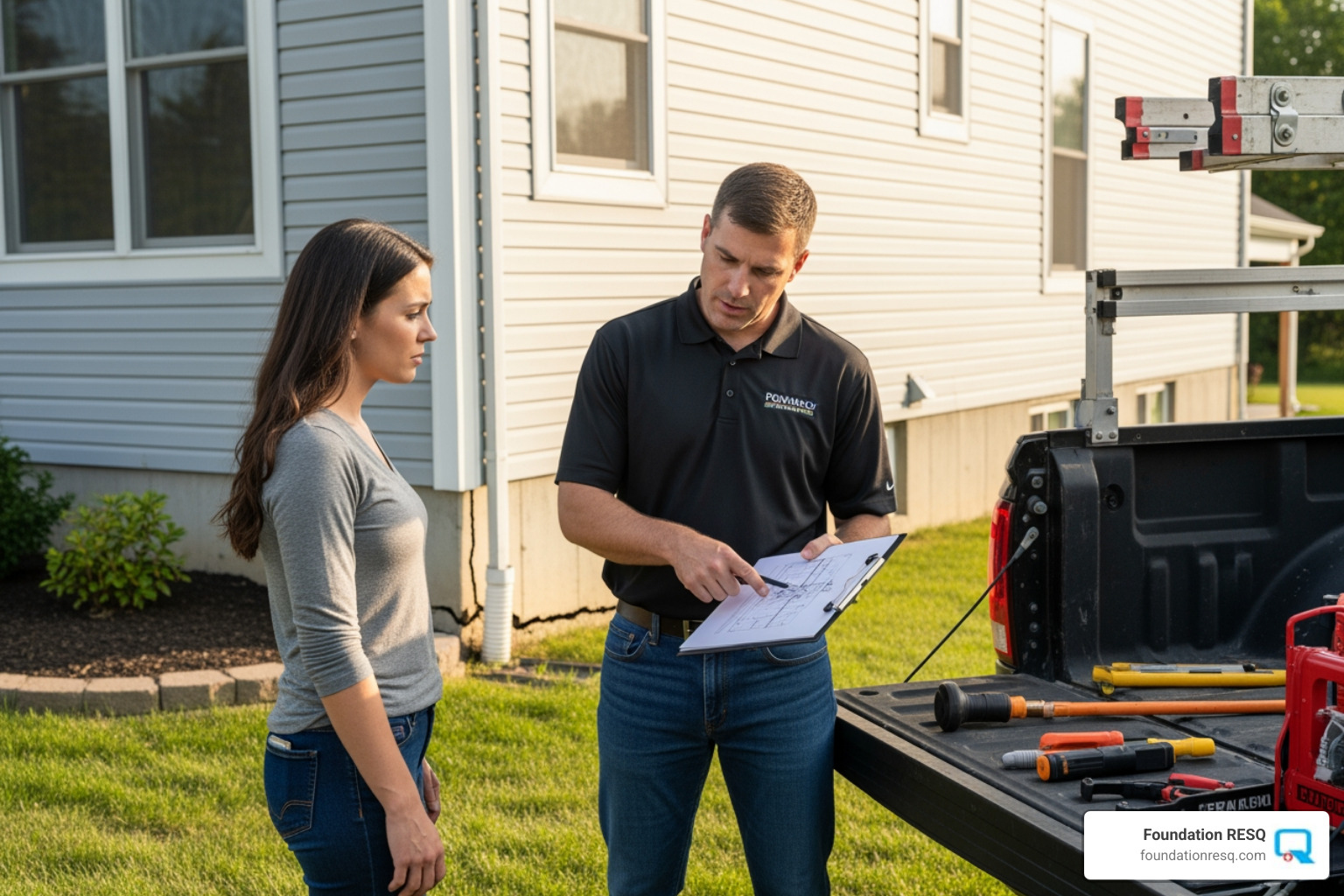
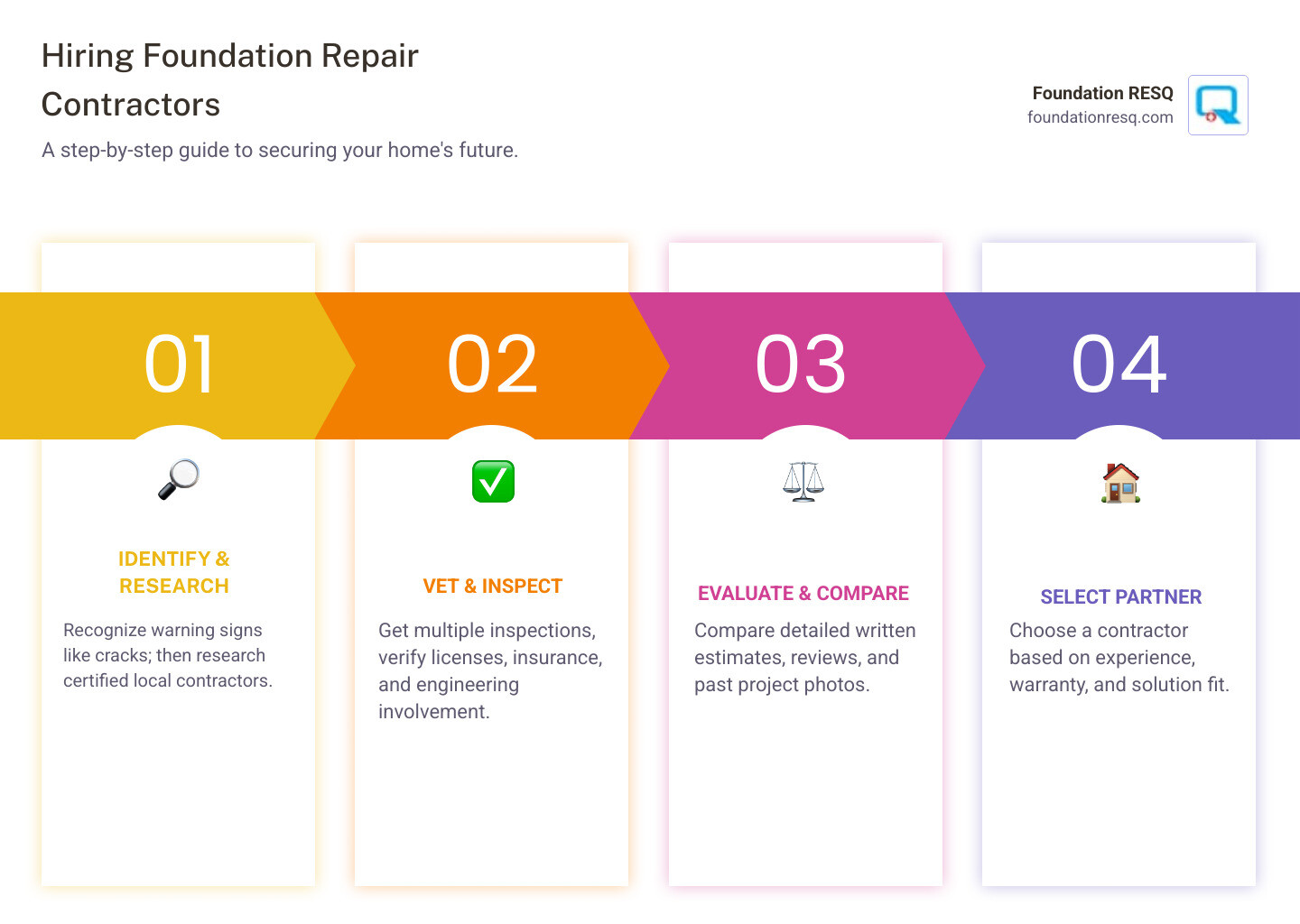
How to Hire the Best Foundation Repair Contractors
Choosing the right foundation repair contractors is crucial for protecting your home’s structural integrity. The right partner will solve the problem correctly, while the wrong one can create a costly nightmare.
The Hiring Process
A methodical hiring process ensures you find a qualified expert.
- Look for Engineer Involvement: Quality contractors collaborate with geotechnical and structural engineers to design custom, engineered solutions for your specific soil conditions.
- Prioritize Experience: In foundation repair, experience is paramount. A contractor with decades in the business has the knowledge to diagnose problems accurately and choose the most effective repair.
- Demand Quality Assurance: The best contractors use premium products and employ their own trained crews, not subcontractors. This ensures accountability and a lasting repair. You can learn more about our experienced team and see examples of our past projects.
Finding and Vetting Reputable Contractors
- Start with Referrals and Professional Organizations: Ask friends and neighbors for recommendations. Also, check directories from groups like the National Foundation Repair Association (NFRA). You can find a certified pro via the NFRA.
- Use a Vetting Checklist: Once you have a list of candidates, verify they are properly licensed in your state (Alabama, Florida, or Georgia) and carry both liability and worker’s compensation insurance.
- Read Reviews and Get Multiple Quotes: Check online reviews for patterns in customer feedback. Always get at least three detailed, written estimates to compare solutions, not just prices.
Key Questions to Ask Potential Contractors
When you meet with contractors, their answers to these questions will reveal their qualifications.
- How many years of experience do you have in foundation repair? (Look for specialized, long-term experience.)
- Do you use your own trained crews or subcontractors? (In-house crews offer better quality control.)
- What role will a structural engineer play in my project? (Ensure they are actively involved in the design.)
- Can you explain why this repair method is the best solution for my home? (A good contractor will educate you.)
- What kind of warranty do you offer, and is it transferable? (Look for lifetime, transferable warranties.)
- What is the estimated timeline for the project?
- Can you provide proof of your license and insurance? (This should be readily available.)
- Can you provide references from past clients?
- How will you protect my property during the repair? (This shows respect for your home.)
- What are your payment terms and financing options? (Understand all costs upfront.)
A professional contractor will welcome these questions and provide thorough answers.
Frequently Asked Questions about Foundation Repair
Here are answers to some of the most common questions we receive from homeowners.
Are foundation repairs a worthwhile investment?
Yes, absolutely. Foundation repair is a critical investment for three main reasons:
- Safety: It secures the structural integrity of your home, protecting your family.
- Value: It prevents a potential loss of up to 20% of your home’s value caused by foundation damage.
- Cost-Savings: Addressing problems early is far less expensive than waiting for them to become severe structural failures.
How long does a typical foundation repair take?
The timeline depends on the scope of work. Minor repairs, like sealing small cracks, can often be completed in 1-2 days. More extensive projects, such as installing multiple piers or reinforcing walls, may take a week or more. The project’s size, complexity, and weather can all affect the timeline. We provide a detailed schedule during your free inspection and work to minimize disruption to your daily life.
Does homeowners insurance cover foundation repair?
Typically, no. Most standard policies do not cover damage from soil movement, settling, or expansive clay, as these are often considered maintenance issues. However, there are exceptions. If the damage is the direct result of a covered peril, such as a burst pipe or fire, your policy might provide coverage.
Always check your specific policy and talk to your insurance agent to understand what is and isn’t covered. Even if insurance doesn’t apply, we offer financing options to help make this essential repair affordable.
Conclusion
Your home is likely your most significant investment, and it all rests on its foundation. A stable foundation is essential for keeping your home safe, structurally sound, and valuable.
We’ve covered the warning signs, causes, and proven repair methods that restore a foundation’s integrity. The most important takeaway is that early action makes all the difference. Addressing foundation problems early leads to simpler repairs, lower costs, and protects your home’s value.
You don’t have to solve these problems alone. Choosing the right foundation repair contractors means partnering with experienced professionals who use engineered solutions and stand behind their work with strong warranties.
For homeowners across Alabama, Florida, and Georgia, Foundation RESQ is committed to providing lasting solutions that protect your home and peace of mind. Our free, no-obligation inspections offer clarity and an honest path forward.
Your home’s foundation supports everything. Let us help you ensure it’s as solid as it should be.