
A neat patch can hide why a garage floor cracked. Foundation repair for a cracked garage floor is appropriate when soil movement or lost support beneath the slab causes the damage; cracks from concrete shrinkage or aging may need a different solution. The cause matters more than the crack’s appearance alone.
It’s understandable to want a smooth, dependable surface again, especially when cracks widen, sections become uneven, or water pools. This article explains how expansive soil, underground voids, and construction issues can affect a garage slab, and which clues may indicate a support problem rather than a surface defect.
You’ll also learn how the cause guides the repair, from restoring lost support to addressing a non-structural crack. Understanding the difference can help you see what may restore stability and when a visible patch alone is unlikely to solve the problem.
Key Takeaways
- Soil movement and changing moisture can affect the support beneath a garage slab; crack patterns and unevenness help show when settlement may be involved.
- Epoxy or polyurethane injection may suit a non-structural crack, while a crack linked to movement needs its underlying cause addressed.
- Voids beneath concrete can leave a slab unsupported. Understanding the direction and extent of settlement helps guide a repair that restores support.
- Some cracks follow control joints or result from concrete shrinkage. Foundation repair, including pier installation where appropriate, can address problems tied to structural settlement.
How expansive soils contribute to foundation settlement
Expansive soil changes volume as its moisture content rises and falls. When wet ground expands, it can press against a slab; when it dries, the soil can shrink and leave less support beneath the concrete. Repeated movement may contribute to settlement, uneven surfaces, and cracks. Soil conditions are only one possible cause: poor compaction, erosion, or water washout can also undermine support.
Moisture patterns around a garage matter. For example, runoff that repeatedly collects beside one side of a slab can soften or wash away soil below it. Extending downspouts at least 10 feet from the home can reduce the risk of erosion and water damage beneath the slab. Where excessive moisture around the foundation contributes to settlement, a drain tile system may help manage the water. It does not replace repairs needed to restore lost support.
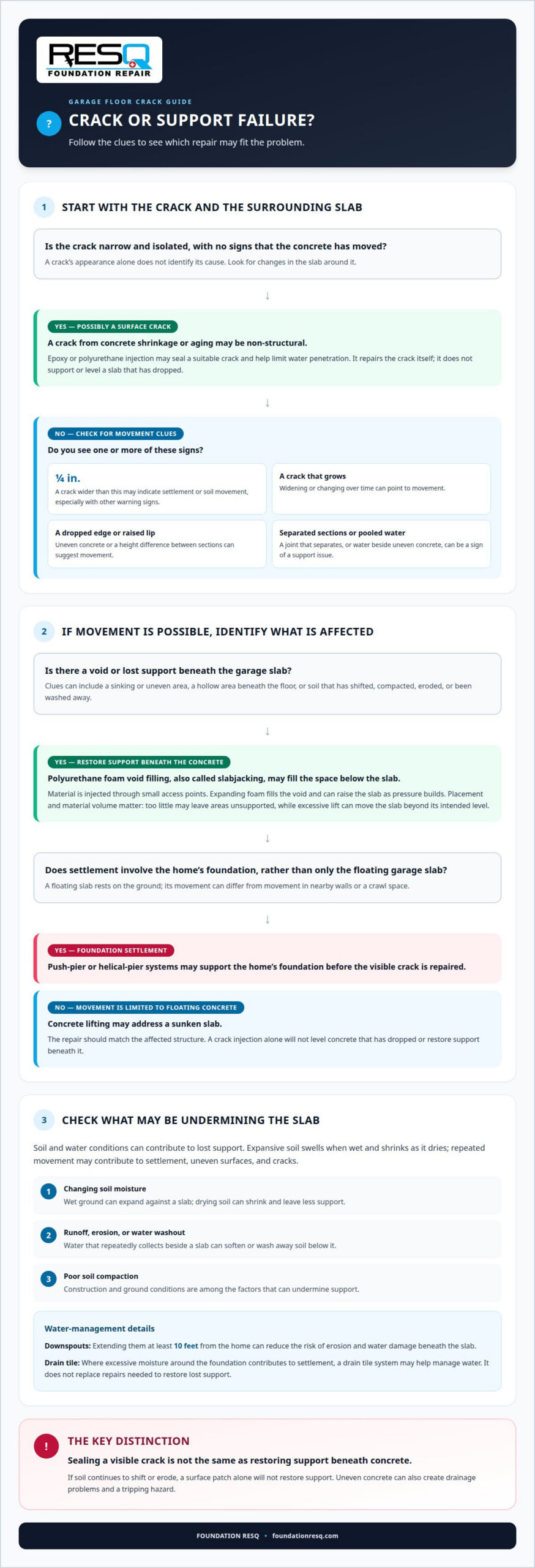
Look at the crack alongside other changes. A garage-floor crack wider than 1/4 inch may indicate settlement or soil movement, especially with other warning signs. A dropped slab edge, a widening crack, or a lip between concrete sections can suggest movement rather than a surface-only defect. A crack that stays isolated may have a different cause, such as shrinkage or aging.
Building-code and permit requirements depend on the repair scope and applicable local rules. Warranty coverage depends on the specific repair agreement, so no single term applies to every garage floor.
Consider professional foundation repair when a crack grows, the slab drops, sections separate, or water pools beside uneven concrete. These signs can point to movement or lost support beneath the surface.
Ignoring settlement can leave uneven concrete, drainage problems, and a tripping hazard. If soil continues to shift or erode, sealing the visible crack alone won’t restore support.
Repair time depends on the affected area, access, and work needed to address the cause. How long a repair lasts also depends on underlying soil and moisture conditions, and on whether the work restores support rather than simply sealing the crack.
Ready to Have Your Pristine Garage Floor Back?
A narrow crack caused by concrete shrinking as it cures may be non-structural. Epoxy or polyurethane injection can seal a suitable crack and help limit water penetration. The material enters the crack, bonds within the concrete, and closes the path through the slab. This addresses the crack itself, not a floor that has dropped or lost support.
The distinction matters. If one side of a garage floor sits lower, for example, injecting the visible crack won’t level the surface. The cause and direction of movement must first be assessed. A growing crack, separated joint, or noticeable lip between concrete sections can indicate a support issue. In that case, surface repair alone may leave the underlying problem unresolved.
Polyurethane injection can also fill voids beneath a garage floor. In slabjacking, material is injected through small access points into the space below the concrete. Expanding foam fills the void and can raise the slab as pressure builds. Placement and material volume matter: too little may leave areas unsupported, while excessive lift can move the slab beyond its intended level.
These methods have different purposes. Crack injection seals a suitable crack; foam void filling restores contact beneath unsupported concrete. An assessment can determine whether the slab needs lifting, crack repair, or both. A stable slab with a shrinkage crack, for example, differs from a sunken section over an underground void. Matching the repair to the condition helps avoid treating only the visible symptom.
If a settled garage slab needs lifting, explore ways to restore a stable concrete surface and understand which repair approach fits the damage.
Voids and loss of support beneath a garage slab
A garage slab can settle when soil shifts, compacts, erodes, or leaves a void beneath the concrete. Contractors assess the direction of movement, drainage, and whether the damage is isolated or part of a wider support problem.
Restoring Slab Support and Position
Restoring support means addressing a gap or unstable ground beneath a slab, then correcting its position where the repair allows. This matters because sealing a crack won’t support concrete that has dropped. A floating garage slab rests on the ground rather than relying on the home’s foundation. Its movement can differ from movement in nearby walls or a crawl space.
Repairing a Sinking or Uneven Floor
Repairing a sinking or uneven floor starts with assessing settlement, possible voids, drainage patterns, and nearby structural movement. This helps determine whether the issue is limited to the slab or part of a larger support problem. Foundation repair for cracked garage floor settlement depends on whether movement affects the building’s foundation or only the floating slab.
A low edge beside pooled water, for example, may indicate that drainage or moisture is contributing to soil loss. A hollow area beneath the garage floor can point to a void, while a raised lip can create a tripping hazard. These clues are considered together to identify where support is needed.
Consider adjacent spaces, too. A damp crawl space may need moisture control, but that alone doesn’t mean the garage slab has settled. Assessing the slab, foundation, and surrounding ground helps distinguish separate problems.
If settlement involves the home’s foundation, push-pier or helical-pier systems may support it before the visible crack is repaired. For floating concrete, Foundation ResQ’s PolyRenewal Concrete Lifting can address a sunken slab. Foundation repair for cracked garage floor damage should match the affected structure rather than treat every crack the same way.
Construction issues, including joints and soil preparation
A garage floor can crack as concrete shrinks during curing. Temperature fluctuations also make concrete expand and contract, contributing to cracks over time. A typical garage floor is a concrete slab, generally reinforced with rebar, but reinforcement doesn’t prevent every surface crack. An isolated crack, for example, may reflect shrinkage rather than foundation settlement, especially without uneven flooring or other signs of movement.
Control joints are intentional gaps that give a slab room to move and help control cracking. A crack that follows a straight joint line or pattern may be normal. Its location and shape offer useful clues during an inspection. By contrast, a crack crossing the slab irregularly or widening alongside a height difference deserves closer evaluation. A single crack matters less than how it relates to the floor and surrounding structure.
Soil preparation also affects the concrete beneath a garage. If the ground wasn’t compacted sufficiently during construction, it can settle later and leave parts of the slab without consistent support. Water can also erode or wash soil away, creating a void beneath the floor. An uneven section with a visible lip between concrete areas, for example, may indicate movement below rather than a curing crack.
A sound assessment considers the crack pattern, slab level, joints, drainage, and signs of lost support together. That distinction guides the repair: a stable slab with a crack along a control joint may need a different response from a slab affected by settlement. Surface patching won’t correct movement caused by unsupported ground. If settlement has changed the slab’s position, the plan needs to address support as well as visible damage.
If a garage floor is uneven or its cracks are changing, request an assessment of your garage floor to identify whether the cause is surface cracking or lost support.
Foundation ResQ: Foundation repair
Foundation ResQ provides foundation repair for garage-floor concerns linked to settlement or structural movement. When cracks appear alongside a dropped slab, uneven surfaces, or related foundation signs, identifying the cause helps determine whether the problem needs more than a surface repair.
When foundation settlement affects the structure, helical pier installation or push pier installation may provide support. The right approach depends on the movement and affected area. A crack caused by concrete shrinkage alone may not require foundation repair, so distinguishing surface cracking from lost support is important.
If your garage floor shows signs of settlement, contact Foundation ResQ for a free inspection and estimate for foundation repair.
Choose a Clear Next Step for Your Garage
A practical next step is to assess the damage in context, not as a mark on concrete alone. Foundation repair for a cracked garage floor should address whether the slab, the home’s foundation, or both need attention. That distinction helps direct the work toward the source of the problem and gives you a clearer basis for deciding what to do next.
Foundation ResQ provides foundation repair, including helical pier installation when foundation support is needed. It also offers Mold Remediation Services for mold concerns, rather than slab movement. A focused assessment can connect the problem you’re seeing with the type of repair that fits, without treating every crack as the same issue.
If you’re ready to discuss the garage floor or related foundation concerns, contact Foundation ResQ. A calm, informed next step can help you move toward a more stable home.
Frequently Asked Questions
What does a concerning foundation crack look like?
A horizontal crack in a foundation wall wider than 1/8 inch can signal serious soil or hydrostatic pressure. Pay attention if it widens, runs across several areas, or appears with other changes, such as sticking doors or sloping floors. A crack’s direction and progression provide useful clues, but the surrounding structure matters too. A single mark alone doesn’t establish the cause.
What is the average cost to fix a cracked foundation?
There isn’t one dependable average cost for every cracked foundation because the repair depends on what caused the damage and how much support is affected. Surface crack repair differs from structural stabilization, and access and repair scope also influence the work. In Tallahassee, Foundation ResQ offers free estimates. The repair cost depends on the specific needs of the project.
What kind of cracks show foundation issues?
Cracks that spread irregularly, widen over time, or extend from a floor onto a wall can indicate structural movement. Horizontal cracks in foundation walls deserve attention, especially if accompanied by bowing or other visible changes. A small vertical wall crack, by contrast, may be cosmetic. Consider its direction, width, and changes over time rather than judging by one feature alone.
What causes cracks in a garage floor foundation?
Garage-floor cracks can result from concrete shrinkage during curing, temperature changes, shifting soil, or water eroding ground beneath the slab. Poor soil compaction during construction can also leave uneven support. A crack may form as concrete cures, for example, while a dropped slab section suggests the ground below may have changed. The crack’s pattern and surrounding conditions help distinguish these causes.
How can you tell whether a garage floor crack is structural or cosmetic?
A crack is more concerning when it changes along with the floor, such as when a section becomes uneven or a gap opens between adjoining concrete. A stable, isolated line may be cosmetic, particularly if it follows a control joint. Note whether the crack grows or connects with other damage. That pattern helps show whether the concrete itself cracked or the slab moved.
How much does garage floor crack repair cost in the United States?
Garage-floor repair costs vary across the United States because sealing a stable crack differs from lifting a settled slab or addressing foundation support. The affected area, access, cause, and repair method shape the project, so a single national figure would not describe every case. In Tallahassee, Foundation ResQ offers free estimates; the price depends on the repair needs and is provided after a quote request.