
A lifetime label doesn’t mean every foundation problem is covered. A foundation repair warranty generally applies only to work performed by the company that issued it, and only for the period stated in the agreement. The most useful foundation repair warranty information starts with that distinction: the written terms define what’s protected, what’s excluded, and whether coverage can transfer to a new owner.
It’s reasonable to expect a warranty to help protect a major repair, but the coverage period alone doesn’t show how much protection it provides. This guide explains what repair warranties may cover, how transfers work, and which events or later changes can affect coverage. You’ll also learn how to compare warranty terms with the repair method and scope of work, so you can assess an offer with a clear understanding of what it promises.
Key Takeaways
- Read the warranty’s written scope: coverage usually applies to the work performed, not every foundation or structural problem.
- When a home changes hands, transfer rules and deadlines can affect whether the existing coverage continues.
- Natural disasters, soil movement, drainage conditions, and later work on the foundation can affect warranty coverage.
- Compare the repair method and the warranty’s exclusions, maintenance requirements, and remedy, not just its term.
- Before signing, understand who pays for materials, labor, and access-related costs if covered work needs attention.
What Does a Foundation Warranty Cover?
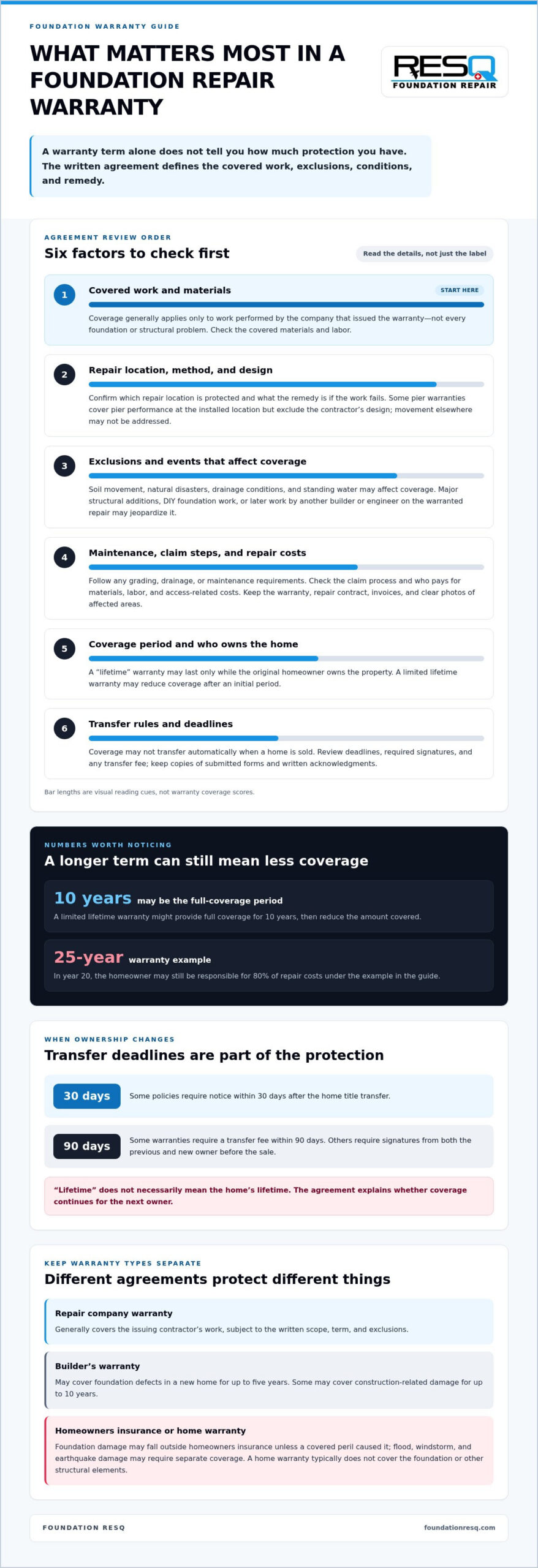
A foundation repair warranty generally covers only work performed by the contractor that issued it. It doesn’t automatically protect every part of a home’s structure or cover problems outside the stated warranty period. Read the written terms for the covered materials, labor, repair location, and remedy if the work fails.
Coverage length and value aren’t the same. A lifetime warranty may apply only while the original homeowner owns the home. A limited lifetime warranty might provide full coverage for 10 years, then reduce the amount covered. For example, a 25-year warranty requiring the homeowner to pay 80% of repair costs in year 20 offers limited protection then.
Foundation damage may fall outside a homeowners insurance policy unless a peril specifically covered by that policy caused it. Damage from a sudden event, such as a tree falling on the home, may be covered under the policy’s terms. Flood, windstorm, and earthquake damage may require separate coverage. A home warranty typically doesn’t cover a home’s foundation or other structural elements.
Pier warranties need close reading, too. Some cover an installed pier’s performance and its ability to prevent settlement at that location, but exclude the contractor’s design. That distinction matters: a pier might perform as described while movement continues elsewhere. Check whether the warranty addresses the specific repair location, the cause of movement, and the company’s responsibility for the design.
Do foundation repair warranty laws or required disclosures vary by state? Warranty terms are set out in the agreement, while disclosure requirements can depend on applicable state rules. Review the contract language and the state requirements that apply to the transaction.
How can homeowners file a foundation repair warranty claim, and what documentation is needed? Follow the claim process in the warranty, then provide the warranty document, repair contract, invoices, and clear photos of the affected area. A dated record of new cracks or movement can help show what changed and where.
A builder’s warranty may cover foundation defects in a new home for up to five years. Some builder warranties may cover construction-related damage for up to 10 years, including issues connected to soil movement or erosion. These warranties differ from a repair company’s warranty, which applies to its own work. Homeowners should identify which agreement applies before treating a foundation issue as covered.
Later changes can affect coverage. Major structural alterations, such as adding a room or garage, can sometimes void the warranty. DIY foundation work or work by another builder or engineer on the warranted repair may also jeopardize coverage. Keep the original warranty copy and follow any grading, drainage, or maintenance requirements. Standing water or neglected hazards may provide grounds to deny a claim.
Transferring an existing foundation warranty
A transferable warranty can preserve some protection when a home changes ownership, but transfer rules vary by agreement. The key details are whether coverage transfers, what deadlines apply, and which records the new owner receives.
Transferring Coverage After a Home Sale
A warranty transfer changes the covered homeowner from the seller to the buyer, subject to the policy’s transfer terms. This matters because the repair company’s workmanship coverage may otherwise remain tied to the original owner. Some policies require notice within 30 days after the home title transfer. For example, a buyer who receives the deed should promptly locate the warranty and identify its transfer procedure.
Transfer Restrictions and Fees
Transfer restrictions are conditions a policy sets for continuing coverage under new ownership. Some warranties require a transfer fee within 90 days, while others require both the previous and new owner to sign a transfer form before the sale. Missing a deadline or signature can interrupt the transfer process. A seller and buyer can account for these requirements while preparing the ownership records and sale documents.
Transferability isn’t automatic just because a warranty describes itself as lifetime coverage. The agreement may define “lifetime” by the original homeowner’s ownership rather than the home’s lifespan. A buyer should distinguish a repair warranty from a home warranty, since the agreements can have separate transfer terms. The warranty document, not the label, explains whether the next owner receives coverage.
Builder warranties have their own transfer conditions. A homeowner usually receives a builder’s warranty as the home’s first occupant, unless it transfers with the purchase while the home remains under warranty. A buyer taking ownership of a newer home should identify the builder’s warranty and its remaining period. The seller’s closing records can help establish when the home was purchased and which documents accompany it.
Before listing a home, the current owner can find the original repair contract, warranty certificate, and any transfer form. The agreement may identify a notice deadline, required signatures, or a fee. Keep copies of submitted forms and written acknowledgments with the home’s repair record. That record gives the buyer a clearer account of the repair, the contractor, and any continuing workmanship coverage.
After a purchase, the new owner can contact the builder to validate the transfer of an existing foundation warranty. This is especially relevant when the home is still within its builder-warranty period. The buyer should keep the title-transfer date, warranty copy, and transfer correspondence together. Those documents help establish ownership and show whether the transfer steps were completed on time.
When selling, review transferability before representing coverage as continuing with the property. If a policy requires both owners’ signatures before sale, completing the form afterward could fail to meet that condition. A clear record of the transfer terms helps both parties understand what protection remains and which repair work it applies to.
Natural disasters and soil movement exclusions
A foundation warranty can exclude damage caused by events outside the repair company’s work. Natural disasters such as earthquakes, fires, and floods may fall outside coverage. The warranty may protect against a failure in the installed repair, not every new cause of movement. That distinction matters when damage appears after a disaster or follows a change in soil conditions.
Soil movement terms deserve close attention because settlement is not the only kind of movement. Contracts commonly exclude expansive soil heave, where soil expansion pushes upward against a foundation. Some also exclude movement from horizontal soil expansion or contraction. A warranty covering settlement might therefore address downward movement without covering upward heave or sideways pressure.
Lateral movement can also be treated differently from settlement. Some contracts exclude horizontal soil expansion or contraction, even when a homeowner sees new wall movement. Other terms define a covered area around installed piers. For example, contracts described in the market exclude settlement more than 4 feet from a pier. A separate threshold may require movement of at least 3/8 of an inch before contractor action is required.
Exclusions can involve events beyond weather and soil. Foundation damage from termites or leaky plumbing may not be covered when the cause isn’t a defect in materials or workmanship. Fire and flood damage may also be excluded from a repair warranty. An inspection that identifies the likely cause helps distinguish a repair failure from damage caused by plumbing, pests, or another event.
Incidental damage is another separate limit. Contracts commonly exclude responsibility for damage that occurs during repair work or results from later settlement. This can affect issues beyond the installed repair itself. Read the scope for language about affected areas, later movement, and damage to other parts of the structure. The warranty’s remedy may be narrower than expected if those details are excluded.
Coverage can also depend on work the homeowner must complete beyond the contractor’s project. Some contracts require grading and drainage improvements outside the repair company’s work. If those conditions aren’t met, the company may have grounds to deny warranty coverage. Standing water near the foundation is a preventable hazard that can also affect coverage. Keep records of completed drainage work and maintenance.
Before treating a new crack as a covered failure, compare its location and cause with the written terms. Note whether the movement is settlement, heave, or horizontal expansion, and whether it falls within the stated pier area. Keep the warranty and inspection findings together. These details help clarify whether the installed repair, excluded soil conditions, plumbing, or incidental damage best explains the change.
Choosing a repair company that offers a warranty
A useful warranty connects the promised protection to the repair method, location, and cause of movement. Compare those terms with the written repair plan before choosing a contractor.
Evaluating Warranty-Offering Repair Companies
Evaluate the contractor’s warranty alongside its proposed work, not as a separate promise. The agreement should identify which materials and workmanship it covers, the repair area, and the remedy for covered failure. This matters because a long term can still offer limited protection. A 5-year warranty, for example, may be easier to assess than a lifetime label without clear coverage details.
Match the warranty to the repair method and foundation concern. If a proposal includes pier installation, identify whether coverage concerns the installed pier’s performance, settlement at that location, or other work. Compare this scope with the inspection findings and the contractor’s repair plan. The warranty should make clear how the covered work relates to the movement being addressed.
Terms can differ even when two companies use the same duration. Fixed-term warranties may run for 5, 10, or 25 years, while some offers use a lifetime term. Compare the start of the period, what happens after a repair, and whether coverage changes over time. A lifetime label alone doesn’t show whether protection lasts for the home or the original owner’s ownership.
Questions Before Signing
Questions before signing help pin down the warranty’s limits in writing. They matter because verbal explanations may not match the signed agreement. Ask what type of movement qualifies, which repair locations are included, and what action the contractor takes when covered work fails. Then compare each answer with the actual contract language.
- Which materials and workmanship are covered, and for what period?
- Does coverage apply to the repair itself, its design, or both?
- What conditions, such as drainage maintenance, must the homeowner meet?
- Are later settlement or movement outside the repaired area excluded?
- What costs could remain if the foundation must be accessed?
- Can the warranty transfer with ownership, and what records must accompany it?
Keep the signed warranty, repair plan, and inspection record together. If an answer changes the apparent scope, ask for that term in the written agreement before signing. A previous repair or another contractor’s later work can affect how a warranty applies, so compare the proposed coverage with the home’s repair history.
What questions should homeowners ask before signing a foundation repair warranty?
Before signing, connect each warranty promise to the written terms, repair scope, and claim process. Reliable foundation repair warranty information starts with understanding what happens if the foundation moves again and what responsibilities remain with the homeowner.
Start by asking exactly what the warranty covers. Does it apply to materials and workmanship, and which repair locations qualify? A foundation warranty generally covers work performed by its issuing company, during the stated period, and only while that company remains in business. That last condition matters for long-term coverage. The Foundation Repair Network advises homeowners to pay close attention to warranty or guarantee terms.
Ask what the company will do if covered work fails. Will it repair the affected work or provide another remedy? The National Foundation Repair Association advises homeowners to follow maintenance requirements when the warranty makes them conditions of coverage. Ask which maintenance tasks apply, how to document them, and whether drainage or grading work is part of those responsibilities.
- Which materials, workmanship, and repair locations are covered?
- What movement or failure qualifies for a claim, and how is it measured?
- What maintenance must the homeowner complete, and how should it be recorded?
- Who pays for access-related work if the foundation must be exposed?
- Does the warranty transfer with home ownership?
- What claim documents and notice steps does the agreement require?
Clarify possible costs beyond the covered repair. A warranty should cover the policyholder’s materials and workmanship without direct cost, though accessing the foundation may create secondary costs. Ask what access could involve at the repaired location and which costs remain the homeowner’s responsibility. That answer separates the repair remedy from work needed to reach it.
Ask how the agreement treats later symptoms. A hypothetical example involves a repaired home whose foundation begins settling again five years after cosmetic repairs. The key issue is whether the new movement relates to warranted work or an excluded condition. Ask how the company distinguishes those causes and what inspection or records support its decision.
Read the contract’s dispute and cancellation terms before signing. Some foundation repair contracts make a signing deposit nonrefundable after a period that is usually three days. If the agreement requires mandatory arbitration, homeowners who enter arbitration give up the right to appeal the arbitrator’s decision. Keep the signed contract and warranty together with inspection notes, photos, and maintenance records. These documents make foundation repair warranty information easier to apply if questions arise later.
For a professional assessment of foundation movement and repair needs, explore foundation repair options.
Foundation ResQ: Foundation repair
Foundation ResQ provides foundation repair in Tallahassee for homeowners dealing with structural movement, cracking, or concerns beyond an existing warranty’s scope. When the written terms exclude the cause of damage, or coverage has ended, understanding the repair needed can help you decide what to do next.
Repair options depend on the problem and the structure. Foundation ResQ offers helical pier and push pier installation as part of its foundation repair services. These methods may be relevant when foundation support needs attention, while the appropriate approach depends on the home’s conditions.
If you’re weighing a repair after reviewing your warranty, contact Foundation ResQ about foundation repair.
Make Your Next Foundation Decision With Clarity
A warranty is one part of protecting a home. The next step is to connect its written terms with what the structure is showing now. Keep the agreement and repair records together, note any changes in the affected areas, and use those details to frame a focused conversation about the home’s condition.
Clear foundation repair warranty information can help you distinguish a warranty question from a new repair concern. Foundation ResQ provides foundation repair, helical pier installation, and mold remediation services for structural and moisture-related concerns in Tallahassee. If movement or moisture has raised questions about your property, contact Foundation ResQ to discuss the concern and possible next steps.
Contact Foundation ResQ about your foundation to discuss your concerns and move forward with a better-informed plan.
Frequently Asked Questions
What does a foundation repair warranty typically cover?
A foundation repair warranty typically applies to work the issuing company performed, such as specified materials or workmanship. It doesn’t automatically extend to unrelated areas of the home. For example, a warranty for repaired piers may address their performance at the installed locations, not a separate crack elsewhere. Read the repair description alongside the coverage terms to understand exactly which part of the structure the agreement protects.
How long do foundation repair warranties last?
Foundation repair warranty periods range from fixed terms, such as 5, 10, or 25 years, to lifetime coverage. The stated duration doesn’t explain whether coverage stays full for that entire time. A 25-year agreement, for example, can require the homeowner to pay 80% of repair costs in year 20. Compare both the term and any changes in coverage over time to understand the protection offered.
What foundation repair warranty exclusions and limitations are common?
Common exclusions include damage caused by fire, flood, earthquake, termites, or leaky plumbing rather than defective materials or workmanship. Terms can also limit coverage to a particular repair location, excluding movement beyond the covered area. Incidental damage during work or later settlement can be excluded as well. For instance, a contract may address an installed pier but not a new problem caused by unrelated soil movement.
Do foundation repair warranties cover labor, materials, and future damage?
A warranty can cover materials and workmanship for the repair performed, but future damage isn’t automatically included. The agreement defines whether the remedy addresses labor, replacement materials, or both. It can also leave secondary access costs to the homeowner if workers must expose the foundation to reach a covered repair. Review each cost category separately, especially if the repaired area sits beneath finished flooring or landscaping.
Are foundation repair warranties transferable to a new homeowner?
Some warranties transfer, but the new owner must follow the agreement’s process. A policy can require contacting the repair company within 30 days after the title transfer; some also require a transfer fee within 90 days. Other agreements call for both owners to sign a form before the sale. Keep the completed form and transfer correspondence with the home’s repair records.
How do lifetime and limited-term foundation repair warranties compare?
A lifetime warranty describes a long coverage period, but the contract defines whose lifetime or ownership it means. A limited-term warranty states a fixed period, though coverage can change before that term ends. For example, one limited lifetime structure offers full coverage for 10 years, while another 25-year agreement requires the homeowner to pay 80% of repair costs in year 20. Compare the remedy and cost-sharing terms, not just the label.
Can foundation repair warranties be voided by drainage problems, remodeling, or lack of maintenance?
Yes. A warranty can be jeopardized by failing to complete required grading or drainage work, neglecting standing water, or skipping maintenance conditions. Major structural changes, such as adding a room or garage, can sometimes void coverage. DIY structural repairs or later work by another builder or engineer on the warranted foundation work can also affect protection. Keep records of maintenance and changes made around the home.
How can homeowners check whether a foundation repair company and its warranty are reputable?
Start by comparing the written repair plan with the warranty’s covered work, exclusions, claim process, and remedy. A clear agreement should identify the repair location and explain any homeowner maintenance duties. Also note whether the warranty depends on the issuing company remaining in business. Keep the contract, inspection findings, and repair records together so you can assess a future claim against the original scope.