
An estate in Myers Park is more than just a residence; it’s a vital piece of Tallahassee’s architectural heritage that requires a specialized touch to maintain. You likely take immense pride in your home’s original masonry and intricate millwork, yet it’s natural to feel a sense of dread when you notice a bouncy floor or a new crack in the plaster. Many homeowners worry that addressing these issues will lead to a “money pit” of invasive repairs that strip away the property’s historic soul.
We understand that your goal is to preserve, not just fix. Scheduling a professional foundation inspection for historic homes in Myers Park is the most reliable way to distinguish between minor settling and genuine structural threats. This guide will show you how to identify specific warning signs in aging crawl spaces and explain how modern, non-invasive stabilization techniques can protect your home’s integrity. You’ll discover a clear path toward resolving structural concerns while ensuring your estate remains a stable, beautiful landmark for decades to come.
Key Takeaways
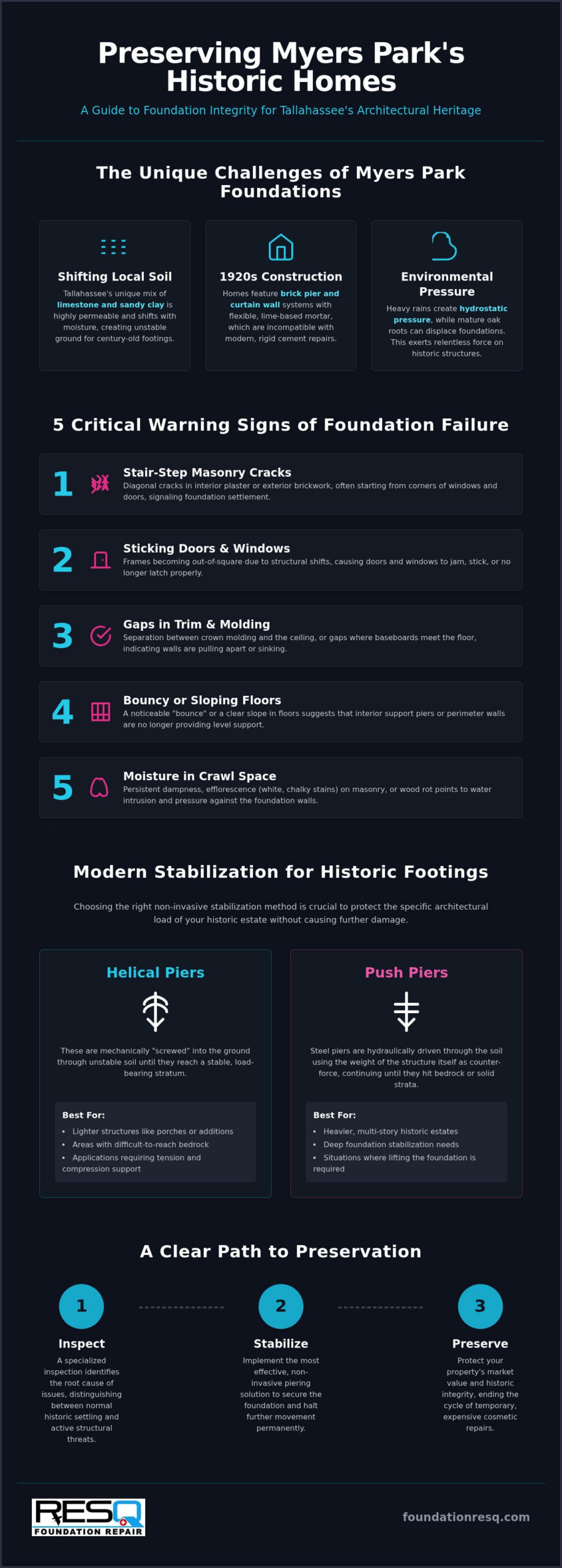
- Understand how the unique limestone and sandy clay soil of Tallahassee’s Myers Park interacts with 1920s-era footings and Tudor Revival architecture.
- Learn to identify critical structural red flags like stair-step masonry cracks and sloped flooring through a professional foundation inspection for historic homes in Myers Park.
- Discover how the neighborhood’s iconic mature oak canopy and heavy rains create hydrostatic pressure that threatens the stability of original basement walls.
- Differentiate between helical piers and push piers to determine the most effective, non-invasive method for stabilizing your estate’s specific architectural load.
- Establish a long-term preservation plan that protects your property’s market value and prevents the cycle of expensive, temporary cosmetic repairs.
Why Historic Foundations in Myers Park Require Specialized Inspections
Myers Park stands as a testament to Tallahassee’s architectural history, characterized by its 1920s Tudor Revivals and stately Colonial estates. These properties weren’t built with the standardized concrete slabs common in modern subdivisions. Instead, they rely on complex masonry systems that have interacted with the local environment for a century. A standard assessment often misses the nuances of these aging structures. This is why a specialized foundation inspection for historic homes in Myers Park is the only way to truly understand the health of an estate.
Unlike the thick red clay found in many parts of the Southeast, Tallahassee’s soil profile consists largely of limestone and sandy clay. This mixture is highly permeable and prone to shifting based on moisture content. When you evaluate a 100-year-old home, you must distinguish between natural settling and structural failure. Settling is a slow, expected adjustment to the earth; failure is an active threat to the building’s stability. Adhering to the philosophy of historic preservation means identifying these threats before they compromise original millwork or masonry.
The Anatomy of a 1920s Foundation
Many historic homes in this area utilize brick pier and curtain wall construction. These systems were designed to breathe and move slightly. Builders originally used lime-based mortar, which is softer and more flexible than modern Portland cement. If a previous owner used stiff modern cement for repairs, it can actually cause original bricks to shatter during natural shifts. Specialized restoration experts like Progressive Contracting NY Corp often highlight the importance of using period-appropriate materials to maintain structural stability without damaging the original masonry. Understanding exactly where the load-bearing points sit within the historic floor joist system is critical for any stabilization plan.
Environmental Stressors in Tallahassee
Tallahassee’s climate presents unique challenges. High humidity and seasonal heavy rains saturate the soil around Myers Park foundations, leading to increased hydrostatic pressure. This area also sits within what experts often call “Sinkhole Alley,” where deep-seated soil issues can cause sudden shifts in support. Tallahassee’s shallow water table creates a constant cycle of soil expansion and contraction that exerts relentless pressure on historic footings. Without a professional foundation inspection for historic homes in Myers Park, these environmental factors can quietly erode the home’s value from the ground up.
5 Critical Warning Signs in Your Myers Park Estate
Identifying structural shifts in a historic home requires a keen eye for detail. While minor settling is common over a century, certain patterns indicate an active threat to your property’s longevity. A professional foundation inspection for historic homes in Myers Park helps you distinguish between a house that is simply “aging gracefully” and one that requires immediate stabilization. Detecting these issues early prevents minor shifts from turning into irreversible damage to your estate’s original features.
Interior Indicators of Movement
Inside the home, structural movement often reveals itself through the rigid materials that cannot flex with the frame. Plaster walls are particularly telling. Look for “stair-step” cracks that begin at the corners of window frames or door headers. These aren’t just cosmetic blemishes; they often mirror a shift in the footings below. Similarly, check for separation in historic crown molding or gaps where the baseboard meets the floor. If a door that once swung freely now sticks or refuses to latch, don’t assume it’s just the humidity. If the frame is no longer square, the foundation likely moved.
The condition of your original hardwood flooring is another vital diagnostic tool. Walk across the rooms and pay attention to any new “bounce” or a noticeable slope toward the exterior walls. These changes suggest that the interior piers or the perimeter crawl space walls are no longer providing level support. In grand estates with original fireplaces, examine the hearth and surround for new cracks or separation from the wall. Following the Secretary of the Interior’s Standards, it’s vital to address these symptoms using methods that protect these original architectural elements from further stress.
Exterior and Crawl Space Red Flags
The exterior of your home provides the most direct evidence of soil movement. Examine the brickwork for mortar joint displacement. Just like interior plaster, exterior masonry will often crack in a diagonal, stair-step pattern when a section of the foundation settles. These openings allow Tallahassee’s heavy rains to penetrate the wall, leading to secondary issues like efflorescence or interior dampness. For a broader look at regional issues, you can review our guide on 7 Warning Signs of a Bad Foundation in Florida Homes to see how these symptoms manifest across different property types.
Finally, the crawl space is often the first place where structural health fails. After a Florida storm, check for standing water or a persistent musty odor. High moisture levels in this confined space lead to wood rot in original sills and rim joists, which are the primary load-bearing components of your home. If you notice these red flags, a thorough foundation inspection for historic homes in Myers Park is the first step toward a permanent remedy that preserves your estate’s value.
Historic Preservation Challenges: Roots, Moisture, and Masonry
The lush landscape of Myers Park is a defining feature of the neighborhood, but it presents specific challenges for structural longevity. Preserving a century-old estate requires more than just cosmetic upkeep; it demands an understanding of how the environment interacts with historic building materials. A professional foundation inspection for historic homes in Myers Park must account for the delicate balance between Tallahassee’s natural beauty and the physical needs of masonry footings.
One common mistake homeowners make is applying “quick-fix” solutions, such as patching historic brick piers with modern Portland cement. As discussed previously, these rigid materials don’t allow for the natural expansion and contraction of original lime-based mortar. This can lead to spalling, where the face of the historic brick actually pops off due to trapped pressure. Following The Secretary of the Interior’s Standards for the Treatment of Historic Properties ensures that any remediation efforts respect the original material science of your home.
The Impact of Mature Landscapes
The iconic Myers Park canopy of mature live oaks provides shade and character, but these massive root systems are relentless in their search for water. During Florida’s seasonal droughts, these roots can desiccate the sandy clay soil beneath your home, leading to localized shrinkage and settlement. The proximity of large trees to a historic footing directly correlates to the rate of soil moisture depletion and subsequent foundation movement. Managing drainage near historic governor’s driveways and stone gateways is equally vital. Improper runoff can saturate the soil, causing it to lose its load-bearing capacity and threatening the stability of your estate’s perimeter.
Moisture Control and Indoor Air Quality
Tallahassee’s heavy rains and high humidity levels create a constant threat of hydrostatic pressure against historic basement walls. Because 1920s homes were often built with unlined crawl spaces, they are particularly susceptible to mold growth and wood rot. This moisture doesn’t stay confined to the crawl space. Through the “Stack Effect,” warm air rises through the house, pulling damp, potentially mold-laden air from the foundation into your living quarters. To protect your original hardwood floors and improve indoor air quality, consider reviewing our Crawl Space Encapsulation Tallahassee: The Complete Homeowner’s Buying Guide. A comprehensive foundation inspection for historic homes in Myers Park identifies these moisture entry points before they require expensive remediation.
Stabilization Solutions: Helical Piers vs. Push Piers for Historic Footings
Once a professional foundation inspection for historic homes in Myers Park reveals active movement, the priority shifts to permanent stabilization. Traditional repair methods often involve extensive excavation that can jeopardize fragile masonry or original landscaping. Modern piering systems offer a sophisticated alternative. These technologies allow us to reach stable, load-bearing strata deep beneath Tallahassee’s sandy clay without requiring the removal of original architectural features.
Choosing the Right Piering System
Selecting between helical and push piers depends on the specific structural load and the condition of the existing footings. Helical piers are often the preferred choice for lighter historic structures, such as single-story wings or original porches. These piers are mechanically screwed into the soil, which creates minimal vibration. This is a critical advantage when working near delicate, century-old brickwork that might otherwise crack under heavy percussion. For a deeper look at this process, you can explore our guide on Professional Helical Pier Installation: The Permanent Solution.
In contrast, push piers are ideal for the heavier, multi-story estates common in Myers Park. These systems use the actual weight of the home to drive high-strength steel pier sections into the ground. Because the home’s mass provides the counter-force, we can ensure each pier has reached a competent soil layer. Both methods prioritize long-term stability and can be installed with relatively small equipment. This protects the mature oaks and garden gateposts that define your property’s character.
Non-Invasive Reinforcement Techniques
Not every structural issue requires piering. If your foundation inspection for historic homes in Myers Park identifies bowing in original basement or crawl space walls, carbon fiber wall reinforcement offers a low-profile remedy. These straps are stronger than steel but apply directly to the interior surface. They stop inward movement permanently without the need for invasive exterior digging or heavy machinery.
For exterior features like slate walkways or stone patios, we utilize PolyRenewal concrete lifting. This high-density foam injection levels sunken surfaces with surgical precision. It preserves the original materials while eliminating trip hazards and improving drainage away from the house. These non-invasive technologies serve as a final line of defense, ensuring your home’s structural health remains intact for another century. If you are ready to secure your property’s future, schedule a professional assessment with our local experts today.
Restoring Structural Integrity with Foundation ResQ
At Foundation ResQ, we view ourselves as more than just a repair company; we are protectors of Tallahassee’s architectural legacy. We understand that a home in Myers Park is a significant investment and a vital piece of local history. Our commitment to the community is reflected in every project we undertake. We don’t believe in temporary patches that only mask symptoms. Instead, we use a “remedy-based” framework to ensure that the root cause of structural movement is addressed permanently and professionally.
A professional foundation inspection for historic homes in Myers Park is the cornerstone of our partnership with you. Our team approaches every estate with the respect it deserves, combining deep local knowledge with advanced engineering. We recognize the specific challenges of Tallahassee’s limestone-heavy soil and shallow water table. By focusing on the ultimate resolution of physical issues, we provide a protective barrier between your property and the environmental factors that threaten its stability.
Why Myers Park Homeowners Trust Us
Trust is built on a foundation of expertise and reliable results. We utilize industry-leading structural technologies specifically designed for the stabilization of existing buildings. This allows us to offer specialized solutions like helical pier installations and carbon fiber reinforcement that general contractors often cannot provide. Our solution-focused approach also extends to the air you breathe and the floors you walk on. We integrate mold remediation and crawl space encapsulation into our structural plans. This dual focus protects your original hardwood floors from moisture damage while ensuring a healthy indoor environment for your family. With your home’s structural health secured, you can then look to luxury remodeling resources; for instance, the design experts at Ethicore provide an intentional guide to high-end bathroom storage that can inspire your next interior project.
When we arrive for a foundation inspection for historic homes in Myers Park, you can expect a methodical and neighborly experience. We begin by listening to your specific concerns and observing the unique characteristics of your estate. Our experts conduct a thorough interior and exterior assessment, looking for the specific red flags like stair-step cracks or sloped floors mentioned earlier in this guide. We coordinate closely with you to ensure our visit causes minimal disruption to your daily life. Once the inspection is complete, we provide a clear, non-invasive plan for stabilization. We prioritize long-term outcomes, ensuring your home remains a stable landmark for the next generation.
Schedule your free historic home foundation inspection with Foundation ResQ today.
Securing the Future of Your Myers Park Estate
Your historic home is a legacy that deserves a specialized approach to structural health. By recognizing warning signs like stair-step masonry cracks or uneven floors early, you prevent minor settling from becoming a threat to your property’s architectural integrity. We combine over a decade of specialized foundation experience in Tallahassee with a deep understanding of local geological conditions. Our team understands how to use specialized helical pier systems to stabilize historic masonry without the need for invasive excavation, ensuring your estate stays exactly where it belongs.
A professional foundation inspection for historic homes in Myers Park is the most effective way to protect your investment from the region’s unique soil and moisture challenges. We provide a methodical, non-invasive plan for stabilization that respects the original character of your estate. Don’t wait for structural concerns to compromise your home’s beauty or value. Request Your Free Foundation Inspection for Your Myers Park Home to ensure your estate remains a stable landmark for years to come. We’re here to help you preserve what matters most.
Frequently Asked Questions
Is it normal for a 100-year-old home in Myers Park to have cracks?
Yes, minor hairline cracks in original plaster or mortar are often just signs of natural settling over a century. However, larger “stair-step” cracks in exterior brick or interior walls suggest active structural movement. A professional foundation inspection for historic homes in Myers Park helps determine if these cracks are cosmetic or indicators of failing footings. Identifying these issues early prevents minor shifts from turning into irreversible damage to your estate’s original masonry.
Will foundation repair destroy the historic character of my home?
No, modern stabilization techniques like helical pier installation are designed to be non-invasive and preserve architectural integrity. These systems reach deep into stable soil without requiring the removal of original millwork or masonry. We prioritize methods that protect the home’s soul while securing its structure. This ensures the property remains a stable landmark without the need for the heavy machinery that often damages delicate historic landscapes or governor’s driveways.
How long does a typical foundation inspection take for a historic estate?
A thorough assessment usually takes between one and two hours, depending on the size and complexity of the estate. Our experts meticulously examine the crawl space, exterior masonry, and interior floors to identify specific red flags. Because historic homes in Tallahassee often feature unique building materials like lime-based mortar, we take the extra time needed to ensure every structural nuance is documented before creating a customized remediation plan that prioritizes long-term stability.
What is the cost of foundation repair for historic homes in Tallahassee?
Costs vary significantly based on the severity of the structural issues and the specific stabilization methods required for your estate. Factors such as the number of helical or push piers needed, the condition of the existing footings, and the presence of moisture issues all influence the final investment. We provide a detailed, itemized plan after a professional assessment so you can understand the exact requirements for restoring your property’s structural health and long-term value.
Can crawl space encapsulation help with bouncy floors in an old house?
Yes, crawl space encapsulation is a highly effective way to stabilize the environment beneath your home and protect original hardwood floors. High humidity in Tallahassee often leads to wood rot in sills and joists, which causes that “bouncy” sensation. By sealing the crawl space and installing a dehumidifier, we stop the moisture cycle that weakens these supports. This process preserves the floor’s rigidity while improving the overall indoor air quality in your living quarters.
Do I need a structural engineer or a foundation repair specialist?
Both roles are valuable, but a foundation repair specialist provides the practical, hands-on expertise needed for actual remediation. Specialists like Foundation ResQ understand the interaction between Tallahassee’s sandy clay soil and historic footings. While an engineer provides a technical report, a specialist designs and implements the actual “remedy-based” framework. This ensures your home receives the specific piering or reinforcement systems required to stop movement permanently and professionally without compromising the building’s character.
How do mature oak trees in Myers Park affect my home foundation?
Large live oaks have massive root systems that compete with your foundation for soil moisture. During dry Florida seasons, these roots can pull significant amounts of water from the sandy clay beneath your home. This causes the soil to shrink and pull away from the footings, leading to localized settlement. A professional foundation inspection for historic homes in Myers Park evaluates these landscape factors to ensure your stabilization plan accounts for root-related soil desiccation and shifting water tables.
What happens if I ignore foundation issues in a historic property?
Ignoring structural red flags often leads to a cycle of expensive, temporary cosmetic repairs that don’t address the root cause. Over time, active movement can cause original plaster to shatter, doors to become permanently stuck, and masonry to separate beyond repair. Unresolved moisture issues in the crawl space also invite mold growth and wood rot. Addressing these problems early protects your investment and prevents minor shifts from becoming irreversible structural failures that strip the home of its value.