If you spot a long, level line breaking through the mortar of your home’s base, you aren’t just looking at a cosmetic blemish. In our region, finding horizontal cracks in foundation block wall Tallahassee properties often signals that the surrounding soil is exerting dangerous pressure against your home’s structure. While vertical cracks might suggest simple settling, horizontal ones are a call to action that requires a professional’s eye to ensure your family’s safety.
It’s completely natural to feel a sense of dread when you notice these shifts, especially with Tallahassee’s heavy seasonal rains and unpredictable soil conditions. You’re likely wondering if your home is still stable or if you’re facing an overwhelming repair project. This guide will provide the clarity you need by explaining exactly why these block walls bow and crack. We’ll walk through how to assess the severity of the damage and outline the permanent stabilization methods, such as carbon fiber reinforcement, that restore your peace of mind and protect your investment for the long term.
Key Takeaways
- Learn why horizontal cracks in foundation block wall Tallahassee properties indicate serious soil pressure rather than standard settling.
- Understand the specific role that Tallahassee’s clay soil and heavy rainfall play in creating hydrostatic pressure against your home.
- Identify the critical visual signs of wall failure, including the “Quarter Test” for crack width and evidence of lateral displacement.
- Explore why professional carbon fiber reinforcement offers a permanent and non-invasive solution compared to temporary cosmetic patches.
- Discover the methodical steps of a professional structural evaluation to ensure your home remains safe and stable for years to come.
What Do Horizontal Cracks in Block Walls Indicate?
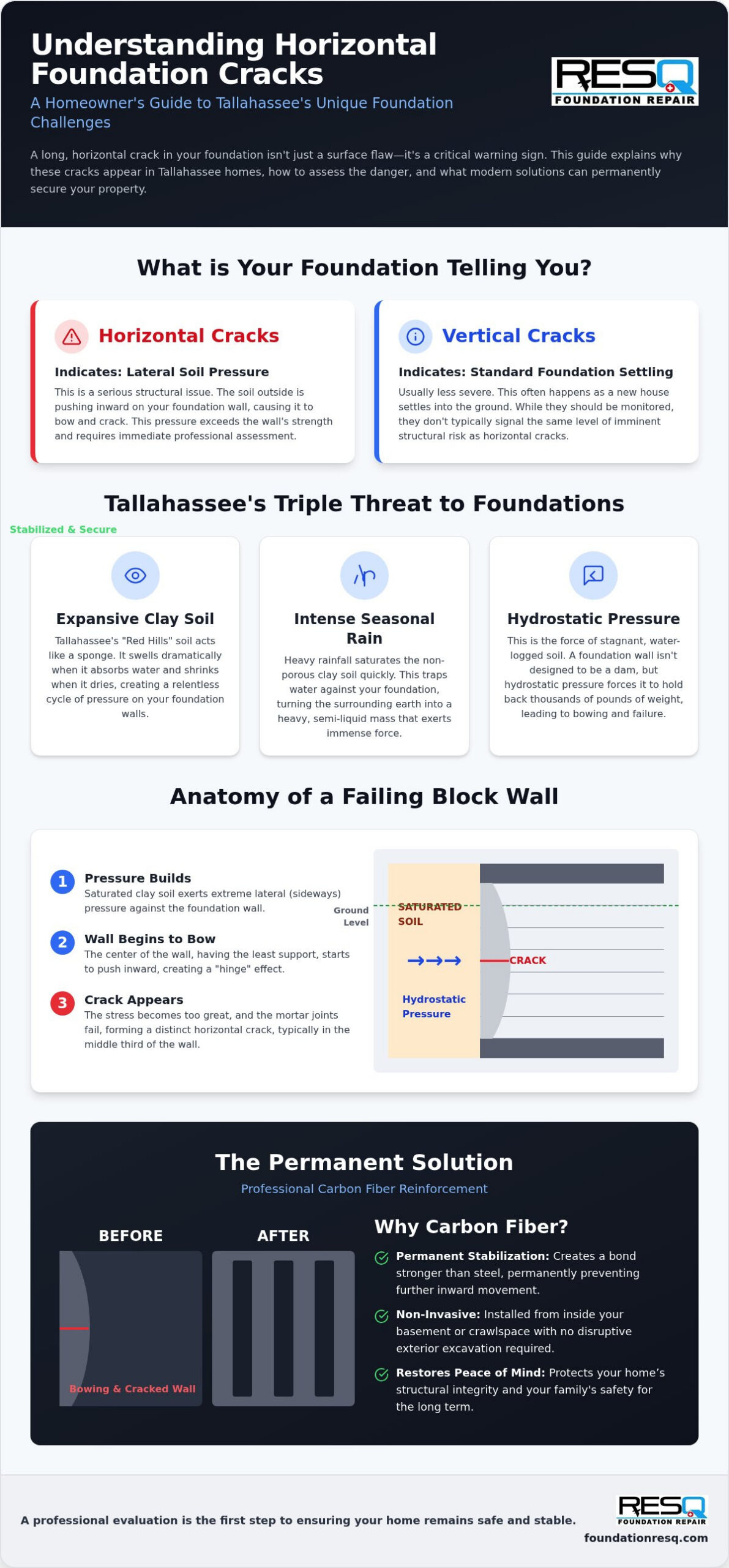
A horizontal crack in a Concrete Masonry Unit (CMU) wall is a fracture that runs parallel to the ground, typically following the mortar joints between blocks. Identifying horizontal cracks in foundation block wall Tallahassee homes is a critical task because these openings indicate a different type of stress than vertical cracks. While vertical cracks usually point to standard settling, where the ground beneath the home moves downward, horizontal ones signify lateral pressure. This means the soil outside is pushing sideways against your home’s structure.
Applying basic foundation engineering principles shows us that your home’s base is designed to carry immense vertical loads. It isn’t naturally built to act as a heavy-duty retaining wall against shifting earth. When the pressure from the outside exceeds the wall’s strength, a “hinge” effect occurs. The wall begins to bow inward at the center while the top and bottom remain anchored by the floor joists and the footing. This inward curve is a clear sign that the structural integrity of the wall is being compromised.
Block Walls vs. Poured Concrete Foundations
Block walls are uniquely susceptible to lateral force because of their construction. They consist of individual units held together by mortar, which acts as the primary weak point. While a concrete block is durable, the mortar joints are much softer and fail more easily under tension. Poured concrete foundations are monolithic, meaning they’re a single solid piece that distributes stress more evenly. In a block wall, the pressure often targets the mid-point of the wall’s height, as this is the area with the most flexibility and the least amount of vertical compression to hold it in place.
The Anatomy of a Failing Mortar Joint
Structural failure often starts subtly. You might first notice “stair-step” cracks near the corners of your foundation, which are common signs of settlement. However, when these cracks transition into a long, continuous horizontal line, the issue has shifted to lateral displacement. This movement is driven by shear stress, where the weight of the soil actually slides the blocks inward. You’ll most commonly find horizontal cracks in foundation block wall Tallahassee basements or crawl spaces in the third or fourth block course from the top. This specific location is where the external soil pressure is often highest relative to the wall’s internal reinforcement, creating a pivot point that forces the wall to buckle.
Why Tallahassee Soil and Rain Cause Horizontal Cracking
Tallahassee’s geography is dominated by the “Red Hills” region, characterized by dense, heavy clay soil. This material is highly expansive. When it absorbs water, it swells significantly, and when it dries, it shrinks. This constant movement creates a relentless cycle of stress on your home’s base. Finding horizontal cracks in foundation block wall Tallahassee homes is often the direct result of this soil fatigue. The clay acts like a sponge, but one that becomes incredibly heavy and rigid once saturated, putting your foundation in a constant battle with the earth.
The problem intensifies during North Florida’s intense rainy seasons. Our local weather patterns often deliver several inches of rain in a single afternoon. Because clay is non-porous, the water doesn’t drain quickly. Instead, it pools against your foundation, turning the soil into a heavy, semi-liquid mass that presses inward with thousands of pounds of force. This weight, known as hydrostatic pressure, is the primary driver behind structural bowing.
Tallahassee’s Hydrostatic Pressure Problem
Hydrostatic pressure is the force exerted by stagnant water. When the soil around your home becomes saturated, it gains immense weight. A block wall is essentially forced to act as a retaining wall, holding back thousands of pounds of wet earth. If your yard lacks proper drainage, this pressure builds until the mortar joints can no longer hold. This is why many homeowners see their worst cracks appear after a particularly wet summer or a tropical storm event.
As we move through 2026, many older foundations in established neighborhoods like Midtown or Killearn are reaching a structural breaking point. Decades of these wet-dry cycles have weakened the mortar bonds between the blocks. When the pressure peaks during a storm, the wall finally bows inward along a horizontal line. If you notice your walls leaning or shifting, it’s wise to request a professional evaluation to assess the lateral load before the damage progresses.
Tree Roots and Local Vegetation
Tallahassee is known for its beautiful canopy of live oaks and loblolly pines. While these trees provide shade, their root systems are massive and thirsty. During dry spells, these roots aggressively seek out moisture, often pulling it from the soil directly beside your foundation. This causes the clay to shrink and pull away, creating gaps that allow even more water to pool there during the next rain, which restarts the pressure cycle.
Conversely, large roots growing too close to the home can exert direct physical force as they expand in diameter. Many local landscaping mistakes, such as planting moisture-loving shrubs right against the block wall, exacerbate these issues. These plants require frequent watering, which keeps the soil near the foundation in a perpetual state of expansion. This localized moisture creates an uneven pressure profile, making it much more likely for a horizontal crack to form in that specific area as the wall struggles to resist the uneven force.
Measuring the Danger: When to Worry About Block Wall Cracks
Identifying the severity of horizontal cracks in foundation block wall Tallahassee properties requires more than just a quick glance. You need a methodical way to measure the risk to your home’s structural integrity. One of the simplest tools for a preliminary check is the “Quarter Test.” If you can easily slide a standard quarter into the crack, it has reached a width of approximately 1.75 millimeters. While this might seem minor, it indicates the mortar bond has completely severed, allowing moisture and soil gases to penetrate the wall.
Beyond width, you should look for lateral displacement. This occurs when the blocks shift so the top part of the wall no longer vertically aligns with the bottom. You can check this by hanging a plumb line from the ceiling joists or using a long carpenter’s level against the wall face. If the wall “bellies” out toward the center of the room, the structure is bowing. This inward curvature is a definitive sign that the hydrostatic soil pressure is winning the battle against your home’s base. You may also notice secondary symptoms on upper floors, such as windows that suddenly stick or doors that no longer latch. These aren’t just “old house” quirks; they’re often signs of a foundation under extreme stress.
The Three Stages of Wall Failure
Structural engineers and foundation experts typically categorize wall movement into three distinct stages to determine the urgency of repair:
- Stage 1: Hairline horizontal cracks appear along the mortar joints. At this point, there is no visible bowing, but the wall’s internal strength is beginning to fade.
- Stage 2: Cracks widen beyond 1/8 inch. You might notice a slight inward tilt or “shearing” where one course of block sits slightly further in than the one below it.
- Stage 3: This is a critical state. You’ll see significant bowing and cracks that may be 1/2 inch wide or larger. At this stage, the wall is at a high risk of total collapse during a major Tallahassee rain event.
When Is a Crack an Emergency?
Determining if a crack is “active” is the most important part of your assessment. If you mark the ends of a crack with a pencil and notice it growing longer or wider over a few weeks, the movement is ongoing. This active shifting is a structural emergency that requires immediate intervention. Any wall that is more than two inches out of plumb is nearing a critical failure point where the weight of the house above could cause a sudden breach.
It’s a mistake to wait for a wall to “stop moving” on its own. In our local climate, the expansive clay soil ensures that pressure will only increase with every passing season. Because these issues involve the weight-bearing capacity of your home, you should always seek a professional evaluation for any horizontal fracture. Early stabilization is much more cost-effective and less invasive than a full wall reconstruction after a collapse.
Professional Repair Methods for Tallahassee Foundation Walls
When you discover horizontal cracks in foundation block wall Tallahassee properties, your first impulse might be to reach for a tube of epoxy or a bag of mortar. These cosmetic fixes are temporary and potentially dangerous. They hide the visual evidence of a structural failure without addressing the lateral soil pressure that caused it. As the earth continues to push, the wall will keep bowing behind the patch, often leading to more sudden and severe failure later. Professional remediation focuses on restoring structural integrity through advanced engineering rather than just hiding the symptoms.
Carbon Fiber Reinforcement: How It Works
Modern carbon fiber wall reinforcement is a game-changer for homeowners dealing with inward-curving walls. This material is technically stronger than steel, yet it’s thinner than a penny. We apply high-strength carbon fiber straps vertically along the bowing wall using a specialized epoxy bond. Once the bond cures, the wall is effectively locked in place. The straps absorb the lateral tension that the block and mortar cannot handle on their own. One of the greatest benefits is that this process requires no outside excavation. The straps are low-profile and can be painted over, allowing you to maintain a clean look in your basement or crawl space.
Piering Systems for Foundation Stabilization
Sometimes, the issue isn’t just lateral pressure but also a lack of vertical support in Tallahassee’s shifting clay. In these cases, helical pier installation is the most reliable remedy. These piers are mechanically screwed into the ground until they reach stable soil or bedrock deep below the problematic clay layers. Unlike push piers that rely solely on the weight of the structure, helical piers provide immediate stability in various soil conditions. They transfer the home’s weight off the failing foundation and onto a stable subterranean layer. This system often allows us to lift the foundation back toward its original position, closing cracks and leveling floors in the process.
To ensure a permanent result, we also address the root cause: water. An integrated approach often includes installing a sump pump system or a crawl space dehumidifier to manage North Florida’s moisture levels. By reducing the hydrostatic pressure outside, we protect the new reinforcements from unnecessary stress. If you’re ready to secure your home’s future, you can schedule a professional structural evaluation to determine which system is right for your specific needs.
Stabilizing Your Tallahassee Home with Foundation ResQ
Since 2013, Foundation ResQ has served as the steadfast local expert for homeowners across Leon County. We understand that discovering horizontal cracks in foundation block wall Tallahassee properties can be a stressful experience for any property owner. Our approach is built on technical precision and a deep understanding of North Florida’s unique environmental challenges. We don’t just patch a crack; we implement engineered solutions that address the physics of your home’s structure. By choosing a team with over a decade of local experience, you’re opting for a partner that prioritizes the long-term health and safety of your building over temporary fixes.
Our team treats every project with the seriousness it deserves, recognizing that your home is likely your most significant investment. We focus on providing a stable, expert presence that leads you from a state of uncertainty toward an informed resolution. By utilizing industry-standard technology and methodical assessment techniques, we provide the dependable guidance necessary to navigate complex structural repairs. Our goal is to ensure that your home’s foundation remains a solid, reliable base for your family for decades to come.
Our Remedy-Based Framework
We utilize a remedy-based framework that focuses on the ultimate resolution of structural issues rather than just treating the symptoms. This means we look at the house as a complete, integrated system. Often, stabilizing a bowing wall is only part of the solution. To prevent future hydrostatic pressure build-up, we frequently recommend crawl space encapsulation to manage the humidity and moisture levels that cause our local clay to swell. This comprehensive approach creates a permanent protective barrier for your home. Every stabilization project we undertake is backed by a transferrable lifetime warranty, providing you with documented proof of your home’s structural integrity and protecting its future resale value.
Taking the Next Step for Your Foundation
The process of restoring your home begins with a thorough, professional structural assessment. During our free evaluation, a Foundation ResQ specialist will examine the specific patterns of your horizontal cracks in foundation block wall Tallahassee and determine the exact stage of failure. We take the time to explain our findings in clear, non-technical language so you can make an informed decision about your property. We’ll look at the exterior drainage, the interior wall plumb, and the condition of the mortar joints to build a customized stabilization plan tailored to your home’s specific needs.
Most structural issues are manageable if you act before the damage becomes irreversible. Our experts are committed to providing steady, reliable guidance throughout the remediation process. We prioritize non-invasive methods that restore safety without disrupting your daily life. When you’re ready to secure your foundation against the elements, our team is prepared to provide the permanent protection and peace of mind your home deserves.
Securing Your Home’s Future Against Structural Failure
Finding horizontal cracks in foundation block wall Tallahassee properties is a significant discovery, but it doesn’t have to be a source of constant worry. You now understand that these fractures are the result of lateral pressure from our local Red Hills clay and heavy seasonal rains. By identifying the signs of bowing early and choosing permanent solutions like carbon fiber reinforcement or helical piering, you can effectively halt structural movement and protect your home’s stability.
Foundation ResQ is here to serve as your steadfast local expert. As A+ rated structural repair specialists with over 10 years of local Tallahassee experience, we provide the methodical, remedy-based solutions your home requires. We stand behind our work with lifetime transferrable warranties on stabilization, ensuring your investment remains secure for the long term. Don’t wait for the next heavy rain to test your foundation’s limits. Schedule Your Free Foundation Inspection in Tallahassee Today and gain the informed resolution you deserve. Your home’s safety is our priority, and we’re ready to help you restore it to full health.
Frequently Asked Questions
Is a horizontal crack in a block wall always bad?
Yes, horizontal cracks are almost always a sign of structural distress. Unlike vertical hairline cracks that might result from minor shrinkage, horizontal ones indicate that the wall is struggling to resist lateral pressure from the surrounding soil. This is a serious condition that can lead to bowing or eventual wall failure if you leave it unaddressed. Professional evaluation is always recommended to ensure your home’s safety and stability.
How much does it cost to fix a horizontal foundation crack in Tallahassee?
The cost of repair depends entirely on the severity of the damage and the stabilization method your home requires. Minor cracks might only need reinforcement, while major bowing could require extensive piering or wall anchors. Factors such as soil conditions and accessibility also influence the total investment. Because every foundation is unique, it’s best to consult with a local expert for a comprehensive assessment and a detailed project plan for your property.
Can I use epoxy to fix a horizontal crack in my basement wall?
Epoxy is not an appropriate solution for repairing horizontal cracks because it only addresses the surface symptom. While epoxy can seal a crack against moisture, it lacks the tensile strength to stop the wall from bowing further under soil pressure. Using it as a standalone fix is dangerous as it masks ongoing structural movement. Permanent stabilization requires mechanical reinforcement like carbon fiber straps to counteract the relentless lateral forces acting on the wall.
What causes foundation walls to bow inward in Florida?
Inward bowing is primarily caused by hydrostatic pressure and expansive clay soils. When North Florida’s heavy rains saturate the ground, the soil expands and presses against the foundation with immense force. If the yard has poor drainage, this weight builds up until the block wall can no longer remain vertical. Over time, this pressure forces the center of the wall to buckle inward along a horizontal line, creating a structural hazard.
How long does carbon fiber foundation repair last?
Carbon fiber foundation repair is designed to be a permanent solution for stabilizing horizontal cracks in foundation block wall Tallahassee homes. The material doesn’t stretch, rust, or degrade over time, making it incredibly durable once bonded to the masonry. When installed correctly by certified professionals, these systems are often backed by lifetime warranties. This ensures that the reinforced wall remains stable and protected against future lateral soil pressure for the life of the structure.
Will insurance cover horizontal foundation cracks caused by hydrostatic pressure?
Most standard homeowners insurance policies don’t cover foundation repairs caused by earth movement or hydrostatic pressure. Insurance typically covers sudden, accidental events like pipe bursts rather than gradual structural wear or soil-related issues. However, coverage varies significantly depending on your specific policy and any additional endorsements you’ve purchased. You should review your policy documents or contact your insurance agent to confirm what specific protections are in place for your Tallahassee home.
Can a bowing block wall be straightened or just stabilized?
A bowing block wall can often be straightened if the damage is caught early enough. Using specialized systems like helical piers or wall anchors, experts can apply controlled pressure to move the wall back toward its original vertical position. If the bowing is severe or the wall is too fragile, stabilization might be the only safe option. Stabilization stops further movement even if the wall can’t be fully returned to its plumb state.
Does Tallahassee’s clay soil make foundation repair more difficult?
Tallahassee’s dense clay soil requires specific engineering approaches but doesn’t make repair impossible for experienced local teams. The expansive nature of the Red Hills clay means that any repair must be robust enough to handle high pressure. Understanding the local geology is essential when fixing horizontal cracks in foundation block wall Tallahassee properties. Using the right technology, such as helical piers that reach past the clay layers, ensures a successful and long-lasting structural restoration.