
An interior French drain is a perforated pipe system buried beneath your basement floor perimeter that collects water already inside your foundation and routes it to a sump pump for removal. It does not stop water from entering your walls. What it does is give that water a controlled exit before it floods your floor, damages your belongings, or feeds mold growth. If you’re dealing with seepage at the wall-floor joint, water pushing up through slab cracks, or recurring wet spots after rain, this system is almost certainly the right fix.
The core components are straightforward:
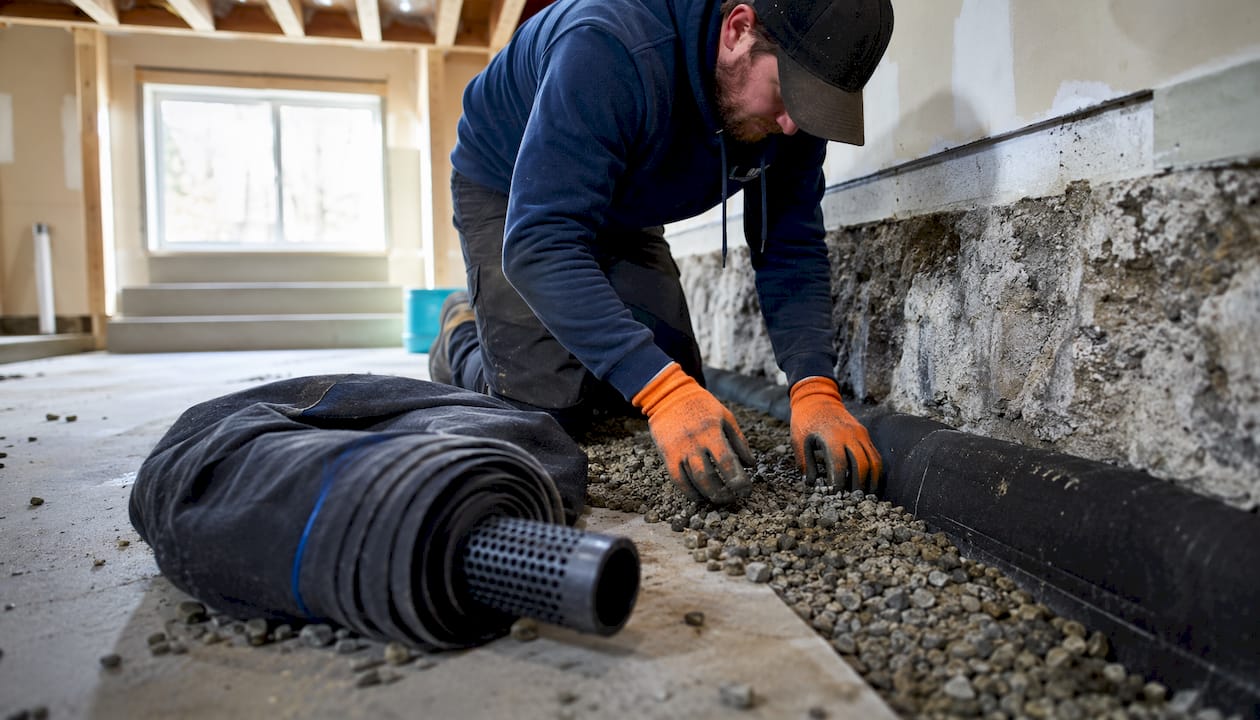
- Perforated PVC pipe laid in a gravel-filled trench along the interior perimeter, just inside the footing
- Washed gravel surrounding the pipe to create a low-resistance path for water
- Geotextile filter fabric wrapping the pipe and gravel to block soil and silt
- Sump pit and pump at the low point, which activates automatically and discharges water away from the house
Installation runs $3,000–$8,000 for a standard basement and typically completes in one to two days, making it one of the fastest waterproofing solutions available. The sump pump is not optional. Without it, collected water has nowhere to go.
How to install an interior French drain in your basement
The process requires concrete cutting, hand excavation, and precise pipe placement. Most homeowners hire a licensed waterproofing contractor, but understanding each step helps you evaluate quotes and spot shortcuts.
-
Pull permits first. Many jurisdictions require permits for interior drainage work, sump pump installation, or the discharge connection. Permit requirements vary by location, and a reputable contractor handles this as part of the job. A contractor who offers to skip permits to “save you money” is transferring liability to you.
-
Clear and prep the basement. Remove everything within two feet of the perimeter walls. Cover HVAC equipment, water heaters, and electrical panels with plastic sheeting. Concrete dust is pervasive.
-
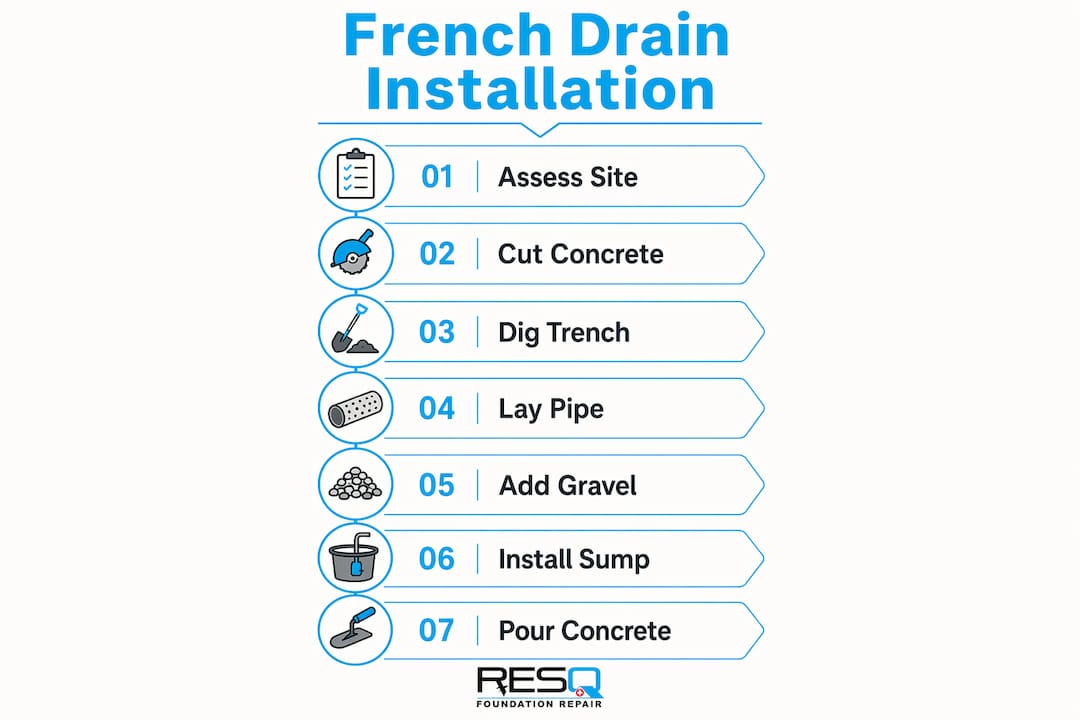
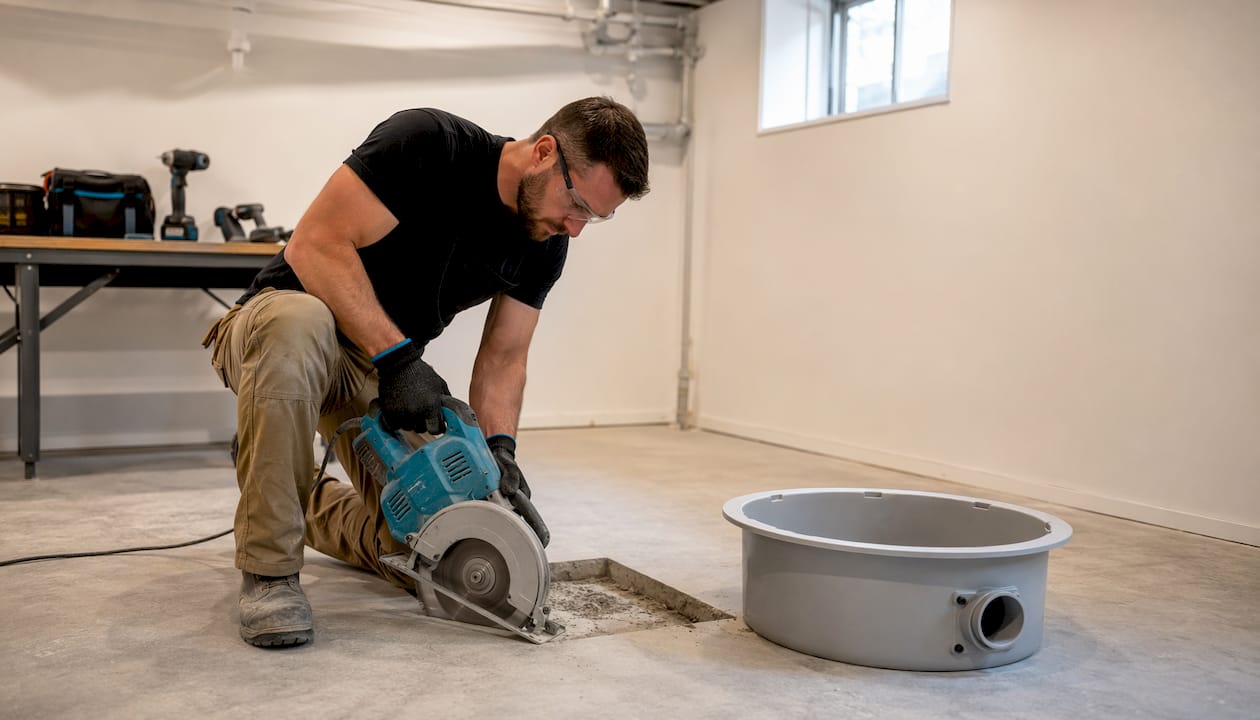
Cut the perimeter strip. A concrete saw cuts a narrow strip along the base of the perimeter walls. This is loud, dusty work. Wet-cutting saws reduce airborne silica, which is a real respiratory hazard without proper masks.
-
Break out and remove the slab section. Jackhammers break the cut strip into manageable chunks. All concrete and soil spoil gets hauled out.
-
Excavate the trench. The trench goes down below the existing slab, reaching footing depth along the perimeter. All excavation inside a finished basement is manual. No equipment fits. This is the most labor-intensive part of the job and the primary reason labor dominates the cost.
-
Lay the gravel bed. A layer of ¾-inch washed gravel goes into the trench first, creating the drainage bed. Never use pea gravel or crushed limestone, both of which break down and clog pipes faster.
-
Wrap and place the perforated pipe. Four-inch perforated PVC pipe, wrapped in geotextile filter fabric, gets laid on the gravel bed. The pipe must slope continuously toward the sump pit, typically at least ⅛ inch per foot. Get this wrong and water sits stagnant in the pipe.
-
Backfill with clean stone. More washed gravel covers the pipe completely, filling the trench to just below the original slab level.
-
Install the sump pit and pump. The sump basin gets dug at the lowest point, sized to handle your expected water volume. A submersible sump pump with a float switch goes in the basin. The discharge line runs to daylight, a storm drain, or a dry well, never to the sanitary sewer.
-
Pour new concrete. Fresh concrete restores the floor surface over the trench. Curing takes 24–48 hours before foot traffic. The finished result looks like a thin seam along the perimeter wall.
Pro Tip: Use only clean ¾-inch washed stone and wrap both the pipe and the gravel bed in non-woven geotextile filter fabric. Skipping the fabric is the single most common cause of premature system failure. Silt migrates into the gravel, clogs the pipe, and forces a full re-excavation.
Pros and cons of interior French drains for basement waterproofing
Understanding what this system actually does, and what it cannot do, prevents expensive disappointment.
Advantages:
- Lower cost than exterior systems ($3,000–$8,000 vs. $8,000–$15,000+)
- No exterior excavation, no landscape destruction, no property line concerns
- Installs year-round, including during winter when frozen ground stops exterior work
- Relieves hydrostatic pressure beneath the slab, which is often the actual water source
- Works around finished walls and obstacles without full basement demolition
Limitations:
- Does not stop water from reaching or saturating foundation walls
- Completely dependent on electricity. A power outage during a storm is exactly when you need it most
- Requires floor demolition, which disrupts a finished basement significantly
- Ongoing maintenance: sump pump testing, battery backup replacement, occasional drain flushing
| Factor | Interior French drain | Exterior French drain |
|---|---|---|
| Typical cost | lower cost range typical for interior | higher cost range typical for exterior |
| Installation time | typically a couple of days | often several days to a week or more |
| Exterior disruption | None | Major excavation |
| Interior disruption | Floor removal required | None |
| Stops wall moisture | No | Yes |
| Handles sub-slab water | Yes | No |
| Power dependency | Yes (sump pump) | Not always |
| Lifespan | 15–25 years | 25–40 years |
The critical distinction is water management versus waterproofing. Interior drains manage water after it breaches the foundation. Exterior systems prevent that breach. For most existing homes with seepage at joints and floor cracks, management is exactly what the situation calls for.
Pro Tip: If your basement is finished, calculate full reconstruction costs before choosing interior drainage. Drywall removal, flooring replacement, and trim work can add a significant amount to the total project cost.
Pro Tip: Budget for a battery backup sump pump. A standard unit keeps the system running during the storms most likely to overwhelm your drainage.
What does interior French drain installation actually cost?
Labor and concrete work drive the price, not materials. Pipe and gravel are cheap. Jackhammering, hand-digging, and re-pouring concrete inside a confined space is not.
| Cost component | Typical range |
|---|---|
| Perimeter drain (per linear foot) | $40–$85/ft |
| Full perimeter installation | typical full perimeter cost |
| Partial installation (one wall) | typical partial installation cost |
| Sump pump system | typical sump pump system cost |
| Battery backup pump | typical battery backup pump cost |
| Permits and inspections | Varies by jurisdiction |
Factors that push costs higher:
- Finished basement walls requiring removal and reconstruction
- Obstacles like support columns, HVAC equipment, or water heaters in the drain path
- Deep footings requiring deeper excavation
- New sump pit if none exists
- Mold remediation that must precede waterproofing work
- Structural repairs needed alongside drainage installation
A partial installation along one or two wet walls costs 40–60% less than a full perimeter system and is the right call when water entry is localized. Understanding basement drainage solutions before you get quotes helps you push back on contractors who default to full perimeter work for a two-wall problem.
The sump pump itself needs periodic replacement. Factor that into your long-term budget alongside annual testing and occasional drain flushing.
Interior vs. exterior systems: which one does your basement actually need?
The fundamental difference is where in the water’s journey each system intervenes. Interior drains catch water after it enters. Exterior drains stop it before it contacts the foundation wall. That distinction determines which system fits your problem.
Choose interior drainage when:
- Water enters at the cove joint (where floor meets wall) or pushes up through floor cracks
- Exterior excavation is blocked by a garage foundation, close property lines, or mature landscaping
- Budget constraints require the lower-cost option upfront
- You need a solution during winter months when ground is frozen
Choose exterior waterproofing when:
- Water enters through the wall face itself, under pressure
- Foundation walls are bowing or cracking from hydrostatic pressure
- You’re building new construction with the exterior already exposed
Before committing to either system, diagnose the actual water entry point. Cove joint seepage and sub-slab pressure are interior drain problems. Wall face seepage under pressure is an exterior membrane problem. Getting this wrong means spending money on a system that addresses the wrong stage of the water’s path.
Structural problems require separate attention. Bowing or cracking walls need carbon fiber straps or wall anchors before or alongside drainage work. A French drain relieves hydrostatic pressure beneath the slab but does nothing to counter soil forces pushing laterally on a wall. If a crack is wider than a quarter inch or a wall has visible movement, consult a structural engineer before any drainage work begins.
Understanding the full picture of why water enters basement walls is the most valuable step you can take before calling a contractor. You can also learn more about building drain systems to understand how interior drainage connects to your home’s broader plumbing.
Pro Tip: Test your sump pump every spring by pouring a bucket of water into the pit. If it doesn’t activate immediately, replace it before the wet season. Assess sump pump performance annually, not just when you notice a problem.
Key Takeaways
An interior French drain manages basement water intrusion by routing it to a sump pump, installed at a typical moderate cost, but it does not stop water from reaching foundation walls.
| Point | Details |
|---|---|
| Core function | Collects water after foundation breach and routes it to a sump pump for removal. |
| Installation cost | Full perimeter runs $5,000–$9,500; partial one-wall installs cost $1,500–$3,500. |
| Filter fabric is critical | Skipping geotextile wrap causes silt clogging and forces costly re-excavation. |
| Diagnose before installing | Identify whether water enters at cove joint, floor cracks, or wall face before choosing a system. |
| Structural damage needs separate repair | Bowing or cracked walls require reinforcement alongside any drainage installation. |
FAQ
How long does interior French drain installation take?
Most standard basement installations complete in one to two days, plus 24–48 hours for concrete curing. Larger perimeters or finished basements with obstacles take longer.
Do I need a permit to install an interior French drain?
Permit requirements vary by jurisdiction. Many areas require permits for interior drainage, sump pump installation, or the discharge connection. Always check with your local building department before work starts.
Can I install an interior French drain myself?
Technically possible, but the concrete cutting, precise pipe slope, sump pit sizing, and concrete restoration require specialized tools and skills. Most homeowners are better served by a licensed waterproofing contractor for interior basement waterproofing.
How long does an interior French drain last?
With proper installation and maintenance, interior systems last 15–25 years. Sump pumps need replacement every 7–10 years, and the drain itself benefits from occasional flushing to clear any accumulated sediment.
Does an interior French drain stop water from entering my basement?
No. It manages water that has already entered by giving it a controlled path to the sump pump. Exterior waterproofing systems prevent water from contacting the foundation wall in the first place.