
What if a wall crack has nothing to do with your foundation, or a small change is an early clue worth tracking? If you’re asking, “is my foundation settling or is it something else,” the uncertainty can be unsettling. A single symptom doesn’t confirm the cause. Its location, pattern, and changes over time matter.
Moisture, normal wear, and other conditions can explain visible changes, too. Rather than jump to a repair, look for patterns and note what may be behind them.
This guide covers common signs of foundation movement, other causes that can look similar, and what to document as conditions change. For Tallahassee homeowners, Foundation ResQ addresses foundation and moisture-related concerns and can help connect observed symptoms with an appropriate next step.
Key Takeaways
- A single crack or sticking door can’t confirm foundation settling. Consider its location, pattern, and changes over time.
- If you’re wondering “is my foundation settling or is it something else,” compare possible structural, moisture-related, and finish-related causes. More than one concern can be present.
- Use symptom patterns to decide what to observe next, not as a substitute for a professional assessment.
- Document changes with dated photos and brief notes, and inspect only what you can check safely.
- Understanding the cause helps guide the next step, whether that involves foundation stabilization, moisture control, or concrete lifting.
Is My Foundation Settling? Start With the Pattern of Changes
Foundation settling is downward movement as the ground beneath a structure compresses or changes. Homes can experience other kinds of movement, too, and visible changes may have causes unrelated to the foundation. If you’re asking, “is my foundation settling or is it something else,” note where symptoms appear, which direction they run, whether they recur, and how they change over time.
A crack or sticking door is a reason to pay attention, but neither confirms a structural problem on its own. An assessment considers the pattern alongside the property’s condition. For background, structural settlement describes downward movement that can occur when support beneath a structure changes or compresses.
Which changes can raise a foundation concern?
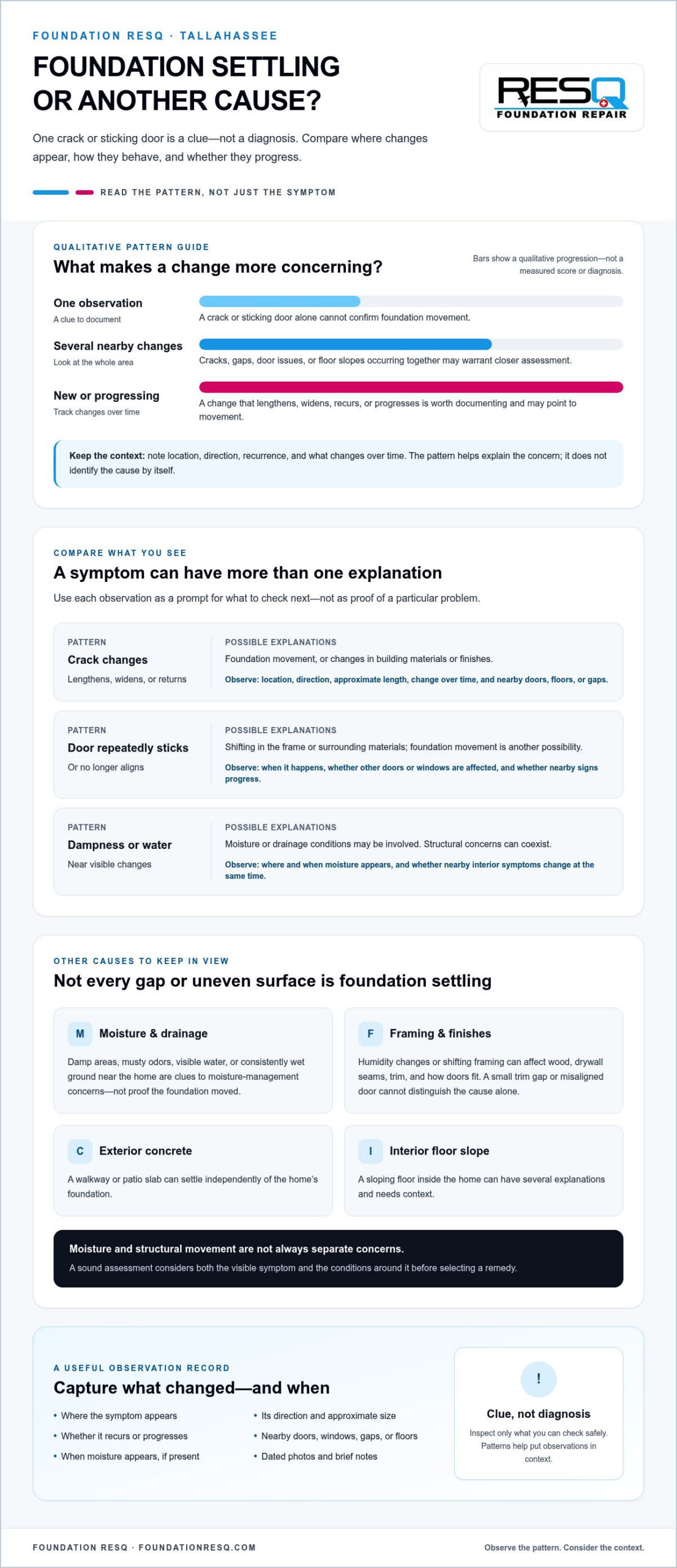
Cracks in walls or ceilings, or around doors and windows, are observations to record, not proof of settling. Note their location and direction, and whether they appear to be lengthening or widening. Also track doors or windows that newly stick or no longer align, sloping floors, and widening gaps between walls, trim, or floors. Several changes in one area, especially if they’re progressing, may warrant closer assessment.
Why one symptom rarely tells the whole story
Similar changes can have different explanations, including moisture-related movement or shifts in framing and finishes. A mark that has looked the same for years offers different information from a crack that is visibly changing. Neither observation identifies the cause, but tracking the difference helps explain what’s happening and when it began.
A symptom is a clue, not a diagnosis. Compare its location, direction, recurrence, and progression with other changes. For example, note whether a sticking door is near a crack, whether the problem returns after the door is adjusted, and whether nearby gaps or floor slopes are changing too. These details help describe the concern without assuming its cause.
In short: a new or progressing pattern may point to foundation movement and is worth documenting, but symptoms alone can’t confirm settling. Keep a clear record, then consider possible causes before choosing a remedy.
What Else Can Look Like Foundation Settling?
A crack, gap, or uneven surface can have more than one explanation. Moisture can affect building materials, framing or finishes can shift independently, and as experienced contractors like Acadiana Patios & Construction frequently observe, an outdoor walkway or slab may settle without indicating movement in the home’s foundation. These conditions can overlap, so one concern doesn’t rule out another.
Changes in weather or indoor humidity can affect wood and other building materials, sometimes altering how doors, trim, or finishes fit. Record the timing, but don’t assume that a seasonal change identifies the cause. Compare what changed, where it occurred, and whether it persists or progresses.
Moisture, drainage, and crawl space conditions
Damp areas, musty odors, visible water, or consistently wet ground near the home can point to moisture-management concerns. They’re useful clues, but they don’t establish that the foundation has moved. Note where moisture appears and whether nearby interior symptoms change at the same time. For more on moisture conditions below the home, see this Tallahassee crawl space encapsulation guide.
Moisture and structural movement aren’t always separate problems. Water conditions may need attention even if they don’t explain a crack or sticking door. For instance, specialist contractors such as T.M. Drainage demonstrate how thorough CCTV drain surveys can pinpoint whether hidden underground leaks or blockages are contributing to surrounding soil saturation. A sound assessment considers the visible symptom and the conditions around it before selecting a remedy.
Interior finishes, framing, and uneven concrete
Drywall seams, trim, and doors may shift as materials respond to humidity changes or framing moves. A misaligned door or small trim gap can’t distinguish those changes from foundation movement on its own. Look for several signs developing together, and note whether they’re changing over time.
An uneven walkway or patio slab is different from an uneven floor inside the home. Exterior concrete can settle independently, while a sloping interior floor can have several explanations and needs context. Foundation ResQ’s Tallahassee concrete leveling guide explains more about uneven concrete surfaces.
A visible symptom shows what has changed; it doesn’t identify the cause. If you’re unsure whether symptoms point to foundation movement, moisture, or a separate concrete issue, an assessment can put your observations in context. Foundation ResQ addresses structural and moisture-related concerns in Tallahassee. Learn more about foundation evaluation in Tallahassee.
How to Compare Foundation Settling Signs With Other Causes
If you’re weighing “is my foundation settling or is it something else,” compare the pattern rather than relying on one symptom. The table outlines observations to track and possible explanations to consider. These are not diagnoses: a home’s age, construction, and site conditions all affect how changes should be interpreted.
| Symptom pattern | Possible explanations | What to observe next |
|---|---|---|
| A crack appears to lengthen, widen, or recur | It may relate to foundation movement, but changes in materials or finishes can also produce cracks. | Record where it is, its direction and approximate length, and whether it changes. Note nearby doors, floors, or gaps. |
| The same door sticks repeatedly or no longer aligns | Shifting in the frame or surrounding materials may contribute; foundation movement is another possibility. | Note when it happens, whether other doors or windows are affected, and whether nearby symptoms appear or progress. |
| Dampness or water signs occur near visible changes | Moisture or drainage conditions may be involved. Structural concerns can also coexist. | Record where and when moisture appears, and whether the location overlaps with cracks or alignment changes. |
| One outdoor walkway or slab looks uneven | The concrete may have settled independently of the home’s foundation. | Note whether unevenness is limited to that surface or accompanied by changes inside the home. |
What the location and shape of a crack can tell you
Describe a crack by its location, direction, approximate length, and whether it changes. Note whether it’s in a wall, ceiling, or near an opening, and whether it runs vertically, horizontally, or at an angle. These details help frame useful questions, but no single shape or location confirms the cause. Don’t treat a visual rule of thumb as a diagnosis.
What recurring changes may add to the picture
A recurring door alignment problem alongside changes in nearby areas may warrant more attention than one isolated, unchanged finish issue. Document cracks or gaps with dated photos taken from consistent viewpoints, and add brief notes about what has changed. Don’t rely on memory alone.
Pattern and progression matter more than one isolated observation. If several signs appear in different parts of the home or visibly progress, arrange an assessment to understand the cause. A careful evaluation considers the property and its conditions before a remedy is recommended.
What to Do If You Notice Possible Foundation Movement
If changes recur, progress, or appear in several related areas, take a measured approach. A clear record helps an evaluator understand what you’ve noticed. Avoid repairs or tests that could obscure the cause. Document the condition safely, then consider the structure and surrounding conditions together.
Document the changes without disturbing the structure
Keep observations factual. Note when each symptom first appeared, where it is, and whether it has changed. Take dated photos of cracks, door gaps, and uneven areas from consistent viewpoints so you can compare them over time. If you notice water intrusion or crawl space moisture, record what’s visible, but don’t enter an unsafe area or disturb the structure to investigate.
- Record what you see. Describe the location and appearance of each change, such as a crack near a window or a door that no longer closes smoothly.
- Note changes over time. Add the date when a symptom recurs or looks different. Include relevant observations, such as visible dampness or a recent weather event, without assuming it caused the change.
- Inspect only what’s safe and visible. Look for nearby signs from accessible areas. Avoid invasive testing, removing finishes, or attempting unsupported repairs.
- Arrange an evaluation when warranted. Share your notes and photos so the property’s symptoms and surrounding conditions can be considered together.
When a professional evaluation is a sensible next step
Consider an evaluation if changes continue to progress, return after adjustments, or occur in multiple related areas. Sudden or significant changes also merit prompt attention, even though a visible symptom alone can’t establish the cause. A careful assessment can distinguish possible foundation movement from moisture-related, framing, finish, or concrete concerns before a remedy is selected.
For Tallahassee homeowners, Foundation ResQ evaluates reported symptoms in the context of the property and observed conditions. Its Tallahassee foundation repair guide offers more information about addressing foundation concerns. If your documented changes warrant a closer look, schedule a foundation evaluation with Foundation ResQ.
How Foundation ResQ Helps Identify the Cause in Tallahassee
Cracks, alignment changes, dampness, or uneven surfaces can raise questions, but they don’t point to one repair by themselves. Foundation ResQ considers reported symptoms in the context of the property and its observed conditions. For Tallahassee homeowners asking, “is my foundation settling or is it something else,” an assessment can help clarify whether the concern appears structural, moisture-related, connected to concrete, or involves more than one factor.
From visible symptoms to a clearer explanation
An evaluation looks at where symptoms occur and how they relate, rather than treating each sign in isolation. Your dated photos and notes can help explain what changed and when. The property’s surrounding conditions matter, too. Considering these details together helps distinguish possible foundation concerns from other explanations. The findings, not a checklist, should guide the next step.
The remedy depends on what the evaluation indicates. If foundation movement is identified, stabilization may be appropriate. Foundation ResQ installs helical and push piers for foundation stabilization. If moisture conditions are part of the concern, moisture-control options may be relevant. For an uneven concrete surface separate from the home’s foundation, concrete lifting may be a more suitable category of work. These are different needs, not interchangeable fixes.
A measured next step for Tallahassee homeowners
Foundation ResQ serves Tallahassee with foundation stabilization and moisture-control services, as well as concrete lifting. The first step is understanding the cause before selecting a solution. A crack or sloping surface alone doesn’t establish which service is appropriate. An evaluation brings the home’s reported changes and visible conditions into context.
Bring your observations and photos to the evaluation, and describe any changes or moisture concerns you’ve noticed. This information helps frame what needs closer attention without assuming the cause in advance. Tallahassee homeowners concerned about possible foundation movement can request an evaluation from Foundation ResQ to discuss the property’s observed conditions and a measured path forward.
Take a Clear Next Step for Your Home
If you’re still asking, “is my foundation settling or is it something else,” remember that a visible change is a reason to observe, not a diagnosis. Look at its location and pattern, keep dated photos and notes, and watch for symptoms that progress or appear together. Moisture, finishes, framing, concrete, and foundation movement can produce overlapping clues, so the cause should guide any remedy.
Foundation ResQ serves Tallahassee homeowners with foundation stabilization, moisture control, and concrete lifting. If an assessment points to foundation movement, stabilization may include helical or push pier installation. If moisture conditions are involved, moisture control may be more appropriate. The right approach depends on the property and observed conditions.
Take a measured step toward clarity. Request a foundation evaluation from Foundation ResQ to discuss the changes you’ve documented. Understanding what’s happening can help you make an informed decision about protecting your home.
Frequently Asked Questions
How can I tell if my house is settling or just experiencing normal changes?
You can’t reliably tell from one symptom alone. Look at its pattern and whether it changes. A long-standing mark that stays the same may be less concerning than a crack that grows alongside new door or window alignment problems. Record locations, dates, and visible changes. In Tallahassee, an evaluation can consider the home’s structure and surrounding conditions to help identify the cause.
Can a sticking door mean my foundation is settling?
Yes, a sticking door can occur with foundation movement, but changes to the door, frame, or surrounding materials can also cause it. Note whether the problem is new or recurring, and whether other doors, windows, cracks, or floor changes appear nearby. If several related symptoms develop or progress, document them and consider an evaluation rather than assuming the door alone confirms a foundation issue.
Are cracks in walls always a sign of foundation problems?
No. Changes in finishes or framing may also contribute, and a crack’s appearance alone can’t confirm its source. Note where it is, which direction it runs, and whether it changes. A crack that visibly progresses or appears alongside other changes may warrant assessment. An evaluation considers the pattern and the home’s condition before a repair is selected.
Can heavy rain make foundation settling signs more noticeable?
Heavy rain may make moisture or drainage conditions around a home more noticeable, and dampness can occur alongside other visible changes. Rain alone doesn’t establish that a foundation is settling or explain a crack or sticking door. Record when symptoms appear and note any visible water or damp areas. For a Tallahassee home, an evaluation should consider both structural observations and moisture conditions without assuming one caused the other.
What should I do if I notice a new foundation crack?
Photograph the crack, note the date and location, and describe its direction and approximate length. Take later photos from the same viewpoint to document any visible change. Look for related signs nearby, such as new gaps or alignment changes, but don’t remove finishes or attempt invasive testing. If the crack progresses, recurs, or appears with other changes, arrange an evaluation to understand the cause before choosing a remedy.
When should I have possible foundation settling evaluated?
Arrange an evaluation if symptoms are progressing, recurring, or appearing together in related areas. Sudden or significant changes also merit prompt attention. A single symptom doesn’t prove foundation movement, but an assessment can consider its pattern alongside the property and surrounding conditions. Tallahassee homeowners can share dated photos and notes with Foundation ResQ to help frame concerns and determine what the observed changes may warrant.
Can moisture problems cause symptoms that look like foundation settling?
Yes, moisture-related conditions can accompany changes that resemble signs of foundation movement, though they don’t prove the foundation has shifted. Dampness, visible water, or crawl space moisture are clues to document, not a diagnosis. Moisture concerns and structural issues can overlap. An assessment that considers both the building and its moisture conditions can help clarify the cause and guide an appropriate next step.