
If you suspect mold in your HVAC ducts, turn off the system, fix any leaks or moisture problems you can find, and arrange a qualified inspection. Cleaning on your own only makes sense for small, visible deposits on hard duct surfaces; porous duct liner that shows mold growth usually needs to be replaced rather than scrubbed, according to EPA guidance.
TL;DR:
- A musty odor that strengthens when the system runs, visible growth near vents, and recurring dampness are practical reasons to investigate further.
- The CDC and EPA do not recommend routine mold air sampling, since no health based indoor mold concentration standard predicts who will become ill.
- Photograph growth with its location and date, and ask inspectors to show visible evidence and specify containment, cleaning, and material replacement before you agree to work.
- Prevent recurring moisture by clearing condensate drains, sealing duct joints with mastic or approved metal tape, maintaining filters, and correcting sweating or poorly insulated ducts.
- Homeowners insurance coverage depends on the policy and moisture cause; gradual leaks may be excluded, while sudden events such as burst pipes may qualify.
Table of Contents
- Signs You May Have Mold in HVAC Ducts
- Where Mold Commonly Grows in HVAC Systems and Why
- Health Concerns: Who Is at Risk and What Symptoms to Watch For
- How to Inspect HVAC Ducts Safely and What to Document
- What to Do Next: Cleaning, Replacement, and When to Hire a Professional
- Prevention and Maintenance to Stop Mold From Returning
- A Practical View on HVAC Mold and Moisture Control
- Get a Free Inspection for HVAC and Crawl Space Mold
- FAQ
- Sources
Signs You May Have Mold in HVAC Ducts
The most reliable clues are the ones you can see and smell, not a lab number. A musty odor that gets stronger when the furnace or air conditioner kicks on is often the first warning, since moving air pushes spore-laden smells out through the vents. Visible black or green growth around registers, inside the first few inches of ductwork, or on the grille itself is a direct sign of contamination.
Other indicators are easy to miss if you are not looking for them:
- Fine black dust or flaky residue on registers that looks different from ordinary household dust
- Allergy-like symptoms such as sneezing, coughing, or a stuffy nose that show up mainly when the system runs
- Recurring condensation, dampness, or water stains near ductwork, the air handler, or nearby ceiling tiles
- A sudden increase in musty smell after heavy rain or high humidity
Any one of these on its own is not proof of a serious problem, but several appearing together is a reasonable trigger to inspect further.
Where Mold Commonly Grows in HVAC Systems and Why
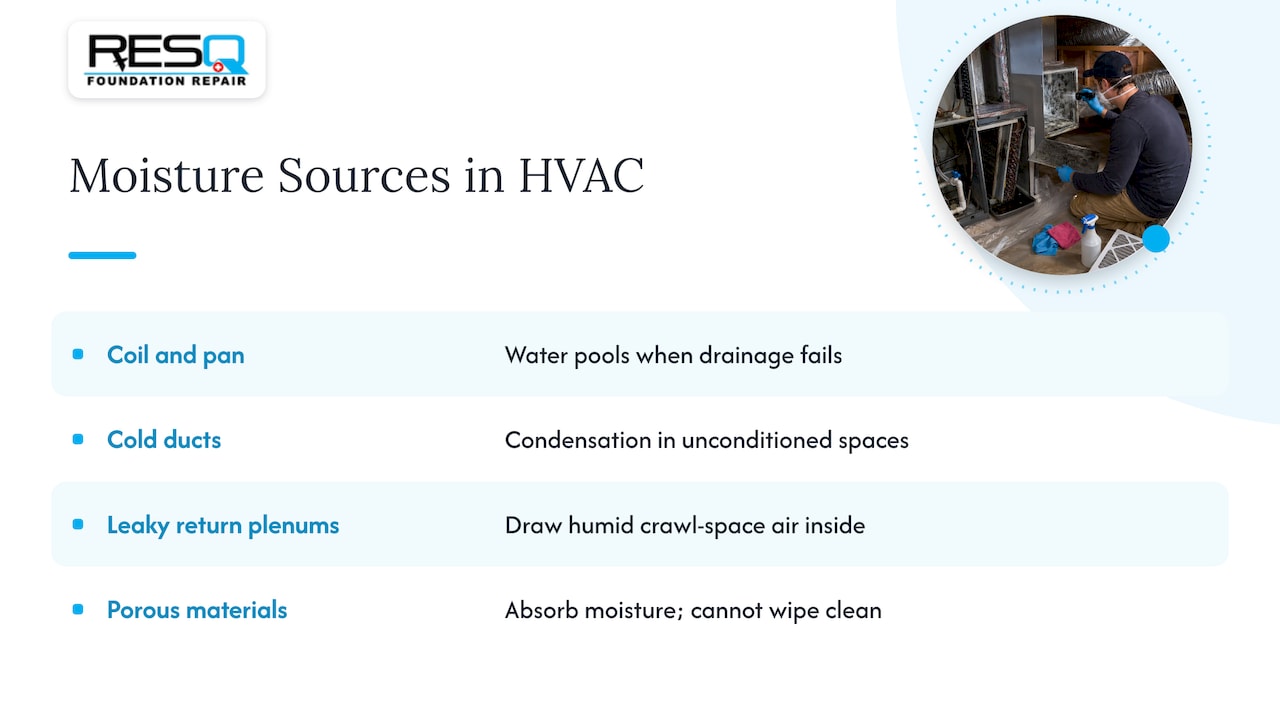
Mold needs moisture, and HVAC systems create plenty of opportunities for it. The evaporator coil and condensate pan sit in a cool, wet environment almost by design, and a clogged drain line or a tilted pan lets water pool instead of draining away. Sweating ductwork is another common trigger: when humid air meets a cold duct surface, condensation forms on the outside or inside, especially in runs through attics, crawl spaces, or other unconditioned areas.
Return plenums with leaky seams can pull humid, dusty air from a crawl space directly into the system. Porous duct liner and flexible duct insulation are especially vulnerable because they absorb moisture and cannot be wiped clean the way sheet metal can. Once that material gets wet and stays wet, mold tends to recur no matter how often the surface is cleaned.
Health Concerns: Who Is at Risk and What Symptoms to Watch For
Mold exposure is tied to a range of respiratory symptoms, including cough, wheeze, nasal and throat irritation, and allergic reactions. CDC guidance notes that moldy environments are associated with asthma exacerbation, and that health effects vary from person to person, so testing cannot reliably predict who will get sick.
People with asthma, allergies, or a compromised immune system tend to be more sensitive to mold exposure. Neither the CDC nor the EPA recommends routine air sampling for mold in homes; NIOSH testing and remediation guidance points out there are no health-based standards for indoor mold concentrations, so visual inspection and odor are more useful than lab numbers for deciding whether action is needed. If symptoms are persistent or severe, a healthcare provider should be part of the conversation.
How to Inspect HVAC Ducts Safely and What to Document
A careful inspection can confirm a problem without making it worse, as long as you take a few precautions first.
- Turn off the HVAC system before you start, since running it while contamination is suspected can spread spores through the home.
- Do a visual check and a simple sniff test at each supply and return register, using a flashlight to look a few inches into the duct.
- Inspect the condensate pan, drain line, and any accessible air handler parts for standing water, rust, or slime, but stop if reaching them requires removing panels you are not comfortable handling.
- Photograph anything you find, noting the date, location, and whether the area feels damp.
- For an area larger than a small patch, or if you want confirmation beyond sight and smell, request a professional inspection rather than attempting a tape-lift sample yourself.
Pro Tip: Ask any inspector to physically show you the mold rather than just handing you a verbal diagnosis; a legitimate assessment should include visible evidence you can see with your own eyes.
Keep your photos and notes together. They become useful later for a remediation plan, a contractor quote, or an insurance claim.
What to Do Next: Cleaning, Replacement, and When to Hire a Professional
EPA guidance distinguishes between duct materials: hard-surface metal ducts with substantial visible mold can often be cleaned, while porous liner material that has gotten wet or moldy should be removed and replaced instead, since it cannot be reliably cleaned. Running the HVAC system while mold is present can spread spores to other parts of the house, so the first steps are shutting the system down and getting any moisture source under control.
Professional remediation for ductwork typically follows a structured sequence outlined in EPA mold remediation guidelines:
- Containment of the work area and use of negative air pressure to prevent cross-contamination
- Cleaning of coils, pans, and accessible hard-surface ducts
- Removal and replacement of contaminated porous liner or insulation
- Post-remediation verification that the area is clean before the system goes back into regular use
Large or hidden infestations may call for temporary relocation of occupants, particularly when someone in the home is especially sensitive to mold. Before hiring anyone, ask them to show you the mold, explain their containment and safety measures, and describe exactly what gets replaced versus cleaned. A provider who cannot answer those questions directly is a red flag. For a closer look at what a full job typically involves, see how the mold remediation process works.
Prevention and Maintenance to Stop Mold From Returning
Moisture control is the real fix, since cleaning alone rarely holds if the underlying conditions stay the same.
A few habits make the biggest difference:
- Check and clean condensate pans and drain lines each season, especially after heavy cooling or heating use
- Seal duct joints with mastic or approved metal tape rather than fabric or duck tape, which fails over time
- Use an appropriate filter recommended for your HVAC system and replace it on schedule
- Keep whole-house humidifiers maintained to avoid excessive indoor humidity
If you notice duct runs sweating or ducts that are not properly insulated, addressing condensation on ductwork early prevents it from becoming a recurring mold source.
Pro Tip: A duct leak that lets in humid attic or crawl space air is often easier to find than it sounds. For a quick way to narrow it down before calling in help, this DIY duct leak check guide walks through five checks most homeowners can do themselves.
A Practical View on HVAC Mold and Moisture Control
Mold in ductwork rarely shows up on its own. In our work on crawl space remediation and basement waterproofing, we consistently see HVAC duct mold traced back to a moisture problem somewhere else in the home, whether that is a damp crawl space, a leaking foundation, or poor drainage around the house. Treating the duct symptom without fixing that source is why so many homeowners deal with the same mold smell again a year later.
If you have gone through the inspection steps above and found anything beyond a small, hard-surface patch, it is worth getting a qualified remediator involved before the problem spreads further.
— Kayle
Get a Free Inspection for HVAC and Crawl Space Mold
When mold in your ducts traces back to a damp crawl space or a foundation letting in moisture, cleaning the vents only addresses half the problem. Our mold remediation work is built around finding and fixing that moisture source first, whether that means crawl space encapsulation, sump pump repair, or basement waterproofing, so the mold does not simply return once the ducts are clean.

Our inspection includes:
- A visual walkthrough of your crawl space, foundation, and accessible HVAC components, with any mold or moisture issues shown to you directly
- A diagnosis of where excess moisture is coming from, not just where the symptoms are showing up
- A written remediation plan and quote with no pressure to sign on the spot
We serve homeowners and property managers in the local region. If you have found signs of mold near your ductwork or in your crawl space, request a free inspection and get a clear picture of what is actually causing it.
This article is general information, not a substitute for advice from a qualified doctor. Consult a qualified healthcare professional about your own circumstances before acting on anything here.
FAQ
Can mold in air ducts make you sick?
Yes, exposure to mold in ducts can trigger respiratory symptoms such as coughing, wheezing, nasal irritation, and allergic reactions, and it can worsen asthma in people who already have it, per CDC guidance. Sensitivity varies by person, so some household members may notice symptoms while others do not.
What is the 2 foot rule for ductwork?
This refers informally to inspecting and sealing the first couple of feet of duct near the air handler or coil, a common trouble spot for condensation and leaks, though it is not a formal EPA or industry standard. The more reliable approach is to seal all accessible duct joints with mastic and check connections throughout the run, not just near the unit, following duct sealing guidance.
Will mold go away if it dries out?
Drying out stops active mold growth, but it does not remove existing mold or its spores from porous surfaces like duct liner. EPA guidance recommends removing and replacing moldy porous materials rather than relying on drying alone.
Will homeowners insurance cover mold in HVAC?
Coverage depends on your specific policy and what caused the moisture, since many policies exclude mold resulting from long-term neglect or gradual leaks. Check your policy language and document the cause and timeline of the moisture problem, since a sudden covered event like a burst pipe is treated differently than a slow, unaddressed leak.