
Demolition isn’t the automatic answer to mold. Whether mold remediation without demolition is possible depends on what is wet, how far the growth has spread, and whether the affected material can be cleaned. The scope depends on the affected area, the moisture source, and material condition, so remediation starts by finding what is sustaining the mold.
It’s understandable to worry that mold means tearing out walls or flooring. In some cases, targeted cleaning and moisture correction can address the problem; in others, damaged materials need controlled removal to reach hidden growth and protect the home. This article explains what shapes remediation costs, how professionals trace moisture, and how they decide between cleaning and removal, so you can understand the options before work begins.
Key Takeaways
- Understand which factors shape remediation costs, including the extent of mold and the condition of affected materials.
- Learn how tracing leaks and hidden moisture helps address the cause, not just visible mold.
- See when professional cleaning may be appropriate and when damaged materials need controlled removal.
- Find out how Foundation ResQ’s mold remediation services can help when moisture or mold concerns need professional attention.
How much should mold remediation cost ?
A reliable estimate starts with the affected area, material condition, and moisture source. The price depends on the case and is provided after a quote request; the scope reflects contamination, access, containment, filtration, and required material removal. Surface growth on sealed tile differs from mold inside porous drywall. A bathroom ceiling, wall cavity, and crawl space each require different assessment and work.
Containment helps limit spread while professionals remove mold. They isolate the work area with barriers, then use controlled airflow to keep contaminated air from moving into clean rooms. For example, a hallway leading to a mold-affected bedroom may need protection before work begins. The size and layout of the contained area affect setup, access, and the time needed for thorough remediation.
Air filtration is another part of the process. HEPA air scrubbers used during remediation capture airborne spores as small as 0.3 microns. Filtration supports containment, but it does not replace removing contaminated materials or correcting moisture. Professionals may clean suitable surfaces, remove damaged porous materials, and treat the affected area. The method depends on how far growth has spread beyond what is visible.
Material condition can change the scope. Mold on a hard, cleanable surface may be treated differently from growth embedded in drywall, insulation, or carpet. Porous materials can retain moisture and contamination beneath visible spots. If affected materials remain in place, surface cleaning may leave the underlying problem unresolved. Removing only materials that cannot be adequately cleaned can limit unnecessary disturbance.
Moisture control is essential to preventing recurrence. The U.S. Environmental Protection Agency recommends keeping indoor humidity between 30% and 50% to help prevent mold recurrence. A professional assessment should identify the moisture source before cleanup is considered complete. A plumbing leak, condensation, or water intrusion can require different corrections. Containment, air filtration, removal decisions, and moisture repair together shape a thorough mold removal plan.
Moisture-source identification
Mold can point to a leak or hidden water damage, even when visible growth looks small. Professionals trace moisture beyond the stained surface to find what is sustaining it. Growth behind drywall may follow a plumbing leak, while damp flooring can indicate water beneath a finished surface. A musty cabinet may warrant checking nearby plumbing and the wall behind it. Finding the source helps distinguish isolated surface growth from a wider moisture problem.
The assessment follows moisture through connected areas. A professional may inspect window edges, plumbing connections, cabinets, flooring, and spaces near known leaks or flooding. Insulation and drywall can conceal dampness, so the affected area may extend beyond the visible mark. For example, a leak near a kitchen sink can affect the cabinet base and adjacent wall. The inspection connects these clues to focus remediation and repairs.
The cause must be addressed, not just the mold. A plumbing leak calls for fixing the leaking connection; moisture around a window may require addressing water entry there. High humidity can affect several rooms, while a localized leak may leave a more limited pattern. The right correction depends on the inspection. Cleaning before stopping ongoing water intrusion can leave materials exposed to the same conditions again.
Professionals also assess whether moisture has affected porous materials or structural components. Wet insulation may hold water where a painted wall appears dry, and flooring may conceal dampness underneath. Those findings guide decisions about what can be dried and retained and what needs removal. A clear record of the moisture source, affected locations, and completed repairs helps keep mold remediation focused and distinguish a resolved leak from moisture that still needs attention.
Mold remediation methods, from surface cleaning to controlled demolition
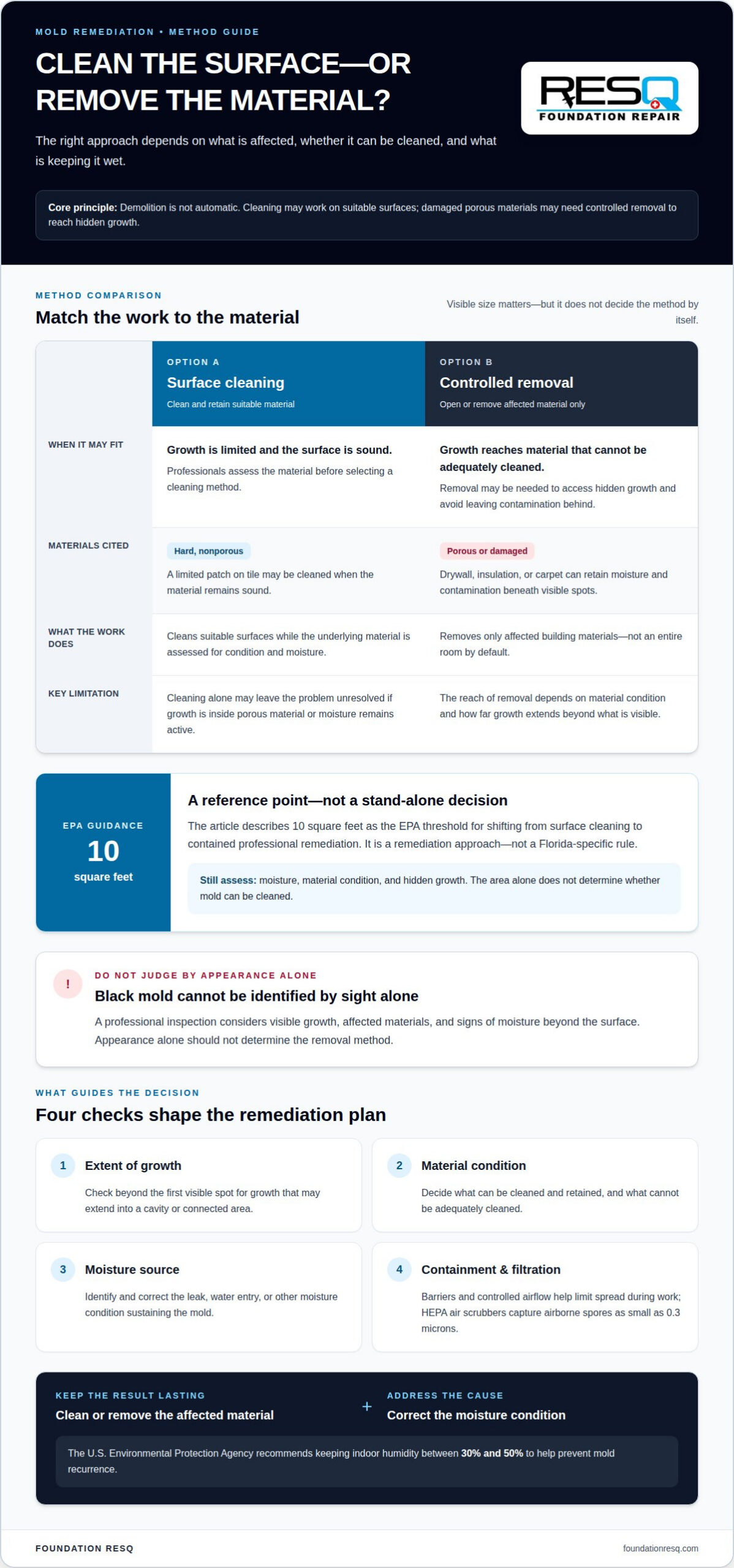
The EPA identifies 10 square feet as the threshold for shifting from surface cleaning to contained professional remediation. This describes a remediation approach; it does not identify a Florida-specific rule. For a smaller affected area, professionals assess the surface and material before choosing a cleaning method. The size alone doesn’t determine whether mold can be cleaned, because moisture, material condition, and hidden growth also matter.
Hard, nonporous surfaces may be cleaned when mold is limited and the material remains sound. A small patch on tile differs from growth embedded in drywall or carpet. Porous materials can retain moisture and contamination below the visible surface. If affected drywall or insulation cannot be adequately cleaned, removing it may be necessary to reach the growth and avoid leaving contamination behind.
Controlled demolition means opening or removing only affected building materials, rather than tearing out an entire room by default. In a basement, a professional may need to remove a damaged section of drywall to assess the cavity behind it. Containment and air filtration help limit spread during removal. The extent of removal depends on material condition and the reach of the mold, not just the size of the first visible spot.
Black mold can’t be identified by sight alone, so appearance shouldn’t determine the removal method. A professional inspection considers visible growth, affected materials, and signs of moisture beyond the surface. Cleaning alone may be insufficient if mold is inside porous materials or the moisture source remains active. The practical approach is to match the method to the material: clean suitable surfaces, remove materials that can’t be properly cleaned, and address the moisture condition supporting growth.
What steps do professionals take for mold remediation without demolition?
Professionals begin with an inspection to map visible growth, affected materials, and likely moisture pathways. They check nearby rooms and building cavities when stains, odors, or water damage point beyond the exposed surface. For example, growth beside a bathroom fixture may lead them to examine the adjoining wall and plumbing area. This assessment defines the work area and identifies materials that may remain in place.
Next, professionals address the moisture source and contain the affected space. Barriers separate the work area from occupied parts of the home, while air filtration helps limit airborne particles and cross-contamination. The containment boundary should account for access routes, nearby furnishings, and the location of the growth. If inspection reveals mold inside a wall cavity, professionals can limit opening to the affected section rather than removing an entire wall.
Within the controlled area, the team chooses cleaning or removal according to material condition. Sound, cleanable surfaces can be treated in place. Damaged materials or those that cannot be adequately cleaned may need careful removal. Removed debris is managed within the contained work zone to help prevent it from spreading through the home. The aim is targeted work, not demolition for its own sake.
After removal or cleaning, professionals treat affected surfaces and continue filtration as needed. They review the work area for remaining visible contamination and confirm that the moisture problem has been addressed. Rebuilding follows when removal exposes an area that needs replacement. Without correcting the leak or other moisture source, cleaning alone may leave conditions that support renewed growth.
These steps can preserve unaffected finishes, but they can’t always avoid opening or removing materials. Hidden growth, damaged drywall, or contamination inside porous materials may make limited removal necessary. For a contained assessment and remediation plan, schedule professional mold remediation.
Foundation ResQ: Mold Remediation Services
Foundation ResQ provides Mold Remediation Services for homeowners dealing with visible mold, recurring growth, or concerns about affected building materials. If you’re considering mold remediation without demolition, a professional assessment can clarify which materials may be cleaned and whether limited removal is needed. Foundation ResQ’s process includes inspection, source containment, isolation barriers, mold removal, and moisture-control recommendations.
Moisture-related damage may also raise concerns about the home’s foundation. Foundation repair, Helical Pier Installation, and Push Pier Installation address foundation issues, not mold cleanup, so they fit when structural concerns need attention alongside remediation.
If mold or related property concerns need professional attention, contact Foundation ResQ to discuss the next step.
Choose a plan that protects the home
A professional assessment connects the visible concern to the home’s broader condition. A clear plan gives each part of the work a purpose: preserve materials that remain serviceable, address moisture conditions, and base removal on actual damage. This keeps the goal focused on protecting the property, not simply avoiding disruption.
A preference for mold remediation without demolition can guide the scope, but it shouldn’t prevent access to affected areas when opening materials is necessary. The right balance depends on inspection findings and what is needed to restore the space. A thoughtful plan explains why particular materials can stay or need attention. With that clarity, you can decide how to move forward.
Discuss your mold concerns with Foundation ResQ and take a considered step toward a healthier, better-protected home.
Frequently Asked Questions
Can a professional get rid of mold without tearing down walls?
Yes, professionals can often remediate mold without removing walls when growth is accessible and affected materials remain suitable for cleaning. The decision depends on inspection findings, not just the visible patch. If mold extends inside drywall or the material is damaged, opening or removing a limited section may be necessary. Avoiding all removal isn’t the goal; addressing the affected area thoroughly is.
How Do “No-Demo” Methods Claim to Work?
These methods focus on treating accessible growth while limiting disturbance to building materials. A professional may contain the work area, clean suitable surfaces, and use air filtration to manage airborne particles. The approach works only when the mold and affected materials can be reached and the moisture condition is addressed. Treating an exposed surface alone can’t resolve growth concealed inside materials.
How can a client verify the remediation was done correctly?
Review the completed work against the documented scope: which areas were treated, which materials were removed, and how the moisture source was addressed. Photos of the affected area before and after work can help clarify what changed. Treated surfaces should have no visible mold. If signs return, the underlying moisture condition or concealed affected material may need further attention.
Is mold dangerous, and should I leave the house?
Mold can irritate allergies, asthma, and breathing problems, but its presence doesn’t automatically mean everyone must leave the home. With widespread mold or a strong odor, limit exposure and keep children and pets away until a professional can contain the area. If symptoms are occurring, reducing time near the affected space is a practical precaution while remediation is assessed.
When can mold be remediated without demolition?
Remediation without demolition may be suitable when growth is limited to accessible surfaces and affected material can be cleaned without compromising it. For example, mold on a sound, nonporous surface may not require opening a wall. A Tallahassee home with staining near a leak still needs assessment for hidden damage. If growth reaches concealed or damaged materials, targeted removal may be necessary.
How do professionals remove mold from drywall without removing it?
Professionals may clean drywall in place when the affected surface is accessible and the material remains sound. They contain the work area, treat the surface using an appropriate method, and address the moisture condition. Drywall that is soft, deteriorated, or affected within the wall cavity may not be suitable for surface cleaning alone. In that case, removing only the damaged section can expose hidden growth.