
Foundation repairs don’t automatically mean moving out. In most cases, homeowners can stay in their homes while work is underway. Peace of mind after foundation repair comes from understanding what is being stabilized and how moisture concerns are addressed. The repair method and work area can affect daily routines.
It’s reasonable to want more than a stable structure: you also want to know how repairs may affect your home’s value and indoor air quality. Foundation movement and water intrusion can affect walls, floors, plumbing, and moisture conditions. Timely repairs can support long-term stability, and documented work can help build buyer confidence. Knowing which signs warrant an inspection also helps you understand what to expect before, during, and after repairs, without treating every crack as a crisis.
Key Takeaways
- In most cases, homeowners can stay in their homes during foundation work; the repair area and method shape what to expect day to day.
- Notice how water intrusion and foundation movement can affect both structural components and indoor moisture conditions.
- Learn why worsening cracks, sticking doors, or other changes in how your home functions deserve timely attention.
- Understand how professional repair records may support buyer confidence, and why insurance coverage depends on the cause of damage.
How repairs can protect home value and indoor air quality
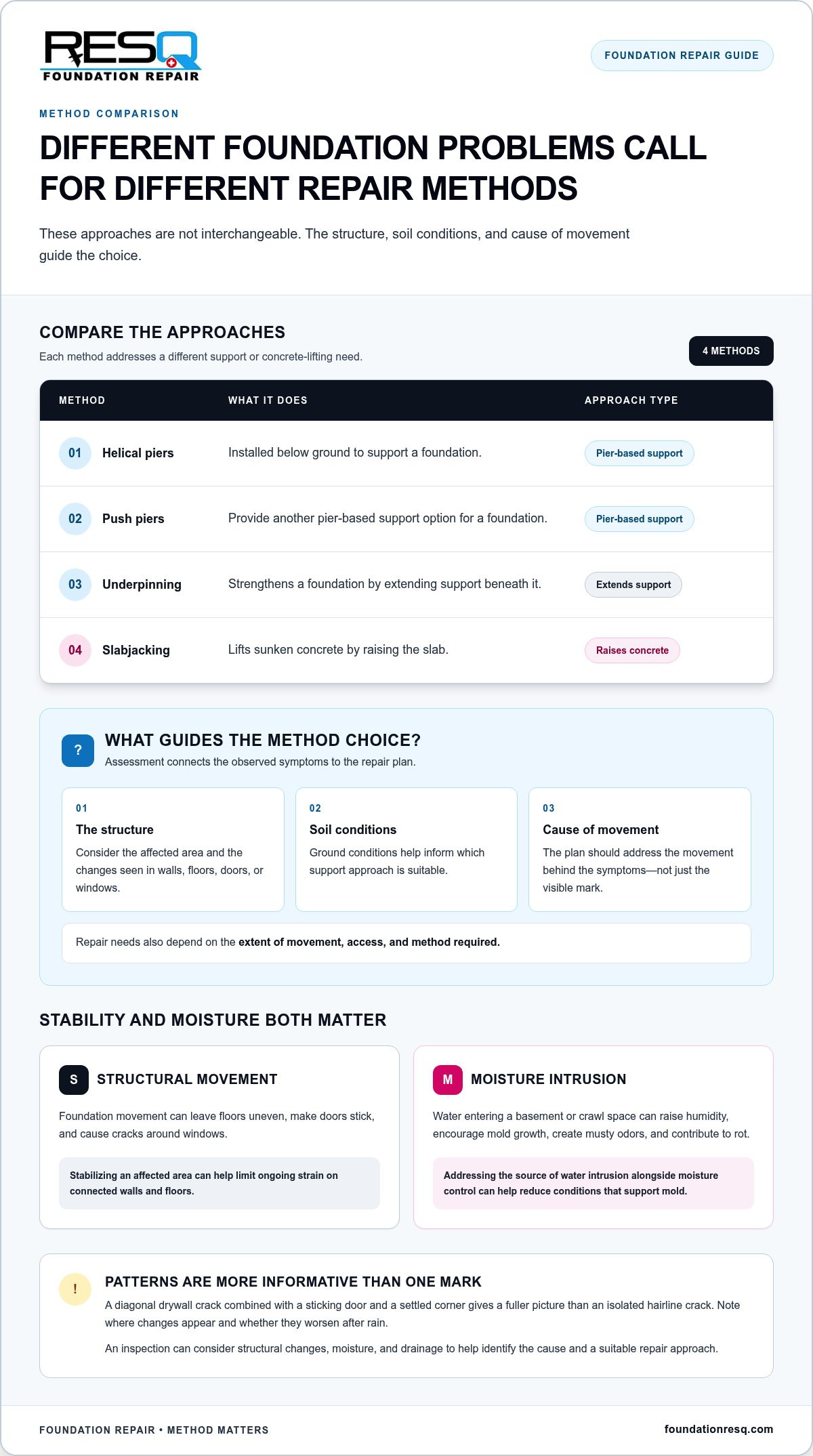
Foundation damage can leave floors uneven, make doors stick, and cause cracks around windows. A repair plan aims to stabilize the affected area and address the movement behind those changes. Supporting a settled section, for example, can help limit ongoing strain on connected walls and floors. Repairs don’t erase every existing mark, but addressing movement can help protect the home from further structural effects.
Different methods address different problems. Helical piers are installed below ground to support a foundation, while push piers provide another pier-based support option. Underpinning strengthens a foundation by extending support beneath it; slabjacking lifts sunken concrete by raising the slab. These approaches aren’t interchangeable: the structure, soil conditions, and cause of movement guide the choice.
Moisture matters as much as structural stability. Water entering a basement or crawl space can raise humidity, encourage mold growth, create musty odors, and contribute to rot. Cracks that let water through can therefore affect indoor air quality as well as the foundation. Addressing the source of intrusion alongside moisture control can help reduce conditions that support mold. A musty smell or recurring dampness deserves attention, even when a crack looks small.
Timely repairs can limit building damage and help avoid more complex work, supporting long-term value without promising a particular resale price. Repair needs depend on the cause, extent of movement, access, and method required. An assessment and repair record can help explain what was corrected if you sell later. Buyers can better understand the property when they can review professional repair documentation instead of facing an unresolved foundation concern.
In Tallahassee, an inspection should consider structural changes, moisture levels, and drainage conditions. Permit requirements depend on the project scope and applicable local rules, so the repair plan and work involved are central to determining what applies. A reputable contractor can provide a clear assessment connecting observed symptoms to the proposed repair. To assess licensing, homeowners can review the contractor’s current credentials and confirm they apply to the work being performed.
Risks of delaying foundation repairs
Foundation cracks can widen as soil shifts or moisture builds around the structure. A narrow crack near a window may become more noticeable as movement continues. Settling can also make doors and windows stick, while uneven floors may signal changes beneath the home. These symptoms matter because foundation movement can affect walls, framing, and connected plumbing, not just one visible surface.
Shifting soil may strain water, sewer, and drain pipes. A pipe leak can add moisture around the foundation, while runoff directed toward the house can worsen wet conditions. In a crawl space, dampness can contribute to mold, mildew, musty odors, and wood rot. Delaying attention may turn a structural concern into a moisture problem affecting more of the building.
What risks or side effects can occur after foundation repair? Depending on the excavation and equipment used, work may disturb nearby landscaping or cause temporary noise and vibration. After work, new or continuing cracks, recurring water entry, or doors that remain difficult to operate deserve follow-up, as they may indicate unresolved movement or moisture.
Look for patterns rather than judging one mark alone. A diagonal drywall crack combined with a sticking door and a settled corner, for example, gives a fuller picture than an isolated hairline crack. Note where changes appear and whether they worsen after rain. An inspection can consider structural changes, moisture, and drainage to help identify the cause and a suitable repair approach.
Timely action is aimed at stabilizing the affected area and limiting further damage; it doesn’t mean every crack requires the same repair. If signs are worsening, recurring after patching, or affecting how the home functions, a professional assessment is a practical next step. A focused foundation repair assessment can help connect visible symptoms with movement, moisture, and drainage concerns.
Peace of mind after professional foundation repair
Professional foundation repair can address movement at its source and help restore function to affected parts of a home. A door that once stuck may open more easily after stabilization, while repaired cracks can reflect a more stable foundation. These changes can make daily life feel more predictable. Peace of mind after foundation repair grows from understanding what the work addressed and observing how the home responds.
Look for practical signs, not a flawless finish. Check whether doors and windows operate normally, new cracks appear, or uneven floors and sagging areas change. In a basement, note whether water still enters during storms. Record specific details, such as the room or wall where a change appears. This gives you a clear basis for discussing any continuing concern.
Keep repair records together. A useful file can include the assessment, repair plan, documentation of completed work, and any care guidance provided. These details help you understand which areas were stabilized and explain the work if questions arise during a future sale. Documentation of professional repairs can also build buyer trust compared with unresolved foundation issues.
Stability also depends on conditions around the structure. Runoff directed toward a foundation can contribute to moisture problems, while shifting ground can continue to stress vulnerable areas. Pay attention to drainage and recurring water entry, especially around a basement or crawl space. If movement or moisture returns, note the location and visible change. A serious structural concern deserves a focused assessment rather than repeated cosmetic patching. Repairs can provide a durable basis for confidence, while careful observation helps you recognize when conditions change.
Can foundation repairs affect home value, resale, or homeowners insurance?
Foundation issues can affect a buyer’s confidence and offer. If an inspection finds unresolved movement, buyers may expect repairs or lower their offers. Completed professional repairs can present a clearer picture: the concern was assessed and addressed. This doesn’t guarantee a higher sale price, but documented work can distinguish a repaired foundation from an active, unexplained problem.
Organize the assessment and repair records before listing. A useful file can include the identified problem, the completed repair, and relevant project documentation. These records explain what changed and give buyers information to review alongside their inspection. A repaired crack with supporting documentation, for example, tells a different story from a crack with no explanation. Clear records can make discussions about the home’s condition more straightforward.
Foundation repair and insurance coverage depend partly on the cause of the damage. Damage from a sudden event, such as flooding or plumbing failure, may be covered; long-term wear or settling usually isn’t. The distinction matters: gradual movement over time differs from damage tied to a sudden incident. Review your policy and keep records showing when the damage appeared and what caused it.
Home value reflects the home’s overall condition, not one repair in isolation. A stable structure, functioning doors, and addressed foundation concerns can reduce obstacles during a sale. Buyers may still consider the repair history, current inspection, and any visible signs of continuing movement. Don’t treat a repair as a promise of a particular resale outcome. Instead, provide accurate records explaining the work and the home’s condition.
If you’re weighing a sale or documenting a structural concern, a focused assessment can clarify the issue and repair scope. Request a foundation repair assessment to understand what the observed movement means for your property. A clear evaluation can help you plan repairs, preserve relevant records, and discuss the home’s condition with greater confidence.
Foundation ResQ: Foundation repair
Foundation ResQ provides foundation repair for homeowners facing signs of settlement, shifting, or structural damage. An assessment can connect visible changes, such as cracks or uneven floors, with an appropriate repair approach. Depending on the property’s needs, the work may include helical pier or push pier installation to support the foundation.
If water intrusion has contributed to mold, Foundation ResQ also provides mold remediation services. Addressing structural and moisture concerns can help you understand what needs attention and plan a more stable path forward. A professional evaluation is a sensible next step when cracks are worsening, doors stick, or foundation problems return after patching.
Contact Foundation ResQ to discuss your foundation concerns.
Take the Next Step Toward a More Stable Home
After foundation work, stay informed about your home’s condition. Keep repair documents accessible and note changes that affect daily use, such as a door beginning to stick again or moisture returning in a basement. These observations give you a practical record to refer to if concerns arise later.
Peace of mind after foundation repair comes from knowing what was addressed and having a clear path for follow-up. Foundation ResQ provides foundation repair, including Helical Pier Installation, and Mold Remediation Services for moisture-related concerns. Matching the work to the issue helps you focus on your home’s structural condition and indoor environment.
If you’ve noticed renewed movement, dampness, or another change in your home, share what you’re seeing and where it occurs. Contact Foundation ResQ for help discussing your foundation concerns. A thoughtful next step can help you move forward with greater confidence in your home.
Frequently Asked Questions
Can I live in my house during repairs?
In most cases, homeowners can remain at home while foundation repairs are underway. Daily access may depend on where crews need to work and whether rooms or entryways are affected. Before work begins, move fragile items away from the work zone and keep a clear route through the house. Ask how access will change during each phase.
What Makes the “After” So Effective?
The work is serving its purpose when the home’s use and structural condition align with the repair goal. Doors that open normally and no continuing movement in the repaired area are practical signs to observe. Keep completion documents with photos taken before work. Comparing the same wall or doorway can make changes easier to assess over time.
Will the repairs stop future issues?
Repairs address identified causes, and drainage or waterproofing work aims to help prevent future problems. A support pier, for example, targets foundation support rather than simply filling a visible crack. Monitor drainage paths and look for fresh signs of movement after work. The repair plan should identify the cause being addressed and the conditions to monitor.
What does foundation repair typically cost in the United States?
There isn’t one typical price that applies across the United States. The price depends on the case and is given after a quote request; key factors include the cause and extent of damage, repair method, site access, and related work such as drainage improvements. A localized issue differs from settlement requiring multiple supports, so compare proposals with their scopes in mind.
How can homeowners verify that foundation repairs were completed properly?
Compare the written assessment and completion paperwork with the work performed. For a Tallahassee property, check that the documented repair locations and method match the completed work, then note whether the original concern remains or new movement appears. Foundation ResQ offers free inspections and estimates for homeowners and businesses in Alabama, Florida, and Georgia, helping clarify structural concerns and repair scope.
Do foundation repair companies offer warranties, and what do they cover?
Warranty terms differ, so review the written agreement rather than assuming coverage. It should explain which repair work or materials are covered, how long coverage lasts, what conditions or exclusions apply, and how to submit a claim. Keep the warranty with your assessment and completion records. Coverage for new movement or later damage depends on the specific terms.