
Yes. If you spot cracks, sloping floors, or sticky doors during a walkthrough, or you simply want a lender-acceptable structural opinion before closing, order a dedicated pre purchase foundation inspection from a licensed structural engineer. A general home inspector can flag concerns, but only a professional engineer, or P.E., can diagnose the cause and put a stamp on repair recommendations. The inspection usually runs a few hundred dollars, which is a rounding error next to a five-figure repair bill you’d otherwise discover after closing.
TL;DR:
- A foundation inspection by a licensed engineer costs between $300 and $800 and provides a stamped report with cause, severity, and repair suggestions.
- Watch for warning signs like stair-step cracks, sticking doors, sloping floors, and water pooling, especially if cracks show patterns over 1.5 inches or misalignments.
- An engineer’s inspection involves mapping cracks, surveying floors, checking the crawlspace, and assessing drainage to determine active versus dormant movement.
- Structural engineers’ reports are critical for legal and financial weight, and unpermitted repairs or lack of documentation should raise red flags.
- Negotiation options include repairs before closing, price reductions, escrow funds, or walking away, especially if the damage is active or repair costs are high.
Table of Contents
- What Is a Pre Purchase Foundation Inspection, Exactly?
- Warning Signs That Should Trigger a Closer Look
- Who Should Actually Do the Inspection?
- What Happens During the Inspection
- What It Costs and How Long It Takes
- Turning the Report Into Leverage
- What Trustworthy Documentation Looks Like
- Weighing Repair Risk Against the Deal
- Sources
- FAQ
What Is a Pre Purchase Foundation Inspection, Exactly?
A pre purchase foundation inspection is a narrow, technical assessment of a home’s load-bearing structure, not a rundown of its plumbing and outlets. Where a standard home inspection covers dozens of systems in a couple of hours, a foundation-focused evaluation zooms in on settlement patterns, crack behavior, and whether the structure is still moving. That distinction matters because a home inspector’s report is a starting point, while a structural engineer’s report can carry legal and financial weight with lenders and insurers.
The deliverable looks different too. A foundation assessment before purchase from a licensed engineer typically includes:
- A written, stamped report with the engineer’s professional opinion on cause and severity
- Photographic documentation of every crack, gap, or displacement found
- Measurements from an elevation survey showing how level the floors actually are
- Specific repair recommendations, often with a rough cost range attached
A home inspector, by contrast, is trained to spot anomalies across the whole house and tell you when something warrants a closer look. Home inspectors identify visible signs while a licensed engineer analyzes root cause and produces the kind of documentation a bank or municipality will actually accept.
Warning Signs That Should Trigger a Closer Look
Some cracks are cosmetic. Others are the first visible clue that a foundation has been moving for years. Knowing the difference before you write an offer, or before you decide to walk, saves you from a nasty surprise at the closing table.
- Stair-step cracks in brick or block running diagonally through mortar joints, especially near corners or window openings.
- Doors and windows that stick or won’t latch even though they look square in the frame.
- Sloping or bouncy floors, particularly near the center of the house or over a crawlspace.
- Multiple parallel cracks in drywall, often radiating from doorframes or ceiling corners.
- Separation at chimneys or porches, where an attached structure has pulled away from the main house.
- Uneven grading or standing water near the foundation after rain, which points to a drainage problem that stresses the footing over time.
- Fresh patchwork or paint in one isolated spot, which sometimes hides a crack a seller doesn’t want you to notice.
One crack rarely means much on its own. What matters is the pattern. The Foundation Performance Association’s buyer guidance notes that an elevation difference greater than about 1.5 inches, combined with visible distress like cracking or door misalignment, can indicate meaningful structural movement rather than normal settling.
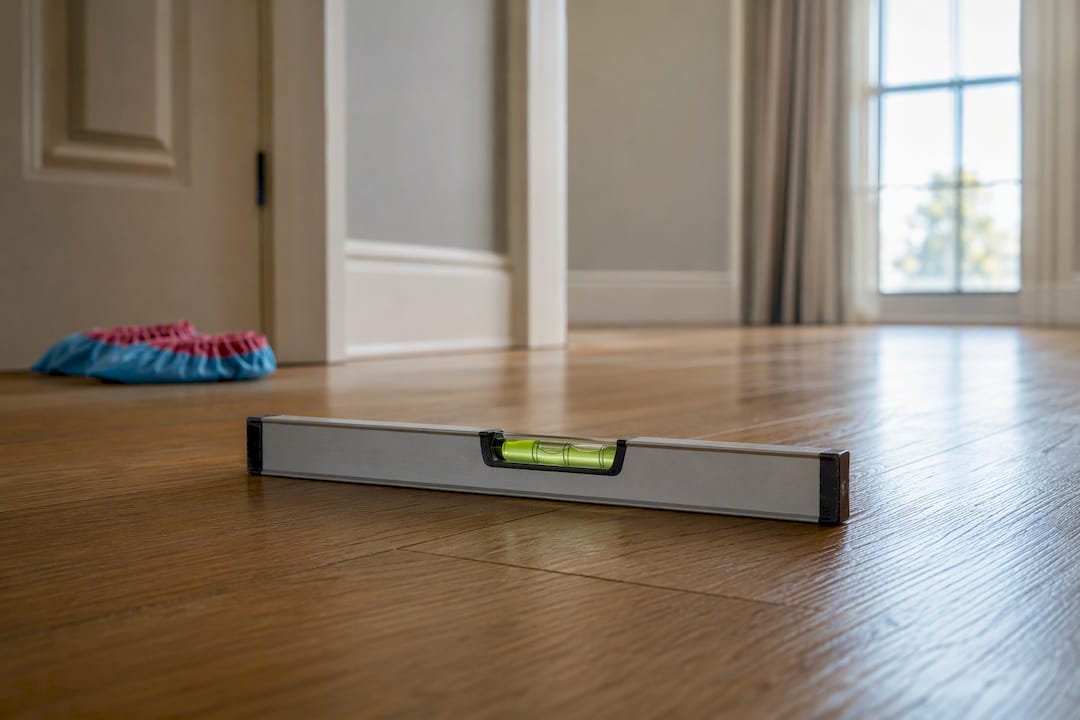
Pro Tip: Bring a marble or a level with you on a showing. Set it on the floor near the center of each room. If it rolls consistently toward one wall, that’s worth mentioning to your inspector before you even schedule anything.
Who Should Actually Do the Inspection?
Three types of professionals get lumped together here, and the differences matter more than most buyers realize.
- Home inspectors look at the whole house, note anything unusual with the foundation, and recommend you escalate to a specialist if something looks off. They’re a good first filter, not a final answer.
- Foundation repair contractors will often inspect for free, but they make money by finding problems to fix. That’s not necessarily dishonest, but it’s a real conflict of interest you should factor into how much weight you give their assessment.
- Licensed structural engineers (P.E.) are the only professionals who can legally seal a report and design repair plans that satisfy permitting authorities. Structural engineers hold the licensure required to calculate loads and stamp repair designs in a way home inspectors and contractors cannot.
If a general inspection turns up anything from the warning-sign list above, get a licensed P.E. involved before your due diligence period closes. Their opinion is what lenders, insurers, and, if it comes to it, attorneys will actually rely on. An escalated engineer’s stamp is often the deciding factor in negotiations, because it converts a subjective worry into a documented, defensible finding.
What Happens During the Inspection
The process is more methodical than most buyers expect, and knowing the steps ahead of time helps you prepare the property and ask sharper questions afterward.
Before the engineer arrives, gather any prior inspection reports, permits, or repair records the seller has on file, and make sure crawlspace or basement access is clear. Move stored boxes, unlock hatches, and trim back landscaping that blocks the foundation perimeter. An engineer who has to fight through clutter to reach a crawlspace wastes time you’re paying for.
On site, expect the inspector to work through a sequence:
- Exterior survey of the foundation perimeter, checking for cracking, bowing, or separation at grade
- Interior walkthrough looking at drywall cracks, door and window function, and floor slope
- Crawlspace or basement inspection, including moisture, ventilation, and support post condition
- Crack mapping, where every visible defect gets measured, photographed, and logged by location
- Elevation or level survey, using a laser level or similar tool to chart floor height across the structure
- Drainage assessment, since grading and downspout discharge are frequently the root cause of movement
Ask the inspector directly whether the final report will state a cause, classify the movement as active or dormant, and include repair cost estimates. A vague report that just says “some settlement observed” isn’t useful when you’re trying to negotiate.
What It Costs and How Long It Takes
Most structural engineer foundation inspections cost between roughly $300 and $800, though larger homes, complex foundation types, or additional testing (like soil borings) can push that higher. A few factors drive the price:
- Home size and foundation type, since a pier-and-beam crawlspace takes longer to document than a simple slab
- Regional labor rates, which shift the baseline cost from market to market
- Extra testing, such as soil analysis or moisture readings, added on top of the standard visual and measurement survey
Turnaround is usually a few days to a week from the site visit to a finished, written report. If your purchase contract has a tight contingency deadline, ask upfront whether expedited service is available. Some engineers will rush a report for an added fee, which is often worth paying when your due diligence clock is running out. Weigh that few-hundred-dollar cost against the alternative: a professional evaluation can catch a problem before closing that would otherwise cost thousands to fix after you already own the house.
Turning the Report Into Leverage
Once the report lands in your inbox, the clock starts. Here’s how to actually use it inside your structural contingency window rather than just filing it away.
- Read for the active versus dormant call. An engineer who classifies movement as active, meaning it’s still happening, is telling you the problem will likely get worse without intervention. Dormant movement from decades ago is a different risk profile entirely.
- Check whether engineered repairs or permits are recommended. If the report calls for sealed drawings or municipal permitting, that’s a signal the fix isn’t cosmetic.
- Decide your negotiation lane. You generally have four options: ask the seller to complete repairs before closing, request a price concession equal to the estimated repair cost, put funds in escrow to cover the work, or walk away if the numbers or the risk don’t work for you.
- Move fast. Contingency windows are typically short, often 7 to 14 days depending on your contract, so don’t sit on a report that needs a response.
- Push back on vague language. If the report doesn’t clearly state cause, severity, and next steps, ask for clarification or get a second opinion before you agree to anything. A skilled inspector’s job is to give you enough clarity to decide, not to leave you guessing.
What Trustworthy Documentation Looks Like
Not every inspection report is created equal, and knowing what good documentation looks like helps you tell a thorough evaluation from a rushed one. A reputable provider backs up every claim with evidence you can actually verify.
At Foundationresq, that means photo documentation of every defect, sealed engineering drawings when repairs are recommended, soil reports when conditions warrant them, and written warranties on completed work. If a seller tells you repairs were already made, that same standard applies to them. Request:
- The original inspection report that identified the problem
- Sealed repair drawings from the engineer who designed the fix
- Permits pulled for the work, if the repair scope required them
- Any warranty documentation, and whether it transfers to a new owner
- How previous repairs were identified and verified as code-compliant
Pro Tip: If a seller can’t produce permits for a foundation repair that clearly required one, treat that as a red flag on its own. Unpermitted structural work can create insurance and resale headaches down the line, even if the repair itself looks fine.
Weighing Repair Risk Against the Deal
Every foundation problem is a negotiation, not a dealbreaker by default. The question is whether the numbers still work once you know what you’re dealing with.
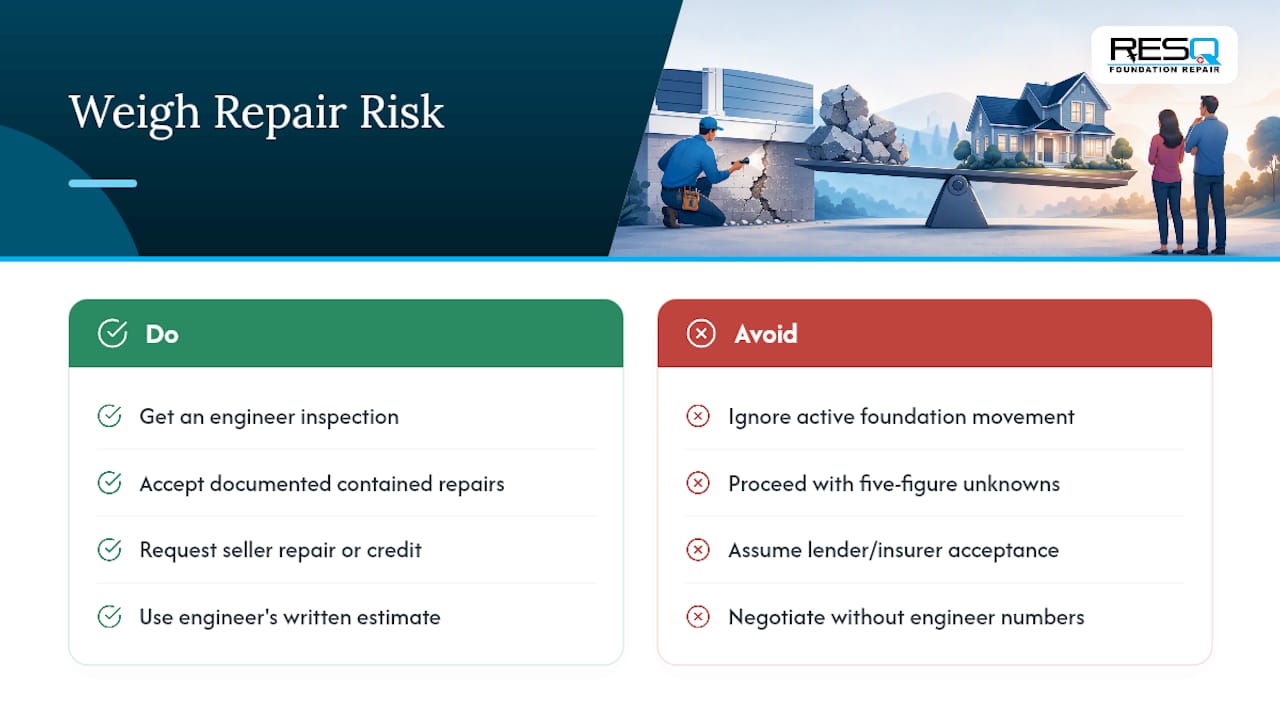
I’d stay conservative when the engineer documents active movement, when repair estimates run into the tens of thousands, or when a lender or insurer signals they’ll balk at the property as is. Those three factors compound each other. A home that’s still moving and needs a five-figure fix is a different risk than a house with a single hairline crack from a house that settled normally 30 years ago and hasn’t budged since.
Documented, contained repairs are often reasonable to accept, especially when the seller is willing to complete the work or credit you for it before closing. The engineer’s stamp is what makes that negotiation possible in the first place. Without it, you’re arguing about a hunch. With it, you’re negotiating over a specific, defensible number.
— Kayle
Sources
For deeper technical guidance, the Foundation Performance Association’s homebuyer evaluation guide lays out elevation survey thresholds and drainage checklists used by practicing engineers. For understanding the legal distinction between inspection types, StructSolve’s comparison of structural engineers and home inspectors breaks down licensure and stamped-report authority in plain terms. Both are worth reading before you hire anyone.
- Structural engineer vs home inspector | StructSolve
- Homebuyers’ Guide for Foundation Evaluation | Foundation Performance Association (FPA-SC-06-0)
- Foundation inspection guide | Redfin
- Structural engineer foundation inspection | This Old House
- Foundation inspection: What to ask and expect | Forbes
FAQ
How much should a foundation inspection cost?
Most structural engineer inspections run between roughly $300 and $800, depending on home size, foundation type, and whether additional testing like soil borings is needed.
What are red flags during a pre-purchase inspection?
Watch for stair-step cracks in masonry, doors and windows that stick, sloping or bouncy floors, multiple parallel drywall cracks, and standing water near the foundation after rain.
What do they do during a foundation inspection?
An inspector maps every crack, surveys the interior and exterior, checks crawlspace or basement conditions, measures floor elevation, and documents drainage before producing a written report with repair recommendations.
Is it smart to buy a house with foundation issues?
It depends on whether the movement is active or dormant and how large the repair estimate is. A skilled inspector’s findings can help you negotiate repairs or a price concession rather than automatically walking away.