
Understanding Sagging Floors: Why Your Home Needs a Stable Stance
Sagging floor repair fixes floors that dip or slope, ensuring your home remains safe and stable. It involves addressing underlying issues like weak joists, damaged supports, or foundation problems. This crucial work prevents further structural damage, maintains your home’s value, and restores level surfaces.
Older homes often come with charm, but they can also hide structural problems like sagging floors. This isn’t just an aesthetic issue; it’s a sign of deeper concerns that can risk your home’s stability. Ignoring these warnings can lead to bigger, more costly problems down the road.
At Foundation RESQ, we understand the critical importance of sagging floor repair for maintaining a home’s structure and value. This guide shares our insights to help you secure your home’s stability.
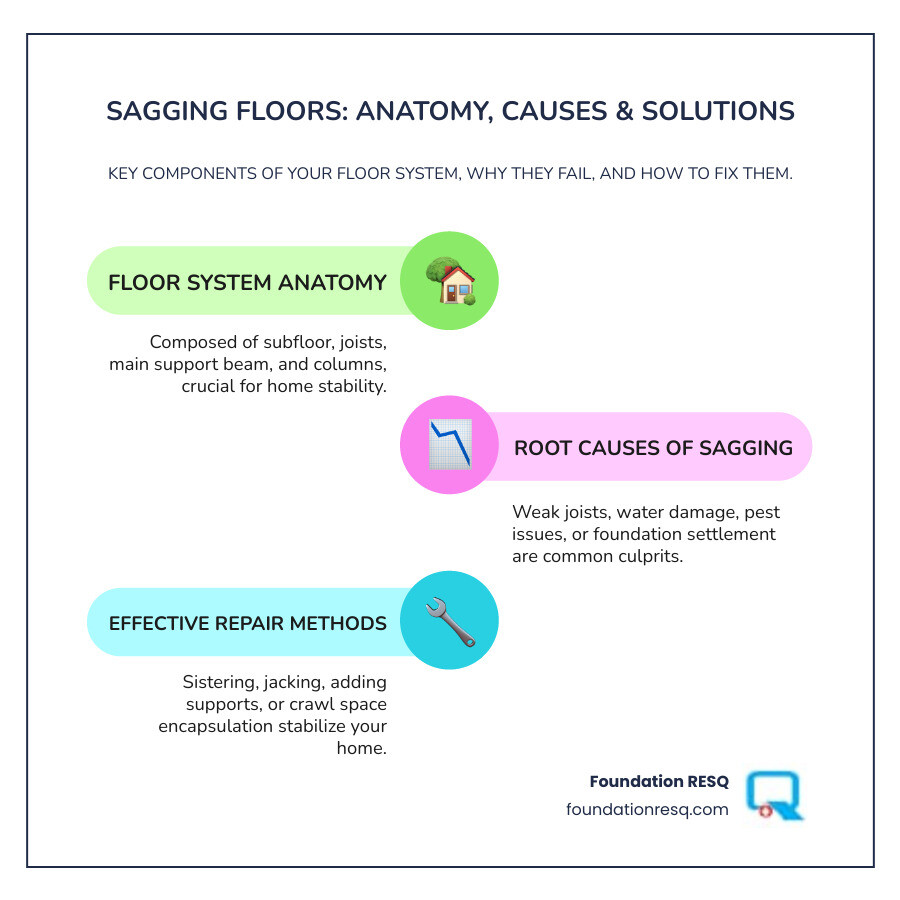
Decoding the Dip: Signs and Root Causes of Sagging Floors
When your home’s floors start to sag, it’s your house sending a clear signal about problems hiding beneath the surface. Understanding these signs is the first step toward effective sagging floor repair.
Telltale Signs Your Floor is Failing
Your home has its own way of communicating distress. Learning to recognize these signs can help you address small issues before they become expensive disasters.
A bouncy or spongy feeling underfoot often indicates weakened or over-spanned joists. This is especially common in high-traffic areas of older homes in places like Tallahassee and Gainesville.
Squeaking or groaning noises aren’t just character; persistent sounds mean floor components are rubbing together due to shifting, a clear warning sign.
Visible slopes or dips are an obvious indicator. A simple marble test can confirm the low spots—if it rolls on its own, you have a slope.
Gaps between the floor and walls appear as floors settle. Check your baseboards; these gaps reveal underlying structural movement.
Sticking doors and windows happen when sagging floors warp your home’s frame. A stubborn door in Panama City could be a symptom of a sagging floor.
Imbalanced furniture-when multiple pieces begin to wobble is another classic sign. If you’re constantly shimming table legs, your floors are uneven.
Finally, cracks in drywall or ceilings, especially around doors and windows, are symptoms of the stress that sagging floors place on your entire home structure.
The Hidden Culprits: Common Causes of Sagging
Knowing why your floors are sagging is crucial for choosing the right sagging floor repair approach. The real problems usually lurk in the crawl space or foundation.
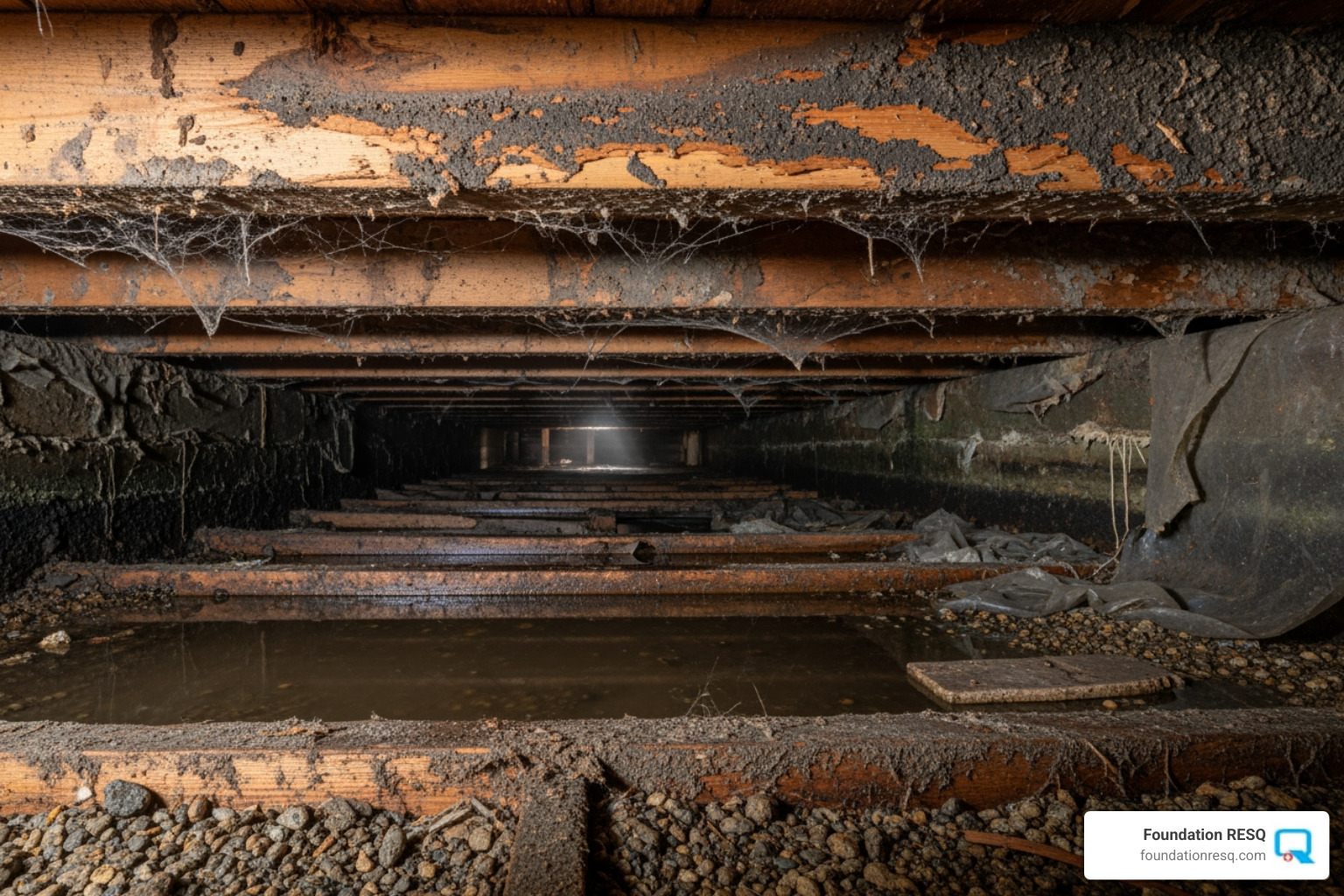
Water damage is a primary cause. Moisture from leaks or poor drainage weakens and rots wooden supports like joists and beams. This is a frequent issue in the humid climates of Florida, Alabama, and Georgia.
High humidity in crawl spaces, common in Jacksonville or Montgomery, fosters mold and slowly deteriorates wooden supports, leading to sagging over time.
Wood rot destroys the structural integrity of joists and beams, making them soft, spongy, and unable to support weight.
Termite damage can be massive. These pests, prevalent in our service areas, hollow out wooden joists from the inside, compromising their strength and causing floors to sag.
Weak or settled support posts that are improperly spaced, undersized, or have settled into the soil can cause the main support beam to sag, bringing the floor down with it.
Undersized or over-spanned joists are common in older homes. Over time, these joists naturally sag under the load, a problem worsened by heavy furniture or appliances.
Foundation settlement is often the true root cause. As the foundation moves, the entire structure above it shifts, causing floors to sag. For more info about foundation repair services, our dedicated page explains how we address these deeper issues.
A damaged sill plate is a critical issue. This piece of lumber connects the foundation to the floor joists. If it rots or gets damaged, joists can lose their support and drop, causing significant sagging.
The Comprehensive Guide to Sagging Floor Repair
Once we’ve identified the signs and causes of a dipping floor, the next step is exploring the solutions. Sagging floor repair ranges from minor reinforcements to extensive foundation work, depending on the root cause of the problem.
Assessing the Damage: Your First Step
Before any work begins, a thorough assessment is essential to ensure we fix the right problem.
- Crawl Space and Basement Inspection: Our professionals will carefully inspect your crawl space or basement, looking for moisture, wood rot, pest damage, weakened joists, and settled posts. We check for any gaps between joists and floorboards.
- Identifying the Root Cause: Our primary goal is to address the underlying issue, whether it’s a few weak joists or a significant foundation problem. This diagnosis informs the entire sagging floor repair plan.
- Checking for Moisture: Moisture is a silent destroyer. We thoroughly check for water intrusion or high humidity. It’s crucial to address any moisture issues and dry out the crawl space before repairs begin to ensure a lasting solution. Learn more about maintaining a healthy sub-structure on our Crawl Space and Basement page.
- Safety Precautions: We adhere to strict safety protocols, ensuring proper ventilation, protective gear, and secure temporary supports before any work begins.
DIY Sagging Floor Repair Methods for Minor Issues
For very minor, localized sagging, some homeowners might consider DIY approaches. However, it’s crucial to know when to call in the experts.
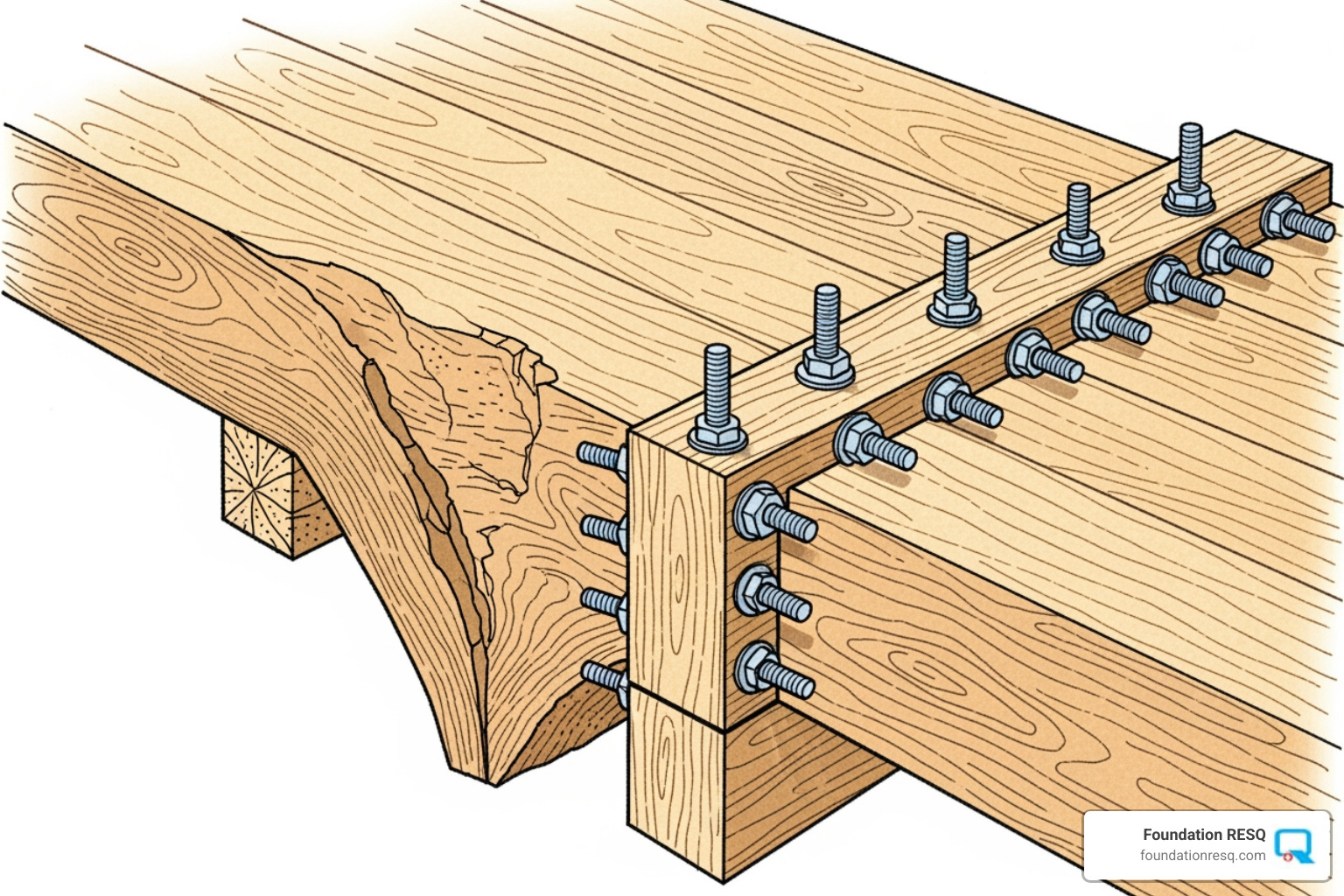
Common DIY techniques include sistering joists (attaching a new joist alongside a weak one) or adding blocking (installing perpendicular supports between joists). These methods can stiffen the floor and reduce bounce. DIY repair may be appropriate for minimal sag (less than 1/2 inch) in a small area, but it often fails to address more serious underlying causes.
Here’s a basic list of tools you’d need for minor joist reinforcement:
- Screw jacks
- 4×4 or 6×6 lumber
- Circular saw or miter saw
- Power drill/driver
- Level and measuring tape
- Safety glasses and gloves
- Structural screws or lag bolts
- Cement blocks
Professional Sagging Floor Repair Solutions
For most cases, professional sagging floor repair is the safest and most effective long-term solution.
Adjustable steel support jacks are a cornerstone of professional repair. These high-strength, galvanized steel jacks permanently stabilize and level floor joists. They support immense loads and are adjustable, allowing us to gradually lift the floor back to its original position. You can learn more about how we safely and effectively install structural jack posts.
We create a solid base for these supports by creating new concrete footings. This prevents future settlement and ensures long-term stability, meeting local building codes in places like Auburn or Valdosta.
To avoid new damage, we use a gradual lifting process. We raise the jacks by small increments over several days, allowing the house to adjust safely without stress.
When foundation settlement is the cause, we use helical Piering. These steel shafts are driven deep into stable soil and attached to the foundation, transferring the home’s weight to solid ground and lifting the structure. It’s a robust solution for homes in Columbus or Ocala.
For sinking concrete slabs, we use Concrete Slab Jacking. This process involves injecting material beneath the slab to lift and stabilize it, leveling the floor above.
Budgeting for Stability: Understanding Repair Costs
When facing sagging floor repair, one of the first questions is about cost. The answer varies, as the price depends on what’s happening beneath your feet.
What to Expect on the Invoice
The price for fixing sagging floors can range from modest to significant. On average, homeowners spend between $1,000 and $10,000, but your actual costs depend on several factors.
For a minor issue like reinforcing a few joists, professional repair typically runs between $1,000 and $5,000. When the root cause is foundation settlement, the investment increases. Foundation piering generally costs between $5,000 and $25,000 or more, depending on the severity of the settlement and the number of piers needed.
Here’s a quick comparison of the cost spectrum:
| Repair Type | Estimated Cost Range |
|---|---|
| DIY Reinforcement | Less than $200 (materials) |
| Professional Joist Repair | $1,000 – $5,000 |
| Foundation Piering | $5,000 – $25,000+ |
| Full Foundation Repair | $10,000 – $50,000+ |
The final cost depends on the severity of the damage, accessibility of the crawl space (tight spaces in homes around Prattville or Dothan can increase labor costs), the underlying cause (wood rot or termite damage require extra steps), and the materials and techniques used.
This is why we offer free inspections and detailed estimates custom to your specific situation. You’ll know exactly what you’re facing and can budget accordingly. To get started, check out our Crawl Space Repair Estimates page.
The Cost of Inaction: Long-Term Implications
While sagging floor repair is an investment, ignoring the problem is far more expensive. Sagging floors are a major red flag for home buyers, significantly lowering your property’s value and deterring offers.
Beyond resale value, the problem will worsen. The stress on your home’s structure leads to more cracks, misaligned doors and windows, and potential damage to plumbing and electrical systems. Delaying repairs is costly; a $3,000 fix today can escalate into a $15,000 problem later. Prompt repairs can be up to 50% cheaper than a future floor replacement.
There’s also the safety factor. Sagging floors create tripping hazards, and in extreme cases, the structural compromise can become dangerous. Addressing floor issues promptly helps preserve not just your home’s value, but also the safety and comfort of everyone who lives there. For more information on related issues, visit our foundation repair services page.
When to Call a Professional
Deciding between a DIY fix and professional help is a critical part of sagging floor repair. While some minor issues might seem manageable, your home’s stability is too important to gamble on.
The DIY Dilemma: Know Your Limits
It’s tempting to save money, but some projects are best left to the experts. It’s time to call a professional if you notice any of the following:
- Signs of major structural issues: Call a professional immediately if you see large foundation cracks, bowing walls, or a visibly sinking foundation.
- Extensive wood rot or pest damage: Widespread wood rot or a termite infestation requires professional remediation and structural repair.
- Visible foundation cracks: Horizontal or stair-step cracks wider than 1/4 inch are serious signs of foundation settlement that need professional assessment.
- When a structural engineer is needed: For complex cases or significant foundation concerns, a structural engineer provides essential calculations and design solutions to ensure safety and code compliance in areas like Brunswick or Macon.
Improper DIY repairs can cause more damage, leading to costlier fixes. Jacking up a floor too quickly can crack walls or break framing. It’s a risk not worth taking with your home’s structure.
Why Choose a Professional for a Lasting Solution
Professional expertise offers peace of mind and long-term solutions that DIY approaches can’t match.
We bring expert diagnosis to every job, identifying the true cause of sagging floors to fix the root problem, not just the symptoms.
At Foundation RESQ, we use patented repair systems like the SmartJack™ crawl space support system. These engineered solutions are proven to provide lasting stability and can support loads of over 60,000 pounds.
We have the proper equipment and safety protocols to lift and stabilize your home safely and efficiently, minimizing risk to your property.
Most importantly, our professional sagging floor repair solutions come with warranties and peace of mind, a significant advantage over DIY repairs. To learn more, explore our Crawl Space Repair Services.
Frequently Asked Questions about Sagging Floors
Here are answers to the most common questions we hear from homeowners about sagging floor repair across Tallahassee, Gainesville, and our other service areas.
How long does it take to fix a sagging floor?
Most professional repairs, like installing a support system, can be completed in one to three days. Our SmartJack™ system, for example, can often be installed in about a day. The system uses engineered fill and can be installed year-round, so we can get your home stable quickly without a long wait for concrete to cure.
Can you level a floor without completely replacing it?
Absolutely. In most cases, we can save your existing floors. Using adjustable support jacks and other reinforcement techniques, we can lift and level the existing floor structure without requiring a full replacement. Tearing out the floor is only necessary in cases of extreme, widespread wood rot or termite damage that has compromised the wood itself.
Will fixing the sagging floor also fix cracks in my walls?
Yes, it often does. As we gradually lift the floor, the stress on your home’s frame is relieved. This can cause cracks in your walls to close and sticking doors and windows to realign. Our SmartJack system is designed to lift floors and walls back toward their original position in a controlled, safe manner, resolving the root cause of these secondary issues. Some minor cosmetic repairs may still be needed afterward, but the structural problem will be solved.
Restore Your Home’s Stability for Good
This guide has shown that sagging floor repair is about more than aesthetics—it’s about protecting your home’s structural integrity and your investment. We’ve covered the warning signs, the hidden causes, and the range of solutions available.
Ignoring a sagging floor leads to worsening structural damage, decreased home value, and potential safety hazards. The good news is that these problems are entirely fixable with professional help.
At Foundation RESQ, we help homeowners across Alabama, Florida, and Georgia restore their homes’ stability. Our team understands the unique challenges of our region, from high humidity in Panama City to the soil conditions around Montgomery. We believe in doing the job right the first time, which is why we offer free inspections, use patented repair systems like SmartJack™, and back our work with solid warranties. We provide lasting solutions that address the root cause of your floor problems.
Your home deserves a stable foundation. Don’t let structural issues compromise your peace of mind.
Ready to take the next step? For a permanent solution to your sagging floors, explore our advanced Crawl Space Stabilization System. Let’s work together to restore your home’s stable stance and protect your investment for years to come.