
Understanding the Foundation of Foundation Repair
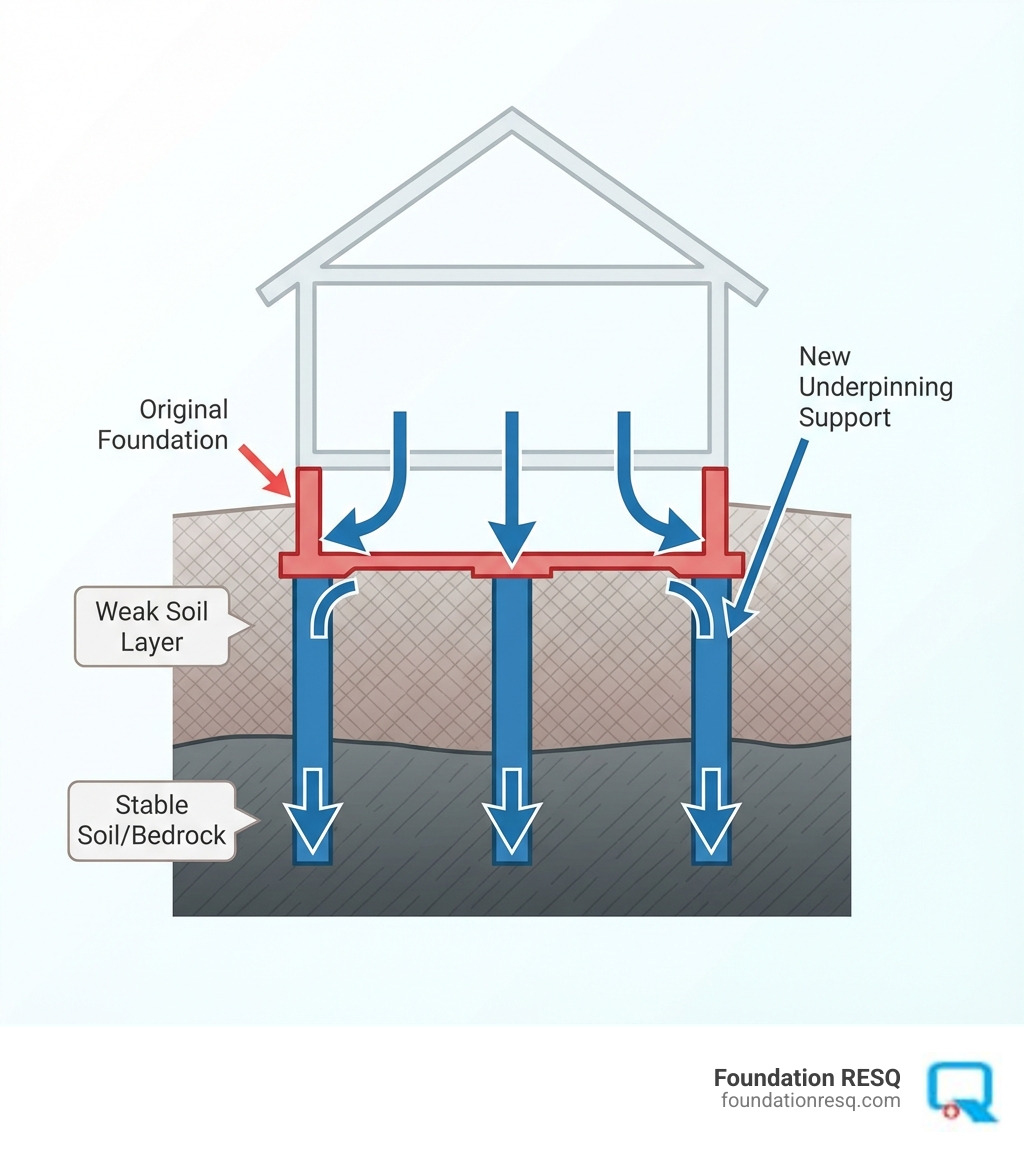
Underpinning construction is the process of strengthening an existing building’s foundation by extending it deeper into the ground or widening its base. This technique transfers the building’s weight from weak soil to stronger, more competent soil layers or bedrock below.
Historically, underpinning has been used for centuries to protect important structures as cities grew and ground conditions changed. Today, the same core idea is applied with more advanced materials and engineering, but the goal remains the same: provide a safer, stronger foundation without tearing the building down and starting over.
Quick Answer: What is Underpinning Construction?
- Definition: A method to strengthen existing foundations by deepening or broadening them
- Purpose: Transfer structural loads to stable soil or bedrock
- When Needed: Foundation settlement, soil changes, increased building loads, or structural additions
- Common Methods: Mass concrete (pit method), beam and base, mini-piles, helical piers, push piers
- Typical Duration: Few days to several weeks, depending on scope
- Cost Factors: Method used, extent of damage, soil conditions, accessibility
If you’re seeing cracks in your walls, doors that won’t close, or uneven floors, your home might be experiencing foundation settlement. Underpinning is a time-tested and reliable solution for serious foundation problems.
The technique works by excavating sections beneath your existing foundation in planned stages, then filling those sections with concrete or installing steel piers that reach solid ground. This process creates new support underneath your home without requiring a complete teardown and rebuild.
Why does underpinning matter? Your foundation supports your entire home. When it fails, everything above it is at risk—from your family’s safety to your property’s value. Foundation settlement doesn’t fix itself; cosmetic repairs only hide the issue. Underpinning addresses the root cause by giving your home a solid base to rest on for decades to come.
Basic underpinning construction vocab:
Why Underpinning is Necessary: Signs and Causes
Your home’s foundation is its bedrock. When this critical component begins to fail, the entire structure is compromised. Understanding why foundations fail and recognizing the early warning signs can save you significant stress and expense. Underpinning construction is a structural intervention designed to restore stability and protect your most valuable asset.
Common Causes of Foundation Failure
Foundation problems are often the result of underlying issues, many of which are common in our service areas of Florida and Georgia:
- Soil Changes: This is the most frequent culprit. Expansive clay soils, prevalent in many regions, swell when wet and shrink when dry, causing foundations to shift. Poor soil compaction or leftover organic material from the initial construction can also lead to future settlement.
- Subsidence: This refers to the gradual sinking of the ground beneath a structure. It can be caused by natural geology or soil erosion from drought and heavy rains.
- Increased Structural Load: Adding a second story, converting an attic, or installing heavy features can increase the load on a foundation beyond its original design capacity, causing it to settle.
- Nearby Excavation: Deep excavation on adjacent properties can destabilize the soil supporting your home, removing critical lateral support and leading to movement.
- Water Damage & Poor Drainage: Water is a foundation’s worst enemy. Poor drainage, leaks, and even freeze-thaw cycles can saturate and erode soil, creating voids and causing settlement.
- Invasive Tree Roots: Large tree roots can draw moisture from the soil, causing it to shrink and settle. They can also physically push against a foundation, causing cracks and displacement.
Telltale Signs Your Home Needs Underpinning
Your home often communicates distress through a series of unmistakable clues. Ignoring these signs only makes the problem worse. Here’s what to look for:
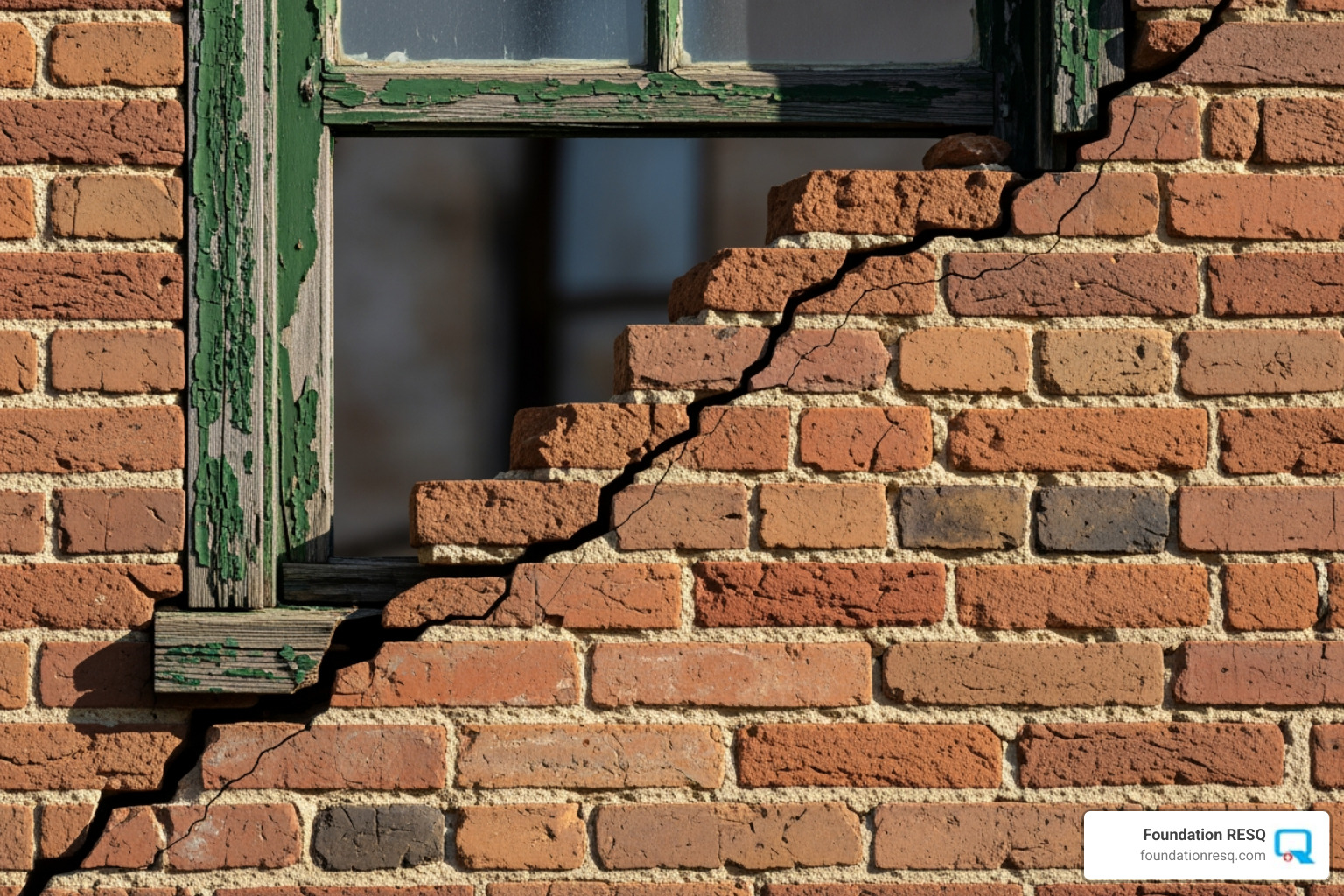
- Wall and Floor Cracks: Look for diagonal or “stair-step” cracks in brickwork, drywall cracks around doors and windows, and cracks in concrete slabs or basement walls.
- Sticking Doors and Windows: If doors and windows suddenly stick, jam, or become difficult to operate, it’s a strong sign your home’s frame is shifting due to foundation movement.
- Uneven or Sloping Floors: A noticeable slope when walking across a room, or objects rolling to one side, indicates that parts of your foundation have settled unevenly.
- Gaps Between Walls and Ceilings: Visible separation where walls meet the ceiling or floor suggests significant structural movement.
- Tilting Chimneys: A chimney that is cracking or leaning away from the house is a clear sign of foundation distress, as it often has its own foundation that can settle independently.
- Foundation Settlement or Sinking: In severe cases, you might see parts of your foundation or the entire house visibly sinking.
If you observe any of these signs, it’s crucial to seek professional help. Early intervention with underpinning construction can prevent minor issues from escalating into costly structural nightmares.
A Guide to Underpinning Construction Methods
Once we’ve determined that underpinning construction is necessary, the next step is selecting the most appropriate method. The choice depends on soil conditions, the extent of settlement, the building’s load, and site accessibility.
Traditional Underpinning: Mass Concrete Method
The mass concrete method, or “pit method,” is one of the oldest forms of remedial underpinning, effective for shallow depths. The process involves excavating short, controlled sections (or “bays”) beneath the existing foundation in a sequential pattern to maintain stability. This method is best for cohesive soils that won’t collapse during excavation. Once a section is dug to stable soil, it’s filled with concrete. After curing, a dry sand-cement mix is packed into any remaining gaps to ensure a solid load transfer. While labor-intensive, it’s effective where access is limited and the required depth is not excessive.
Beam and Base Underpinning
This is a more advanced version of the mass concrete method, designed for heavier loads or to span weak soil spots. It involves constructing a reinforced concrete beam below or in place of the existing footing. This beam distributes the building’s weight to strategically placed mass concrete bases, which are installed on stable ground. This method offers greater strength and is often used for severely damaged foundations or when creating new basements.
More info about our underpinning services
Modern Methods for Underpinning Construction
For situations requiring deeper support or minimal disturbance, modern underpinning construction methods using steel piers are highly effective.
-
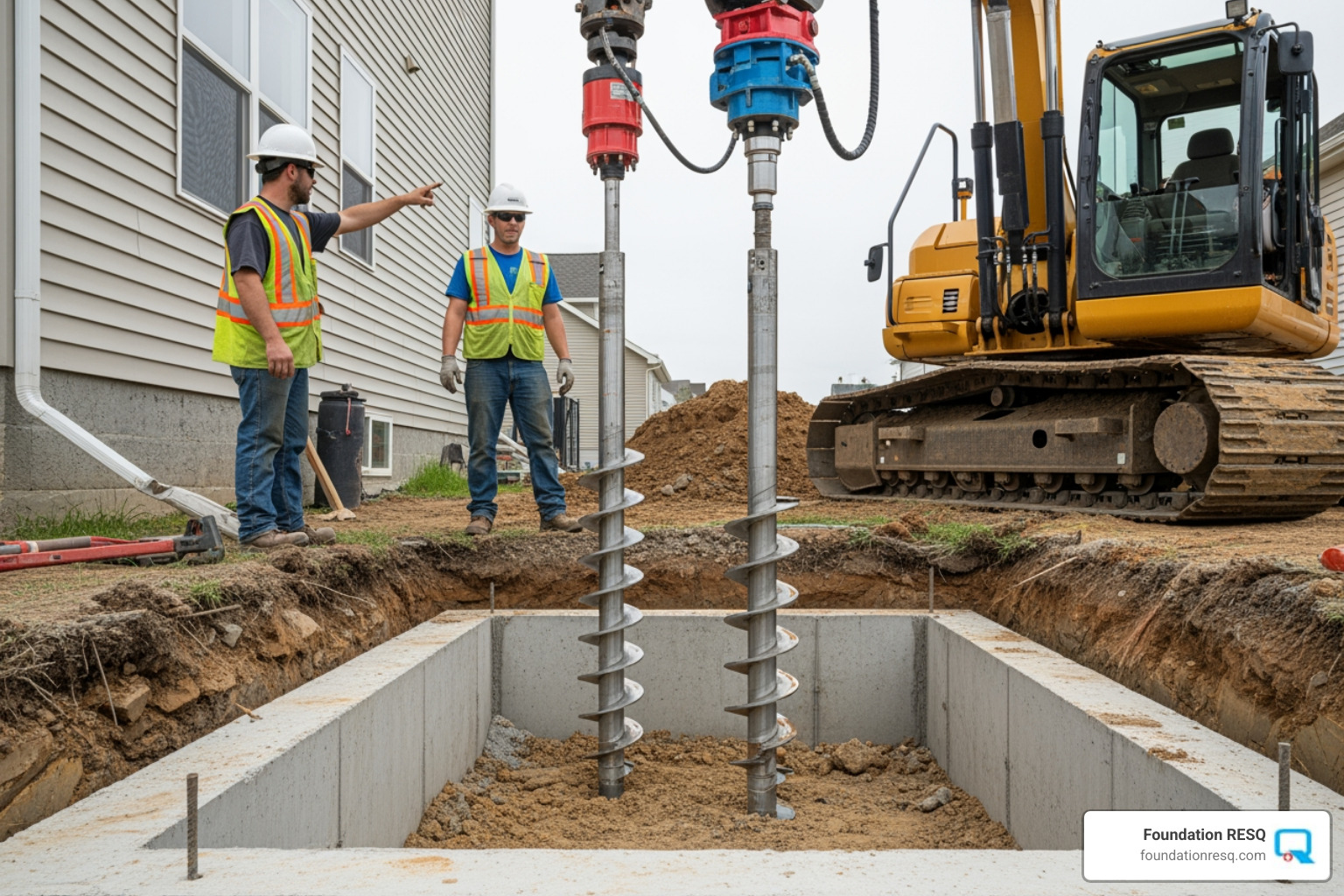
Piled Underpinning / Mini-Piles: This method involves driving or auguring small-diameter piles deep into the ground until they reach stable soil or bedrock. Mini-piles are ideal for variable ground conditions, sites with restricted access, or when loads need to be transferred to considerable depths. We often connect these piles with a concrete beam that supports the existing foundation. You can learn more about this approach on our Piering page. The International Society for Micropiles provides extensive information on these techniques.
-
Helical Piers: These are steel piers with screw-like blades that are mechanically twisted into the ground until they reach stable soil. They are excellent for both residential foundations and lighter structures, offering minimal disturbance to landscaping. Helical piers can sustain significant loads and are designed to lift and stabilize settling foundations.
-
Push Piers: Made of steel, push piers are hydraulically driven deep into the ground using the weight of the structure itself as leverage. They are pushed down until they hit bedrock or stable, load-bearing soil. Push piers are particularly effective for heavier structures and are known for their ability to lift a settled foundation back toward its original position.
These modern methods are often preferred for their precision, speed, and ability to reach deep, competent strata, making them ideal for the challenging soil conditions in Florida and Georgia.
[TABLE] Comparing Underpinning Methods
| Method | Best Use Case | Advantages | Disadvantages |
|---|---|---|---|
| Mass Concrete | Shallow depths, cohesive soils, restricted access | Cost-effective for shallow repairs, simple execution, minimal specialized equipment | Labor-intensive, slower, requires cohesive soil, limited depth capability, potential for concrete shrinkage |
| Beam and Base | Spanning weak areas, heavier loads, creating basements | Stronger than mass concrete, distributes load over wider area, good for significant structural issues | More complex design and execution than mass concrete, higher material cost |
| Mini-Piles | Deep foundations, variable ground, limited access | Reaches significant depths, high load capacity, minimal vibration, versatile | Higher cost, requires specialized equipment and expertise, can be time-consuming |
| Helical Piers | Lighter structures, varying soil, minimal disturbance | Fast installation, minimal excavation, immediate load bearing, can lift foundation, year-round installation | Not always suitable for extremely heavy loads, can be more expensive than traditional concrete methods |
| Push Piers | Heavy structures, deep stable soil, potential lifting | Fast installation, reaches bedrock/stable soil, can achieve significant lifts, minimal disturbance, permanent | Requires sufficient structural weight to drive, not ideal for lighter structures, higher cost |
The Underpinning Process: From Assessment to Completion
Undertaking underpinning construction is a significant project that demands meticulous planning and execution by experts. At Foundation RESQ, we guide you through each stage to ensure a lasting solution for your home.
Step 1: Professional Assessment and Design
This critical phase lays the groundwork for the entire project. It begins with a comprehensive, free inspection by our team to document damage and identify contributing factors. We then engage qualified structural engineers to understand the root cause of the failure. To design an effective solution, we often require independent soil tests to reveal the soil’s composition and bearing capacity. This data is compiled into a geotechnical report, which the engineer uses to create a detailed, customized underpinning design. This blueprint specifies the method, location, and depth of the new supports, ensuring safety and efficacy. You can View our past projects to see how our designs come to life.
Step 2: Permits and Building Regulations
Before any work begins, we handle all necessary legal and regulatory requirements. Underpinning construction is considered structural work and is subject to oversight to ensure safety. An application must be made to the local building control authority in our Florida and Georgia service areas. Once approved, surveyors will inspect the work at critical stages to ensure it adheres to the approved design and meets all safety standards. We also advise on any considerations regarding adjacent properties to ensure the work does not impact your neighbors. All work must comply with local safety regulations. You can find general information on these requirements via resources like Building Regulation Requirements.
Step 3: The Underpinning Construction Phase
With approvals secured, the physical underpinning construction begins. The site is prepared by protecting landscaping and ensuring clear access. Excavation is carried out in short, controlled sections as a crucial safety measure to prevent further damage. Depending on the method, this involves digging pits for concrete or installing steel piers. The new foundation elements are then installed according to the engineering design—either by pouring high-strength concrete or by driving piers to the predetermined stable strata. Throughout this phase, the structural engineer and building control surveyor conduct inspections to verify the work. Once the new supports have gained sufficient strength, the building’s load is transferred to them, stabilizing the structure.
Risks, Costs, and Alternatives to Underpinning
While underpinning construction is a highly effective solution, it’s important to understand the potential challenges, costs, and alternative approaches.
Potential Risks and Challenges
Underpinning is a complex structural repair that carries risks if not executed correctly. Improper work can lead to further settlement, structural damage, or even collapse. Excavation can also impact neighboring properties or encounter unforeseen ground conditions like hidden utilities, leading to delays and increased costs. These risks underscore the absolute necessity of hiring experienced professionals for both design and construction.
Cost Considerations and Property Value
The cost of underpinning construction varies based on several factors:
- Method Used: Traditional methods may be less expensive for shallow repairs, while pier systems are suited for deeper, more complex issues.
- Extent of Damage: A small, localized repair costs less than a whole-house project.
- Soil Conditions & Accessibility: Deep or challenging soil and limited site access can increase labor and material costs.
A professional evaluation is essential for an accurate estimate. While underpinning is an investment, it protects your property’s value. A home with a settled foundation can lose significant market value. Stabilizing the foundation restores its structural integrity and marketability. Reputable contractors like Foundation RESQ often provide long-term guarantees, offering peace of mind in your investment.
Alternatives to Underpinning
For less severe issues, other repair methods might be considered.
- Grout Injection: This involves injecting a cement or chemical grout into the soil to fill voids and increase density. It’s often used for soil improvement in sandy soils or to stabilize ground during nearby excavations.
- Resin Injection: This method uses an expanding resin injected into the soil to compact it and potentially lift a foundation. It is sometimes viewed as a less permanent solution for significant structural settlement.
- Soil Stabilization: This is a broader category of techniques to improve existing soil strength, such as improving drainage or installing moisture barriers.
For significant, irreversible foundation settlement, underpinning construction is typically the only permanent and truly effective solution. It is the definitive fix for house movement that won’t reverse on its own. To determine the best course of action, Explore all our foundation repair services or consult with our specialists.
Frequently Asked Questions about Underpinning
We understand that homeowners have many questions about underpinning construction. Here are some of the most common inquiries.
How long does underpinning a house take?
The duration varies based on project scope, the number of piers needed, house size, the method used, and site conditions. A small, localized repair might take a few days to a week. More extensive, whole-house underpinning could take about a month. We provide a clear timeline after our initial assessment.
Is underpinning covered by homeowner’s insurance?
Coverage depends entirely on your policy. Insurance may cover underpinning if the damage was caused by a specific “covered peril,” like a burst pipe. However, settlement from natural ground movement, expansive soils, or poor drainage is often considered a maintenance issue and is typically not covered. It is essential to check with your insurance provider to understand your specific coverage.
Can a house be lived in during underpinning?
For the safety and comfort of your family, we generally advise against it or recommend temporary relocation. Underpinning involves significant noise, dust, and vibration from heavy machinery. An active construction site with open excavations poses safety risks. Our team will assess the scope of work and advise you on the best course of action, but for most projects, temporary relocation is the safest and most comfortable option.
Secure Your Home’s Future with Professional Underpinning
The foundation of your home is not just concrete and steel; it’s the very bedrock of your family’s safety, comfort, and financial investment. When that foundation falters, the signs are clear, and the need for action is urgent. Underpinning construction is more than just a repair method; it’s a commitment to the long-term structural integrity of your property.
We understand that facing foundation issues can be daunting, but with the right expertise, it becomes a manageable and ultimately rewarding process. Underpinning provides a permanent solution to persistent foundation settlement, transferring the load of your home to stable ground and protecting it for generations to come. It stabilizes your property, prevents further damage, and restores its value, turning a potential liability into a solid asset.
At Foundation RESQ, we pride ourselves on our customer-focused service, advanced techniques, and affordable, lasting solutions. We are the trusted experts in Tallahassee, Havana, Quincy, Wakulla, Crawfordville, Lake City, Madison, Perry, Pensacola, Thomasville, and Jacksonville, ready to provide the professional assessment and custom underpinning construction your home deserves. Don’t let foundation problems undermine your peace of mind or your home’s value.
Contact us for a free inspection and a lasting solution to your foundation problems today. We’re here to ensure your home stands strong on solid ground.