
A waterproofing membrane is a continuous, impervious barrier applied to structural elements to stop liquid water from migrating through them. It resists hydrostatic pressure from groundwater pushing against your foundation, sheds bulk water on roofs and walls, and protects concrete and steel from the slow damage that moisture causes over years. Unlike damp-proofing, which only slows vapor movement, a true waterproofing membrane holds back water under pressure.
Here is what a waterproofing membrane actually does:
- Blocks liquid water from penetrating foundations, basement walls, roofs, and slabs
- Resists hydrostatic pressure from groundwater around below-grade structures
- Protects concrete from freeze-thaw cycles that crack and erode it over time
- Shields steel reinforcement from corrosion caused by moisture and soil chemicals
- Prevents mold and mildew from establishing in walls, crawl spaces, and basements
- Guards against soil-borne contaminants and chemical erosion of structural elements
- Extends the service life of building materials by keeping them consistently dry
What are the real benefits of using a waterproofing membrane?
Waterproofing membranes do more than keep water out. They protect your home’s structure, your air quality, and your wallet over the long run.
- Mold and mildew prevention: Moisture intrusion is the primary driver of mold growth in basements and crawl spaces. Sealing crawl spaces with a proper membrane directly reduces mold risk and improves indoor air quality for everyone in the home.
- Structural protection: Water weakens concrete through freeze-thaw expansion, corrodes rebar, and rots wood framing. A membrane stops that cycle before it starts.
- Lower repair costs: Basement and foundation repairs rank among the most expensive water damage fixes a homeowner faces. Preventing intrusion up front costs far less than remediating it later.
- Property value: Buyers and inspectors notice water damage. A properly waterproofed foundation signals a well-maintained home and reduces the likelihood of costly surprises during a sale.
- Reduced insurance claims: Chronic water intrusion leads to repeated claims. Effective waterproofing breaks that pattern.
Key insight: Foundations and basements are the most expensive areas to repair after water damage. A membrane installed correctly at construction or during renovation is far cheaper than the remediation bill that follows years of unmanaged moisture.
What types of waterproofing membranes are available?
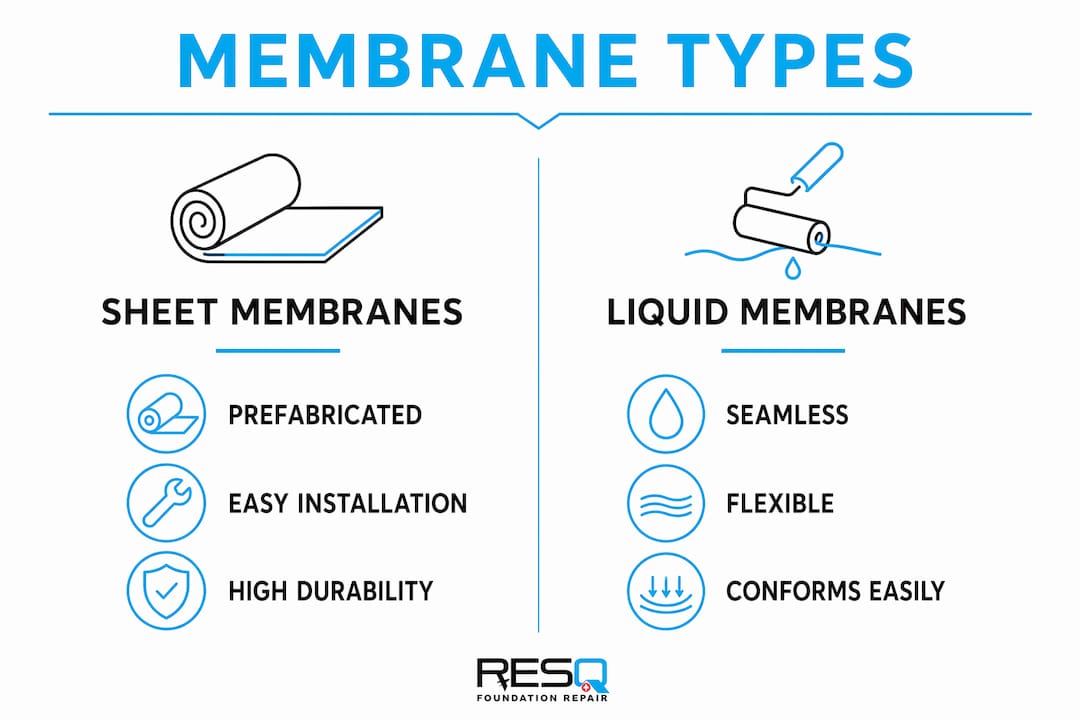
Waterproofing membranes fall into two broad families: sheet-based systems and liquid-applied systems. Each has distinct strengths, and the right choice depends on the substrate, the exposure conditions, and whether the membrane will be buried or exposed to traffic.
- Bitumen-based sheet membranes: Made from oxidized or polymer-modified asphalt, these are among the most widely used below-grade systems. Modified bitumen, reinforced with SBS (styrene-butadiene-styrene) polymers, offers better flexibility and cold-weather performance than oxidized versions.
- Synthetic sheet membranes: EPDM (ethylene propylene diene monomer), TPO (thermoplastic polyolefin), and PVC membranes are common on flat roofs and above-grade applications. EPDM handles UV exposure and temperature swings well; TPO and PVC are heat-weldable, which produces strong, reliable seams.
- Liquid-applied membranes: Applied by brush, roller, or spray, these cure into a seamless film that conforms to irregular surfaces and complex details. Polymethyl methacrylate (PMMA) systems cure quickly and handle both pedestrian and vehicular traffic, making them a strong choice for parking decks and plaza surfaces.
One distinction worth knowing: a waterproofing membrane is not the same as a vapor barrier or a damp-proof course. A vapor barrier manages the diffusion of water vapor and sits on the warm side of insulation. A damp-proof course is a localized masonry barrier. Specifying one where you need the other is a costly mistake, because the performance requirements are entirely different.
| Membrane Type | Flexibility | UV Resistance | Best Application | Traffic Tolerance |
|---|---|---|---|---|
| Oxidized bitumen | Low | Poor | Below-grade walls | None |
| SBS-modified bitumen | High | Moderate | Below-grade, pedestrian decks | Pedestrian |
| EPDM | Very high | Good | Flat roofs, above-grade | None |
| TPO / PVC | Moderate | Good | Flat roofs | None |
| PMMA liquid-applied | High | Good | Decks, parking, green roofs | Pedestrian and vehicular |
| Polyurethane liquid | High | Moderate | Wet rooms, balconies | Pedestrian |
How are waterproofing membranes applied and where do they go?
Placement and installation technique matter as much as the membrane material itself. A high-quality sheet installed carelessly will fail faster than a mid-grade product installed with care.
Sheet membrane installation involves unrolling prefabricated sheets over a prepared substrate and bonding them with adhesive, heat welding, or self-adhesive backing. Overlapping seams must be sealed completely. Heat welding, used with TPO and PVC, fuses the sheets into a single continuous layer with no adhesive gap to fail.
Liquid-applied installation means coating the surface directly, which lets the membrane conform to corners, penetrations, and irregular shapes that sheet membranes struggle to cover cleanly. Multiple coats are typically required, with each layer allowed to cure before the next is applied.
Above-grade placement covers roofs, walls, balconies, and wet rooms. Here the membrane sheds bulk water from rain and runoff. Below-grade placement covers foundation walls, basement floors, and retaining walls, where the membrane must resist continuous hydrostatic pressure from surrounding groundwater. Exterior application (positive-side waterproofing) addresses the pressure at its source, before water ever reaches the concrete.
Substrate preparation is not optional. Loose material, dust, and surface contamination prevent adhesion and create voids where water can travel laterally under the membrane. Seam and termination integrity is the single most common failure point, not the membrane field itself.
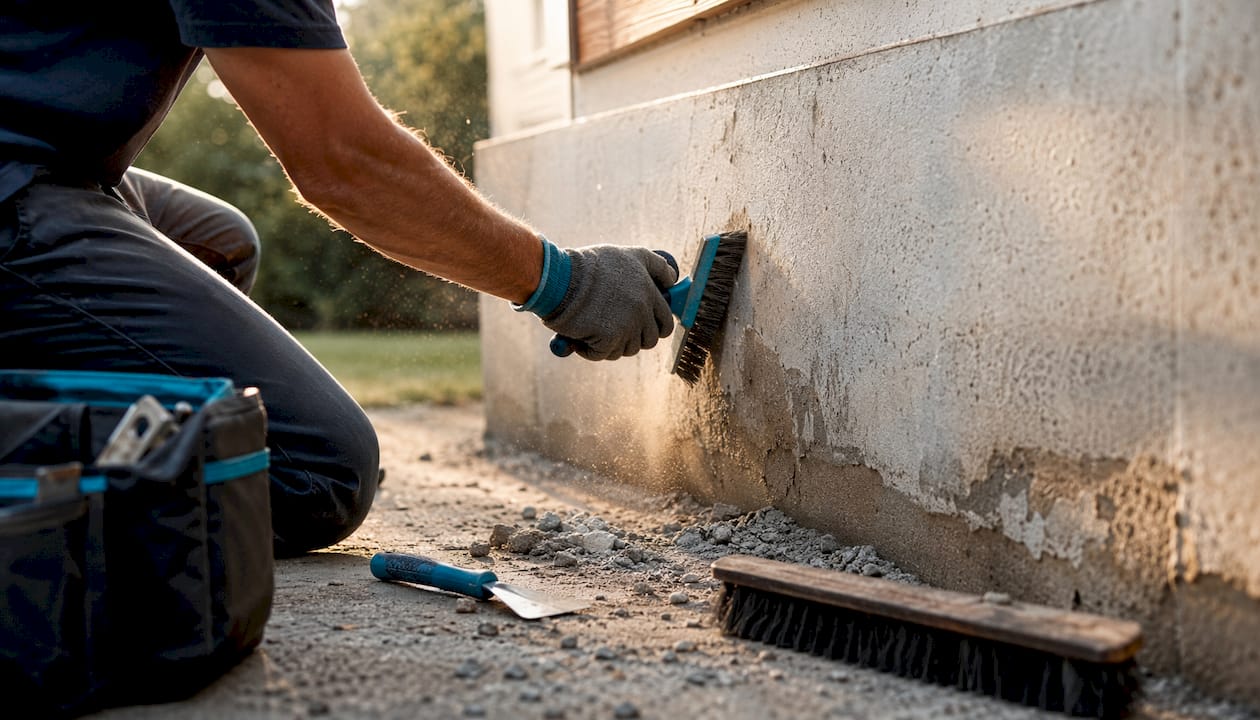
Pro Tip: Before any membrane goes down, check that the substrate is clean, dry, and structurally sound. Priming porous concrete before applying a liquid membrane dramatically improves adhesion and reduces the risk of delamination under hydrostatic pressure.
When and where should you use a waterproofing membrane?
Not every surface needs a waterproofing membrane, but any area with regular bulk water exposure does. The question is less “should I use one?” and more “which system fits this location?”
- Basements and foundation walls: Below-grade areas face constant groundwater pressure. Basement waterproofing with an exterior membrane is the most effective approach because it stops water before it contacts the concrete.
- Crawl spaces: Moisture rising from bare soil saturates wood framing and insulation. A membrane on the crawl space floor and walls controls that source directly.
- Flat and low-slope roofs: Without adequate slope to drain quickly, these surfaces hold water. A waterproofing membrane rated for ponding is required, not just a standard roofing underlayment.
- Balconies and terraces: These are exposed horizontal surfaces with tile or pavers on top. Water infiltrates grout joints and collects beneath the finish layer, so a membrane under the tile is the only reliable protection.
- Wet rooms and shower areas: Tile alone is not waterproof. A liquid-applied membrane behind the tile, covering the bathroom waterproofing substrate, is what actually keeps water out of the wall assembly.
- Green roofs and plaza decks: Soil and vegetation hold moisture against the structure for extended periods. These applications demand membranes rated for root resistance and prolonged wet contact.
- Retaining walls: Soil pressure combined with groundwater creates both hydrostatic and chemical stress. A membrane protects the concrete from both.
Membranes and drainage systems work together. Installing a membrane without drainage increases the pressure on that membrane and shortens its life. The membrane stops water at the surface; the drainage system removes water that accumulates around the building.
Common questions homeowners ask about waterproofing membranes
Is a waterproofing membrane necessary in every wet area?
In areas with regular bulk water exposure or hydrostatic pressure, yes. Damp-proofing alone does not stop active water entry after rain or in high-groundwater conditions.
How long does a waterproofing membrane last?
Properly installed membranes on below-grade applications can perform for decades when protected from physical damage. Exposed membranes on roofs and decks have shorter service lives and require periodic inspection.
How many coats of liquid membrane should you apply?
Most manufacturers specify two to three coats, applied in alternating directions, with each coat fully cured before the next. Always follow the product’s data sheet for minimum dry film thickness.
What are the main disadvantages of waterproofing membranes?
Membranes can fail at seams, terminations, and penetrations if installation is poor. They also cannot compensate for cracked or structurally compromised concrete. A membrane is a supplement to sound construction, not a fix for bad concrete work.
Why waterproofing is an investment in your building’s long-term health
A waterproofing membrane is not a cosmetic upgrade. It is part of the structural protection system that keeps a building sound over its full service life.
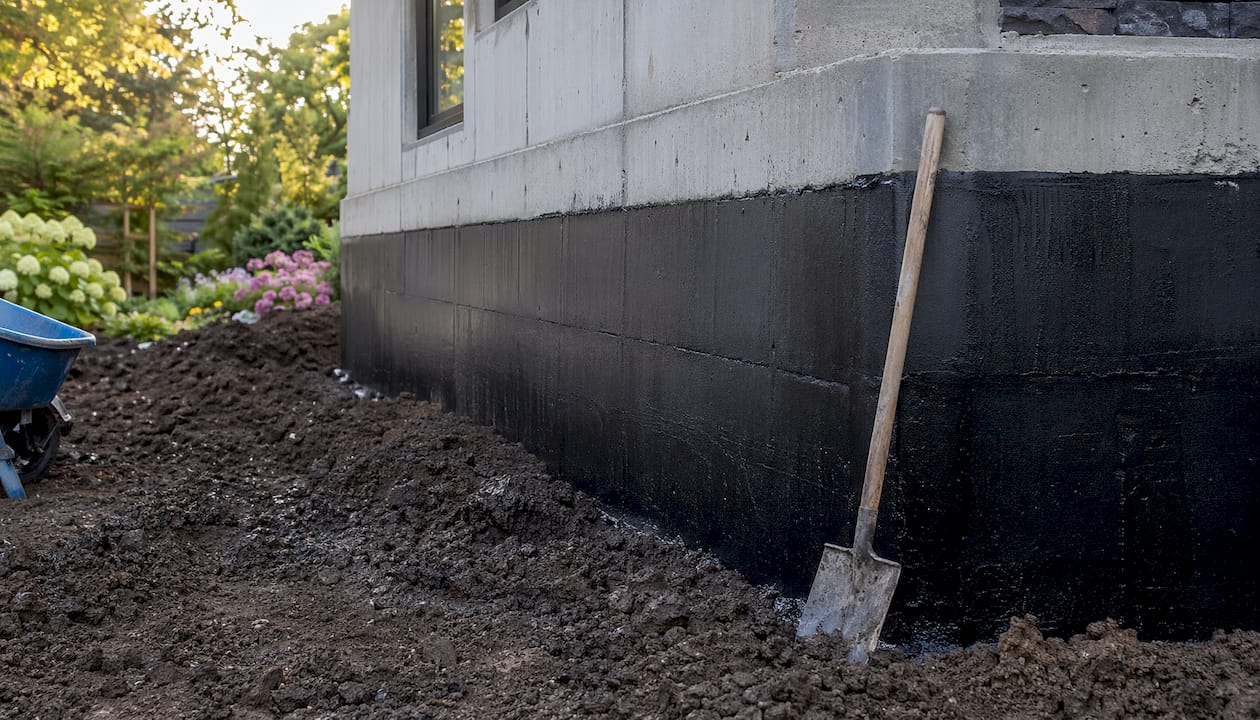
Beyond water, membranes protect against soil-borne contaminants and chemical erosion that attack concrete from the outside in. In below-grade applications, the membrane sits between the concrete and the surrounding earth, blocking both liquid water and the chemicals dissolved in it. That dual protection matters especially in areas with aggressive soils or where environmental health standards apply.
Effective waterproofing also reduces lifecycle costs. Fewer water intrusion events mean fewer mold remediation jobs, fewer concrete repairs, and less structural intervention over time. The upfront cost of a quality membrane and proper installation is consistently lower than the cumulative cost of addressing the damage that follows unmanaged moisture.
A membrane works best as part of a complete system. Quality concrete placement, proper joint management, and adequate drainage all contribute. Relying on a membrane to cover poor concrete work or skipped construction steps leads to failure regardless of membrane quality.
Key ways waterproofing reduces long-term costs and risks:
- Prevents mold remediation expenses by blocking the moisture that feeds growth
- Protects concrete from freeze-thaw cracking that requires patching or replacement
- Shields steel reinforcement from corrosion that compromises structural capacity
- Reduces the frequency of foundation and basement repairs
- Supports compliance with building codes and environmental health standards
How to maintain and inspect your waterproofing membrane
A membrane installed correctly still needs periodic attention. Inspection is far cheaper than emergency repair.
For accessible membranes on roofs, balconies, and exposed decks, a visual check twice a year catches most problems early. Look for blistering, cracking, lifted seams, and any area where the membrane has separated from the substrate or a penetration. After major storms, check that drains and scuppers are clear. Standing water accelerates membrane degradation and adds weight the structure was not designed to carry.
Below-grade membranes are buried and cannot be inspected directly, so the signals come from inside. Efflorescence (white mineral deposits) on basement walls, damp patches, or active seepage after rain all indicate that the membrane or its drainage system has been compromised. Catching these signs early usually means a targeted repair rather than a full excavation.
Keep records of the membrane type, installation date, and any repairs. That information is useful when diagnosing a new problem and when selling the property.
What causes waterproofing membranes to fail?
Membranes fail for predictable reasons, and most of them trace back to installation rather than the material itself.
Seam and termination failures are the most common. The field of a sheet membrane is rarely where the leak originates. Water finds the edge, the overlap, or the point where the membrane meets a pipe or wall penetration. Heat-welded seams on TPO and PVC systems eliminate adhesive gaps, but they require trained installers and calibrated equipment. Lap-sealed seams on self-adhesive sheets need firm pressure and clean, primed surfaces to bond properly.
Poor substrate preparation is the second major cause. A membrane applied over dusty, damp, or structurally weak concrete will delaminate. Once water gets under the membrane, it travels laterally and can emerge far from the original breach, making the source difficult to find.
Physical damage after installation also causes failures. Backfilling against a freshly applied below-grade membrane without a protection board tears or punctures the sheet. On roofs and decks, dropped tools, foot traffic in the wrong areas, and root intrusion from vegetation all compromise the membrane over time.
Finally, using the wrong product for the application creates problems that no amount of careful installation can prevent. A roofing membrane is designed to shed water, not to resist prolonged hydrostatic pressure. Substituting one for the other in a below-grade application is a specification error that leads to failure.
Key Takeaways
A waterproofing membrane blocks liquid water under pressure, protecting foundations, roofs, and wet areas from the structural and health damage that unmanaged moisture causes.
| Point | Details |
|---|---|
| Core function | A membrane stops liquid water migration under hydrostatic pressure, not just surface moisture. |
| Membrane vs. damp-proofing | Damp-proofing slows vapor; a waterproofing membrane resists active water entry under pressure. |
| Installation is critical | Seams and terminations are the most common failure points, not the membrane field itself. |
| Pair with drainage | A membrane without a drainage system faces higher pressure and shorter service life. |
| Supplement, not substitute | Membranes work alongside sound concrete and proper joints, not as a fix for structural deficiencies. |
FAQ
Is a waterproofing membrane necessary?
Any below-grade area, flat roof, or wet room with regular bulk water exposure needs a waterproofing membrane. Damp-proofing alone does not stop water under hydrostatic pressure.
What are the disadvantages of a waterproofing membrane?
Membranes can fail at seams, terminations, and penetrations, especially when installation is poor or the substrate is not properly prepared. They cannot compensate for cracked or structurally unsound concrete.
How long does membrane waterproofing last?
Below-grade membranes protected from physical damage can last for decades. Exposed membranes on roofs and decks have shorter service lives and need periodic inspection and maintenance.
How many coats of waterproof membrane should you apply?
Most liquid-applied systems require two to three coats applied in alternating directions, with each coat fully cured before the next. Always follow the manufacturer’s specified minimum dry film thickness.