
Partial foundation repair is defined as targeted structural work applied only to the damaged sections of a foundation, leaving intact portions untouched. This approach covers a range from minor crack injections to pier installation and partial wall replacement, with costs ranging from $2,000 to $30,000 depending on damage severity and method. Full foundation replacement, by contrast, regularly exceeds $50,000. For homeowners facing localized foundation problems, understanding what is a partial foundation repair option means knowing you have a practical, affordable path that does not require tearing out your entire foundation. Foundationresq helps homeowners in Tallahassee evaluate exactly which sections need attention and which can stay as they are.
What is a partial foundation repair option and how does it work?
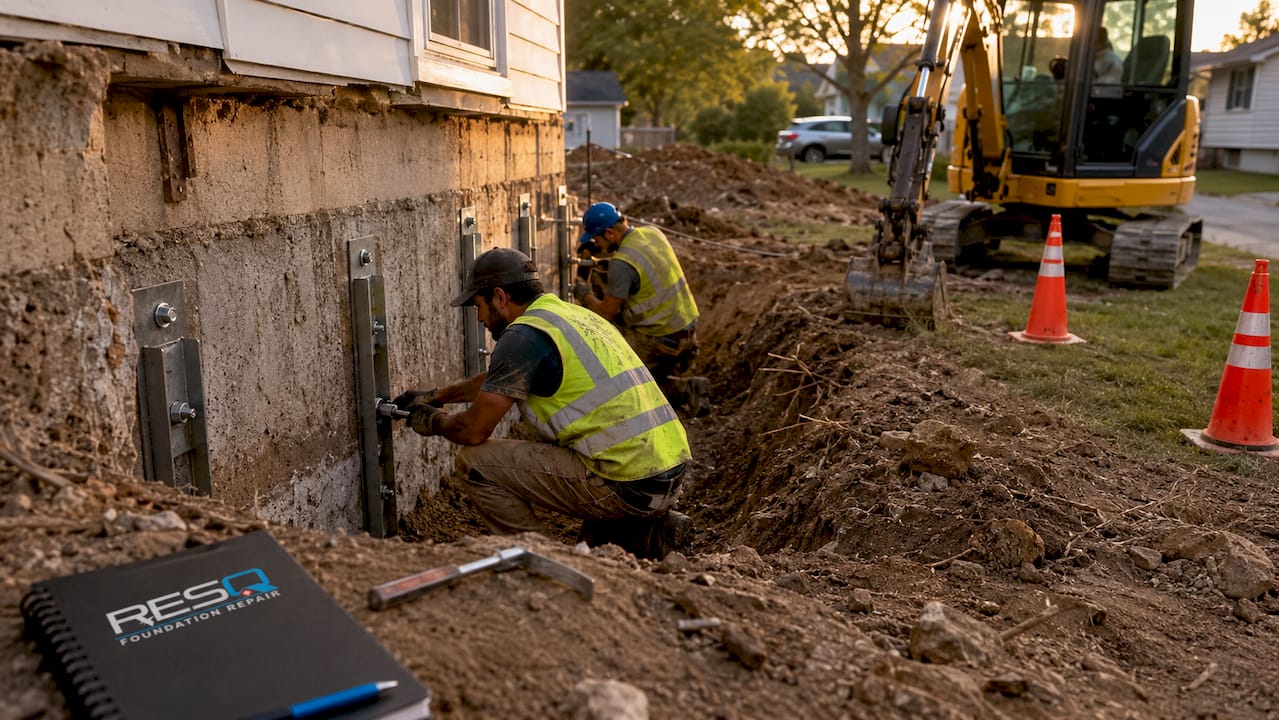
Partial foundation repair targets specific problem areas rather than the whole foundation system. A structural engineer or qualified contractor identifies which sections show active damage, such as cracking, settling, or bowing, and applies the appropriate repair method only to those zones. The rest of the foundation stays undisturbed. This targeted approach is what separates partial repair from full replacement, both in cost and in construction impact.
The most common partial repair methods include crack injection, carbon fiber reinforcement, steel beam bracing, wall anchors, push piers, helical piers, and partial wall replacement. Each method addresses a specific type of structural failure:
- Crack injection: Epoxy or polyurethane resin fills hairline and moderate cracks to restore waterproofing and structural continuity. Costs typically run $300–$800 per injection.
- Carbon fiber straps: Bonded to bowing walls to halt inward movement without excavation. Individual straps cost $350–$1,000 each.
- Wall anchors: Steel plates installed inside the wall and anchored into stable soil outside. Each anchor runs $400–$700 and can be tightened over time to gradually straighten the wall.
- Push piers and helical piers: Steel shafts driven or screwed into load-bearing soil beneath specific foundation points to lift and stabilize settled sections. Push piers cost approximately $2,000 each; helical piers run about $3,000 each.
- Partial wall replacement: Used when a wall section is too deteriorated to reinforce. Costs range from $15,000 to $30,000 for this method alone.
Pro Tip: Ask your contractor to show you the specific load calculations behind any pier recommendation. A reputable contractor will tell you exactly how many piers are needed and why, not just quote a round number.
Exterior excavation is often required for pier systems and wall anchors, so partial repairs involve real construction work. The advantage is that the work stays confined to the affected area, which keeps timelines and costs manageable.
What are the benefits of partial foundation repair over full replacement?
The primary benefit is cost. Full foundation replacement regularly exceeds $50,000, while most partial repair projects fall well below that threshold. For homeowners with localized damage, paying for a full replacement is like replacing an entire roof because one section of shingles failed.
Partial repairs are also far less disruptive to daily life. Homeowners can typically remain in residence during partial repair work, which is rarely possible during full replacement. That means no temporary housing costs and no major interruption to your routine.
Additional benefits include:
- Preservation of existing structure: Sound foundation sections stay in place, reducing material waste and construction risk.
- Shorter project timelines: Most partial repairs complete in days rather than weeks.
- Less soil disturbance: Targeted excavation around specific piers or wall sections causes far less disruption to landscaping and utilities than full perimeter excavation.
- Suitability for real estate transactions: Buyers and sellers can address specific flagged issues from a home inspection without triggering a full foundation overhaul.
Partial repair does have limits. Foundation issues worsen without intervention, and a partial fix applied to the wrong problem only delays a larger expense. If underlying soil movement or chronic water intrusion is not addressed alongside the structural repair, the same sections will fail again. Partial repair works best when the root cause is also corrected.
How much does partial foundation repair typically cost?
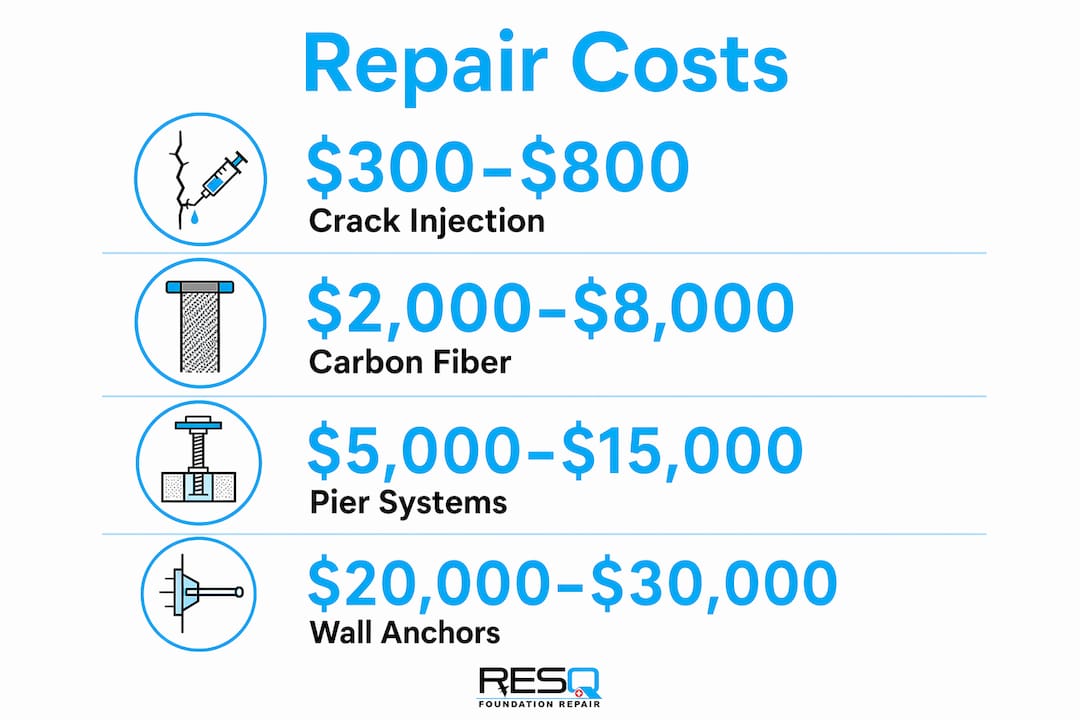
Repair costs depend directly on the method used and the extent of the damage. The table below shows typical 2026 price ranges for the most common partial repair methods.
| Repair method | Typical cost range |
|---|---|
| Crack injection | $300–$800 per crack |
| Carbon fiber straps | $4,000–$10,000 total |
| Steel beam bracing | $6,000–$15,000 |
| Wall anchors | $8,000–$15,000 |
| Push or helical piers | $10,000–$30,000 |
| Partial wall replacement | $15,000–$30,000 |
These figures reflect multiple cost variables including damage scope, soil conditions, foundation type, home size, and regional labor rates. A crack injection project in stable sandy soil costs far less than a pier installation in expansive clay soil that requires deeper driving.
Pro Tip: Get at least three written quotes before signing any contract. Quotes that vary by more than 30% usually signal a difference in scope, not just pricing. Ask each contractor to specify the number of piers, straps, or anchors included.
Geographic location also affects pricing. Labor rates in Tallahassee differ from those in major metro areas, which is why national cost averages can mislead local homeowners. Financing options are available for most partial repair projects, making it possible to address structural problems now rather than waiting for damage to escalate.
How to decide if partial foundation repair is right for your home
The decision starts with a professional assessment. A licensed structural engineer charges $500–$1,500 for an independent evaluation, and that fee is money well spent. A neutral engineer’s opinion tells you objectively whether partial repair will hold long term or whether full replacement is the only viable path. Never rely solely on a contractor’s assessment, since contractors have a financial interest in the scope of work they recommend.
Partial repair is the right call when:
- Damage is localized. One or two wall sections show cracking or bowing while the rest of the foundation remains stable and level.
- The overall foundation retains structural integrity. Walls are not displaced beyond repair thresholds, and the foundation still carries load effectively in most areas.
- Bowing walls have not exceeded four inches of inward movement. Walls bowing more than four inches typically require replacement rather than reinforcement.
- Underlying causes are correctable. Poor drainage, minor soil settlement, or isolated water intrusion can be fixed alongside the structural repair.
- A structural engineer confirms partial repair as a long-term solution. Professional inspection is the most reliable method to determine whether partial repair is sufficient or just a temporary fix.
Full replacement becomes necessary when multiple walls have failed, when deterioration is widespread, or when the foundation has shifted so severely that reinforcement cannot restore load capacity. Signs that point toward replacement include extensive spalling concrete, multiple walls bowing simultaneously, and significant vertical displacement of the sill plate.
Before contracting any repair, address the soil and moisture conditions driving the damage. Foundation issues advance without intervention, and structural repairs applied over unresolved drainage problems will not last. Ask your contractor how the repair plan accounts for water management and soil stabilization before work begins.
Key Takeaways
Partial foundation repair is the most cost-effective solution for localized foundation damage, provided the overall foundation retains structural integrity and underlying causes are corrected.
| Point | Details |
|---|---|
| Targeted repair saves money | Partial repairs cost $2,000–$30,000 versus full replacement exceeding $50,000. |
| Multiple methods available | Crack injection, piers, carbon fiber straps, and wall anchors each suit different damage types. |
| Get an independent engineer | A $500–$1,500 structural assessment confirms whether partial repair is a long-term solution. |
| Address root causes | Soil movement and water intrusion must be corrected alongside structural repairs or damage will return. |
| Know the replacement threshold | Walls bowing more than four inches or widespread deterioration typically require full replacement. |
What I’ve learned after seeing hundreds of foundation repair decisions
Homeowners consistently underestimate how much the decision between partial repair and full replacement depends on the quality of the initial diagnosis. The structural method matters, but the assessment matters more. I have seen well-executed pier installations fail within three years because the contractor never addressed the expansive clay soil driving the settlement. The piers were installed correctly. The diagnosis was incomplete.
The other mistake I see repeatedly is treating partial repair as a temporary patch. That framing leads homeowners to delay getting proper work done, which always costs more in the end. A correctly scoped partial repair, using the right method for the specific damage type, is a permanent fix. It is not a band-aid. The key word is “correctly scoped,” and that requires an independent structural engineer, not just a contractor’s walk-through.
When you are evaluating qualified contractors, ask them to walk you through the repair proposal line by line. Any contractor who cannot explain why they chose a specific method over alternatives is not someone you want working on your foundation. The best contractors welcome that conversation. They know the reasoning behind every recommendation, and they can explain it in plain language.
Post-repair monitoring also matters more than most homeowners realize. Mark your repaired wall sections with a pencil line at the crack edges after work is complete. Check those marks every six months. If movement resumes, you catch it early when the fix is still simple.
— Kayle
Foundationresq’s approach to partial foundation repair
Foundation problems rarely announce themselves at a convenient time, and the cost of waiting is always higher than the cost of acting. Foundationresq specializes in targeted foundation repair services for homeowners across Tallahassee, including crack injection, pier installation, carbon fiber reinforcement, and wall anchor systems.
Every project starts with a thorough assessment to identify exactly which sections need work and which do not. Foundationresq builds repair plans around your specific damage type, soil conditions, and budget. Flexible financing options in 2026 make it possible to move forward without putting the full cost out of pocket. If you want to see real project outcomes before committing, the Foundationresq case studies show documented results from homes with damage similar to yours.
FAQ
What is a partial foundation repair option exactly?
Partial foundation repair is targeted structural work applied only to damaged foundation sections, using methods like crack injection, pier installation, or carbon fiber reinforcement. It costs $2,000–$30,000 depending on the method, compared to full replacement which typically exceeds $50,000.
Is partial foundation repair a permanent fix?
Yes, when correctly scoped and applied to appropriate damage. A licensed structural engineer can confirm whether partial repair is a long-term solution or whether full replacement is needed for your specific situation.
Can I stay in my home during partial foundation repair?
Partial foundation repairs generally allow homeowners to remain in residence during the work, making them far less disruptive than full foundation replacement projects.
How do I know if my foundation needs partial repair or full replacement?
Walls bowing more than four inches, multiple failed walls, or severe widespread deterioration typically require full replacement. Localized damage with a stable overall foundation is usually a strong candidate for partial repair.
What factors affect the cost of partial foundation repair?
Pricing depends on the repair method chosen, the extent and location of damage, soil conditions, foundation type, home size, and regional labor rates. An independent structural engineer assessment costing $500–$1,500 gives you the most accurate basis for comparing contractor quotes.