
What if the concrete isn’t the problem, but the ground beneath it? If a patio, walkway, driveway, or floor is sinking, asking what causes concrete to sink is a useful first step. The slab may be settling because soil has eroded, fill wasn’t compacted well before installation, or moisture changes have affected the ground beneath it.
An uneven surface can be frustrating, especially when it’s unclear whether water, soil conditions, or the original installation is to blame. Settlement in one outdoor slab doesn’t automatically mean your home’s foundation is failing. But new cracks, pooling water, sticking doors, or cracks in interior walls can help show whether the concern extends beyond one slab.
This article explains common reasons concrete settles, what signs to observe, and how to distinguish isolated slab movement from possible foundation movement. You’ll also learn what to document and when a professional assessment can help identify the cause before you consider a remedy.
Key Takeaways
- What causes concrete to sink often comes down to shifting, compressing, or eroding support beneath the slab, but the specific cause varies.
- Compare the affected slab with nearby surfaces and the home itself. A single low patio may point to a different issue than movement across connected areas.
- Photograph the settlement, note whether it changes, and observe nearby drainage or pooling without digging beneath the concrete.
- The right next step depends on an assessment. Lifting a settled slab and stabilizing a home’s foundation address different conditions.
What causes concrete to sink beneath a driveway, patio, or walkway?
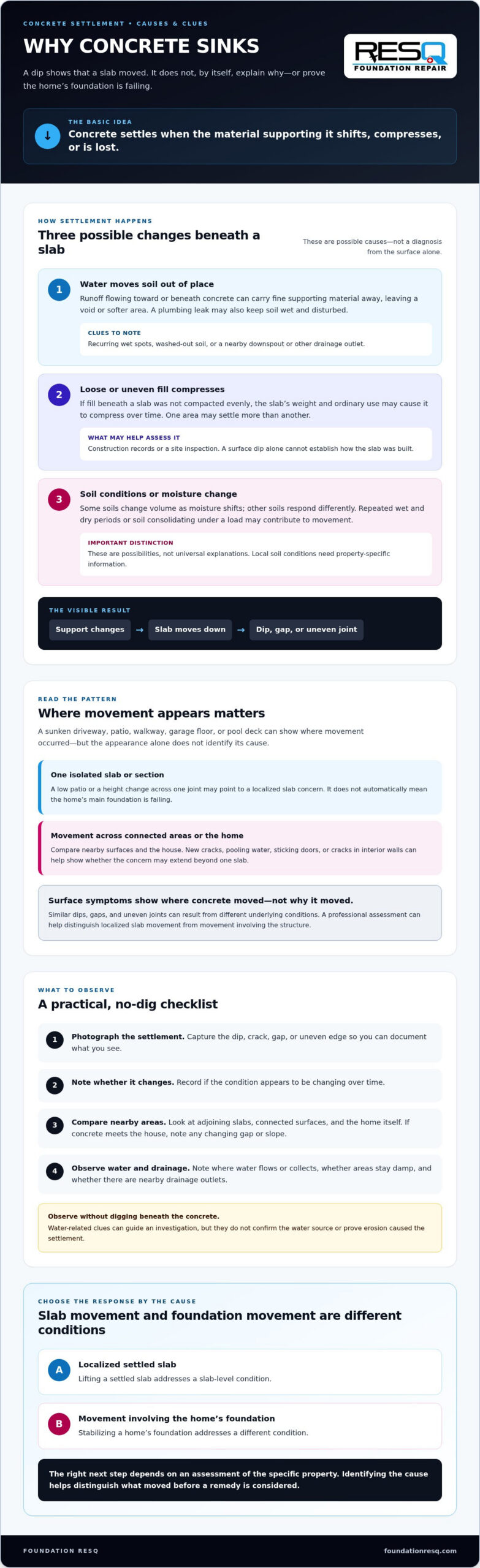
Concrete sinks when the soil or other material supporting it shifts, compresses, or is lost. This downward movement is called settlement. It can happen beneath an outdoor slab or a concrete surface inside the home, and it may affect the whole slab or just part of it. In structural terms, Settlement describes the movement of a structure as its supporting ground changes.
So, what causes concrete to sink in one spot but not another? It depends on what has changed beneath the slab. Support may be uneven, or conditions may affect only a limited area. The visible dip shows that the slab has moved, but it doesn’t reveal whether the cause is soil loss, compression, or another issue. One sunken slab alone doesn’t prove that the home’s main foundation is failing.
What does concrete settlement mean?
Settlement is downward movement caused by a change in the support beneath concrete. An entire slab may settle to a lower level, or one section may drop while the rest stays close to its original position. When adjoining parts move by different amounts, the result is called differential settlement. This uneven movement can leave a noticeable height change across a crack, joint, or slab edge.
Which concrete surfaces are most likely to show sinking?
Homeowners may notice a driveway dipping near the garage, a walkway with a raised or low joint, a patio with a changed slope, or a garage floor with a changing edge or gap. Pool decks can also show uneven sections around joints. These appearances help describe where movement has occurred, but they don’t identify its cause.
Look at the pattern, not just the individual slab. A height difference between two sections of a patio is different from movement across connected surfaces and the home. If the concrete meets the house, note whether the gap or slope seems to be changing. Don’t assume that movement in the slab means the foundation has shifted. A professional assessment can help distinguish a localized slab concern from movement involving the structure.
Surface symptoms show where concrete moved, not why it moved. Similar gaps, dips, or uneven joints can result from different underlying conditions, so appearance alone isn’t enough to diagnose the problem.
How water, soil erosion, and poor compaction make concrete sink
Several changes beneath a slab can weaken its support. Water may move soil out of place, loose fill may compress under the concrete, and some soils may shift as their moisture content changes. These are possible mechanisms, not a diagnosis. The downward movement of the ground can also occur as soil consolidates under a load, so a visible dip doesn’t reveal what happened below.
In Tallahassee, heavy rain and how water drains across a specific property can be relevant clues. Runoff concentrated near a slab may affect it differently from water that drains away. Soil types and site conditions vary, so don’t assume a particular soil problem without a property-specific assessment.
Can rain or a plumbing leak wash soil out from under concrete?
Yes. Runoff flowing toward or beneath a slab can gradually carry fine supporting material away, leaving a void or softer area. A plumbing leak may also keep soil wet and disturbed. Look for recurring wet spots, washed-out soil, or a nearby downspout or other drainage outlet. These clues can help guide an investigation, but they don’t confirm the water source or prove that erosion caused the settlement.
Why can poorly compacted fill settle beneath a slab?
Fill beneath concrete needs adequate, even compaction to provide stable support. If it’s left loose or uneven, the slab’s weight and ordinary use may cause it to compress over time. The concrete can then settle gradually, sometimes more in one area than another. A surface dip alone can’t establish how the slab was built; construction records or a site inspection may help assess this possibility.
How can soil moisture changes affect concrete support?
Some soils change volume as moisture conditions shift, while others don’t respond the same way. In susceptible soils, repeated wet and dry periods can contribute to movement or changes in support beneath a slab. Soil may also consolidate under applied loads. These are possibilities, not universal explanations for sinking concrete. Confirming local soil conditions requires property-specific information; Tallahassee’s general climate alone can’t identify the cause at a particular home.
Note where water collects or flows, and whether the same areas stay damp. Those details can help a professional distinguish drainage-related soil loss from compaction or moisture-related movement. If you’re in Tallahassee and the cause remains unclear, learn about concrete lifting and leveling as a possible next step after the slab and its supporting conditions have been assessed.
How to tell soil erosion, settlement, and foundation movement apart
Clues around a sunken slab can help narrow down what to investigate, but they can’t confirm the cause. A low section beside a downspout may raise questions about drainage; several connected surfaces changing height may warrant a wider look. A sinking concrete walkway doesn’t automatically mean the house foundation is failing. Patterns matter more than one crack or gap.
Use this comparison to guide your observations, not to diagnose the problem. The same symptom can have more than one explanation.
| Possible cause or concern | Clues to look for | What the clue cannot establish |
|---|---|---|
| Soil erosion or drainage issue | Settlement near a downspout, low spot, standing water, leak, or visible soil loss | That water caused the movement or where it came from |
| Localized slab settlement | One section of a patio, walkway, or driveway sits lower than adjoining concrete | Whether soil compressed, shifted, or was washed away |
| Possible broader foundation movement | Related changes across connected areas or the home, such as sticking doors and new interior cracks | That the foundation is failing or what repair, if any, is appropriate |
What clues may point to erosion or drainage problems?
Check for downspouts that release water near the slab, low spots where water collects, recurring damp areas, visible soil loss, or a nearby leak. Note whether the concrete change is localized along a wet area or drainage path. These details can guide an inspection, but each may have other explanations. A wet patch, for example, doesn’t identify its source by itself.
When might movement extend beyond one concrete slab?
Look beyond the affected walkway or patio. Check whether nearby slabs or parts of the house show changes too. Doors or windows that stick and new cracks in interior walls are useful context to record, especially if they appear alongside other signs of movement. They aren’t standalone proof of foundation trouble. If several signs seem connected, a professional foundation repair assessment in Tallahassee may help clarify whether the concern involves the home’s structure.
The question of what causes concrete to sink can’t be answered reliably from a crack, gap, or uneven joint alone. Photograph what you see, note where water flows, and record whether other areas change. A professional can assess the overall pattern and distinguish a localized slab issue from possible movement involving the home. That distinction helps determine relevant next steps, rather than assuming every sunken surface needs the same response.
What to check when you notice sinking concrete
A few careful observations can help a professional understand where the slab moved and what conditions may be involved. You don’t need to uncover the soil or test the concrete yourself. Stay on stable, accessible ground, and don’t dig beneath the slab or enter an unsafe area to investigate.
What should homeowners document before requesting an assessment?
Take photos from consistent viewpoints so you can compare changes over time. Note when you first noticed the settlement and whether the dip, gap, or crack appears to be changing. Record nearby downspout outlets, standing water, drainage changes, recurring wet areas, and any plumbing concerns you’ve observed. These details can help connect surface movement with nearby conditions without assuming what caused it.
Then look at the surrounding area from a safe location:
- Note whether the affected slab seems isolated or connects to other uneven surfaces.
- Observe whether nearby water collects, flows toward the concrete, or drains away.
- Record visible gaps, uneven joints, and changes in access or drainage.
- Photograph related changes on connected surfaces or inside the home, if present.
Don’t move heavy objects, walk across unstable edges, or try to inspect below the concrete. The goal is to document what you can see, not to identify the cause yourself.
When should a professional inspect settled concrete?
Consider an assessment if the settlement appears to be changing, creates a trip hazard, interferes with access, or redirects water toward an unwanted area. Professional input can also help when the cause is unclear or several signs appear together, such as changes across multiple surfaces and new issues inside the home. These observations don’t prove structural movement, but they can help an evaluator understand the scope.
If there’s an immediate safety concern, keep people away from the affected area and address the hazard through an appropriate professional. For less urgent changes, your photos and notes can provide a clear starting point. They may help an assessment distinguish a localized slab concern from a broader pattern and determine whether further evaluation is warranted.
Understanding what causes concrete to sink often requires looking beyond the visible dip. If you’re in Tallahassee and would like a professional to assess settled concrete, request an assessment from Foundation ResQ.
How identifying the cause guides concrete leveling or foundation repair
The right response depends on what an assessment finds. A settled patio slab, ongoing soil loss from water, and movement affecting a home’s foundation are different conditions. Addressing only the visible dip without understanding what may be happening beneath it can leave the underlying concern unaddressed. A suitable plan should reflect the cause, extent of movement, and conditions around the concrete.
When is concrete lifting different from foundation stabilization?
Concrete lifting and leveling addresses the elevation of a settled slab when an assessment finds it suitable. Foundation stabilization, by contrast, addresses structural support concerns affecting a building. These approaches serve different purposes, and a sunken walkway alone doesn’t establish that foundation stabilization is needed. An inspection can help determine whether movement is limited to the slab or appears connected to the home’s structure.
Foundation ResQ offers PolyRenewal concrete lifting in Tallahassee. Whether lifting is appropriate depends on the slab and site conditions; it isn’t the right answer for every case. If movement involves the home’s foundation, a different evaluation and response may be needed.
What happens during a professional evaluation?
An evaluator considers the concrete’s condition and movement pattern alongside the surrounding area. That may include the slab’s height and edges, nearby soil, drainage conditions, and whether connected surfaces or parts of the building show related changes. The goal is to understand the scope before recommending a response, rather than assuming every crack or low spot has the same cause.
If water appears to be contributing to soil loss, that condition may need attention as part of the overall plan. If the concern is a settled slab, lifting may be considered if the site is suitable. If signs point to broader structural movement, the focus may instead be foundation stabilization. The proposed approach should fit the observed conditions; no particular outcome should be assumed before an assessment.
Understanding what causes concrete to sink helps guide the next step, but identifying the cause helps distinguish slab leveling from structural foundation work. For more information about the process and considerations for local properties, learn about concrete leveling in Tallahassee.
Start with the cause, then choose your next step
Concrete can settle when its support shifts, compresses, or is lost, but a dip or crack alone can’t tell you why. Water-related soil loss, poorly compacted fill, and moisture-related soil movement are possible causes. The pattern matters too: a single settled slab isn’t the same as movement affecting the home’s foundation.
To better understand what causes concrete to sink, photograph the area, record changes, and note nearby drainage conditions. An assessment can help determine whether the concern is a settled slab, a water issue, or broader structural movement. The right response depends on those findings, and not every uneven surface needs the same repair.
Foundation ResQ serves Tallahassee homeowners with PolyRenewal concrete lifting and foundation stabilization services. If you’re considering options for a settled slab, request an assessment from Foundation ResQ to discuss whether concrete leveling may suit the conditions.
Frequently Asked Questions
What causes concrete to sink most often?
Changes in the soil supporting a slab are a common cause of sinking concrete. Soil may erode as water flows through it, compress if fill beneath the slab was loose, or shift as moisture conditions change. What causes concrete to sink depends on the property and slab. A dip or crack can point to movement, but it can’t identify the cause without a closer assessment.
Can heavy rain cause concrete to sink?
Heavy rain can contribute to settlement if runoff flows beneath a slab and carries away supporting soil, or if drainage repeatedly saturates an area. Rain alone doesn’t mean concrete will sink. In Tallahassee, note whether water pools near a driveway or patio, flows from a downspout toward it, or appears to drain differently than before. These observations can help guide an inspection, but they don’t confirm the cause.
Can a plumbing leak cause concrete to sink?
Yes, a plumbing leak can contribute to sinking if it continually wets or displaces soil beneath or near a slab. Possible clues include a recurring damp area, unexplained pooling, or a wet patch that persists when there hasn’t been recent rain. These signs don’t prove a leak or show what caused the settlement. Avoid digging beneath the concrete; have a qualified professional assess concerns about water and slab movement.
Does sinking concrete mean my foundation is failing?
No, a sunken slab doesn’t automatically mean the home’s foundation is failing. A patio, walkway, or driveway may settle on its own, separately from the house. Document whether other connected surfaces or parts of the building have changed too. New interior cracks or doors that stick are context to report, not proof of a foundation problem. An assessment can help distinguish localized slab movement from broader structural concerns.
Can poorly compacted soil make a concrete slab sink?
Yes. Fill that wasn’t compacted evenly may compress under the weight of the concrete and normal use, reducing support beneath part or all of a slab. Settlement can become noticeable gradually as the support changes. A low spot alone can’t show how the slab was constructed, though. Construction records or a professional inspection may help determine whether compacted fill could be involved and what next steps are suitable.
How can I tell whether water is washing soil out from under concrete?
You usually can’t confirm soil washout from surface clues alone, but you can record signs that may help an inspection. Look for visible soil loss, recurring wet areas, water pooling near the slab, or a downspout outlet directing runoff nearby. Note whether the settlement is close to a drainage path or wet spot. Don’t dig beneath the concrete; several conditions can produce similar clues, so an assessment may be needed.
Can tree roots cause concrete to sink?
Tree roots can affect soil and concrete near a slab, but they don’t automatically explain a sunken area. Roots may disturb support as they grow, while changes around older or removed trees may also affect the ground. Note whether the settlement is near a tree, but treat that as context rather than proof. Avoid cutting roots or digging beneath the slab; a professional can assess the site and likely cause.