That hairline crack in your drywall isn’t just a cosmetic nuisance; it’s often the first warning sign of a structural emergency. In North Florida, what many homeowners dismiss as “natural settling” is frequently an active failure of the soil beneath the slab. If you’ve noticed sticking doors or sloping floors, you’re likely feeling the weight of uncertainty regarding your home’s safety and the potential costs involved. Finding the right sinking home foundation solutions requires moving past the fear of the unknown and into the territory of engineered precision.
We understand that technical jargon like helical piering and anxiety over structural integrity can be overwhelming. This guide is designed to provide clarity and reassurance by focusing on permanent remedies rather than temporary fixes. You’ll learn exactly why your foundation is shifting and how modern engineering can stabilize your property for the long term. We will preview the most effective repair methods for our unique regional soil, explain how 2026 building code updates prioritize structural resilience, and show you how to identify a local expert who can protect your home’s future.
Key Takeaways
- Distinguish between minor settlement and active structural failure to determine the urgency of your situation.
- Identify how local environmental factors like expansive clay and water pressure impact the stability of North Florida foundations.
- Evaluate permanent sinking home foundation solutions like helical and push piering that transfer structural loads to stable soil strata.
- Learn to interpret physical warning signs, including the difference between horizontal and vertical wall cracks, to catch issues early.
- Understand the role of professional stabilization in maintaining long term safety and meeting updated building code requirements.
Understanding Foundation Settlement vs. Sinking Foundations
Every home interacts with the earth in a dynamic way. Foundation settlement is the natural downward movement of a structure as it finds its equilibrium within the soil. While this sounds concerning, most buildings undergo a degree of uniform settlement without sustaining significant damage. You can learn more about the basic principles of a Foundation (engineering) to understand how loads are distributed and how soil interaction affects a building’s stability.
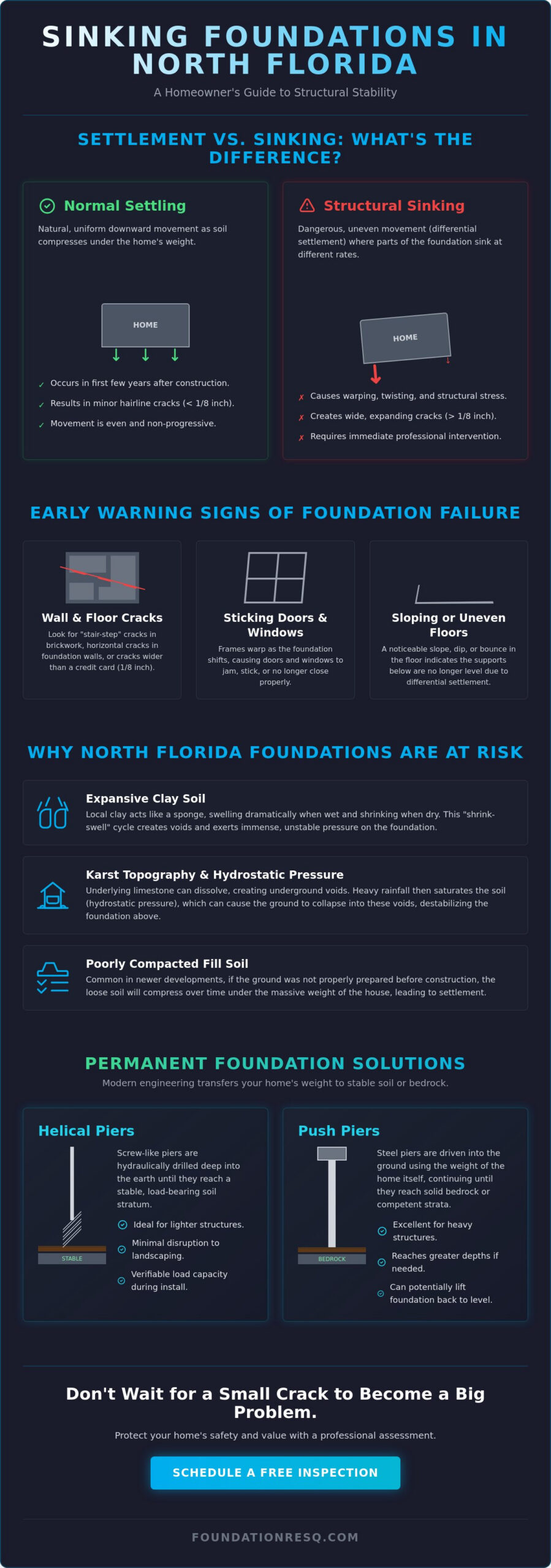
However, “sinking” usually refers to a more dangerous phenomenon known as differential settlement, where one portion of the foundation drops faster or further than the rest. Differential settlement is the primary cause of structural damage because it occurs when various parts of a foundation sink at different rates, forcing the building’s rigid frame to twist and crack. When this occurs, the structure can no longer distribute its weight evenly. This leads to warped door frames, sloping floors, and compromised integrity.
Homeowners often ask when a crack transitions from a cosmetic eyesore to a structural hazard. Generally, any crack wider than one-eighth of an inch or any opening that continues to grow indicates that you need to explore professional sinking home foundation solutions. If you can fit the edge of a credit card into a crack, or if the crack is diagonal rather than vertical, it’s time to seek a professional assessment.
The Difference Between Normal Settling and Structural Failure
Most houses settle slightly during the first few years after construction as the weight of the building compresses the underlying soil. This is usually uniform and results in minor, hairline cracks that don’t expand over time. Movement becomes a structural failure when it is progressive. If you notice “stair-step” cracking in brickwork or mortar joints, it’s a clear sign of uneven weight distribution. These patterns show that one section of the wall is literally pulling away from the rest of the structure, creating a gap that will only widen without intervention.
Why North Florida Foundations Face Unique Risks
Tallahassee’s geography presents specific challenges that make seeking sinking home foundation solutions a local necessity. Our region is characterized by karst topography, a landscape where the underlying limestone is easily dissolved by water, creating underground voids. When you combine this with heavy seasonal rainfall, the soil can become saturated and lose its load-bearing capacity. This environmental pressure is discussed extensively in our guide on Professional Foundation Repair in Tallahassee: A Guide for 2026. The interplay between expansive clay and high water tables means your home’s stability depends heavily on the health of the soil beneath it.
Primary Causes of Sinking Foundations in Tallahassee
Tallahassee’s geological makeup presents a unique set of challenges for structural stability. The primary culprit is often the high concentration of expansive clay in our local soil. Unlike sandy soils that drain quickly, these clays act like a sponge. They expand significantly when saturated and contract when they dry out. This constant movement creates an unstable base for any structure. You can explore Foundation Design: Key Principles and Practices to see how engineers account for these complex soil mechanics when planning a build.
Hydrostatic pressure also plays a major role in regional property damage. During heavy North Florida rainstorms, water accumulates in the soil surrounding your foundation. This water exerts immense pressure against your home’s walls and floor. Over time, this force can lead to cracks or cause the entire structure to shift. Conversely, during periods of extreme heat, we see soil desiccation. The soil loses so much moisture that it literally shrinks away from the footings, leaving the foundation unsupported. In newer developments across North Florida, we also frequently encounter issues with poorly compacted fill soil. If the land wasn’t properly prepared before the slab was poured, the loose soil will eventually compress under the weight of the house, leading homeowners to seek sinking home foundation solutions. Maintaining the integrity of the soil also involves managing nearby trees; for instance, Portland Tree Service offers professional crane services to safely remove large trees that could otherwise compromise a building’s stability.
The Impact of Soil Moisture Cycles
The “shrink-swell” cycle is a relentless force on concrete structures. When clay soils contract during a dry spell, they create physical voids or pockets beneath the concrete. When the next heavy rain arrives, the foundation may drop into these empty spaces. This is why slab foundation repair Tallahassee often begins with a thorough evaluation of moisture management. Large tree roots can exacerbate this by drawing water out of the soil near your home, causing localized drying and uneven settlement.
Structural Weaknesses and Erosion
External factors like broken gutters or improper grading can turn a minor drainage issue into a structural emergency. When water isn’t directed away from the house, it pools near the foundation and causes a “washout” effect. This process carries the supporting soil away from the home’s perimeter, leaving the foundation hanging over a cavity. Additionally, buried organic matter, such as old tree stumps or construction debris, eventually decays. As this material breaks down, it leaves behind underground voids that can no longer support the weight of your home. If you suspect your home is being affected by these environmental factors, a professional structural evaluation can help identify the root cause before the damage spreads.
Comparing Modern Sinking Home Foundation Solutions
Choosing the right repair method is critical for the long-term safety of your property. While some contractors might suggest surface-level remedies like mudjacking or simple concrete patches, these are often temporary fixes for sinking homes. Such methods add weight to already failing soil without addressing the underlying instability. In contrast, engineered piering systems are the industry gold standard because they provide a permanent remedy. This process, known as underpinning, involves transferring the entire weight of your home from the shifting topsoil to more stable, load-bearing strata deep underground. These specialized steel piers reach past unstable soil to load-bearing depths, effectively bypassing the problematic clay and karst features common in Tallahassee.
Both helical and push pier systems offer a level of stability that traditional concrete work cannot match. They’re designed to remain unaffected by the “shrink-swell” cycles of the soil or localized erosion. By anchoring your home into deeper, more competent earth, these systems act as a final line of defense against structural failure. Selecting the correct piering type depends on your home’s specific architectural needs and the geological profile of your lot. Before committing to a repair method, many homeowners benefit from consulting a foundation repair cost estimator to understand how variables like pier type, soil depth, and settlement severity influence the total investment. Property managers overseeing multiple buildings may also find value in reviewing a commercial building foundation inspection checklist to ensure consistent structural monitoring across all assets.
Helical Piers: The Screw-In Solution
Helical piers are distinguished by the screw-like plates, or helices, welded to the steel shaft. These are mechanically driven into the earth using hydraulic machinery, much like a screw into wood. They’re ideal for lighter structures, such as porches, or situations where the soil has a high water table. Because they don’t require the weight of the house to be installed, they’re versatile for various property types. A key advantage of this system is the precision of the installation. Technicians can measure the torque as the pier descends, ensuring it meets a specific load capacity before the house is ever attached. This provides a data-driven confirmation of stability.
Push Piers: Heavy-Duty Stabilization
Push piers offer a heavy-duty alternative for larger residential homes or commercial buildings. These systems use the actual weight of the structure to drive the steel pier sections into the ground. A bracket is attached to the foundation, and hydraulic jacks “push” the pier down until it reaches competent soil or bedrock. This method is exceptionally reliable because the pier is tested against the house’s weight during the very act of installation. Unlike helical piers, which require rotational force, push piers rely on linear pressure. This makes them a robust choice for stabilizing a building that has already experienced significant movement. Both options represent the pinnacle of modern sinking home foundation solutions, ensuring your home’s structural health for decades to come.
How to Identify and Address Foundation Settlement Early
Identifying structural issues early can save you thousands in long-term repair costs. While some movement is expected over decades, homeowners should follow a clear hierarchy of signs to determine the urgency of their situation. Hairline vertical cracks in a foundation wall may simply require consistent monitoring, but horizontal cracks or large diagonal gaps are immediate red flags. Horizontal cracks often suggest that external soil pressure is pushing against the wall, while vertical cracks usually indicate that a portion of the structure is dropping into a void. Addressing these symptoms with engineered sinking home foundation solutions prevents minor settlement from becoming a total structural collapse.
The “sticking door” phenomenon is a classic indicator of a racked frame. When one side of your house sinks faster than the rest, the rectangular frames of your doors and windows become skewed. This distortion makes them difficult to open or close. You might also notice daylight appearing through gaps where the wall meets the ceiling or floor. These separations are critical indicators that the foundation is no longer providing a level base for your living space. If your home’s frame is no longer square, the stress on your drywall and siding will only increase over time.
The Homeowner’s Diagnostic Checklist
A proactive inspection of your property can reveal subtle shifts before they escalate. Use the following checklist to evaluate your home’s health:
- Stair-step cracks: Look for these in exterior brickwork or siding. They follow the mortar lines and indicate significant differential movement in the foundation.
- Window functionality: Check if windows no longer lock properly or if the trim is pulling away from the exterior wall.
- Crawl space health: Inspect the area beneath your home for leaning piers, sagging floor joists, or standing water. Moisture in this area often destabilizes the soil, making crawl space encapsulation Tallahassee a vital part of a comprehensive structural protection plan.
When to Call for a Professional Inspection
A professional inspection is the only way to confirm if your home requires sinking home foundation solutions. Technicians use precision tools like laser levels to map the exact elevation of your floors and soil probes to test the density of the earth beneath your footings. Don’t rely on DIY “quick fixes” like filling cracks with epoxy or mortar. These methods only hide the symptoms. Without stabilizing the base of the home, the cracks will inevitably return as the structure continues to shift. If you’ve identified any of these warning signs, it’s time to schedule a professional structural evaluation to protect your home’s long-term integrity. Landlords and property managers responsible for multiple units should also reference a thorough commercial building foundation inspection checklist for 2026 to stay ahead of code compliance requirements and tenant safety obligations.
Professional Stabilization with Foundation ResQ
Foundation ResQ stands as the steadfast local expert for homeowners seeking sinking home foundation solutions in Tallahassee. Our team combines deep regional knowledge of North Florida’s unique geological challenges with extensive engineering expertise and adherence to national technical standards. This ensures that every repair plan is robustly designed, leveraging broad technical resources, while being executed by local professionals who understand our specific red clay and karst topography. We prioritize high-quality helical and push pier systems because they offer a permanent remedy for structural failure. These engineered systems are designed for maximum durability and are accompanied by reassuring warranties that provide long-term security for your property’s future.
Choosing a professional team means moving beyond temporary patches toward a state of informed resolution. Our solutions are not just about stopping the movement; they are about restoring the structural health of the building. By anchoring your home to stable, load-bearing strata, we provide a final line of defense against the environmental pressures that cause foundations to fail. This methodical approach is designed to give you confidence in the safety and longevity of your home.
Our Methodical Approach to Foundation Repair
We follow a highly organized, service-centric process to restore your home’s integrity. Our methodical approach begins with a comprehensive site evaluation where we use precision tools to map the exact extent of the settlement. Once we determine the best piering locations, we install the steel shafts with minimal landscape disruption. Unlike older methods that required massive excavation, modern piering is surgical and efficient. After the piers are locked into stable strata and the foundation is stabilized, we often implement carbon fiber wall repair Tallahassee. This modern solution reinforces foundation walls against inward movement, providing a protective barrier that works in tandem with the new piering system to ensure the entire structure remains secure.
Restoring Your Peace of Mind and Property Value
Addressing foundation issues today is a strategic move that protects both your safety and your financial investment. Professional foundation repair offers a significant return on investment by preserving home resale value and ensuring the structure remains marketable. A house with a documented, professional repair is a stable asset, whereas one with visible sinking signs can lose substantial value during a sale. We take our role as the “Steadfast Local Expert” seriously, focusing on long-term outcomes rather than quick fixes. We understand the stress that structural concerns cause, and our goal is to lead you toward a state of informed resolution. Schedule your free foundation inspection with Foundation ResQ today to take the first step toward a permanent recovery for your home.
Securing Your Home’s Structural Future
Securing your home’s stability starts with recognizing that North Florida’s unique soil dynamics require more than just cosmetic fixes. You now understand that differential settlement is a progressive issue that demands engineered sinking home foundation solutions to ensure permanent safety. By choosing professional piering over temporary surface patches, you’re investing in the long-term health of your property and preventing the escalating costs of structural failure.
Foundation ResQ provides Groundworks certified engineered solutions that stabilize your building with minimal landscape disruption. Every installation is backed by lifetime transferable warranties, providing you and any future owners with enduring peace of mind. Your home is your most significant investment; it deserves the protection of a seasoned professional who understands the local terrain. Protect your home’s future-schedule a free foundation inspection today. We’re ready to help you restore the strength and value of your property with a solution built to last.
Frequently Asked Questions
Is a sinking foundation always a disaster?
A sinking foundation is a serious structural concern, but it does not necessarily mean your home is on the verge of collapse. It indicates that the soil beneath your footings can no longer support the weight of the structure. While the damage is progressive, identifying the issue early allows for controlled stabilization that restores the home’s integrity and prevents a total loss of property value.
How much does it cost to fix a sinking home foundation?
The total investment for foundation repair depends on several variables, including the number of piers required and the depth of the load-bearing soil strata. Factors such as the size of the home, the severity of the settlement, and the specific geological profile of your lot will influence the final cost. Homeowners should seek a professional site assessment to receive an accurate estimate tailored to their unique structural needs. For a detailed breakdown of what drives these expenses, our foundation repair cost estimator guide for 2026 provides a comprehensive look at the variables that affect stabilization pricing in North Florida.
Can you fix a sinking foundation without piers?
While minor cosmetic cracks can be patched with mortar, true structural sinking requires a more robust remedy. Piers are considered the most effective sinking home foundation solutions because they bypass the unstable topsoil entirely. Methods that rely on adding more material to the surface often fail in Tallahassee’s expansive clay because they don’t address the underlying soil instability.
How long does it take to install foundation piers?
Most residential piering projects are completed within two to five days. The exact timeline varies based on the number of piers being installed and the ease of access to the foundation perimeter. Modern hydraulic installation techniques are designed for efficiency and cause minimal disruption to your daily routine or your home’s landscaping.
Will my homeowners insurance cover a sinking foundation?
Standard homeowners insurance policies typically exclude coverage for foundation sinking caused by earth movement, natural settlement, or hydrostatic pressure. Coverage is usually reserved for sudden events, such as a major plumbing failure that washes out the soil. It is best to review your specific policy documents or speak with your insurance agent to understand your coverage limits regarding structural remediation.
What is the difference between mudjacking and piering for a sinking slab?
Mudjacking involves pumping a heavy concrete slurry under a slab to fill voids, whereas piering uses steel shafts driven into deep, stable earth. Piering is a permanent solution because it transfers the building’s weight to competent soil. Mudjacking often fails in North Florida because the heavy slurry adds weight to the same unstable clay that caused the initial sinking.
Can a sinking house be leveled completely?
In many instances, a structure can be lifted back toward its original level position, but the primary objective is always permanent stabilization. A professional technician will carefully monitor the lifting process to ensure the home’s rigid frame is not stressed beyond its limits. The goal is to close major gaps and restore functionality to doors and windows while ensuring the foundation is secure.
What happens if I ignore a sinking foundation?
Ignoring foundation failure leads to progressive structural damage that becomes more expensive to fix over time. Minor cracks will eventually grow into large gaps that allow water and pests to enter your home. Untreated settlement can also lead to ruptured utility lines, permanently warped frames, and a significant decrease in your property’s resale value.