
Why Crawl Space Mold Removal Matters for Your Home’s Health
Crawl space mold removal is essential when you find mold growing beneath your home, especially after a leak or water intrusion event. Here’s what you need to know right away:
Quick Answer: Crawl Space Mold Removal Process
- Identify the problem – Look for visible mold, musty odors, or health symptoms
- Assess the size – Small areas (<10 sq ft) may be DIY-able with proper safety gear
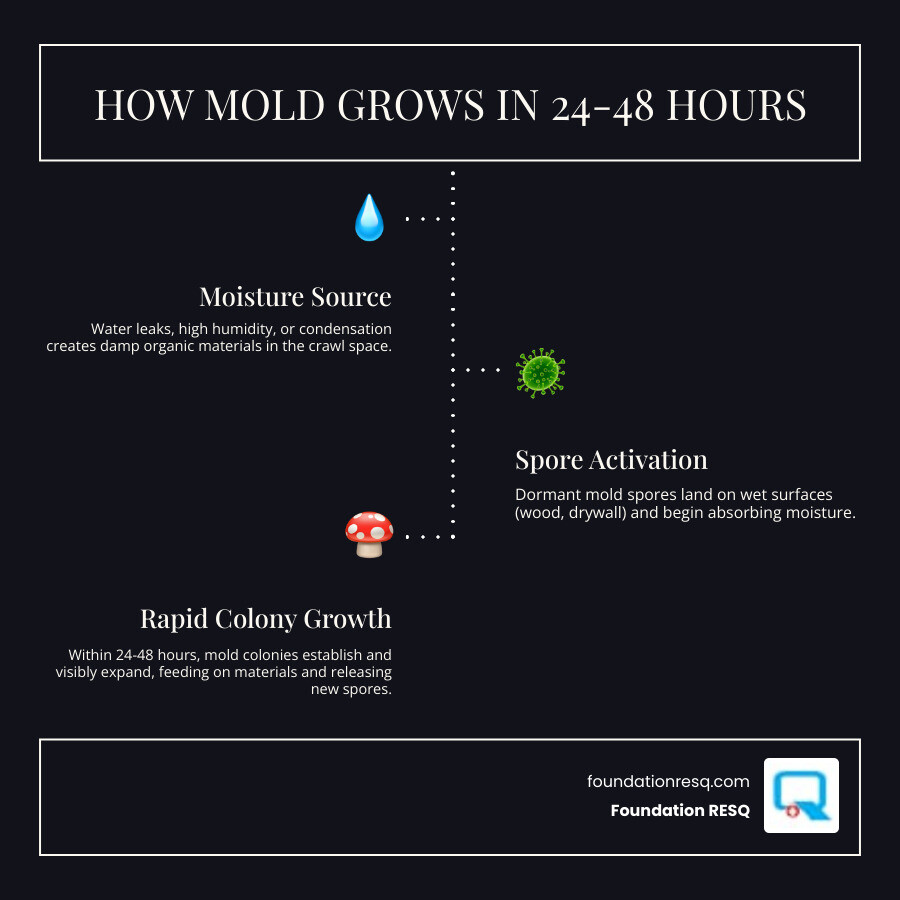
- Fix the moisture source – This is critical or mold will return within 24-48 hours
- Remove the mold – Use detergent and water, HEPA vacuum, or professional remediation
- Prevent recurrence – Control humidity below 60%, improve drainage, consider encapsulation
Nothing is worse than noticing a funky smell and realizing you have extensive water or mold damage in an area you rarely visit. Crawl spaces are particularly vulnerable because they’re dark, damp, and often unconditioned spaces where mold can thrive unnoticed for months.
The stakes are high. According to the CDC, mold exposure can cause stuffy nose, sore throat, coughing, burning eyes, and skin irritation—symptoms that worsen for those with asthma or respiratory conditions. Beyond health concerns, mold in your crawl space can compromise your home’s structural integrity. Wooden floor joists and beams deteriorate as mold feeds on organic materials, leading to bouncy or sagging floors above.
There’s also the stack effect to consider. Air naturally moves from lower to upper levels of your home, meaning mold spores from your crawl space don’t stay there—they spread into your living areas where your family breathes them in daily.
The good news? Mold can begin to grow within 48 hours of excessive moisture, but it can also be stopped if you act quickly and address the root cause. Small infestations (under 10 square feet) can often be handled yourself with proper safety equipment. Larger problems require professional help to ensure complete removal and prevent regrowth.
As Kayle Vernon, I’ve helped dozens of homeowners through the process of identifying and addressing moisture issues that lead to problems like crawl space mold removal, drawing on a decade of experience in marketing for home services companies. This guide will walk you through every step—from identifying the problem to preventing it from ever coming back.
Crawl space mold removal terminology:
First Steps: Identifying the Mold Problem in Your Crawl Space
Before we can tackle crawl space mold removal, we first need to confirm its presence and understand its scope. It’s often a hidden problem, but our homes have clever ways of telling us something’s amiss.
Common Causes of Crawl Space Mold
Mold needs moisture, organic material, and darkness to thrive. Our crawl spaces in Alabama, Florida, and Georgia often provide the perfect breeding ground. Here are the primary culprits we see:
- Humidity Levels Above 60%: This is the big one! If the humidity in your crawl space consistently rises above 60%, mold will find it an open invitation. We often see this in our humid climate, where outside air, especially during summer, can introduce significant moisture. High humidity causes condensation on cooler surfaces like pipes and ductwork, creating perfect spots for mold to start.
- Condensation: When warm, moist air meets cool surfaces, condensation forms. This is particularly common on uninsulated pipes, HVAC ducts, and concrete foundation walls. Ironically, new, high-efficiency HVAC systems can sometimes exacerbate this by making ducts colder, leading to more condensation in an unconditioned crawl space.
- Plumbing Leaks: Even small, undetected leaks from pipes, water heaters, or drain lines can introduce enough moisture for mold to flourish. A steady drip can quickly saturate wood and insulation.
- Foundation Cracks: Cracks in your foundation walls or slab can allow groundwater to seep directly into the crawl space, especially after heavy rains. This is a direct pathway for moisture intrusion.
- Poor Exterior Drainage: If your yard slopes towards your house, or your gutters and downspouts aren’t directing water far enough away from the foundation (ideally at least 6 feet), rainwater will pool around and seep into your crawl space.
- HVAC System Issues: Beyond condensation, improperly sealed or leaking HVAC ducts can dump moist air directly into the crawl space or draw humid crawl space air into your home’s ventilation system, spreading spores.
Understanding these sources is the first step toward effective Crawl Space Water Damage remediation and preventing future mold growth.
Types of Mold and Associated Health Risks
While we often hear about “black mold,” all mold can potentially cause health issues. Identifying the exact type of mold usually requires professional testing, but here are some common types we encounter and their general effects:
- Black Mold (Stachybotrys): This is the infamous dark greenish-black mold. It’s often found in areas that have been wet for extended periods, like after a flood or persistent leak. Stachybotrys is known for producing mycotoxins, which can be particularly harmful. Exposure can lead to more severe health issues like respiratory problems, chronic fatigue, headaches, and even neurological issues.
- White Mold (Aspergillus/Penicillium): These types can appear white, gray, or green and often have a powdery or fuzzy texture. They are very common and can cause allergic reactions, asthma attacks, and other respiratory symptoms. They can also cause eye irritation and skin rashes.
- Yellow Mold (Serpula lacrymans): While less common in general household mold, this can sometimes be found in crawl spaces, particularly feeding on wood. It can appear slimy or powdery and can cause significant wood decay, leading to structural damage.
Regardless of the type, inhaling or touching mold or mold spores can cause health issues like allergic reactions, increased asthma attacks, eye irritation, skin rashes, or nose and throat discomfort. Addressing mold is crucial to maintaining a healthy living environment and protecting your loved ones from potential health hazards.
Assessing the Size of the Infestation
Before we jump into crawl space mold removal, we need to figure out how big the problem is. This helps us decide if it’s a DIY project or if we need to call in the pros.
- Small Mold Area: This is typically defined as a total affected area less than 10 square feet (or about one square meter). If we find just a few small, isolated patches, this might be something we can tackle ourselves.
- Medium Mold Area: This category includes situations where there are more than three patches of mold (each smaller than one square meter), but the total combined area is less than three square meters (roughly 10-30 square feet). While still potentially manageable for an experienced DIYer, this size often benefits from professional assessment.
- Large Mold Area: If we find a single patch of mold larger than 3 square meters (about 30 square feet), or if there’s extensive mold spread across multiple areas, this is definitely a job for professional mold remediation specialists. Our experience tells us that anything beyond a small, isolated patch quickly becomes too complex and risky for homeowners.
Hidden mold is another challenge. Mold can grow behind walls, under flooring, or within insulation, often indicated by a persistent musty odor even without visible signs. If we suspect hidden mold, or if the mold returns quickly after cleaning, professional help is essential.
For more detailed guidance on what to look for and how to determine the extent of your mold problem, check out our Crawl Space Mold Inspection Tips.
The Ultimate Guide to Crawl Space Mold Removal
Alright, we’ve identified the enemy and assessed its size. Now, let’s talk strategy for crawl space mold removal. Safety is paramount, and addressing the moisture source is non-negotiable. Removing mold without fixing the underlying water issue is like bailing out a leaky boat without patching the hole – it’s just going to fill up again!
Essential Personal Protective Equipment (PPE)
Working in a crawl space is already challenging due to tight quarters and potential hazards. Adding mold to the mix means we absolutely need to protect ourselves. Mold spores can become airborne easily when disturbed, and contact can irritate skin and eyes.
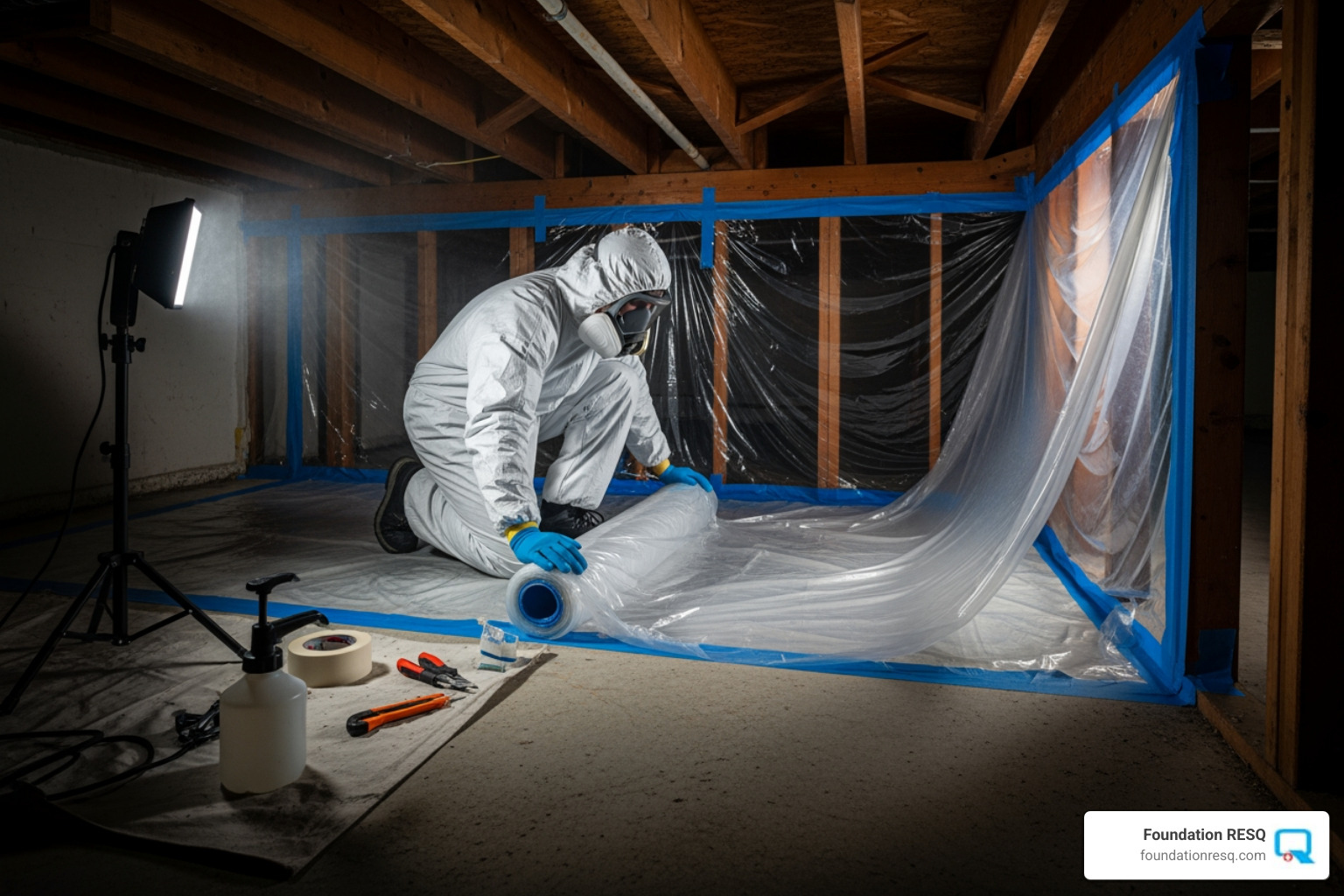
When we’re dealing with mold, even for small DIY jobs, we always recommend wearing the following PPE:
- N95 Respirator: This is crucial for filtering out mold spores from the air we breathe. A simple dust mask won’t cut it. Make sure it fits snugly over your nose and mouth.
- Safety Goggles: Protect your eyes from airborne spores and cleaning solutions.
- Waterproof Gloves: Heavy-duty, disposable gloves are best. We want to avoid skin contact with mold and harsh cleaning agents.
- Disposable Coveralls: These help keep mold spores off our clothes and skin, preventing us from tracking them into other parts of the house. We can then dispose of them safely after the job.
DIY Steps for Small-Scale Crawl Space Mold Removal
For those small, isolated mold patches (under 10 square feet) where the moisture source has been identified and fixed, we can often handle the crawl space mold removal ourselves. Here’s our step-by-step guide:
- Isolate the Area: Before starting, close off the crawl space from the rest of the house. If possible, use plastic sheeting and duct tape to create a barrier around the affected area to prevent spores from spreading. Open windows or use fans to ventilate the crawl space, directing airflow out of the house, not into it.
- Scrub Surfaces with Detergent and Water: For non-porous surfaces like plastic vapor barriers, metal pipes, or sealed concrete, a simple solution of unscented detergent and water works wonders. Scrub vigorously with a stiff brush to dislodge the mold.
- HEPA Vacuuming: After scrubbing and allowing surfaces to dry, use a HEPA (High-Efficiency Particulate Air) vacuum to thoroughly clean the area. This type of vacuum is designed to capture tiny mold spores that regular vacuums would just recirculate into the air.
- Natural Solutions (Vinegar, Baking Soda):
- Vinegar: For a natural approach, a 1:1 solution of white vinegar and water can be sprayed onto the moldy surface. Let it sit for an hour, then scrub and rinse. Vinegar is effective at killing many types of mold.
- Baking Soda: Sprinkle baking soda directly onto the mold, let it sit overnight, then scrub with a brush and water. Baking soda is a mild abrasive and can help deodorize.
- Thorough Drying: After cleaning, it’s absolutely critical to dry the area completely. Use fans and, if necessary, a dehumidifier to ensure all moisture is gone. Mold will return if the wood moisture level is above 20% or humidity above 60%.
For more comprehensive guidance on DIY mold cleanup from the EPA, we recommend consulting their US EPA mold cleanup guide.
Why Professional Remediation is Often Necessary
While DIY can work for small areas, our experience shows that professional mold remediation is often the safest and most effective solution, especially for crawl spaces. Here’s why:
| Feature | DIY Mold Removal | Professional Mold Remediation |
|---|---|---|
| Infestation Size | Small (under 10 sq ft) | Medium (10-30 sq ft) & Large (over 30 sq ft) |
| Equipment | Basic cleaning supplies, PPE | Advanced PPE, HEPA vacuums, air scrubbers, soda blasters, specialized cleaning agents, containment systems |
| Safety | Risk of exposure, improper PPE use | Trained technicians, strict safety protocols, proper containment |
| Effectiveness | May miss hidden mold, temporary fix if source not addressed | Thorough removal, addresses root cause, prevents recurrence |
| Disposal | Can be challenging to dispose of contaminated materials safely | Proper disposal of hazardous waste |
| Underlying Issues | Focuses on visible mold, may overlook moisture sources | Identifies and addresses all moisture sources, structural issues |
| Guarantee/Certification | None | Often comes with guarantees and third-party verification |
- Large Infestations: As we discussed, anything over 10-30 square feet is too much for a DIY job. Professionals have the tools and training to handle extensive mold growth safely and effectively.
- HVAC Contamination: If mold has entered your HVAC system, it can spread spores throughout your entire home. This requires specialized cleaning and remediation techniques that only professionals can provide.
- Structural Wood Rot: Mold that has led to wood rot in joists or beams requires not just mold removal but also structural repair. Our team at Foundation RESQ can address both the mold and the underlying wood rot repair.
- Recurring Mold: If you’ve tried to remove mold yourself and it keeps coming back, it means the underlying moisture issue hasn’t been fully resolved, or the previous removal wasn’t thorough enough. Professionals can diagnose and fix these persistent problems.
- Proper Disposal: Mold-contaminated materials like insulation, drywall, or carpet need to be disposed of properly to prevent further spread. Professionals have the protocols and equipment for safe containment and disposal.
For comprehensive and lasting solutions, we offer expert Mold Remediation Services to tackle any size of infestation.
Long-Term Prevention: How to Keep Mold from Coming Back
Effective crawl space mold removal isn’t just about cleaning up the existing mold; it’s about making sure it never returns. This means a proactive approach to moisture control and regular maintenance.
Step 1: Control Humidity and Moisture Sources
This is the single most important step in mold prevention. Mold needs moisture, so removing its water supply is key.
- Fix All Leaks: This includes plumbing leaks, roof leaks, and foundation leaks. We can’t stress this enough: if the source of moisture isn’t fixed, mold will return within 24-48 hours.
- Install a Crawl Space Dehumidifier: Given the high humidity in our service areas like Tallahassee, Gainesville, and Jacksonville, a dehumidifier is often essential. If your crawl space humidity reaches above 60% at any time, we recommend installing a crawl space dehumidifier. This is more effective than relying on vents, which can actually draw in more humid air.
- Maintain 30-50% Relative Humidity: Our goal is to keep the relative humidity in your crawl space between 30% and 50%. This range is too dry for mold to grow effectively.
- Insulate Pipes: Insulating cold water pipes and HVAC ducts in the crawl space prevents condensation from forming on their surfaces, eliminating a common moisture source.
Step 2: Improve Drainage and Waterproofing
Water from outside is a major contributor to crawl space moisture. We need to ensure it flows away from your home, not into it.
- Grade Soil Away from Foundation: The ground around your home should slope away from the foundation. This directs rainwater away naturally.
- Clean Gutters and Downspouts: Clogged gutters can overflow, dumping water directly against your foundation. Ensure they are clear and that downspouts extend at least 6 feet away from the foundation to divert water effectively.
- Install a Crawl Space Drainage System: If you have recurring issues with standing water, an interior Crawl Space Drainage System can collect water and direct it to a sump pump, which then expels it safely away from your home. This is often part of a comprehensive Crawl Space Waterproofing strategy.
Step 3: Consider Full Crawl Space Encapsulation
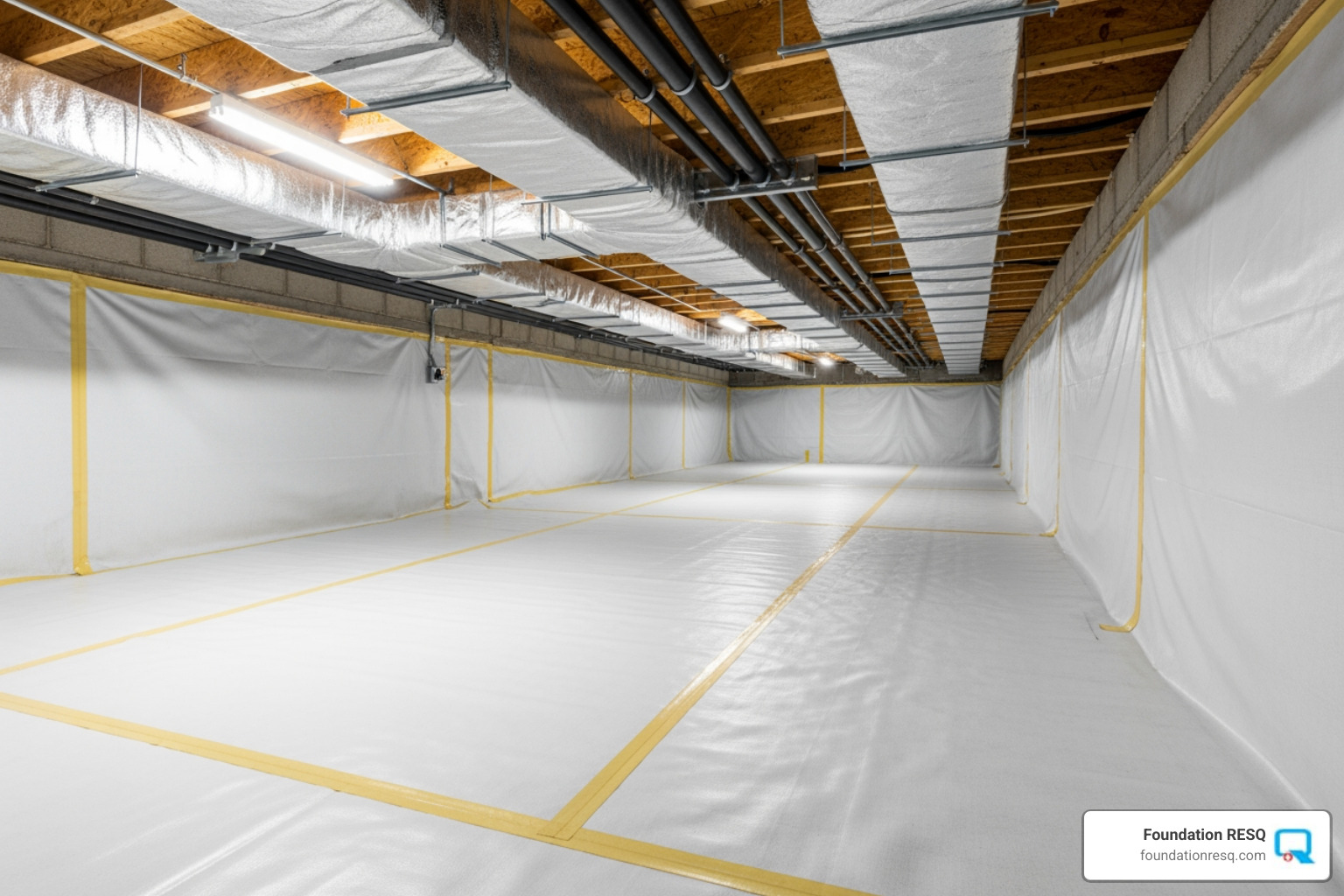
For the most robust and long-term solution to mold prevention and moisture control, we often recommend full crawl space encapsulation. This transforms your damp, dirty crawl space into a clean, dry, conditioned space.
- Vapor Barrier Installation: A heavy-duty, reinforced vapor barrier covers the entire crawl space floor and extends up the foundation walls. This physically blocks moisture from the ground from evaporating into the crawl space air.
- Sealing Vents and Gaps: Traditional crawl space vents, especially in humid climates like ours, often do more harm than good by letting in humid air. Sealing these vents and any other gaps in the foundation prevents outside moisture and pests from entering.
- Insulating Foundation Walls: Insulating the foundation walls helps to maintain a stable temperature, reducing condensation and making your crawl space more energy-efficient.
- Prevents Moisture Entry: By sealing off the crawl space from the earth and outside air, encapsulation dramatically reduces humidity levels, making it nearly impossible for mold to grow.
- Improves Home Air Quality: Since the crawl space is isolated and conditioned, the air that eventually makes its way into your living space (via the stack effect) is cleaner and healthier. This improves overall indoor environmental services for your home.
Encapsulation is an investment that pays off in improved air quality, structural integrity, and peace of mind, virtually eliminating the conditions for crawl space mold removal in the future.
Frequently Asked Questions about Crawl Space Mold
We hear a lot of questions about crawl space mold, and for good reason! It’s a common and concerning issue for homeowners. Let’s tackle some of the most frequent ones.
Is mold in a crawl space a deal-breaker when selling a house?
Mold in a crawl space doesn’t have to be a deal-breaker, but it can certainly impact the sale of your home.
- Impact on Home Value: Untreated mold can significantly lower your home’s value. Buyers are often wary of mold issues due to potential health risks and the cost of remediation.
- Buyer Perception: Most buyers will see mold as a red flag, suggesting deeper moisture problems and potentially extensive damage. It can make them hesitant or lead them to demand significant price reductions.
- Importance of Professional Remediation Records: If you’ve had mold, professional remediation with proper documentation and a transferable warranty can actually be a selling point. It shows you’ve addressed the problem thoroughly and proactively.
- Structural Integrity Concerns: Mold feeds on organic materials, particularly wood. If left untreated, it can lead to Crawl Space Wood Rot Complete Guide in floor joists, subflooring, and support beams, compromising the structural integrity of your home. This is a major concern for buyers and can lead to costly repairs.
Addressing crawl space mold professionally before listing your home can help preserve its value and make it more attractive to potential buyers.
Can I just use bleach or paint over the mold?
We strongly advise against using bleach or painting over mold. Here’s why these “quick fixes” are ineffective and can even be detrimental:
- Why Bleach is Not Recommended by the EPA: While bleach can kill mold on non-porous surfaces, it’s generally ineffective on porous materials common in crawl spaces (like wood). Bleach is mostly water, and the chlorine evaporates quickly, leaving behind moisture that can actually feed the mold deeper within the material. Furthermore, bleach is a harsh chemical that can damage surfaces and create toxic fumes, especially in confined spaces. The EPA and other health organizations often recommend detergent and water for cleaning mold, not bleach.
- Painting Only Hides the Problem: Painting over mold is like putting a band-aid on a gaping wound. It doesn’t kill the mold or address the underlying moisture source. The mold will continue to grow beneath the paint, eventually causing the paint to peel, crack, and blister. You’ll be left with an aesthetic problem and the same mold issue you started with, but now it’s harder to access and treat.
- Mold Will Return if Moisture Isn’t Controlled: Whether you use bleach or paint, if you don’t fix the moisture problem that caused the mold in the first place, it will inevitably return. Our focus is always on identifying and eliminating the source of dampness to provide a lasting solution.
How common is mold in a crawl space?
Mold in a crawl space is incredibly common, especially in humid regions like Alabama, Florida, and Georgia. We often say it’s more common to find some level of mold in an unconditioned crawl space than not.
- Dark and Damp Environment: Crawl spaces are naturally dark, and due to their location, they are prone to dampness from ground moisture, plumbing leaks, and high outdoor humidity. This combination creates an ideal habitat for mold growth.
- Unconditioned Spaces: Unlike the living areas of our homes, crawl spaces are typically unconditioned, meaning their temperature and humidity aren’t actively controlled. This makes them highly susceptible to external environmental conditions.
- Stack Effect Pulling Air into the Home: The “stack effect” means that warmer air rises, creating a slight vacuum that pulls air from lower parts of the house (like the crawl space) upwards into the living areas. This means that the musty, moldy air from your crawl space isn’t staying put; it’s circulating throughout your home, affecting indoor air quality.
Because of these factors, it’s not a question of if a crawl space will get mold, but when and how much, unless proactive moisture control measures are in place.
Conclusion: Reclaim Your Home’s Health and Value
We’ve covered a lot about crawl space mold removal, from identifying the sneaky signs of an infestation to the nitty-gritty of safe removal and, most importantly, long-term prevention. The journey to a mold-free crawl space boils down to three key stages: identify, remove, and prevent.
The biggest takeaway here is the critical importance of addressing the root cause of the moisture. Removing mold without fixing the leak, controlling the humidity, or improving drainage is a temporary fix at best. We’ve seen mold return within 24-48 hours when the moisture problem wasn’t fully resolved, making all the hard work pointless.
By taking decisive action, whether through a careful DIY approach for small areas or by enlisting professionals for larger, more complex infestations, you’re not just cleaning up a mess. You’re actively protecting your family’s health from respiratory issues, allergies, and other mold-related ailments. You’re also preserving your property value, safeguarding your home’s structural integrity, and ensuring that your home remains a safe and comfortable haven for years to come.
For comprehensive and lasting solutions in the Tallahassee area, the experts at Foundation RESQ offer free inspections to create a customized plan for your home. We understand the unique challenges our local climate presents and are equipped with advanced techniques and affordable solutions to tackle any crawl space issue. Don’t let mold undermine your home’s health or value any longer.
Schedule your free mold remediation services inspection today.