
Imagine sitting in your living room a few days after your foundation was stabilized, only to hear a sharp “pop” echoing from the hallway. For many homeowners, this sound triggers immediate concern. You’ve just made a significant investment in your home’s structural health; it’s natural to feel anxious when the building doesn’t immediately return to a perfectly silent state. Understanding what to expect after foundation piering is the best way to replace that worry with confidence. The reality is that your home is a heavy, complex structure that needs time to relax into its new, stable position.
We’ll provide a clear roadmap for your home’s recovery, addressing everything from the temporary disruption of your yard to why some cracks may not close completely. You’ll learn the difference between normal structural adjustments and signs that require a follow-up. This guide covers the physical changes your property undergoes, the professional timeline for starting cosmetic repairs, and the long-term stability you can count on. Our goal is to ensure you feel fully informed as your Tallahassee home transitions from a state of settlement to permanent protection.
Key Takeaways
- Learn how to manage the immediate post-installation appearance of your yard and what to expect during the backfilling and cleanup process.
- Understand what to expect after foundation piering regarding structural movement, specifically the difference between permanent stabilization and cosmetic lifting.
- Identify why “popping” or “creaking” sounds are a normal part of your home’s adjustment as it relaxes onto its new support system.
- Discover the essential timeline for starting cosmetic restorations, including why you should wait at least four to eight weeks before repairing drywall.
- Gain peace of mind by learning how helical and push piers provide long-term stability by reaching deep, load-bearing soil strata.
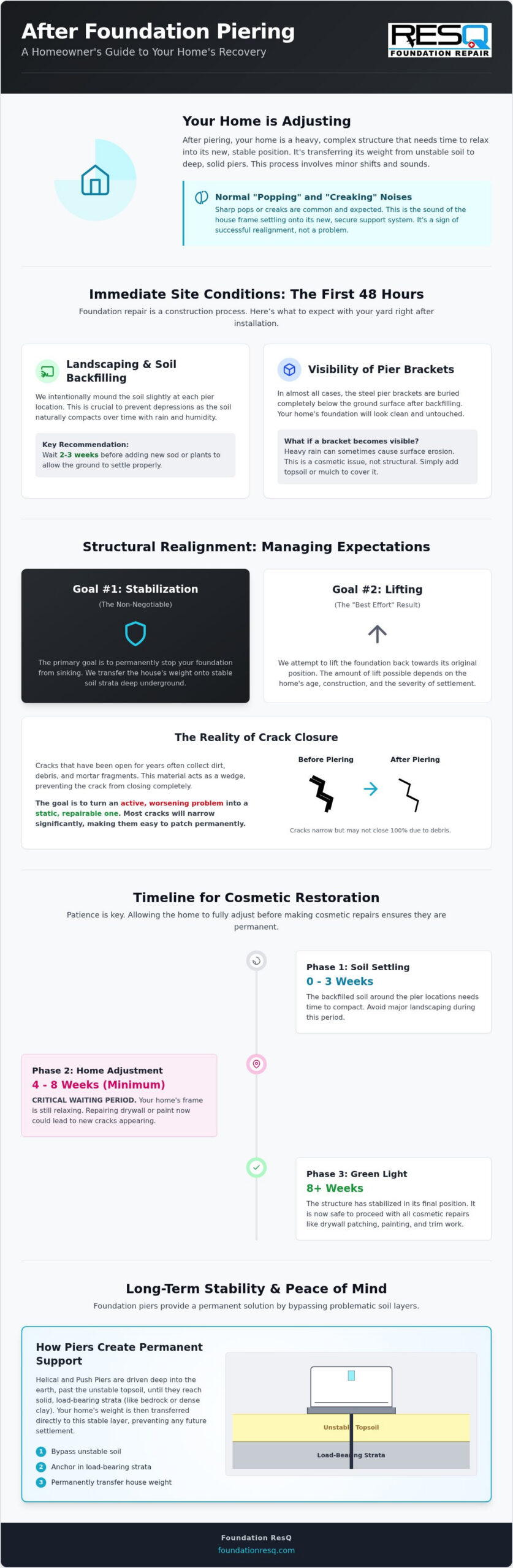
Immediate Site Conditions: The First 48 Hours Post-Installation
After the final pier is driven to load-bearing strata, the physical landscape of your home enters a recovery phase. It’s helpful to remember that foundation repair is a significant construction process. You’ll see disturbed earth where the piers were placed, often referred to as the “freshly dug” look. Understanding what to expect after foundation piering starts with recognizing that this disruption is temporary. Our crews focus on a methodical cleanup, ensuring that your perimeter is secure and that no debris or equipment remains on-site. We treat your property with the respect a neighbor deserves, focusing on a clean hand-off once the structural work is complete.
Landscaping and Soil Backfilling
The backfilling process involves replacing the soil removed during excavation. We intentionally mound the dirt slightly higher than the surrounding grade at each pier location. This technique is essential for long-term site health. As Tallahassee’s humidity and seasonal rains interact with the loose earth, the soil naturally compacts and settles over time. If the site were perfectly flat immediately after installation, you would likely find small depressions or “puddling” in your yard within a month. We recommend waiting at least two to three weeks before investing in new sod or permanent plantings. This window allows the ground to reach a stable density, ensuring your new landscaping has a solid foundation of its own. To ensure your yard recovery goes smoothly, check out Wiregrass Premier Renovations & Landscaping LLC for specialized help with drainage and outdoor living projects.
Homeowners often ask if they will see the heavy steel hardware used to stabilize their homes. In almost every residential application, pier brackets are buried well below the surface. Once the backfilling is finished, the only evidence of the repair should be the stabilized structure itself. However, Florida’s intense weather can occasionally cause surface erosion. If a heavy storm washes away the top layer of soil and reveals a bracket head, don’t panic. This is a cosmetic issue rather than a structural one. We maintain our role as a steadfast local expert by ensuring every installation meets strict safety and depth requirements. If erosion occurs, simply adding a fresh layer of topsoil or mulch will restore the protective barrier over the pier heads and keep your home’s exterior looking its best. Knowing what to expect after foundation piering helps you distinguish between these minor environmental shifts and the permanent security of the piers themselves.
Structural Realignment: Will Your Cracks Close and Doors Align?
When homeowners ask about what to expect after foundation piering, they often focus on the visual “reset” of their home. It’s vital to distinguish between stabilization and lifting. Stabilization is the non-negotiable goal; it involves transferring the weight of your home to stable strata to stop all future sinking. Lifting is an attempt to move the house back toward its original position. While we always aim for the most beneficial lift possible, the structure’s age and the severity of the damage dictate the final result. A house that has been settled for decades has “learned” to be in that position, and moving it requires a careful, methodical approach.
The Reality of Crack Closure
Many expect exterior masonry cracks to snap shut like a puzzle piece. In practice, this doesn’t always happen. If a crack has been open for years, it likely collected dirt, mortar debris, or even insect nests. These materials act like a wedge, preventing the crack from closing flush even when the foundation is lifted. Forcing a 100% closure against this resistance can create unnecessary structural stress in other parts of the home. The ultimate goal of piering is permanent stabilization over cosmetic perfection. Most cracks will narrow significantly, making them much easier to patch and seal during your restoration phase. You’re trading an active, growing problem for a static, repairable one.
Restoring Door and Window Function
Functional success is often the most rewarding part of what to expect after foundation piering. You’ll likely notice an immediate improvement in doors that previously stuck or windows that refused to latch. As the foundation reaches a level state, the squareness of your interior frames is restored. It’s common for a door that required a shoulder to open to suddenly swing freely again. Some frames may still require minor shimming or trim adjustments, especially if the house settled for a long period and the framing warped to accommodate the shift. This is part of the “relaxing” phase mentioned earlier. If you’re looking for more details on the process, you can explore our Professional Foundation Repair in Tallahassee guide.
Stabilizing your home is a technical achievement that provides a permanent remedy for structural failure. If you have questions about your specific results, our team remains available to walk you through the structural changes. For a detailed look at your home’s unique needs, you can always request a follow-up assessment to ensure everything is performing as intended.
The Adjustment Phase: Normal Noises and Micro-Movements
Hearing your home make sudden “popping” or “creaking” sounds after a major repair can be unsettling. However, these auditory shifts are a standard part of what to expect after foundation piering. For years, your home has been slowly sinking, causing the wooden framing, drywall, and flooring to warp and bend under uneven stress. Once we install helical or push piers, we introduce a rigid, immovable support system. Your home is essentially “relaxing” onto this new foundation. These sounds are simply the structural components adjusting to their restored alignment as the tension of the previous settlement is released.
In the Tallahassee area, temperature fluctuations also play a role in these post-repair sounds. Steel is a highly conductive material that expands and contracts with the heat. As the Florida sun warms the ground or a sudden afternoon rain cools it, the interaction between the new steel piers and the home’s original materials can cause minor, harmless noises. Distinguishing between these “good” adjustment sounds and actual structural distress is key. While massive shifts are rare after professional stabilization, the small ticks and pops you hear in the quiet of the night are usually signs that the house is finally finding its permanent level.
Why Your Home Is “Talking” to You
The redistribution of weight across a piering system is a dynamic process. Wood framing is naturally elastic, but drywall is brittle and unforgiving. When the foundation is stabilized, the wood framing shifts back toward its original alignment, while the drywall resists. The resulting “pop” is simply that tension releasing. These sounds typically peak within the first two or three weeks and then subside as the building reaches its new equilibrium.
Monitoring for Secondary Cosmetic Cracks
You might notice new hairline cracks in your drywall after the installation. While this feels concerning, it is a normal side effect of returning a structure to a level state. As the house shifts even a fraction of an inch, brittle materials like plaster may develop tiny fissures. You can track these micro-movements with a simple pencil mark. If you see significant growth, we are always available for a follow-up assessment to ensure your peace of mind. Knowing what to expect after foundation piering allows you to monitor these changes with a calm, informed perspective.
Timeline for Cosmetic Restoration and Repairs
Once the structural work is complete, the temptation to immediately patch every crack and repaint your walls is strong. However, rushing into cosmetic fixes often leads to “double work” and wasted material. The golden rule for homeowners is to wait at least four to eight weeks before starting permanent repairs. This period allows your home to fully adjust to its new, rigid support system and ensures that any minor micro-movements have finished. Understanding what to expect after foundation piering means accepting this brief waiting period as a necessary step for a lasting, professional finish.
If you begin repairs the day after installation, you may find that the house continues to “relax” just enough to reopen a freshly patched drywall seam. Tallahassee’s soil and humidity can also influence how quickly the ground around the piers settles. By waiting two months, you ensure that the structural “reset” is complete and your home is truly static. This patience protects your investment in paint, plaster, and masonry work.
For homeowners who wish to go beyond basic repairs and fully renovate their lower levels once the structure is sound, specialists like rivercityboston.com provide a blueprint for high-quality basement transformations that maximize the value of a stabilized foundation.
Interior Drywall and Trim Repairs
Start your interior restoration with the drywall and plaster. Once the house has rested, you can begin the process of patching, sanding, and repainting. If your home also required Carbon Fiber Wall Repair in Tallahassee for bowing foundation walls, ensure those reinforcements are fully integrated before finishing the surface. You should also examine your interior trim. Baseboards and crown molding often show new gaps as the walls return to a level plane. Use a high-quality, flexible caulk to fill these spaces before applying a final coat of paint. This flexibility helps the trim accommodate the natural expansion and contraction common in our Florida climate.
Exterior Masonry and Brickwork
Exterior masonry requires a specific approach known as tuck-pointing. This involves removing damaged or loose mortar from stair-step cracks and replacing it with new material. When performing these repairs, matching the existing mortar color is vital to maintain your home’s curb value and aesthetic integrity. It is also a key part of what to expect after foundation piering as the exterior skin of the building realigns. Additionally, check the frieze board, which is the horizontal trim piece located just below the roofline. As the foundation is lifted, this board may shift slightly. A professional adjustment here ensures the exterior remains weather-tight and visually aligned.
If you are ready to move forward with the next phase of your home’s recovery, contact our team to schedule a follow-up assessment to verify your structural stability before you begin your cosmetic projects.
Long-Term Stability: The Peace of Mind of a Piered Foundation
The journey from a settling foundation to a stabilized home concludes with the most significant benefit of all: permanence. While the initial weeks involve site recovery and structural adjustments, the long-term reality is that your home is now anchored to stable earth. Unlike temporary fixes that only address surface symptoms, professional piering provides a deep-seated remedy that protects your property’s value for decades. Understanding what to expect after foundation piering means shifting your focus from active worry to routine maintenance. You have successfully moved your home from a state of decline into a state of structural health.
A vital component of this security is the Foundation ResQ and Groundworks warranty. This protection ensures that the stabilization work meets the highest industry standards and remains a reliable barrier against future settlement. By choosing a solution backed by a national network, you gain the confidence that your investment is protected. This isn’t just a repair; it’s a structural reset that allows you to plan for the future of your home without the constant fear of new cracks or shifting floors.
Tallahassee Soil and Your New Piers
Our region is defined by karst topography, a geological landscape where limestone and shifting surface soils create unique challenges for residential buildings. Tallahassee’s clay-rich soil expands when wet and shrinks during dry spells, putting immense pressure on traditional shallow foundations. Your new piers bypass these unstable surface layers entirely. By reaching deep into the load-bearing strata, Professional Helical Pier Installation creates a bridge between your home and the stable earth far below the “active zone” of the soil. This depth provides a protective barrier that remains unaffected by the seasonal cycles of the Florida climate.
The Value of Ongoing Vigilance
While your piers provide the structural support your home needs, maintaining the environment around your foundation is equally important. Your piering system works best when it isn’t fighting against excessive groundwater. Keeping your gutters clean and ensuring your crawl space remains dry are essential habits that complement the work we’ve done. These simple steps prevent soil erosion and hydrostatic pressure from challenging your home’s exterior walls. We encourage homeowners to remain observant and reach out for annual inspections if they have questions about their property’s moisture levels or soil health. Knowing what to expect after foundation piering includes understanding that your home is now a partnership between professional engineering and proactive care.
If you have questions about your recent installation or would like to discuss additional protection for your property, contact Foundation ResQ for a post-install check-up or new estimate. We are here to serve as your steadfast local expert for the life of your home.
Securing Your Home’s Future Stability
Navigating the recovery process after a structural repair requires a balance of patience and informed observation. By understanding what to expect after foundation piering, you can confidently distinguish between normal home “relaxing” sounds and the permanent stability provided by deep-driven steel hardware. It’s important to allow your structure at least four to eight weeks to reach equilibrium before starting any drywall or masonry restoration. This waiting period ensures your cosmetic investments last. It’s the final step in a successful structural reset.
Foundation ResQ brings over a decade of experience to Florida’s unique geological challenges, utilizing specialized helical and push pier systems. Our work is backed by the Groundworks “Life of the Structure” Warranty, providing you with a permanent remedy rather than a temporary fix. If you have concerns about your home’s current health or need a post-installation check-up, we’re here to help. Schedule a Free Foundation Inspection with Tallahassee’s Structural Experts today. Your home is your most significant asset, and we’re committed to protecting its integrity for the long term.
Frequently Asked Questions
Is it normal for new cracks to appear after foundation piering?
Yes, it’s common to see minor hairline cracks in drywall or plaster as the house levels out. While the piers provide a permanent remedy for the foundation, the interior finishes are brittle and react to even slight shifts. These cosmetic changes are part of what to expect after foundation piering as the structure reaches its new equilibrium. We recommend monitoring these areas for a few weeks before scheduling any professional painting or patching services.
How long should I wait to fix my drywall after the foundation is lifted?
We recommend waiting a minimum of four to eight weeks before starting permanent cosmetic repairs. Your home needs this time to relax onto the new steel support system. If you patch drywall or repair trim too soon, you might have to repeat the work if the materials continue to adjust slightly. This patience ensures that your restoration efforts last as long as the structural stabilization itself.
Will my doors and windows work perfectly right away?
You will likely see immediate improvement in sticking doors or windows that wouldn’t latch. As the lift restores the squareness of your frames, functional problems often resolve on the day of installation. However, some frames that were warped by long-term settlement may still require minor shimming or trim adjustments. Understanding what to expect after foundation piering involves recognizing that the structural fix is immediate, but the house may need a short adjustment period.
Does foundation piering increase the value of my home?
Structural stabilization significantly protects and often increases your home’s resale value. A house with active foundation issues is difficult to sell and often requires steep price reductions. By installing a warranted piering system, you provide potential buyers with proof of a permanent solution. In Tallahassee’s competitive market, having a stable foundation backed by a national network like Groundworks offers the peace of mind that buyers and lenders require for a successful transaction.
What happens if the house settles again after piers are installed?
If you notice new signs of settlement, our “Life of the Structure” warranty provides a reliable safety net. Foundation ResQ is committed to long-term results rather than quick fixes. We will send a specialist to evaluate the site and determine if the piers require adjustment. Because we anchor our systems into deep, load-bearing strata, significant movement is rare, but our team remains available to ensure your home stays protected and stable.
Are the “popping” noises in my walls dangerous?
These sounds are a normal and harmless part of the structural adjustment process. For years, your home’s framing has been under uneven stress from sinking soil. As the piers lift and stabilize the building, that tension is released, often resulting in pops or creaks. These noises typically subside within a few weeks as the building settles into its new position. They are a sign that the house is finally finding its permanent level.
Do I need to do anything to maintain the piers over time?
The piers themselves are maintenance-free once installed, but you should prioritize moisture management. We recommend keeping your gutters clean and ensuring that downspouts direct water at least ten feet away from the foundation. Maintaining a dry crawl space through encapsulation or a sump pump system also prevents soil erosion near the pier heads. These proactive steps protect the ground that supports your home and complement the deep stabilization provided by the piering system.
Will the piering process damage my landscaping permanently?
Landscaping disruption is temporary and part of the construction process. We backfill every excavation site and mound the soil slightly to account for natural settling and Tallahassee’s frequent rain. While some bushes may need to be moved during installation, most homeowners can begin replanting or laying new sod within three weeks. This waiting period allows the soil to reach a stable density, ensuring your new yard has a healthy, level surface to grow on.